 Birch Bay Window
 Why Windows Wear Out Faster Here
Birch Bay sits right on the water, and that changes the math on how long a window lasts. Salt-laden air corrodes aluminum hardware and pits vinyl cladding over time. Driving rain off the Strait finds every weak seal and pushes water where it doesn't belong. And the long stretch of gray, damp months from fall through spring means wood trim and sills rarely get a chance to fully dry out before the next system rolls through. A window that might last 25-30 years in a drier inland climate can start showing real problems well before that here in Whatcom County.
None of this means your windows are doomed on some fixed schedule. It means the signs of failure show up differently, and it pays to know what to look for before a small problem becomes a wall repair.
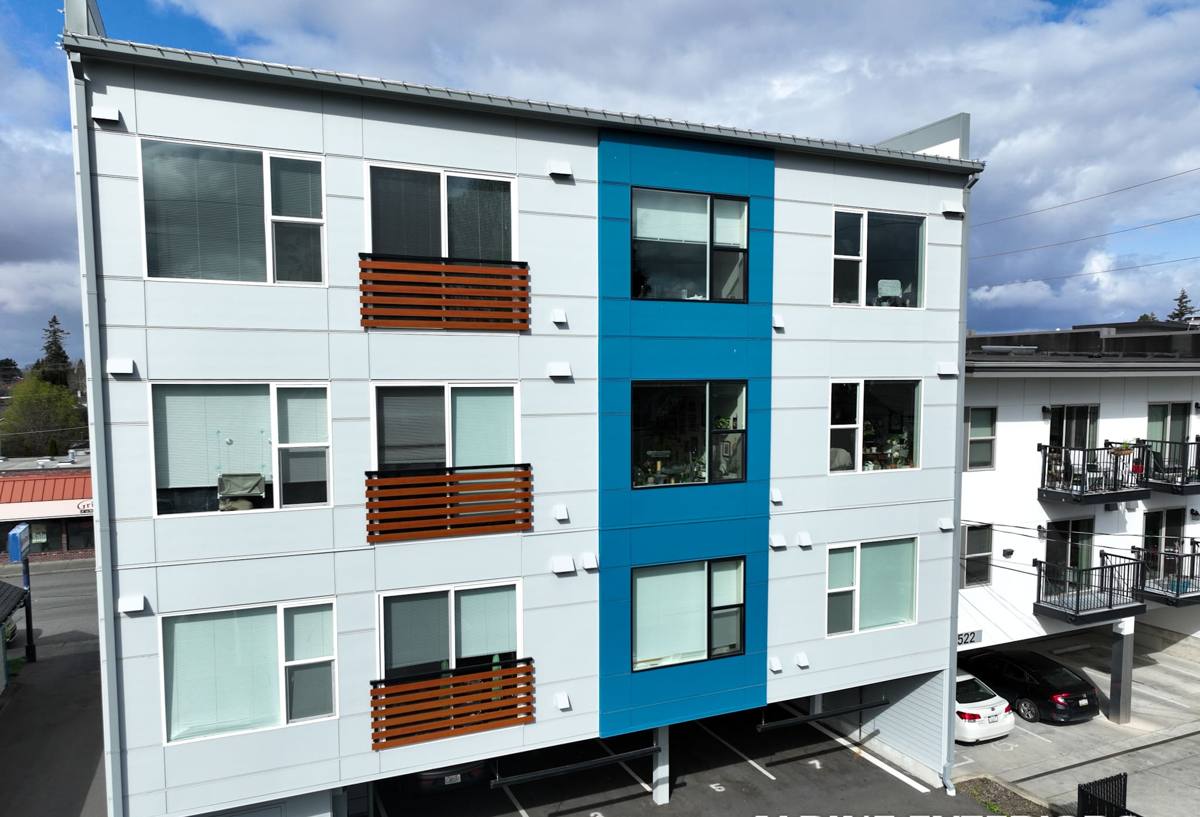
The Clearest Signs You Need New Windows
Fog or Moisture Between the Panes
If you have double-pane or triple-pane windows and see a persistent haze or water droplets trapped between the glass layers, the seal has failed. Once that gas-filled or air-filled cavity is compromised, the insulating value is gone for good. You can't fix this by cleaning the glass — the fog is on the inside of a sealed unit. In some cases the glass unit alone can be replaced without swapping the whole frame, but if the frame is also old or damaged, full replacement usually makes more sense.
Drafts You Can Feel
Hold your hand near the sash on a windy day. If you feel air movement even with the window latched shut, the weatherstripping has hardened or the frame has warped enough that it no longer seals tight. In a place that sees steady wind off the bay, that draft translates directly into higher heating bills.
Wood Rot or Soft Spots
Press a screwdriver gently into the sill, corners, and bottom rail of wood-framed windows. If it sinks in easily or the wood feels spongy, moisture has gotten into the material and started breaking it down. This is one of the most common issues we see in Birch Bay, especially on west- and south-facing walls that take the brunt of storms coming off the water. Rot rarely stays contained to the window — left alone, it spreads into the surrounding framing and sheathing.
Difficulty Opening, Closing, or Locking
Wood swells with moisture and shrinks as it dries, and after enough cycles the frame can warp out of square. If a window sticks, needs to be forced, or won't latch securely anymore, that's not just an annoyance — it's a security and safety issue, particularly for bedroom windows that may need to serve as an emergency exit.
Visible Corrosion on Hardware or Frames
Aluminum-framed windows and older hardware are especially vulnerable to salt air corrosion. White powdery buildup (oxidation) on aluminum, rusted screws, or pitted metal locks and hinges are signs the hardware is failing from the inside out, even if the glass itself still looks fine.
Moss or Persistent Green Growth on Sills and Trim
Birch Bay's moss season is long, and it doesn't limit itself to roofs. If you're seeing moss or algae taking hold on window sills, trim, or the wall just below a window, that's a sign the surface is staying damp longer than it should — often because water isn't shedding away from the window properly. It's worth having someone look at the flashing and caulking, not just scrubbing the moss off.
Rising Energy Bills With No Other Explanation
Old single-pane or early double-pane windows are one of the biggest sources of heat loss in a home. If your heating costs have crept up over the years and you haven't changed your usage habits, aging windows are a common culprit — especially paired with the drafts and failed seals described above.
Comparing Repair vs. Replacement
Not every issue means a full window replacement. Here's a general breakdown of when repair is a reasonable option versus when replacement is the better long-term investment.
| Issue | Repair Often Works | Replacement Usually Makes Sense |
|---|---|---|
| Foggy glass, sound frame | Glass unit swap | If frame is also failing |
| Worn weatherstripping | Yes, low cost | Rarely needed alone |
| Minor sticking or misalignment | Adjustment or hardware fix | If warping is severe |
| Soft or rotted wood frame | Sometimes, if localized | Yes, if rot is extensive |
| Corroded aluminum hardware | Hardware replacement possible | Yes, if frame is pitted throughout |
| Single-pane glass, no storm damage | No real fix for efficiency | Yes, for comfort and energy savings |
| Water intrusion into wall cavity | No | Yes, and promptly |
What Drives the Cost of Replacement
We don't post fixed prices because every home is different, but a few factors consistently move the number up or down:
- Number of windows being replaced at once — doing several together typically costs less per window than one-off jobs
- Frame material (vinyl, fiberglass, wood-clad) and glass package (double vs. triple pane, low-E coatings)
- Whether it's an insert replacement (new window fits into the existing frame) or a full-frame replacement that goes down to the rough opening
- Condition of the surrounding wall — hidden rot or water damage found once the old window is out adds time and material
- Window size and configuration — large picture windows, bays, and custom shapes cost more than standard sliders or single-hungs
- Access and site conditions, including second-story work
A straightforward insert replacement is generally the more affordable path when the existing frame and surrounding wall are in good shape. Full-frame replacement costs more but is the right call when there's rot, water damage, or you're changing the window size or style.
Why Frame Material Matters More Here Than in Drier Climates
In a marine environment like Birch Bay, frame material choice isn't just about looks or budget — it directly affects how long the window holds up against salt air and moisture. Vinyl frames don't corrode and handle moisture well, which is part of why they've become the standard choice for most replacement work in coastal Whatcom County. Fiberglass is a step up in stiffness and dimensional stability, useful for larger openings. Wood-clad windows can look great, but the wood core still needs consistent maintenance — repainting, caulking, and inspection — to keep moisture from working its way in over the years. We'll walk through the honest maintenance trade-offs of each option for your specific project rather than push one product line as a universal answer.
A Quick Self-Check Before You Call Anyone
Walk your home's exterior and interior and check each window against this list. If you check off two or more items on a single window, it's worth having it looked at.
- Glass looks foggy, hazy, or has visible moisture between panes
- You can feel a draft near the frame or sash when it's closed
- Wood trim or sill feels soft, spongy, or shows dark staining
- Window is hard to open, close, or lock without extra force
- Visible corrosion, pitting, or white buildup on metal hardware or frames
- Moss, algae, or persistent green growth on the sill or wall below the window
- Paint or caulk around the frame is cracked, peeling, or missing
- You can hear more outside noise through the window than you used to
Timing the Work Around Our Weather
Window replacement can be done nearly any time of year, but scheduling around the wettest stretches of the Whatcom County winter reduces the amount of time your wall opening is exposed before the new unit is sealed in. Many homeowners plan replacement projects for late spring through early fall for that reason, though a well-organized crew can handle it responsibly in wetter months too by working efficiently and protecting the opening.
What to Expect From a Professional Assessment
A proper inspection goes beyond glancing at the glass. It should include checking the condition of the framing and sheathing behind the trim, testing operation and seal integrity, looking for signs of past water intrusion, and being honest with you about which windows genuinely need replacement versus which ones have years of life left. Replacing every window at once isn't always necessary — sometimes prioritizing the worst-affected windows, often those facing the water or prevailing wind, is the more practical first step.
If you're seeing any of the signs above, or you're just not sure whether your windows are holding up the way they should, we're happy to take a look and give you a straightforward, no-pressure assessment. Fill out the form below to schedule a free estimate.