 Birch Bay Window
 The Real Question Isn't Which Brand — It's Which Frame Material
Most homeowners start their window search by comparing brand names and price tags. That's understandable, but it skips the decision that actually determines how the window performs over the next 20-plus years: what the frame is made of. Glass packages and hardware matter too, but the frame material is what holds up — or doesn't — against wind, moisture, temperature swings, and years of exposure. In Birch Bay, that exposure is more demanding than it looks from the driveway.
This page walks through vinyl and fiberglass frames honestly, including where each one falls short, so you can make a decision based on how your home actually sits — close to the water, exposed to weather off Semiahmoo Bay and the Strait of Georgia, or a bit more sheltered inland toward Blaine or the rest of Whatcom County.
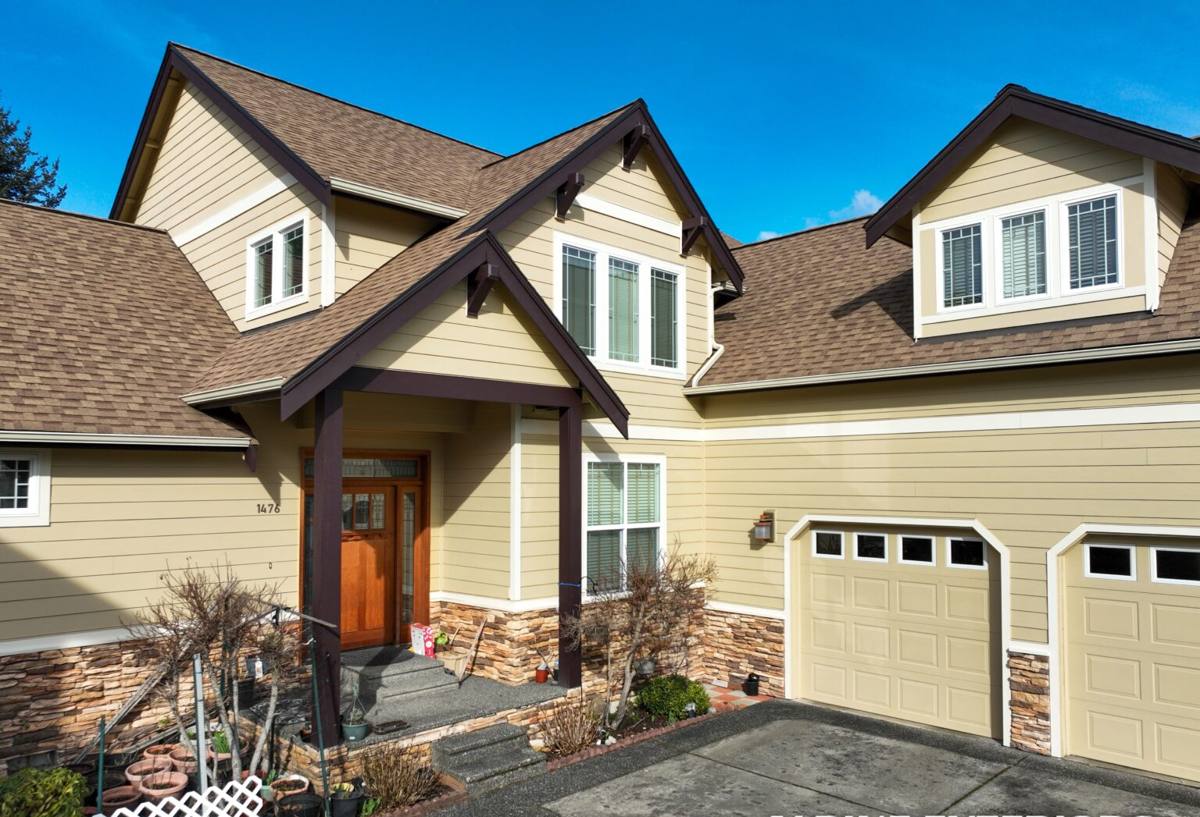
How Birch Bay's Climate Tests a Window Frame
Coastal Whatcom County isn't an extreme climate compared to, say, a hurricane zone, but it's a persistent one. Three factors do most of the damage to window frames over time:
- Salt air: Homes within a mile or so of the water pick up airborne salt that settles on frames, hardware, and screens. Over years, that accelerates corrosion on unprotected metal components and can degrade certain finishes faster than an inland install.
- Driving rain: Wind-driven rain off the water doesn't just hit a window — it pushes against it, testing seals, weep systems, and flashing details far harder than a calm rain does. A frame and installation that handle vertical rain fine can still leak under wind-driven conditions if details aren't right.
- Long moss season: Whatcom County's wet season runs long. Persistent damp conditions mean more time for moisture to sit in and around window openings, more algae and moss growth on north-facing walls and trim, and more opportunity for any small installation gap to become a real problem.
None of this means every window fails here. It means the margin for error is smaller, and the frame material's real-world behavior under sustained moisture and salt exposure deserves more weight than it usually gets.
Vinyl Windows: What You're Actually Buying
Vinyl (uPVC) frames are extruded PVC, often with internal chambers for insulation and structural reinforcement in larger units. They're the most common replacement window frame installed in the Pacific Northwest, and for good reason — they're cost-effective, don't require painting, and perform well in a wide range of conditions.
Where vinyl performs well
Vinyl doesn't rust or corrode, which is a genuine advantage near salt air — there's no metal frame surface for salt to attack. It doesn't rot, and it handles the region's rain exposure fine when the seals and installation are done correctly. Vinyl also insulates well thermally, since the material itself doesn't conduct heat or cold the way metal does, and it's generally the more budget-friendly option up front.
Where vinyl struggles locally
Vinyl expands and contracts with temperature more than fiberglass does. That's rarely a dramatic issue in our mild coastal temperature range, but over many years of expansion-contraction cycles combined with damp conditions, seals and corners on lower-quality vinyl units can work loose faster than a more dimensionally stable frame. Vinyl frames are also typically welded or mechanically fastened at the corners rather than one continuous piece, and those joints are where long-term water intrusion problems tend to start if the product or installation is subpar. Darker vinyl colors can also absorb more heat and expand more, which is worth knowing if you want a darker exterior finish.
Fiberglass Windows: What You're Actually Buying
Fiberglass frames are made from pultruded glass fibers set in resin — a manufacturing process that produces a rigid, dimensionally stable material. It's a newer category in residential windows than vinyl, and it costs more, but the material properties are different in ways that matter for a coastal climate.
Strengths in coastal Whatcom County conditions
Fiberglass expands and contracts at a rate much closer to glass itself, which means less stress on the seal between the glass unit and the frame over time — a real advantage when a home sees decades of damp, cool weather punctuated by the occasional summer heat. It doesn't rust, rot, or corrode, so salt air isn't a durability threat to the frame material itself. Fiberglass is also structurally stronger than vinyl for a given wall thickness, which allows for narrower frames and more glass area in the same rough opening — useful if you want to maximize a water view without a bulky frame in the way. It can be painted, which means a homeowner can change exterior color down the road without replacing the window.
Trade-offs to know
The main trade-off is cost — fiberglass windows typically run higher than comparable vinyl units, sometimes significantly so depending on size and configuration. Fiberglass also has fewer color and finish options at the budget end of the market, since it's a more specialized manufacturing process. And because it's a newer product category, the range of quality between manufacturers varies more than it does in the mature vinyl market, so the brand and manufacturing standard behind a fiberglass window matters more than it might for vinyl.
Side-by-Side Comparison
| Factor | Vinyl | Fiberglass |
|---|---|---|
| Upfront cost | Lower | Higher |
| Salt air resistance | Good — no metal to corrode | Good — no metal to corrode |
| Dimensional stability | Moderate — expands/contracts with temperature | High — closer to glass's expansion rate |
| Long-term seal integrity | Solid with quality product/install | Generally stronger over decades |
| Paintable / color changeable | No — color is set at manufacture | Yes |
| Frame width for a given strength | Wider | Narrower, more glass area |
| Product maturity / consistency | Very consistent across manufacturers | More variation by manufacturer |
Neither column is "wrong." A well-made vinyl window installed correctly will serve a Birch Bay home well for decades. Fiberglass costs more but gives back some margin in dimensional stability and design flexibility, particularly on larger openings or homes with more direct water exposure.
Cost Factors to Weigh (Not Just the Sticker Price)
The purchase price is only part of the real cost. A few things worth factoring in before comparing quotes:
- Frame size and count: Larger openings and picture windows cost more per unit regardless of material, and the cost gap between vinyl and fiberglass tends to widen on bigger units.
- Glass package: Double vs. triple pane, low-E coatings, and gas fill all add cost independent of frame material — and in our climate, glass package affects comfort and condensation resistance as much as frame choice does.
- Installation method: A full-frame replacement (removing the old frame down to the rough opening) costs more than an insert replacement but is often the right call on homes with any history of water intrusion, since it lets us inspect and correct the flashing and sheathing underneath.
- Warranty structure: Compare what's actually covered — glass seal failure, frame defects, and labor are often separate warranty terms, and the fine print varies more between manufacturers than most homeowners expect.
Installation Matters More Than the Frame Material
This is worth saying plainly: a premium fiberglass window installed poorly will leak. A budget vinyl window installed correctly, with proper flashing, sill pan drainage, and sealant detailing for wind-driven rain, will not. In a climate with Birch Bay's rain exposure and long wet season, the flashing and sealing details around the window opening do as much work as the frame material itself. Weep holes have to stay clear, sill pans need to actually direct water outward rather than into the wall cavity, and sealant has to be applied to manufacturer spec — not just wherever looks tidy from the outside.
This is also where moss and algae growth becomes relevant beyond appearance. Persistent moisture sitting against poorly flashed trim accelerates both cosmetic staining and, over years, the kind of slow water intrusion that's expensive to find and fix once it's behind the siding.
A Practical Checklist Before You Decide
- Walk your home's exposure — is it close to the water and facing prevailing wind and rain, or more sheltered?
- Decide if you want the option to repaint the exterior frame color later (only fiberglass offers this)
- Get quotes that separate frame material, glass package, and installation method as line items, not one bundled number
- Ask what installation method is being used — insert or full-frame — and why, for your specific opening
- Compare warranty terms for glass seal failure and frame defects separately, not just "lifetime warranty" as a headline
- Check whether any current moss, staining, or paint failure around your existing trim suggests a moisture issue worth addressing during the window job
Our Take for Birch Bay Homes
For most homes in and around Birch Bay, a quality vinyl window installed with proper flashing and drainage detail is a sound, cost-effective choice — the material itself holds up fine against salt air and rain when the installation is done right. Where we tend to steer homeowners toward fiberglass is on homes with heavy direct water exposure, larger openings where dimensional stability matters more, or where a homeowner wants the flexibility to repaint down the road. Neither choice is a compromise; they're suited to different situations and budgets.
If you'd like a straight answer on which frame material makes sense for your specific home and exposure, we're happy to take a look and walk you through it — no pressure, no upsell. Reach out using the form below for a free estimate.