 Birch Bay Window
 Windows on Lummi Island: What Marine Exposure Actually Does
Lummi Island sits out in the salt air of Hale Passage and the Strait of Georgia, and that changes how windows age compared to homes further inland in Whatcom County. Salt-laden air carries fine mineral particles that settle on glass, frames, and hardware. Over years, that residue works into seals, pits metal components, and accelerates the breakdown of finishes that would otherwise last decades. It's not dramatic — it's slow, and that's exactly why it gets overlooked until a window is failing.
Combine that salt exposure with driving rain off the water and long stretches of gray, damp weather, and you get a climate that tests every seam in a window unit. Wind-driven rain doesn't just fall straight down here; it gets pushed sideways into south and west-facing walls, which is where we see the most flashing and sill damage on island homes.
Salt Spray and Corrosion
Aluminum and lower-grade vinyl hardware — hinges, cranks, locks, balance systems — are the first things to show wear in a salt air environment. You'll notice stiff cranks on casement windows, locks that don't seat cleanly, or a chalky white residue on metal parts. None of that means the whole window is done, but it's worth having someone look before it turns into a bigger repair.
Driving Rain and Wind-Driven Moisture
Water intrusion around windows on exposed elevations is usually a flashing or sealant issue, not a defect in the window itself. On Lummi Island, we pay close attention to how a window is integrated with the wall — the flashing, the sill pan, the sealant joints — because that detailing matters more here than it does in a sheltered inland lot.
Moss, Mildew, and Shade
Wooded and north-facing sites on the island hold moisture longer, and that means moss and mildew growth around window trim, sills, and lower sashes. Wood trim in constant shade and dampness is the most vulnerable — moss holds water against the surface far longer than open exposure would, which is what drives premature rot in older wood-framed windows.
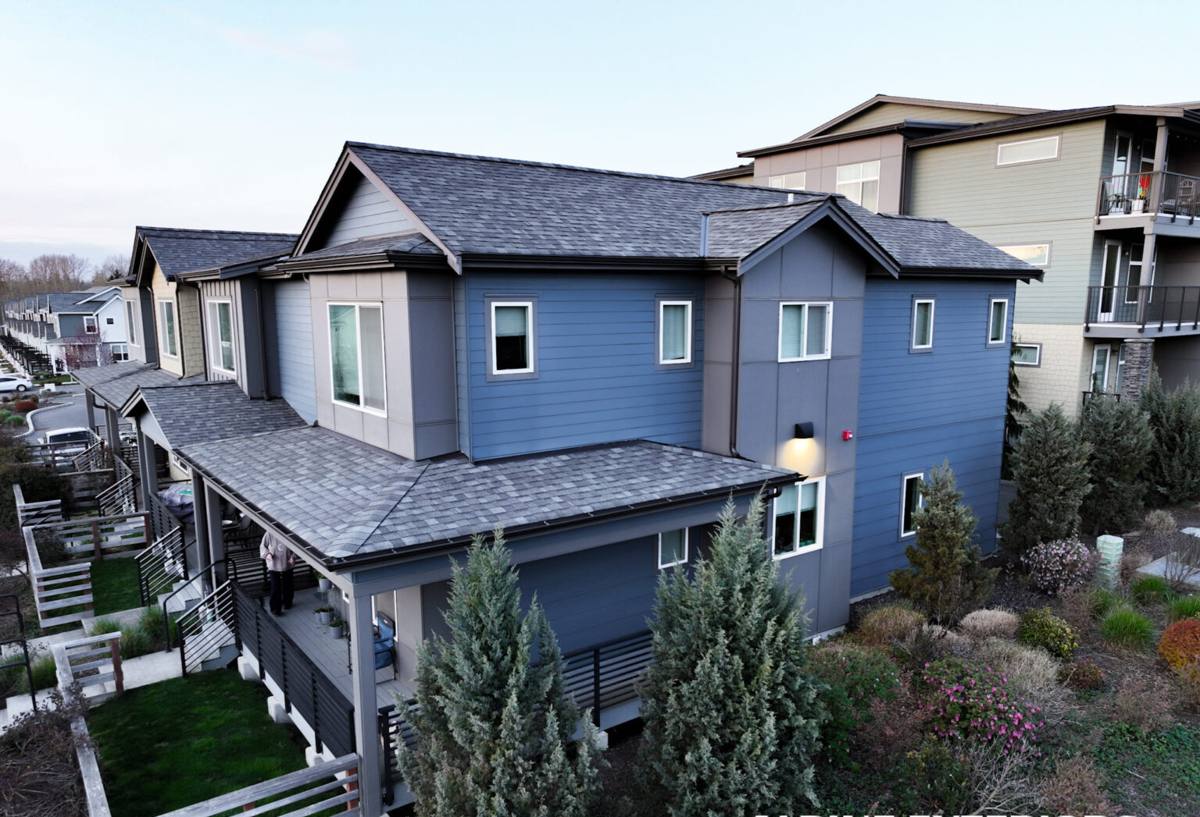
Signs Your Lummi Island Home's Windows Need Attention
Most window problems out here show up gradually. A few things worth checking on a regular walk-around:
- Soft or spongy wood at the sill or lower frame corners
- Visible gaps between the window frame and siding or trim
- Fogging or a permanent haze between glass panes (a failed seal on double-pane units)
- Cranks, locks, or sashes that stick, bind, or won't latch fully
- Peeling or bubbling paint on wood trim, especially on north or shaded walls
- Drafts you can feel with a hand near the frame on a windy day
- Moss or dark staining building up in the corners of the frame or sill
- A noticeable rise in heating costs without any other explanation
Any one of these on its own usually isn't urgent. Several showing up together, especially on the same wall, is a sign that water has been getting past the window's seal for a while.
Repair or Replace? How We Make That Call
Not every problem window needs to come out. A stuck crank, a failed seal on an otherwise sound frame, or a worn weatherstrip are repair jobs. Rotted framing, multiple failed seals across a unit, or a window that's been letting water into the wall cavity for years usually isn't.
| Condition | Usually Repair | Usually Replace |
|---|---|---|
| Foggy glass, sound frame | Yes — reglaze or replace sash | — |
| Stiff hardware, no rot | Yes — clean, lubricate, or replace parts | — |
| Soft wood at sill or corners | Sometimes, if localized | Yes, if it's spread into the frame |
| Drafts with visible gaps | Yes — reseal and re-flash | — |
| Water staining on interior wall below window | Rarely | Yes — usually a flashing failure needing full removal |
| Single-pane, original to an older home | Depends on budget | Often, for energy performance and moisture control |
When we come out to look at a window, we're checking the frame condition, how it was flashed into the wall, the state of the glass seals, and whether the problem is isolated or part of a pattern across that elevation of the house.
Window Materials That Hold Up in a Marine Climate
Vinyl
Good vinyl windows are a solid, low-maintenance choice for most Lummi Island homes — they don't corrode, and they handle moisture well as long as the installation detailing (flashing and sealant) is done right. Vinyl's main trade-off is that it can't be painted to match a color change down the road, which matters to some homeowners and not others.
Fiberglass
Fiberglass frames are more dimensionally stable across temperature swings and hold up well in coastal exposure, which makes them a strong option for west and south-facing walls that take the brunt of the weather. They cost more upfront than vinyl, and that's the honest trade-off.
Wood and Wood-Clad
Wood windows have a look a lot of island and older Whatcom County homes were built around, and clad options (vinyl or aluminum-clad exteriors over a wood interior) reduce the maintenance burden while keeping that appearance. The exterior cladding takes the weather; the wood interior stays protected. We're honest with clients that any painted or bare wood exterior trim in this climate needs a real maintenance schedule — skipping it is what leads to the rot we see on older homes.
Glass Packages
Dual-pane with a low-E coating is standard for most replacement work here. In more exposed spots, we'll talk through argon fill and warm-edge spacers, which help with both energy performance and condensation resistance during the wetter months.
Working on Lummi Island: The Ferry Factor
Any contractor doing work on the island has to plan around the ferry schedule, which shapes how a job gets scheduled and staged. Materials, crew, and equipment all need to make the crossing, so a well-run island job is planned in advance — we batch material deliveries, confirm measurements early, and build the ferry schedule into the timeline rather than treating it as an afterthought. A crew that's done island work before knows to build in that buffer rather than promising a same-day fix that depends on catching a specific sailing.
This is also where local experience pays off in a more direct way: knowing how exposed a particular part of the island tends to be, how wind and rain behave differently on the west side versus a more sheltered cove, and what that means for flashing and sealant choices on a given wall.
Our Window Replacement Process
- On-site assessment — we look at each window's frame, glass, hardware, and how it's integrated with the siding and flashing
- Honest repair-vs-replace recommendation — with the reasoning explained, not just a number
- Material and glass selection — matched to the wall's exposure and your budget
- Scheduling around the ferry and weather windows — so materials and crew arrive together
- Removal and correct flashing/sealant installation — this step is what actually determines whether a new window stays watertight for the next twenty years
- Final check — operation, seal, and cleanup before we consider the job done
Beyond Windows: Siding, Roofing, and Decks
Windows rarely fail in isolation. If moisture has been getting past a window seal, it's often affecting the siding around it too, and a roof with worn flashing near a wall can send water down behind trim in ways that show up first as a window problem. Because we handle siding, roofing, decks, and windows, we can look at a water intrusion issue as a whole-building problem instead of guessing at just the piece in front of us. If a deck ledger, roof valley, or siding seam nearby is contributing to the moisture, we'll flag it rather than replace a window and leave the actual source unresolved.
What Affects the Cost of a Lummi Island Window Project
| Factor | Why It Matters Here |
|---|---|
| Number and size of windows | Straightforward — more or larger openings, more material and labor |
| Frame material | Vinyl, fiberglass, and wood-clad carry different price points |
| Extent of rot or flashing repair needed | Water damage found once we open up a wall adds scope |
| Exposure of the wall | Higher-exposure elevations may warrant upgraded flashing details |
| Access and ferry logistics | Affects scheduling more than direct cost, but can shift timelines |
| Custom sizes or shapes | Older homes sometimes have non-standard openings |
We'd rather walk a homeowner through these factors on-site than throw out a number that doesn't hold up once we're actually into the work.
Why a Local, Whatcom County Crew Matters
A crew that works throughout Whatcom County and knows Lummi Island's particular exposure to salt air and weather isn't guessing at how a window should be flashed or which materials are worth the extra cost on an exposed wall. That local knowledge shows up in details — the sealant that holds up to salt air, the flashing detail that actually sheds driving rain, the realistic sense of how long a repair will last versus when replacement is the smarter call.
If you're seeing drafts, fogged glass, sticking hardware, or signs of moisture around your windows, we're happy to come take a look and give you a straight answer — repair, replace, or leave it alone for now. Reach out for a free, no-pressure estimate, and we'll work with you on scheduling around the ferry so the visit fits your day.