 Birch Bay Window
 Two Different Jobs, Both Called "Window Replacement"
When people call us about replacing windows, most assume there's one way to do it. There isn't. There are two distinct methods — insert replacement and full-frame replacement — and they solve different problems. Both can produce a good result. Both can also be the wrong choice if the house doesn't fit the method. Our job is to look at what's actually happening at the window opening, not just sell whichever job is easier to schedule.
This matters more here than in a lot of places. Birch Bay sits right on the water, and homes here take a steady diet of salt-laden air, wind-driven rain, and a moss season that can run most of the fall and winter. That combination is hard on wood, hard on old flashing, and unforgiving of shortcuts. Picking the right replacement method is as much about what's hidden behind your existing trim as it is about the window itself.
What Insert (Pocket) Replacement Actually Is
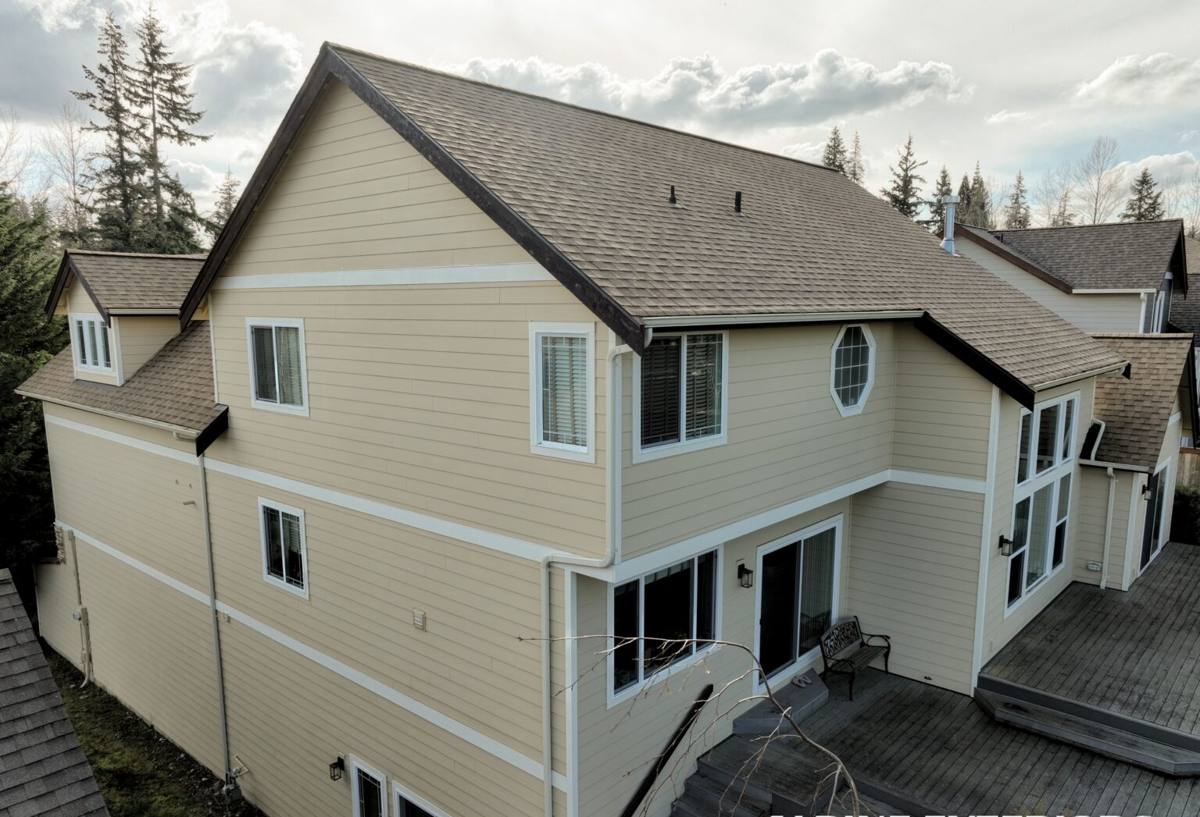
Insert replacement — sometimes called pocket replacement — means the new window is built to fit inside the existing window frame. The old sashes and hardware come out, the old frame stays exactly where it is, and the new unit slides into that opening and gets fastened and sealed to the frame that's already there. The exterior trim, siding, and interior casing around the window are generally left undisturbed.
Why Contractors Like It When It's Appropriate
It's faster, less disruptive to siding and interior finishes, and usually less expensive per opening. For a home where the original wood or vinyl frames are still straight, dry, and structurally sound, insert replacement is a legitimate, honest option — not a corner-cutting one. Many well-built homes in Blaine Road and Point Whitehorn area developments still have perfectly serviceable original framing, even decades in.
Where It Falls Short
Insert replacement only works if what you're inserting into is trustworthy. It doesn't fix rot, doesn't correct an out-of-square opening, and doesn't address failed flashing behind the trim. It also shrinks the glass slightly, since the new frame nests inside the old one — usually a half-inch to an inch of sightline lost on each side, which is noticeable on smaller openings.
What Full-Frame Replacement Actually Is
Full-frame replacement removes the window down to the rough opening — old frame, old sashes, and often the interior and exterior trim as well. That exposes the framing lumber, the sheathing, and critically, the flashing and water management details around the opening. A new window goes in against bare framing, with new flashing, new sealant, and new trim.
Why It's the Right Call More Often Than Homeowners Expect
Full-frame is the only method that lets us actually see and fix what's behind the wall. If there's soft wood, failed caulk joints, or flashing that was never installed correctly to begin with, insert replacement will seal a problem inside the wall instead of solving it. Full-frame costs more and takes longer per window, but it's the method that resets the clock on the whole opening — not just the glass.
The Trade-Off
It disturbs more of the house. Exterior trim and sometimes a course of siding get removed and replaced, interior casing usually needs repainting or restaining, and the work takes longer per opening. On a full house of windows, that adds real time and real cost. It's the right trade when the alternative is covering up a moisture problem.
How to Tell Which One Your Home Actually Needs
You don't need to guess, and you shouldn't have to take a salesperson's word for it either. The honest way to answer this question is to look at the evidence at each opening, since it's common for a single home to need insert replacement on some windows and full-frame on others.
Signs an Opening Needs Full-Frame
- Soft, spongy, or discolored wood at the sill or jambs when pressed with a screwdriver
- Visible daylight, drafts, or water staining around the frame from inside
- Paint that's been bubbling or peeling at the same spot for more than one season
- A frame that's visibly out of square, or a window that's hard to open and close
- Moss or dark streaking on the siding directly below the window, which usually points to water tracking down from a failed seal above
- Any past interior water damage, even if it was "fixed" with paint
Signs Insert Replacement Is a Fair Option
If the frame is dry, square, solid to the touch, the window operates smoothly, and there's no history of leaks or staining, an insert replacement is a reasonable and cost-effective way to upgrade the glass and hardware without opening up the wall. We'll still check flashing and caulking at the exterior before recommending it — an opening can look fine from inside and still have a compromised seal outside.
Why Birch Bay's Climate Changes the Calculus
Whatcom County gets plenty of rain generally, but homes directly along the water in Birch Bay deal with something more specific: wind-driven rain that hits window openings horizontally, not just from above, plus salt air that accelerates corrosion on fasteners, hardware, and unprotected metal flashing. Add a moss season that can stretch from October into spring on north- and west-facing walls, and you have three separate forces working on the same joints and seals year after year.
That combination is exactly why we're more cautious here than a contractor might be inland. A flashing detail that would hold up fine in a drier, calmer climate can fail faster under sustained salt exposure and driving rain. When we find marginal flashing behind an old frame near the water, we're more likely to recommend full-frame replacement — not because insert replacement is inferior everywhere, but because this specific environment doesn't forgive a hidden weak point the way a more sheltered inland home might.
Moss itself doesn't damage a window frame directly, but it holds moisture against siding and trim longer than bare wood would, which extends the amount of time water sits against your window openings after every rain. On older homes near Birch Bay Village and along the waterfront, we routinely find moss buildup as the first visible sign pointing to a moisture issue that started at a window.
Cost Factors: What Actually Drives the Price
Exact numbers depend on window size, count, access, and what we find once we open things up, so we won't quote fake figures here. What we can tell you is what moves the price up or down on either method.
| Factor | Insert Replacement | Full-Frame Replacement |
|---|---|---|
| Labor per opening | Lower — no trim or siding removal | Higher — trim, sometimes siding, is removed and reinstalled |
| Exterior disruption | Minimal | Moderate; expect some siding and trim work around each opening |
| Ability to fix hidden rot or flashing | None — problems stay sealed inside the wall | Full access to inspect and repair |
| Glass size / sightlines | Slightly reduced (new frame nests inside old) | Full original opening size preserved |
| Best fit | Sound, square, dry frames | Any sign of rot, leaks, or an out-of-square opening |
| Interior finish work needed | Little to none | Casing/trim repaint or restain often needed |
On most jobs, the biggest cost driver isn't the method itself — it's how many openings turn out to need full-frame treatment once we get a close look. That's why we inspect before quoting rather than pricing blind off a phone call.
Energy Performance: Does the Method Matter?
Either method, done correctly, can deliver a well-sealed, properly insulated window. The energy performance mostly comes down to the window unit itself — the glass package, the frame material, and how well it's sealed to whatever it's set into. Where the method matters is when insert replacement is used over a frame with a hidden air or moisture path; in that case, no amount of glass upgrade fixes the draft or the slow water intrusion happening around it. That's a durability issue as much as an efficiency one, and it's another reason accurate diagnosis at each opening matters more than the marketing around any particular window brand.
A Straightforward Way to Approach the Decision
You don't need to become an expert in window construction to make a good call here — you need a contractor willing to actually look at each opening instead of quoting a whole-house price sight unseen. Before committing to a method, walk through this with whoever you hire:
- Ask them to check each window's frame condition individually, not assume one method for the whole house
- Ask what they found when they probed the sill and jambs — get specifics, not just "should be fine"
- Ask how existing flashing will be inspected or replaced, especially on any wall that takes direct wind and rain
- Get clarity on which openings (if any) need full-frame versus insert, and why
- Ask what happens to interior and exterior trim and who's responsible for finish work afterward
- Confirm the warranty covers both the window unit and the installation, not just the glass
A contractor who can't answer these specifically, or who pushes one method for every window in the house without inspecting each opening, is guessing — and on a home exposed to Birch Bay's salt air and rain, that's not the kind of guess you want baked into your walls.
Get an Honest Look Before You Decide
Every home along this stretch of Whatcom County coastline ages a little differently depending on exposure, age, and how the original windows were installed. We're happy to come take a straightforward look at your windows, tell you plainly what we find at each opening, and lay out whether insert or full-frame makes sense — no pressure, no upsell script. If you'd like that conversation, use the form below to request a free estimate.