 Birch Bay Window
 Windows in Birch Bay Village Work Harder Than Windows Inland
Birch Bay Village sits close enough to the water that its homes deal with a different set of conditions than a house twenty miles inland in Whatcom County. Salt-laden air off the bay accelerates corrosion on hardware, fasteners, and lower-quality metal components. Driving rain, pushed sideways by wind off the water, tests seals and sill design in ways that calmer inland weather doesn't. And the long, damp moss season here means anything with a horizontal surface — sills, trim, cladding around a window opening — stays wet longer and grows things it shouldn't.
None of that means Birch Bay Village needs exotic materials or gimmicks. It means the basics have to be done right: proper flashing, the correct frame material for a coastal-adjacent environment, and installation details that account for wind-driven moisture instead of assuming it'll shed straight down like it might elsewhere.
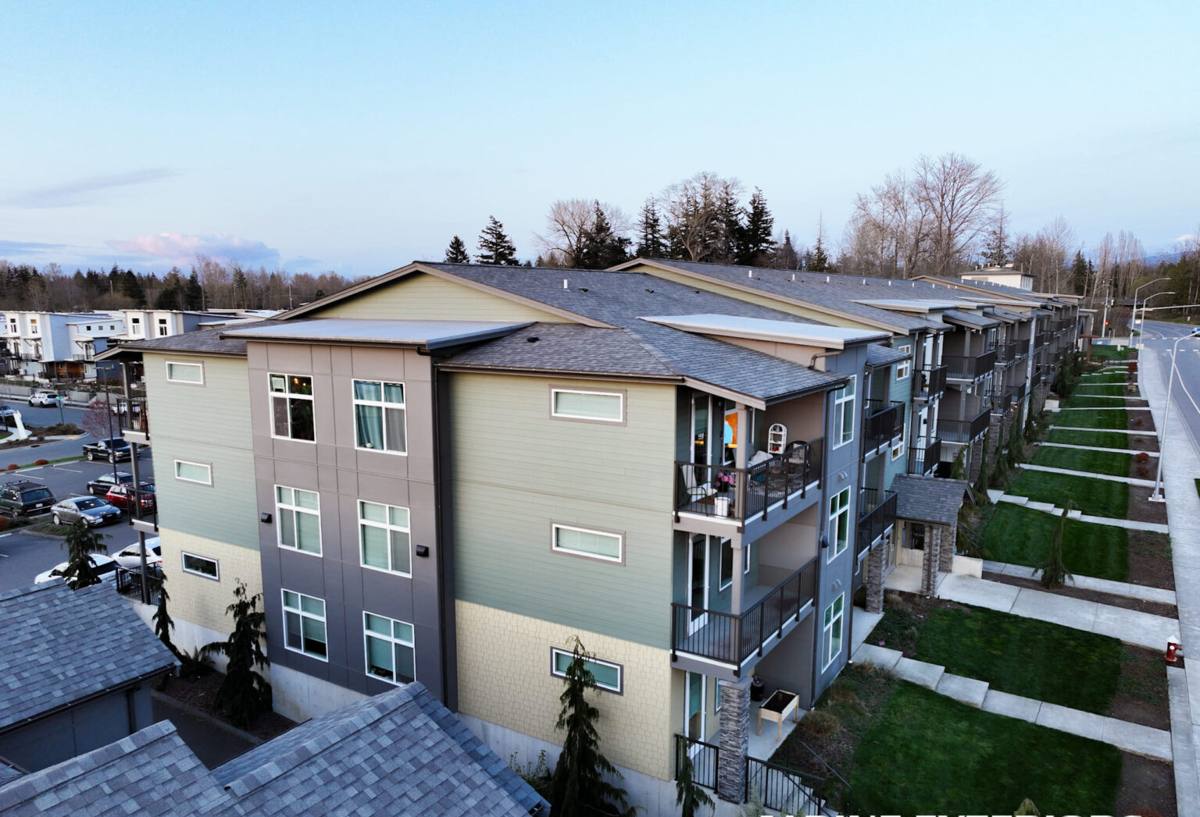
What Correct Window Replacement Actually Involves
A window replacement is not just popping an old sash out and a new one in. Especially in a wet, salt-air environment, most of what determines whether a window performs for twenty years happens before the window itself ever goes into the opening.
The Opening Comes First
Before a new window goes in, the existing opening gets inspected for rot, soft framing, and signs of past water intrusion. In older homes throughout Whatcom County, it's common to find that a window looked fine from the inside for years while moisture was quietly working on the sheathing or framing underneath the old flashing. Replacing the window without addressing that is just covering the problem back up.
Flashing and Water Management
This is the step that matters most in a place like Birch Bay Village. Proper installation uses flashing tape and a drainage plane that directs any water that gets past the window back out — not into the wall cavity. With wind-driven rain coming off the bay, a window that relies only on caulk at the exterior trim line is a window that will eventually leak, usually a few years down the road when the caulk fails and nobody's watching for it.
Air Sealing and Insulation
The gap between the new window frame and the rough opening gets sealed with a low-expansion foam or backer rod and sealant — not stuffed with fiberglass and forgotten. This affects both energy performance and how much moist air can work its way into the wall assembly over time.
Signs a Birch Bay Village Home Needs Window Replacement
Homeowners often wait until a window is obviously failing, but there are earlier signs worth acting on before the damage spreads into the surrounding wall.
- Wood sills or trim that feel soft, spongy, or show dark staining
- Persistent condensation between the panes of a double-pane window (a sign the seal has failed)
- Visible corrosion or pitting on aluminum or steel hardware, common near the water
- Drafts you can feel with a hand near the frame on a windy day
- Difficulty opening, closing, or locking — frames that have swelled, warped, or racked out of square
- Moss or green growth building up on sills or the trim just below a window
- Paint or finish that's peeling specifically around the window opening, not the wall in general
Any one of these on its own might just mean a repair. Several together, especially with visible wood damage, usually means the window and its surrounding trim have been letting water in for a while.
Choosing the Right Frame Material for This Climate
There's no single "best" window material for every home, but some perform more predictably than others in a salt-air, high-moisture environment. The table below reflects how each option tends to hold up, not a ranking of brands.
| Frame Material | Coastal/Moisture Performance | Maintenance | Typical Trade-Off |
|---|---|---|---|
| Vinyl | Does not corrode or rot; handles moisture well | Low — occasional cleaning | Limited color and profile options versus other materials |
| Fiberglass | Very stable in wet, salt-air conditions; minimal expansion/contraction | Low | Higher upfront cost |
| Aluminum | Prone to corrosion and pitting near salt air unless well-coated and maintained | Moderate to high near the water | Slim sightlines, but a maintenance commitment in this location |
| Wood (clad or unclad) | Attractive, but vulnerable where cladding or finish is compromised and moisture reaches the wood | High — finish and caulk need regular attention | Best suited to homes where upkeep is a priority |
For most Birch Bay Village homes, vinyl and fiberglass tend to be the lower-maintenance, more forgiving choices given the salt air and rain exposure. That said, plenty of homes here have wood or clad-wood windows that are performing fine — it comes down to how well they've been maintained and how exposed a given wall is to prevailing wind and rain.
How Our Process Works
1. On-Site Estimate
We look at the actual openings, not just take measurements off a form. That includes checking for existing water damage, noting which walls take the most weather, and talking through what you actually want out of the replacement — energy performance, easier operation, better sound dampening, or simply stopping a leak.
2. Straightforward Quote
You get a quote that lays out window selection, installation approach, and any framing or trim repair we can already see is needed. If we find additional rot once we open things up, we tell you before proceeding, not after the fact.
3. Removal and Opening Prep
Old windows come out carefully to avoid unnecessary damage to surrounding siding or trim. Any soft or damaged framing gets repaired or replaced at this stage — this is the point where it's actually accessible.
4. Installation and Flashing
New windows go in plumb, level, and square, with flashing and sealant sequenced correctly so water sheds outward at every layer, not just at the surface.
5. Interior and Exterior Finish
Trim, caulking, and touch-up work get finished on both sides, and the site gets cleaned up — no leftover materials, no mess for you to deal with.
What Window Replacement Costs Depend On
We're not going to throw out a number that doesn't mean anything without seeing the job, but these are the factors that actually move the price up or down.
| Factor | Why It Matters |
|---|---|
| Number and size of openings | More or larger windows means more material and labor |
| Frame material chosen | Vinyl, fiberglass, and clad-wood carry different price points |
| Condition of the existing opening | Rot or framing repair adds time and material beyond the window itself |
| Window style | Casement, double-hung, and sliders differ in hardware complexity |
| Access | Second-story or hard-to-reach openings take more time and equipment |
| Glass package | Upgraded low-E coatings or gas fills affect both cost and performance |
The only way to get a real number is to have someone look at your specific windows and openings — which is exactly what a free estimate is for.
Why a Crew That Already Works Birch Bay Village Matters
A contractor who works this stretch of Whatcom County regularly already knows what to expect before pulling a single old window. They know which wall orientations tend to see the worst wind-driven rain, what kind of rot patterns show up in homes of a certain age around here, and how much moss buildup is normal versus a sign of a bigger drainage issue. That's not something you can fully substitute with a generic install crew coming from out of the area for a one-off job.
It also matters for follow-up. If a question comes up six months after installation — a squeak, a minor adjustment, a caulk line that needs a touch-up after a hard winter — a local crew is a phone call away, not a drive from somewhere else in the region.
After Installation: Keeping Windows Performing in This Climate
New windows installed correctly need very little upkeep, but a small amount of seasonal attention goes a long way in a wet, salt-air environment.
- Rinse salt residue off exterior frames and glass periodically, especially on walls facing the water
- Keep gutters and downspouts clear so runoff isn't sheeting directly across window openings
- Check exterior caulk lines once a year for cracking or separation
- Remove moss or organic buildup from sills before it holds moisture against the frame
- Operate hardware (locks, cranks, latches) periodically so it doesn't seize from disuse
None of this is intensive, but skipping it is how a well-installed window ends up with an avoidable problem five or ten years down the line.
Get a Free, No-Pressure Estimate
If you're noticing drafts, soft trim, fogged glass, or windows that just don't work like they used to, it's worth having someone take a look before the problem spreads into the surrounding wall. We'll walk your home, tell you honestly what we see, and put together a straightforward estimate — no pressure, no obligation. Use the form below to get started.