 Birch Bay Window
 Windows Built for the Point Whitehorn Coastline
Point Whitehorn sits right up against the salt water of Whatcom County, and that location shapes everything about how a house ages here. Homes on this stretch of coastline take on a different kind of weather than houses even a few miles inland — steady salt-laden air, wind-driven rain that hits window frames sideways instead of straight down, and a damp, shaded season that lets moss and algae take hold on anything that stays wet too long. Windows are one of the first parts of a house to show that wear, because they sit at the seam between conditioned interior space and everything the coast throws at the exterior.
We work on homes throughout Birch Bay and the surrounding Whatcom County coastline, and Point Whitehorn is one of the areas where we see the clearest pattern: window problems here rarely come from one big storm. They come from years of small exposure — salt film building on glass and hardware, moisture working into frame corners, and moss finding a foothold on north-facing trim that never fully dries out between rains.
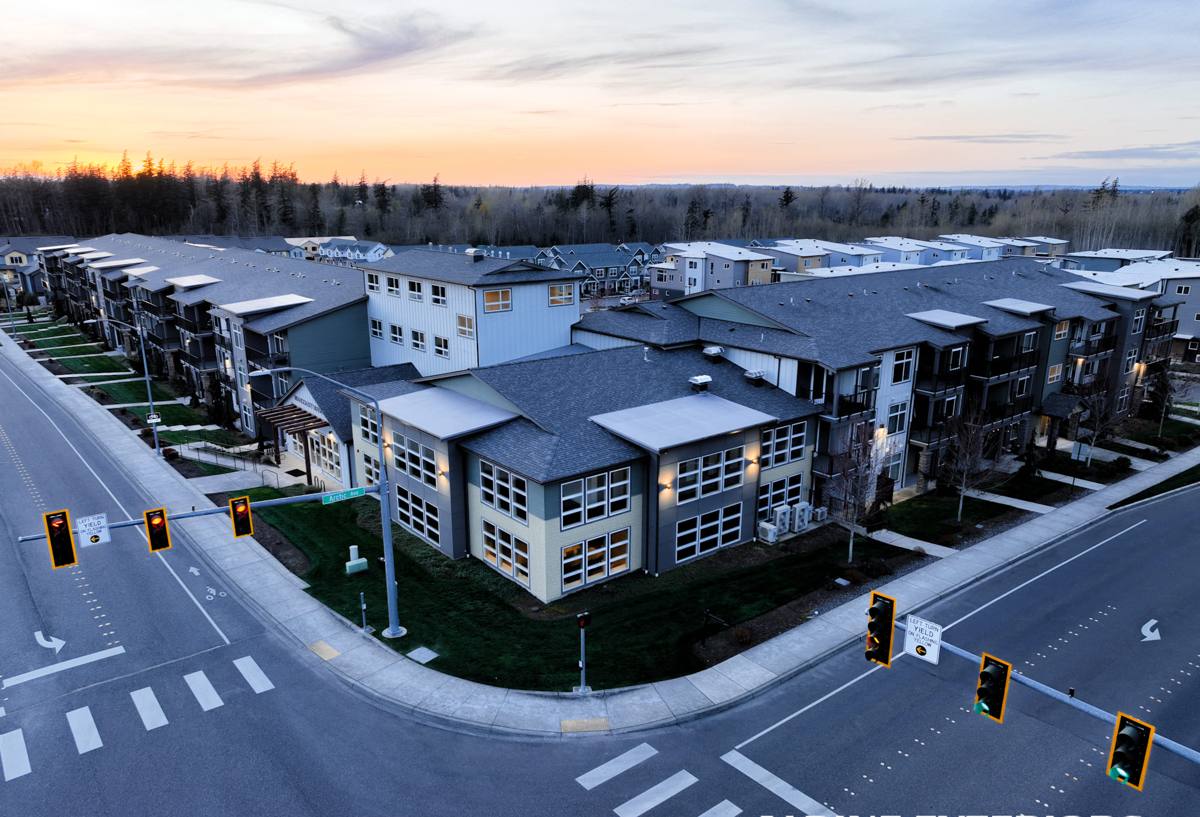
What Salt Air, Rain, and Moss Actually Do to a Window
Salt Air
Airborne salt settles on exterior surfaces and, unlike plain dirt, it holds moisture. On window frames, that means metal hardware — hinges, locks, cranks on older casement windows — corrodes faster than the same parts would inland. Salt film can also etch into unprotected aluminum finishes over time, leaving a dull, pitted look that no amount of cleaning fully reverses.
Driving Rain
Wind off the water doesn't just fall on a window, it pushes against it. That matters at the seams: the joint where the window unit meets the siding, and the caulk lines around the frame. Wind-driven rain finds any gap in that seal and forces water behind the trim, where it can sit against wood framing long after the storm has passed. This is a different failure mode than a typical inland home experiences, where standing water on a windowsill is usually the extent of the problem.
Moss Season
Whatcom County's long wet season, combined with tree cover and north- or west-facing exposures common around Point Whitehorn, creates ideal conditions for moss and algae growth on window trim, sills, and the siding immediately around window openings. Moss holds moisture against the surface it's growing on. On wood trim, that means slow rot underneath a green film that can look almost decorative until you scrape it back.
Signs Your Windows Are Losing the Battle
Most window problems on the coast show up gradually. A few things worth checking on your own before they become bigger repairs:
- Frames that feel soft or spongy when pressed, especially at the bottom corners
- Moss or dark green staining on sills, trim, or the siding just above and below the window
- Hardware — locks, cranks, hinges — that's stiff, corroded, or won't fully latch
- Fogging or a milky haze between double-pane glass, which means the seal has failed
- Drafts or a noticeable temperature difference near the window on windy days
- Peeling or bubbling paint on interior trim near the window, which often signals moisture getting in from outside
- Difficulty opening or closing a window that used to move freely
Any one of these on its own isn't an emergency, but on a coastal home like the ones around Point Whitehorn, they tend to compound. A soft frame corner today is a rot repair in two years if it's left alone.
Choosing Window Materials for This Stretch of Coast
Not every window product on the market handles salt air and driving rain the same way. The table below is a general comparison of how common frame materials tend to perform in this specific environment — it's meant as a starting point for a conversation, not a universal ranking, since installation quality matters as much as material choice.
| Frame Material | Coastal Performance | Maintenance Considerations |
|---|---|---|
| Vinyl | Does not corrode from salt; handles moisture well when properly installed | Low upkeep; check seals and weep holes periodically |
| Fiberglass | Very stable in temperature swings and moisture; strong seam integrity | Low upkeep; higher upfront cost |
| Wood | Warm appearance but more vulnerable to rot if trim and sealing aren't kept up | Requires regular paint/finish maintenance, especially on north-facing exposures |
| Aluminum | Can pit or corrode over time from salt exposure unless it has a marine-grade or well-protected finish | Periodic hardware and finish inspection recommended |
| Wood-clad | Exterior cladding protects the wood core from direct weather | Cladding seams need periodic inspection where it meets the frame |
For most homes in this area, we lean toward vinyl or fiberglass frames on the exposed, water-facing sides of a house, because they hold up against salt and moisture with the least ongoing attention. Where a homeowner wants the look of wood, we talk through the added maintenance commitment honestly rather than glossing over it — a wood window on an exposed elevation near the water is a bigger commitment than the same window set back and sheltered.
Repair or Replace? What We Actually Look At
Not every problem window needs full replacement. When we're out at a Point Whitehorn property, the decision usually comes down to a few factors:
| Factor | Leans Toward Repair | Leans Toward Replacement |
|---|---|---|
| Frame condition | Solid, no soft spots | Soft, rotted, or structurally compromised |
| Glass seal | Clear, no fogging | Fogged or failed insulated glass unit |
| Hardware | Sticky but functional | Broken, corroded beyond adjustment |
| Age of unit | Newer, still under warranty terms | Older, original to the home |
| Water intrusion history | None found behind trim | Evidence of past leaks into wall framing |
We'll always tell you when a repair is the honest answer, even if replacement would be the bigger job. A window that's structurally sound but has a corroded lock or a failed seal often just needs that specific component addressed.
How Our Window Replacement Process Works
- On-site assessment. We look at the window itself, but also the trim, flashing, and siding around it, since problems in one area often trace back to another.
- Product recommendation. Based on the window's exposure — direct salt air and wind versus a more sheltered wall — we recommend frame material and glass options suited to that specific spot on the house.
- Flashing and weatherproofing. This is the step that matters most on the coast. A window is only as good as the seal and flashing detail around it, and we pay particular attention to getting water diverted away from the frame rather than trapped behind it.
- Installation. We remove the old unit, inspect the framing underneath for hidden rot or moisture damage, repair it if needed, and set the new window with proper sealant and flashing.
- Final check. We test operation, confirm the seal, and walk the homeowner through basic care specific to their new windows.
Why a Local Crew Matters Here
A crew that works across Birch Bay and the broader Whatcom County coastline day in and day out knows which details actually matter on a Point Whitehorn home versus a house set back from the water. That's not a marketing point — it changes real decisions, like how much attention a west-facing window seam gets versus one on a sheltered interior wall, or which frame finishes are worth the extra cost given how much salt exposure a particular elevation actually sees.
It also means we're not guessing at how the region's weather behaves. We've seen how a wet Whatcom County fall and winter treat unsealed trim, and we build our installation approach around that reality rather than a generic install method that works fine somewhere drier.
Windows Are Part of the Whole Exterior
Window problems on a coastal home rarely exist in isolation. The same salt air, rain, and moss that wear on window frames also affect the siding around them, the roof above, and any decking exposed to the same conditions. Because our crew handles siding, roofing, windows, and decks, we can look at a window issue in the context of the whole exterior — for example, noticing that moss buildup around a window opening is part of a larger pattern on that side of the house, or that a leak showing up near a window is actually originating from a roofline detail above it. That broader view tends to catch problems earlier and avoid treating symptoms instead of causes.
Keeping Windows in Good Shape Between Visits
A little homeowner maintenance goes a long way on the coast. A few habits worth building into your seasonal routine:
- Rinse salt film off exterior glass and frames periodically, especially after storms
- Gently brush or rinse moss off sills and trim before it spreads, rather than letting it sit through a wet season
- Check that weep holes (small drainage openings at the base of the frame) aren't clogged with debris
- Lubricate hardware on operable windows once or twice a year to slow corrosion
- Watch interior trim near windows for early signs of paint bubbling or softness after heavy rain
None of these take long, but they're the kind of small maintenance that keeps a coastal window performing for its full expected lifespan instead of failing early.
Get a Free, No-Pressure Estimate
If you're noticing drafts, fogged glass, moss on the trim, or windows that just don't operate the way they used to, it's worth having a local crew take a look before small issues turn into bigger repairs. We're happy to walk your Point Whitehorn property, point out what we actually see, and give you honest options — no pressure, no upsell. Use the form below to request a free estimate.