 Birch Bay Window
 Board & Batten Siding in Custer's Climate
Custer sits close enough to Birch Bay and the Salish Sea that homes here take on a specific mix of weather stress: salt-laden air drifting off the water, long stretches of driving rain through fall and winter, and a moss season that can run nearly nine months out of the year in shaded, north-facing exposures. Board and batten siding is a popular choice for homes in this part of Whatcom County because the vertical lines shed water cleanly and the style reads well on both farmhouse-style properties and newer builds. But the style only performs as well as the material and installation behind it, and this is where a lot of board and batten jobs in wetter coastal areas start to show problems within five to ten years.
The core issue isn't the look of board and batten — it's what happens behind the boards. Vertical siding creates more seams, more fastener penetrations, and more places for water to find its way to the substrate than a horizontal lap profile does. In a climate that delivers sustained wind-driven rain off the water and long damp shoulder seasons, those details matter more than they would in a dry inland climate. Get the water management wrong and you're looking at moisture intrusion, rot at the battens, and premature paint failure. Get it right, and board and batten is one of the most durable, attractive sidings you can put on a Custer home.
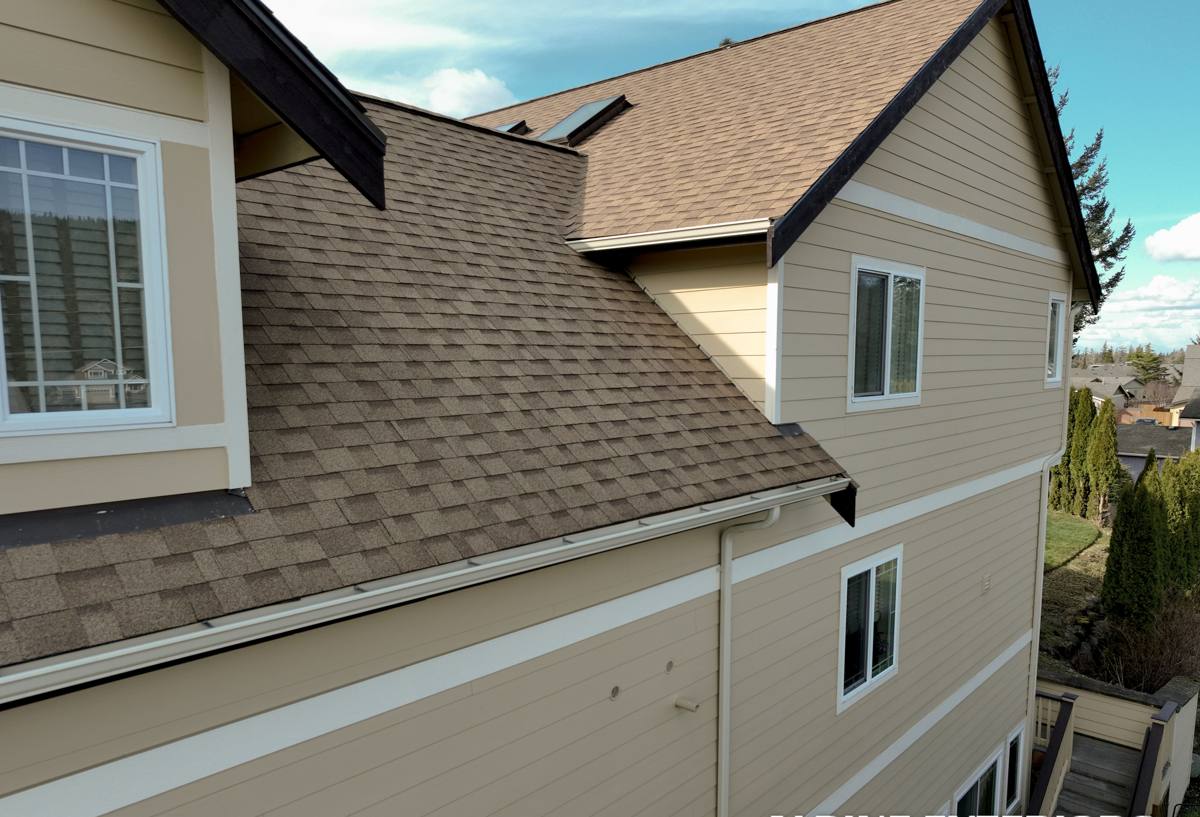
What a Correct Board & Batten Installation Actually Requires
Board and batten is a system, not just a panel. A correct installation for this climate includes several layers working together, and skipping any one of them is where failures start.
Water-Resistive Barrier and Drainage Plane
Every board and batten job we do starts with a properly lapped weather-resistive barrier and a drainage gap behind the siding. In a region that sees as much sustained rainfall as Whatcom County, incidental moisture behind the cladding is not a hypothetical — it's a certainty over the life of the house. The question is whether that moisture has a path to drain and dry, or whether it sits against the sheathing. We install furring or a purpose-built drainage mat behind vertical siding specifically to give water somewhere to go.
Fastening and Batten Placement
The batten strips need to land over solid backing, spaced and fastened to manufacturer specification, with corrosion-resistant fasteners driven to the correct depth — not overdriven, which crushes the fiber cement and opens a path for water at the fastener head. Batten spacing that ignores panel expansion and contraction, or that's fastened through the panel without hitting framing, is one of the most common shortcuts we see when we're asked to look at a failing board and batten job.
Flashing at Every Penetration
Windows, doors, hose bibs, light fixtures, and any other penetration through vertical siding need proper flashing integrated with the water-resistive barrier — installed shingle-style so water is directed out and down, never trapped behind the siding. This is especially important on the sides of a home that face prevailing weather, which in this area often means exposures that catch wind off the bay directly.
Caulking and Sealant Discipline
Vertical board and batten has more butt joints and trim intersections than lap siding, and every one of them is a decision point: does it get caulked, does it get flashed, or is it designed to be left open for drainage? Sealing the wrong joint traps water; leaving the wrong joint open lets wind-driven rain in. This is a detail that separates a crew that's installed board and batten dozens of times in coastal Whatcom County from one that's mostly done inland or drier-climate work.
Why We Install James Hardie for Board & Batten — and Not the Alternatives
Board and batten is available in several materials, and we get asked regularly why we only offer it in James Hardie fiber cement rather than vinyl board and batten panels, LP SmartSide, or traditional cedar boards. Each of those products has honest trade-offs worth understanding.
Cedar
Real cedar board and batten looks beautiful when it's new, and it's a traditional choice in the Pacific Northwest for good reason. But cedar is also the material most vulnerable to the exact conditions Custer sees most: sustained dampness, salt air, and long moss seasons. Cedar demands a real maintenance commitment — refinishing on a cycle, moss and mildew treatment, and vigilance about split or cupped boards — and homeowners who fall behind on that maintenance see rot set in faster than they expect.
Vinyl Board and Batten
Vinyl is the least expensive option and requires little maintenance, but it's also the least durable in a climate with real temperature swings and constant moisture exposure. Vinyl expands and contracts more than fiber cement, seams can separate over time, and impact damage or UV fading isn't repairable — the panel gets replaced. It's also not a material we consider a good long-term investment for the wetter, harsher-than-average coastal exposure homes in this area get.
LP SmartSide
LP SmartSide is an engineered wood product, and like any wood-based siding, its long-term performance depends heavily on end cuts and edges staying sealed and painted. In a region where board and batten seams and battens create more exposed edges than lap siding, that maintenance sensitivity is magnified. We've made a standing decision not to install engineered wood siding, in board and batten or any other profile, because we don't want to build a warranty relationship around a product whose failure mode is so dependent on ongoing homeowner upkeep in exactly the climate that punishes lapses hardest.
James Hardie Fiber Cement
Hardie's fiber cement is non-combustible, doesn't rot, and is manufactured with HZ5 formulations engineered for wetter climate zones like ours. The ColorPlus factory finish is baked on under controlled conditions rather than field-applied, which means better adhesion and color consistency than site-painted alternatives — and it comes with its own finish warranty backing it. For board and batten specifically, Hardie's panel and trim system is designed as a matched assembly, so the panels, battens, and fasteners are engineered to work together rather than being pieced together from separate product lines.
Comparing Board & Batten Materials for This Climate
| Material | Moisture Resistance | Maintenance | Typical Lifespan Here | Salt Air Performance |
|---|---|---|---|---|
| James Hardie Fiber Cement | Excellent — non-combustible, won't rot | Low — repaint cycle only | 30+ years | Strong, factory-cured finish |
| Cedar | Fair — absorbs moisture without upkeep | High — regular refinishing, moss treatment | 15-25 years with diligent care | Vulnerable without maintenance |
| Vinyl Board & Batten | Good but seams can fail | Low | 15-20 years | Can become brittle over time |
| LP SmartSide | Fair — edge and cut-end sensitive | Moderate to high | 20-25 years with upkeep | Requires diligent sealing |
Our Installation Process for Custer Homes
We treat every board and batten job in this area the same methodical way, because the climate doesn't give you a second chance on the details that are hidden behind the siding.
- On-site assessment. We walk the home, note prevailing weather exposure, existing moisture damage, and any problem areas around windows, trim, and grade clearance.
- Substrate check and repair. Any damaged sheathing or framing found during tear-off gets repaired before a single course of siding goes up — covering rot with new siding just delays the problem.
- Water-resistive barrier and drainage plane installation. Properly lapped, taped, and furred out to give incidental moisture a way to drain and dry.
- Flashing at every penetration. Windows, doors, and fixtures get flashed to shed water outward before any panel material goes on around them.
- Panel and batten installation to manufacturer spec. Correct fastener type, spacing, and depth, with battens landing on solid backing.
- Trim, caulking, and finish detail. Sealed where sealing is correct, left open where drainage requires it — not a one-size-fits-all approach to every joint.
- Final walkthrough. We review the finished work with the homeowner and explain what maintenance, if any, the specific product and color will need going forward.
What to Check Before Board & Batten Installation
- Is the water-resistive barrier lapped correctly and is there a drainage gap behind the panels?
- Are fasteners corrosion-resistant and driven to the depth the manufacturer specifies?
- Is flashing integrated at every window, door, and penetration — not just caulked over?
- Are battens landing on solid framing rather than fastened through panel alone?
- Does the crew know which joints should be sealed and which should be left to drain?
- Is there adequate clearance between the bottom of the siding and grade or hardscape?
- Does the material carry a real manufacturer warranty, and is it transferable if you sell the home?
Maintenance and Longevity in Whatcom County Conditions
Even the right material needs the right ongoing care, though the burden is far lighter with fiber cement than with wood-based alternatives. In this climate, the maintenance items that matter most are keeping gutters clear so water doesn't sheet down the face of the siding, rinsing accumulated grime and moss spores off north-facing and shaded walls once or twice a year, and keeping an eye on caulked joints at trim intersections since sealants are the first thing to age in any siding system. James Hardie's factory finish holds color far longer than field-applied paint, which means repainting isn't a recurring cycle the way it is with cedar — but it isn't a "never touch it again" product either. A home in Custer that gets even basic seasonal attention to gutters and drainage will get decades out of a correctly installed Hardie board and batten system.
Cost Factors for Custer Board & Batten Projects
Every home is different, so we don't quote a number without seeing the site, but the factors that most often move a board and batten estimate up or down are consistent from job to job.
| Factor | Why It Matters |
|---|---|
| Tear-off vs. new construction | Removing existing siding and repairing any hidden substrate damage adds labor before new material goes up |
| Wall complexity | Dormers, gables, and multiple wall planes increase cutting, trim, and flashing work |
| Trim and batten detail level | Wider trim packages and tighter batten spacing add material and labor |
| Color selection | ColorPlus factory finishes vs. field painting affect both cost and long-term maintenance |
| Access and site conditions | Slope, landscaping, and staging area affect how efficiently a crew can work |
Why a Crew That Already Works Custer Matters
Board and batten in this specific stretch of Whatcom County isn't the same job as board and batten in a drier or more sheltered part of the state. A crew that already works Custer and the surrounding Birch Bay area knows which exposures take the brunt of driving rain off the water, which walls stay shaded long enough to grow moss even with decent drainage, and how salt-laden air factors into fastener and flashing choices over the long run. That local pattern recognition shows up in decisions made before the first panel goes up — where extra flashing attention goes, how the drainage plane is detailed, which walls get closer attention to batten spacing — not in anything a homeowner would necessarily see on day one, but in whether the siding is still performing well ten and twenty years later.
We stand behind board and batten installations with the manufacturer's product warranty plus our own workmanship guarantee, and we're a phone call away if a Custer homeowner ever has a question about how their siding is holding up.
If you're considering board and batten siding for a home in Custer or anywhere around Birch Bay, we're happy to walk the property, talk through what your specific exposures need, and put together a straightforward, no-pressure estimate using the form below.