 Birch Bay Window
 Cherry Point's Roofs Take a Different Kind of Beating
Cherry Point sits close enough to the water that salt air is a constant, not an occasional visitor. Combine that with the wind-driven rain that rolls in off the Strait and the heavy tree cover common throughout this stretch of Whatcom County, and you get a roofing environment that's genuinely tougher than what you'd find twenty minutes inland. Salt-laden air accelerates corrosion on exposed metal fasteners and flashing. Wind-driven rain finds gaps that a straight-down rainstorm never would. And the long, damp shoulder seasons here give moss and algae months to get established before a hot, dry stretch ever shows up to slow them down.
None of this means Cherry Point homes need exotic materials or gimmicks. It means the fundamentals — tear-off, decking, underlayment, flashing, and ventilation — have to be done right, with products and details chosen for this specific climate rather than a generic spec sheet. That's the difference between a roof that looks fine for five years and one that actually performs for its full expected life.
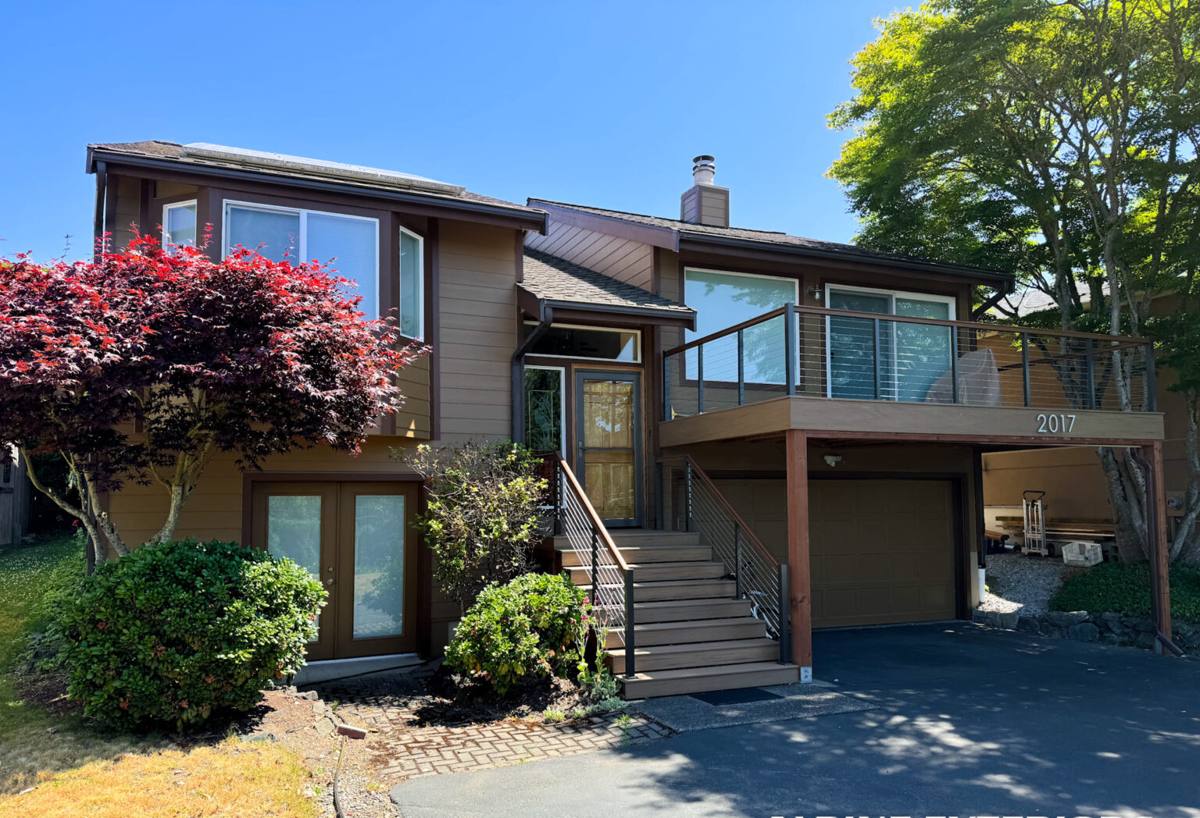
Signs a Cherry Point Roof Is Ready for Replacement
Roofs in this area rarely fail all at once. They give warning signs for a season or two before a leak actually shows up inside the house. Worth checking for, especially if your roof is past the fifteen-year mark:
- Granules collecting in gutters or at downspout outlets — a sign the shingle surface is wearing thin
- Shingles that are cupping, curling at the edges, or visibly cracked
- Thick moss growth along the north-facing slopes or shaded valleys, especially where it's lifting shingle edges
- Dark streaking (algae) that keeps coming back within a season or two of cleaning
- Soft spots or slight sagging when walked or viewed from a ladder
- Rusting or lifting flashing around chimneys, skylights, and roof-to-wall transitions
- Daylight visible through the attic roof deck, or damp insulation after a windy rainstorm
- Multiple past repairs in different spots rather than one contained problem area
Any one of these on its own might just need a repair. Several at once, especially combined with a roof's age, usually means repair spending has stopped being the economical choice.
What a Correct Replacement Actually Involves
Tear-Off and Deck Inspection
We remove the old roofing down to bare decking rather than layering over it. That's the only way to actually see the plywood or plank sheathing underneath — soft, delaminated, or water-stained decking has to be replaced before anything new goes down, and you can't know that's needed until the old material is off. Covering a compromised deck with new shingles just hides the problem for a while.
Underlayment and Water Protection
Given how much wind-driven rain this area sees, underlayment choice matters more here than it would somewhere drier. Self-adhered ice-and-water membrane at eaves, valleys, and roof penetrations gives a second line of defense in the spots most likely to take on water sideways, backed by a synthetic underlayment across the rest of the field.
Flashing Details
Flashing failures — not worn-out shingles — are the most common source of the leaks we actually get called out for. Chimneys, skylights, dormers, and any place a roof plane meets a wall need new, properly lapped flashing as part of a replacement, not a reuse of whatever was there before. Salt air is hard on cheap or thin flashing metal, so material choice here isn't cosmetic.
Ventilation
An attic that can't breathe traps moisture underneath the new roof, which shortens its life no matter how good the shingles are. Balanced intake and exhaust ventilation is part of a correct replacement, not an upsell — it also happens to be one of the better tools against moss, since a cooler, drier roof deck holds less of the damp organic buildup moss needs to take hold.
Choosing a Roofing Material for This Climate
There's no single "best" roofing material — the right call depends on your budget, your roof's pitch and exposure, and how much long-term maintenance you're willing to keep up with. Here's how the common options actually compare for a home dealing with salt air and a long moss season:
| Material | Moisture & Salt-Air Behavior | Moss Resistance | Typical Lifespan | Maintenance |
|---|---|---|---|---|
| Architectural asphalt shingle | Good, with proper underlayment and flashing | Moderate — benefits from periodic cleaning | 25–30 years | Moderate — gutter and moss upkeep |
| Standing seam metal | Excellent when properly coated and fastened | High — sheds moisture quickly, little for moss to grip | 40–50+ years | Low, aside from fastener checks over time |
| Synthetic/composite shingle | Very good — engineered to resist moisture absorption | Moderate to high depending on product | 30–50 years | Low to moderate |
We install and stand behind all three categories, and we'll walk you through the honest trade-offs for your specific roof rather than steering you toward whatever is easiest for us to install. Higher upfront cost for metal or composite often pencils out over the life of the roof in this climate, but a well-installed architectural shingle roof is still a solid, proven choice for plenty of Cherry Point homes.
Moss and Algae: Prevention Beats Cleaning
Moss doesn't just sit on a roof looking bad — its root structures work under shingle tabs and hold moisture against the deck, which is exactly what shortens a roof's life in a climate like this one. Pressure washing an old roof to remove moss is a short-term fix at best, and done wrong it can strip granules and cause more damage than the moss itself.
During a replacement, we build in prevention rather than relying on future cleanings: proper ventilation to keep the deck cooler and drier, attention to any tree cover that's keeping a slope shaded and damp longer than it should be, and, where it fits the material and the homeowner's preference, zinc or copper strips near the ridge that release trace metal ions with every rain to slow regrowth. None of this makes a roof moss-proof forever, but it meaningfully stretches the time between cleanings.
Our Process, Start to Finish
- On-site inspection — we get on the roof (not just a look from the ground) and check the deck, flashing, ventilation, and any problem areas before quoting anything
- Straightforward estimate — a written quote that spells out material, scope, and what's included, with no vague allowances
- Material selection — we walk through the real trade-offs for your roof and budget rather than pushing one product
- Scheduling around weather — we plan tear-off days around forecasted dry windows, since an open roof deck and a Whatcom County rainstorm don't mix
- Tear-off and deck repair — full removal, deck inspection, and replacement of any compromised sheathing
- Installation — underlayment, flashing, ventilation, and roofing material installed to manufacturer spec and local code
- Cleanup and final walkthrough — magnetic nail sweep, debris haul-off, and a walkthrough so you can see the finished work before we consider the job done
Why a Crew That Already Works Cherry Point Matters
Roofing crews that mostly work inland don't always account for how differently a shoreline-adjacent roof in Whatcom County ages. A roof pitch and flashing detail that holds up fine forty minutes from the water can underperform here once salt air and driving rain are part of the equation. A crew that's replaced roofs on this stretch of coastline already knows which details deserve extra attention on a Cherry Point home, understands the local permitting process, and isn't learning the area's weather patterns on your job.
There's also a practical side to hiring local: warranty service, follow-up questions, and any issue that comes up after the fact are a lot easier to resolve with a crew that's a short drive away rather than one that has to schedule a special trip back out to Birch Bay.
What Affects the Cost
Every roof is different, so we won't put a number on your project without seeing it, but the main factors that move the price on a replacement here are consistent:
- Roof size and the number of planes, valleys, and penetrations
- Roof pitch and how much staging or safety equipment steep sections require
- Whether the deck needs partial or full replacement once the old roofing comes off
- Material choice — asphalt, metal, or composite carry different material and labor costs
- Access — tree cover, tight lot lines, or limited driveway space can affect setup and disposal
- Extent of moss or moisture damage found once tear-off begins
We'd rather give you a number based on an actual look at your roof than a rough estimate that changes once we're up there. If you're weighing repair against replacement, or just want an honest read on where your roof stands, we're glad to come take a look. The estimate is free, there's no pressure attached to it, and you can use the form below to get started.