 Birch Bay Window
 Windows Built for a Waterfront Neighborhood, Not a Catalog
Cottonwood Beach sits close enough to the water that its houses take a different kind of beating than homes a few miles inland. Salt-laden air, wind-driven rain that finds its way sideways under eaves, and a moss season that stretches longer than most homeowners expect all work on window frames, seals, and glazing year-round. A window that performs fine in a sheltered inland neighborhood in Whatcom County can fail early here — not because it was a bad product, but because it wasn't matched to this specific exposure.
"Custom" in this context doesn't mean fancy shapes or luxury upgrades. It means selecting frame material, glazing package, hardware, and installation details specifically because of where the house sits relative to wind and moisture, not just picking whatever size fits the existing rough opening. That distinction is the difference between windows that look right for a season and windows that hold up for decades.
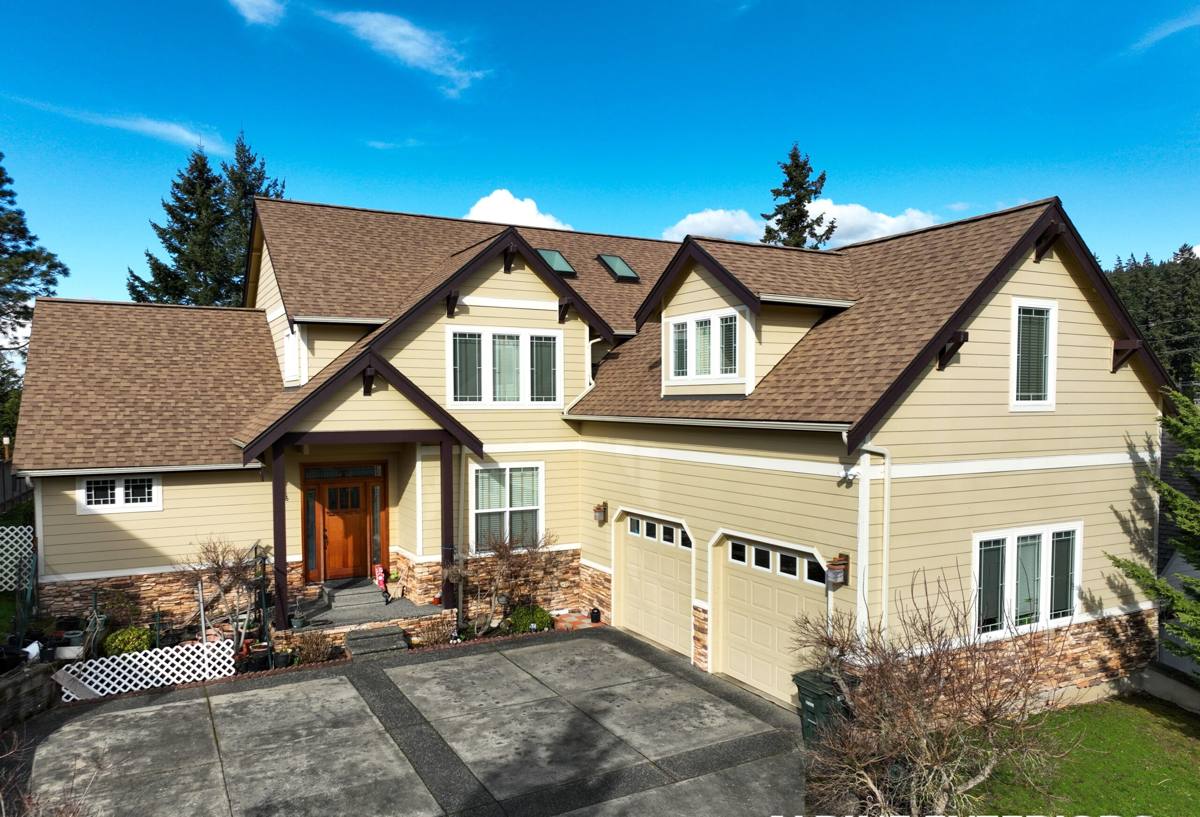
What Salt Air, Driving Rain, and Moss Season Actually Do to Windows
Salt Air
Airborne salt is corrosive to exposed metal hardware — hinges, locks, balance systems, and screen frames — and it accelerates the breakdown of certain sealants and finishes over time. On a Cottonwood Beach home, that corrosion shows up first on the pieces you touch every day: a lock that starts sticking, a crank that gets stiff, a screen frame that pits and discolors faster than it would a few miles away from the water.
Driving Rain
Wind off the water doesn't just fall on a window — it drives rain sideways and pressures it into any gap in the flashing, sill pan, or perimeter seal. A window installed with inland-standard flashing details can look fine from outside for a year or two while moisture is already working its way into the wall cavity behind it. By the time staining or soft trim shows up on the interior, the damage has usually been building for a while.
Moss Season
Whatcom County's long, damp stretch of the year keeps north-facing and shaded window surfaces wet longer than homeowners in drier climates ever have to think about. Moss and algae take hold in any spot where water sits — clogged weep holes, worn sill drainage, or gaps in exterior caulking — and once established, they hold moisture against the frame and trim, which speeds up rot in wood components and finish failure on painted surfaces.
What a Correct Custom Window Job Involves Here
A window replacement done right for this kind of exposure covers more than swapping out glass. The details that matter most in a driving-rain, salt-air environment are usually the ones a homeowner never sees once the trim goes back on.
- Accurate field measurement of each opening — older Whatcom County homes are rarely perfectly square, and a custom-sized unit avoids the shims and gaps that become future leak paths.
- Sill pan flashing that directs any water that does get past the window back outside, rather than letting it pool at the base of the frame.
- Correctly lapped weather-resistive barrier and flashing tape integrated with the existing wall assembly, not just caulked over it.
- Working weep holes so the frame can drain, cleared and checked during installation rather than assumed to be fine.
- Corrosion-resistant hardware selected for coastal exposure rather than standard-grade hinges and locks.
- Proper interior and exterior sealant matched to the siding and trim material, applied in a continuous bead with no gaps.
Frame and Glazing Choices That Hold Up on This Coast
There's no single "best" window material for every home — the right choice depends on sun exposure, wind direction, maintenance appetite, and budget. What matters is picking with the local climate in mind rather than by price alone.
| Frame Material | Salt Air / Moisture Behavior | Maintenance | Typical Lifespan |
|---|---|---|---|
| Vinyl | Won't corrode or rot; UV-stable finishes hold color well near the water | Low — occasional cleaning | 20–30+ years |
| Fiberglass | Excellent dimensional stability in temperature swings; resists moisture damage | Low | 30–40+ years |
| Aluminum | Strong but prone to pitting/corrosion in salt air unless properly coated | Moderate | 20–30 years |
| Wood / Wood-clad | Handsome, but bare wood is vulnerable to driving rain and moss growth without diligent upkeep | High | Varies widely with maintenance |
For glazing, a dual-pane or triple-pane unit with low-E coating and an argon or krypton gas fill is standard practice for this climate — it cuts heat loss, reduces condensation on the interior glass surface, and holds up to the temperature swings between damp mornings and clear afternoons that are typical along this stretch of Whatcom County coastline. Warm-edge spacer systems also matter more here than in drier inland climates, since they reduce the condensation that can otherwise feed mold growth at the edge of the glass.
Hardware and Finish Details
Locks, hinges, and balance mechanisms should be rated for coastal or marine-grade exposure whenever the home is close enough to the water to catch salt spray on windy days. Exterior finishes — whether factory-applied vinyl color, powder-coated aluminum, or clad wood — should be chosen for UV and moisture resistance rather than appearance alone, since a finish that chalks or fades quickly in this environment becomes a maintenance problem within a few years.
Our Process for a Cottonwood Beach Window Project
1. On-Site Assessment
We start by looking at each opening in context — sun and wind exposure, existing signs of moisture intrusion, condition of the surrounding siding and trim, and how the current windows have actually performed. This is also when we check for soft framing or hidden rot around the opening, since that has to be addressed before a new window goes in, not discovered after.
2. Product Selection
Based on that assessment, we recommend frame material, glazing package, and hardware suited to the specific exposure of that wall — a west-facing wall catching wind off the water gets different treatment than a sheltered side yard.
3. Precise Measurement and Ordering
Every window is measured to the actual opening, not assumed from a stock size. This avoids the shimming and gap-filling that creates weak points in the weather seal down the line.
4. Removal and Flashing Correction
Old units come out carefully so we can inspect the opening, correct any existing flashing or sheathing issues, and install a proper sill pan and flashing sequence before the new window ever goes in.
5. Installation and Sealing
The new window is set, shimmed square and plumb, fastened per manufacturer specification, and sealed on both the exterior and interior with the correct materials for the siding and trim involved.
6. Final Inspection and Cleanup
We check operation, look for square and even reveals, confirm weep holes are clear, and walk the job with the homeowner before we consider it finished.
Signs Your Current Windows Are Losing the Fight
Homeowners in this neighborhood often live with small warning signs for years before deciding to replace windows — usually because none of them seem urgent on their own. Taken together, they tell a clearer story.
- Visible condensation or fogging between the panes, not just on the surface — a sign the seal has failed.
- Locks, cranks, or latches that have become stiff, corroded, or hard to operate.
- Soft or discolored trim and sill material around the window opening.
- Moss or dark staining that keeps returning on the frame or sill no matter how often it's cleaned.
- Noticeable draft or temperature difference near the window on windy days.
- Paint or finish that's chalking, peeling, or bubbling faster than it should.
- Difficulty opening or closing windows that used to move smoothly.
Any one of these can be a minor fix. Several at once, especially on a wall that takes direct wind off the water, usually points to windows that are past the point where repair makes sense.
Why Local Experience Matters for This Kind of Work
A window crew that mostly works drier, more sheltered neighborhoods can still do competent work — but they're often making judgment calls about flashing details, hardware grade, and glazing package on the fly, because it's not what they see every day. A crew that regularly works Cottonwood Beach and the rest of the Birch Bay area already knows which walls take the worst of the weather, what water-management details actually hold up here, and which shortcuts show up as callbacks two winters later. That familiarity shows up in fewer surprises during installation and windows that perform the way they're supposed to for the long haul, not just the first dry summer.
Cost Factors Worth Understanding Up Front
Every project is different, but the same variables tend to drive price on custom window jobs in this area:
| Factor | Why It Matters |
|---|---|
| Number and size of openings | Larger and more numerous windows increase material and labor directly |
| Frame material chosen | Vinyl, fiberglass, aluminum, and wood-clad carry different material costs and lifespans |
| Existing wall condition | Rot or moisture damage found during removal adds repair scope before installation can proceed |
| Glazing package | Double vs. triple pane, low-E coatings, and gas fills affect both price and long-term performance |
| Access and wall height | Second-story or hard-to-reach openings take more time and equipment |
We walk through these factors during the on-site visit so there are no surprises once a quote is put together — and so the choices reflect how exposed that particular wall actually is, rather than a flat, one-size price.
If you're weighing whether your Cottonwood Beach home's windows need attention, or you're ready to plan a replacement before the next wet season sets in, we're happy to take a look and put together a straightforward, no-pressure estimate — just fill out the form below.