 Birch Bay Window
 Building Decks for Bellingham's Coastal Climate
Bellingham sits along the Salish Sea in Whatcom County, and homes here deal with a specific mix of weather that most decking materials and generic build methods were never designed for. Salt-laden air drifts in off the water and accelerates corrosion on anything metal. Driving rain, often pushed sideways by wind, finds its way into joints and end-grain that a calmer climate would never test. And a long moss season, sometimes stretching from early fall clear through spring, turns shaded or poorly drained deck surfaces slick and green faster than most homeowners expect. A deck built without those three factors in mind will usually look fine for a season or two, then start showing problems all at once.
Custom deck work in this area needs to start with the climate, not just the design. That means thinking about drainage, material selection, and hardware before a single board goes down, and it's the reason a deck built for a Bellingham home should look different, in the details, from one built somewhere dry and inland.
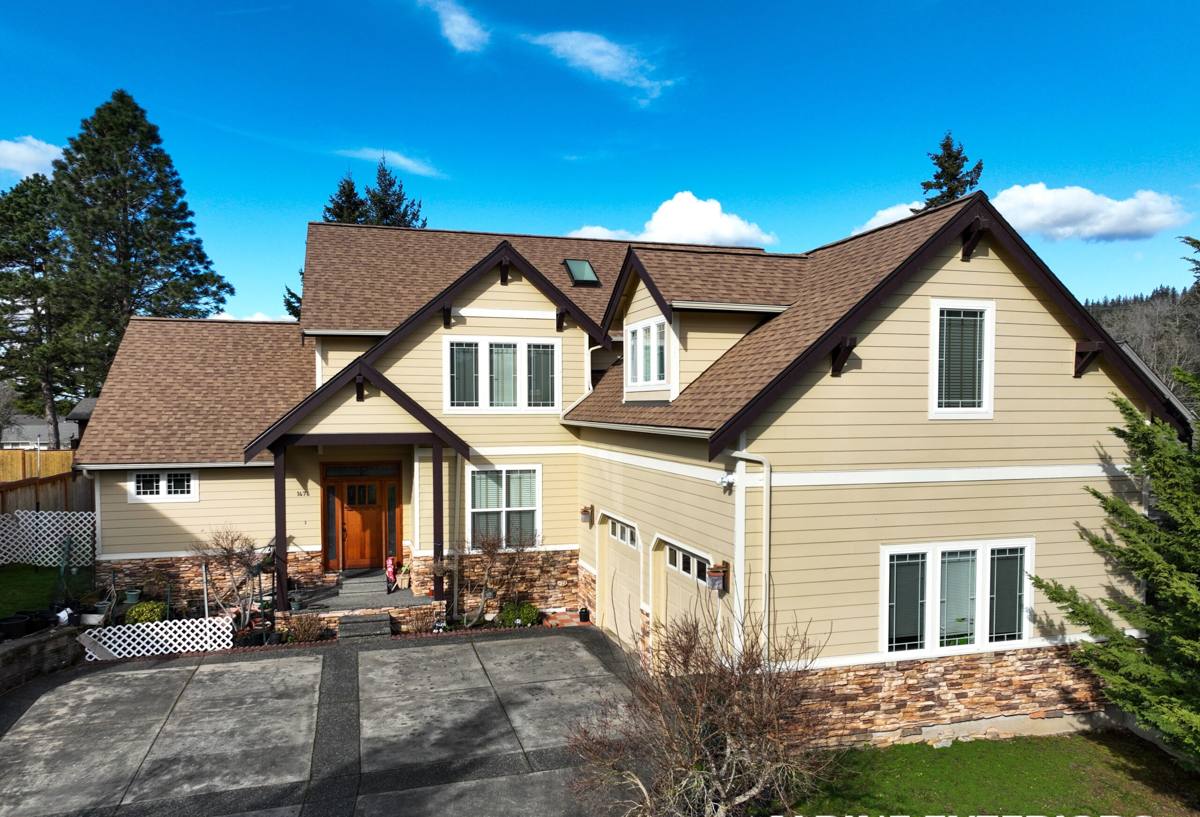
What a Bellingham Deck Actually Needs
Drainage Has to Be Designed In, Not Left to Chance
Standing water is the root cause of most of the deck failures we see: cupped boards, black staining, soft spots in framing, and moss taking hold in low spots. A deck built for this region needs a real slope away from the house, consistent board spacing to let water shed instead of pool, and flashing at the ledger board that actually keeps water out of the house rim joist rather than just directing it downward on paper. None of this is complicated, but it's the part that's invisible once the deck is finished, which is exactly why it gets skipped on rushed jobs.
Sun Exposure and Moss Risk
Moss needs shade and moisture to establish, and a lot of Bellingham lots have at least one side of the house that stays damp and shaded for most of the day thanks to tree cover or the house's own footprint. That doesn't mean a deck can't go on the north side of a house, but it does mean the design should account for it — better ventilation underneath, decking with a surface texture that doesn't trap grime, and a maintenance plan the homeowner actually knows about going in.
Wind-Driven Rain
Rain that comes in at an angle behaves differently than rain that falls straight down. It gets up under railing caps, into fastener heads, and behind fascia boards. Detailing those edges — sealed end cuts, proper cap flashing where a deck meets siding, and hardware rated for wet exposure — matters more here than it would somewhere with a drier, calmer climate.
Choosing a Decking Material That Holds Up
There's no single right answer for every home — budget, the look you want, and how much maintenance you're willing to do all factor in. What matters is picking a material with your eyes open to how it behaves in wet, salty, shaded conditions over years, not just how it looks on day one.
| Material | How It Handles This Climate | Maintenance | Typical Lifespan |
|---|---|---|---|
| Pressure-treated wood | Affordable and strong, but end grain and fastener holes absorb moisture; needs consistent sealing to resist rot and moss | Annual cleaning, periodic staining/sealing | 10–15 years with upkeep |
| Cedar | Naturally rot-resistant and handles moisture well, but softer surface can hold grime and moss in shaded spots without cleaning | Regular cleaning, oil or sealant every 1–2 years | 15–20 years with upkeep |
| Capped composite | Resists moisture absorption and won't rot; textured surfaces shed water and resist algae better than uncapped composite | Occasional washing, no sealing needed | 25+ years |
| PVC decking | Fully synthetic, doesn't absorb water at all; performs consistently in salt air and constant damp shade | Occasional washing | 25+ years |
We don't push one material on every homeowner. If you want the look and feel of real wood and are willing to keep up with sealing, cedar or treated lumber is a legitimate choice. If you'd rather not think about your deck surface for a decade, composite or PVC earns its higher upfront cost in a climate like this one. What we won't do is install a wood deck without being straight with you about the maintenance commitment it takes to keep it looking and performing well here.
What's Underneath Matters as Much as the Surface
A beautiful deck board on a poorly built frame is a short-term fix. The structure underneath is what determines whether a deck is safe and solid in ten years, and it's also the part most homeowners never see once it's built — which is exactly why it deserves the most attention during construction.
- Joist protection: Joist tape or an equivalent moisture barrier on top of framing lumber keeps water from sitting directly on the wood where fasteners penetrate it.
- Correct hangers and connectors: Structural connectors rated for exterior, wet-use conditions — not interior-grade hardware that will rust and weaken over time.
- Ledger attachment: Proper flashing and lag or through-bolt attachment at the house, since this is the single most common point of structural failure on attached decks.
- Footings sized for local soil and frost conditions: Footing depth and diameter should match Whatcom County soil conditions and local frost line, not a generic minimum.
- Post-to-beam and beam-to-joist connections: Rated hardware at every load-bearing connection, not just toe-nailing framing together.
Hardware and Fasteners for a Salt-Air Environment
This is one of the most overlooked parts of deck construction, and it's often the first thing to fail near the water. Standard galvanized fasteners can start showing rust streaks within a couple of years when they're exposed to salt-laden air and constant moisture. Stainless steel fasteners and hardware cost more upfront, but for a Bellingham deck — especially one with any exposure to open water or prevailing weather off the bay — they're the difference between hardware that lasts the life of the deck and hardware that needs to be replaced while the decking itself is still fine.
Hidden fastener systems, which clip boards from underneath rather than screwing through the face, also help here: fewer exposed metal fastener heads means fewer entry points for water and less visible corrosion staining on the deck surface over time.
Our Process for a Custom Deck Build
Every deck we build starts with the same basic process, adjusted for the specific lot, home, and how the homeowner actually wants to use the space.
- Site visit and assessment: We look at drainage patterns, sun and shade exposure, existing structure (if it's a rebuild), and access for materials and equipment.
- Design and material selection: We talk through layout, railing style, and decking material honestly, including the maintenance trade-offs of each option for this climate.
- Permitting: We handle the permit application and coordinate any required inspections with the local jurisdiction.
- Framing: Footings, posts, beams, and joists go in first, with moisture protection and corrosion-resistant hardware throughout.
- Decking, railing, and finish work: Surface material and railing installation, with attention to fastener placement and edge detailing that resists wind-driven rain.
- Final walkthrough: We go over the finished deck with you, including a straightforward maintenance plan so you know what to expect season to season.
Permits and Code Considerations in Whatcom County
Most attached decks, and many freestanding ones above a certain height, require a building permit in Whatcom County and the City of Bellingham. Requirements typically cover guardrail height, stair railing, footing depth, and setback from property lines, and they can vary depending on your specific lot and jurisdiction. We handle the permitting process as part of a custom deck build, but it's worth knowing upfront that skipping this step — something unlicensed or overly casual contractors sometimes do to save time — can create real problems later, from failed home inspections at resale to insurance complications if something goes wrong.
Maintenance to Stay Ahead of Moss and Moisture
Whatever material you choose, a little seasonal attention goes a long way in this climate.
- Clear leaves and debris from between boards and off the surface regularly, especially in fall.
- Keep gutters and downspouts directing water away from the deck area rather than onto it.
- Trim back overhanging branches that keep sections of the deck shaded and damp.
- Wash the surface at least once or twice a year to remove the organic buildup moss and algae feed on.
- For wood decking, reapply sealant or stain on the schedule the product calls for — don't wait until it's visibly failing.
- Check railings and stair connections periodically for movement or corrosion at fastener points.
Why Hire a Crew That Already Works Bellingham
A deck builder who mostly works inland or in a drier climate can still frame a deck that looks right on the day it's finished. What's harder to get right without local experience is everything that shows up two or three years later — the fastener corrosion, the moss in the shaded corner, the ledger flashing detail that wasn't quite tight enough for driving rain off the water. Working in and around Bellingham and the rest of Whatcom County means we've seen how decks in this specific climate age, not just how they're supposed to perform on paper. That shapes real decisions on your project: which hardware we spec, how we detail drainage, and what we tell you honestly about maintenance before you commit to a material.
If you're planning a custom deck for a home in Bellingham, we're happy to take a look at your space and talk through what makes sense for your site, your budget, and how you want to use it. There's a free, no-pressure estimate form below — reach out and we'll go from there.