 Birch Bay Window
 Terrell Creek sits back from the open beachfront that gets most of the attention in Birch Bay, in a stretch of Whatcom County that's a bit more wooded and shaded than the shoreline itself. That difference matters for windows. Homes here still get the marine air and wind-driven storms that come with living this close to the water, but they also carry more tree cover, more shade on north- and east-facing walls, and longer stretches where siding, trim, and window frames simply don't dry out between rain events. Energy efficiency and moisture management end up being the same conversation in this neighborhood, not two separate problems.
This page covers energy-efficient window replacement specifically for Terrell Creek homes — what the local climate actually does to a window's performance over time, what a correctly specified and installed energy-efficient window involves, and why the details that matter here aren't always the ones a big-box estimate covers.
What "Energy-Efficient" Actually Means for a Terrell Creek Window
"Energy-efficient" gets used loosely in window marketing, but it comes down to a handful of measurable ratings, and they don't all matter equally in this climate.
U-Factor: The Number That Matters Most Here
U-factor measures how much heat a window lets through — lower is better. In a climate like this one, where winters are mild but consistently damp and heating runs for months at a time rather than in short cold snaps, U-factor is usually the single most important number on the label. A window with a poor U-factor bleeds heat steadily all season, and that shows up as a heating bill that never quite gets ahead of the weather.
Air Infiltration — The Rating Most Homeowners Never Ask About
Air infiltration measures how much outside air leaks through the window assembly itself, independent of the glass. This is the rating that's easy to overlook and hard to fix after the fact, because it's driven as much by the installation as by the window unit. A well-rated window installed with a sloppy air seal will still draft. In a spot like Terrell Creek, where wind-driven rain regularly tests every gap in a wall assembly, a poor air seal isn't just an efficiency problem — it's usually a moisture entry point too.
Solar heat gain coefficient (SHGC) and condensation resistance round out the picture, but they carry less weight here than in a sunnier or drier climate. We'll walk through what each rating means for your specific home rather than leading with a spec sheet that was written for a different part of the country.
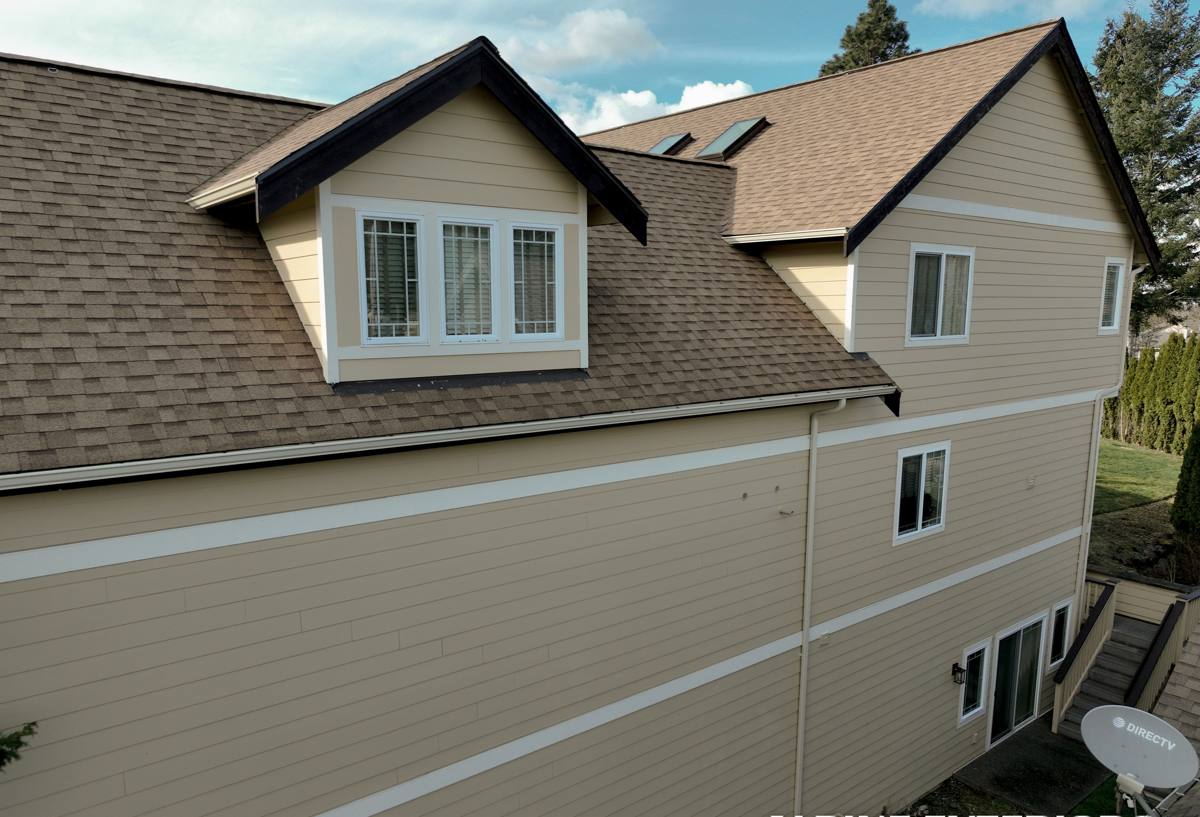
The Local Climate Load: Salt Air, Driving Rain, and a Long Moss Season
Three things work against window performance in this part of Whatcom County, and Terrell Creek gets a version of all three.
Salt-tinged marine air moves through the whole Birch Bay area, not just the immediate waterfront, and it accelerates corrosion on hardware, weatherstripping, and lower-grade fasteners over years. A window's efficiency depends on its seals staying tight — corroded hinges, stiffened weatherstripping, and pitted locking hardware all let a formerly airtight window start to draft, slowly and unevenly enough that most homeowners chalk it up to "the house getting older" rather than a specific, fixable cause.
Wind-driven rain doesn't fall straight down here; storms push it sideways into wall assemblies and window openings, which tests the air seal and flashing on every window on a weather-facing elevation. A window that's efficient on paper but poorly flashed will eventually let moisture into the wall around it, and once that happens, insulation performance in that section of wall drops regardless of how good the glass is.
The shade and tree cover common around the creek corridor add a third factor: a long moss and mildew season that can run most of the year on north-facing walls and anywhere sun doesn't reach for long. Moss and standing moisture on sills and lower sashes don't just look bad — over time they hold water against the frame, which is exactly the condition that degrades seals, swells wood components, and shortens the working life of the weatherstripping that keeps a window airtight.
Why Older Windows Struggle More in This Setting
Single-pane windows and early-generation double-pane units were never built to the air-infiltration standards common today, and decades of exposure to salt air and damp shade compound that gap. It's common to find original windows in this area that are still structurally intact but drafty enough that a homeowner can feel the difference standing near them on a windy day. Replacing the glass alone doesn't fix that — the frame, seals, and installation all factor into whether a window actually performs.
Signs Your Current Windows Are Costing You More Than They Should
- Noticeable drafts near the sash or frame, especially during wind-driven storms
- Fogging or condensation trapped between panes — a sign the seal has already failed
- Cold spots on interior walls or floors near windows in winter, even with the heat running
- Visible moss, mildew, or dark staining building up at the sill or exterior trim
- Sashes that stick, won't stay open, or feel harder to operate than they used to
- Heating bills that run noticeably higher than a similarly sized home nearby
Any one of these can have more than one cause, but seeing several together on the same window is usually a sign the unit has reached the end of its useful efficiency, whether or not it still looks fine from across the room.
What a Correct Energy-Efficient Window Installation Involves
Frame Material for This Climate
Frame material affects both insulation value and how well a window holds up to sustained coastal moisture. Vinyl and fiberglass frames generally require less ongoing upkeep in salt air and shade than an all-wood exterior finish, which is why we lead with them on weather-facing replacements in this neighborhood. Wood-clad interiors paired with a durable exterior cladding can still be the right call when the interior look matters most — it's a trade-off worth discussing against your specific walls and budget, not a default answer.
Glass Package: Low-E Coatings and Gas Fill
A low-emissivity (low-E) coating reflects heat back into the home in winter without meaningfully darkening the glass, and it's close to standard on any window worth calling energy-efficient today. Argon or krypton gas fill between panes adds another layer of insulating performance over plain air fill, at a modest cost difference. Triple-pane glass goes a step further and can make sense on north-facing or particularly exposed walls, though it's not automatically the right call for every window on every home — we'll size the glass package to the specific wall it's going into.
Installation and Air Sealing
This is the step that decides whether a well-rated window actually performs like its label. The rough opening needs to be properly prepared, the sill needs to be pitched and pan-flashed to shed water outward rather than let it pool, and the gap between the window frame and the framing needs a correct air-sealing material — not just a bead of caulk around the trim. Flashing has to integrate with the existing wall covering so water is directed out and down, never trapped behind the new window. Skipping or rushing any of these steps is the most common reason a homeowner installs "efficient" windows and doesn't see the difference on their heating bill.
Frame Material Comparison for This Climate
| Factor | Vinyl | Fiberglass | Wood-Clad |
|---|---|---|---|
| Upkeep in salt air & shade | Low — minimal maintenance | Low — very stable in moisture | Higher — exterior cladding and joints need periodic attention |
| Insulating performance | Good | Good to very good | Good, dependent on core construction |
| Typical cost tier | Lower | Mid to upper | Upper |
| Best fit here | Straightforward replacements on weather-facing walls | Larger openings or homes wanting a stiffer, more stable frame | Homes prioritizing a wood interior look, with the exterior properly protected |
What actually moves the price on an energy-efficient window job is fairly consistent: frame material, glass package (double vs. triple pane, gas fill), number and size of openings, and how much prep the existing rough opening needs. We won't quote a number without seeing your windows in person, but we'll walk through which of those factors apply to your home before you commit to anything.
Our Process, Start to Finish
- On-site assessment — we check each window's current condition, seal integrity, and how the existing opening was flashed
- Honest recommendation — frame material and glass package sized to your budget and to how exposed each wall actually is
- Ordering — units built to the correct opening size, with a realistic timeline communicated upfront
- Removal and opening prep — old units come out carefully, and any hidden moisture or framing issues get addressed before the new window goes in
- Installation and air sealing — the new unit is set, shimmed, sealed, and flashed to shed water outward and keep air infiltration to a minimum
- Final check and cleanup — operation, seal, and finish are confirmed before we consider the job done
Why a Local Terrell Creek Crew Matters
Manufacturer installation guidance is written for average conditions, and Terrell Creek's mix of marine air, driving rain, and heavy shade isn't average. A crew that's actually worked windows in this specific setting knows to pay extra attention to the north- and shade-facing sills where moss builds up fastest, to specify corrosion-resistant hardware without being asked, and to treat the air seal as being just as important as the glass rating — because in this climate, a leaky seal shows up as both a higher heating bill and a moisture problem down the road.
That local experience shows up in decisions that don't come up in a sales pitch: how much pitch a sill pan needs on a shaded wall that rarely fully dries out, which corners of a window opening need extra flashing lap given how this neighborhood's storms tend to hit, and when it's worth spending a little more on frame material because a particular wall stays damp longer than the rest of the house. Those choices are what decide whether new windows are still performing tightly in fifteen years or drafting again in five.
What to Ask Before Hiring for Energy-Efficient Window Work
- Ask what U-factor and air-infiltration ratings they're recommending for your specific walls, and why
- Ask how they handle sill pan flashing and air sealing at the rough opening, not just the visible trim
- Confirm current Washington contractor licensing and insurance
- Get a written scope of work, including frame material and glass package, before signing anything
- Ask how labor and the window unit are each covered under warranty
If your windows in Terrell Creek are drafty, fogged, or just costing more to heat around than they should, it's worth having someone look at them in person before you start comparing quotes. We offer free, no-pressure estimates for energy-efficient window replacement in Terrell Creek and the surrounding Birch Bay area — use the form below to get a time on the schedule.