 Birch Bay Window
 Custom Decks Built for Ferndale's Weather, Not Just Its Backyards
Ferndale sits close enough to the water and far enough into the Whatcom County drizzle belt that a deck here lives a harder life than the same deck would in a drier inland town. Salt-tinged air off the bay, months of driving rain, and a moss season that can run from October through May all work on wood, fasteners, and footings in ways that show up as soft boards, rusted hardware, and slick, blackened surfaces within a few seasons if the build wasn't planned for it. We build decks in Ferndale the way the climate actually demands, not the way a catalog photo suggests.
A deck is one of the few home improvements that's outdoors full-time, uncovered, and load-bearing. That combination means small material and framing decisions matter more here than almost anywhere else in the house. This page walks through what a Ferndale deck actually needs, what a correct build looks like from the ground up, and how we run the job from first call to final walkthrough.
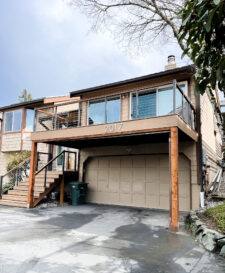
What Ferndale's Climate Does to a Deck
Salt Air and Metal Fasteners
Ferndale's proximity to Bellingham Bay and the Strait of Georgia means airborne salt is part of the local weather, not just a coastline curiosity. Salt air accelerates corrosion on standard steel fasteners, joist hangers, and screws — and once a hidden fastener starts rusting, it's usually out of sight until it fails. Hardware choice is one of the first things we get right, because it's one of the hardest things to fix later.
Driving Rain and Standing Water
Whatcom County rain doesn't just fall straight down — wind-driven rain gets pushed sideways into ledger connections, stair stringers, and any spot where two pieces of wood meet without a gap or flashing. Decking that's installed too tight, or framing without proper drainage slope, traps water instead of shedding it. That trapped moisture is the single biggest driver of rot and early failure in decks around here.
Moss, Algae, and Slip Risk
A long, damp season means moss and algae have plenty of time to establish on any deck surface that stays shaded or doesn't dry out between rains. Beyond the cosmetic issue, moss holds moisture against the decking material and creates a genuinely slippery surface — a real concern on stairs and near entry doors. Surface material, board spacing, and even deck orientation all affect how much moss pressure a deck will face.
Decking Material Options for a Wet Coastal Climate
There's no single "right" material for every Ferndale deck — the right choice depends on budget, how much upkeep you want to do, and how much shade and moisture exposure the site gets. Here's how the common options actually perform in this climate.
| Material | Moisture Behavior | Maintenance | Typical Lifespan Here |
|---|---|---|---|
| Pressure-treated pine/fir | Resists rot when properly sealed; end cuts and fastener holes are vulnerable points | Re-seal or re-stain every 1-2 years in this rainfall | 15-20 years with upkeep |
| Cedar | Naturally rot- and insect-resistant; still needs surface protection against moss and graying | Periodic cleaning and oil/stain every 2-3 years | 20-25 years with upkeep |
| Composite (capped) | Doesn't absorb water or rot; can still trap moisture underneath if airflow is poor | Periodic washing to prevent moss/algae buildup | 25-30+ years, manufacturer warranty backed |
| Uncapped composite (older-generation) | More prone to surface moisture absorption and mold than capped composite | More frequent cleaning than capped composite | Shorter service life; we steer clients toward capped products |
We're candid with clients about the trade-off: composite costs more up front but removes the recurring sealing and staining labor that pressure-treated and cedar decks need in a climate this wet. Wood costs less initially but only holds up if the maintenance actually happens on schedule — and in our experience, that's the part that gets skipped once the first couple of dry summers go by.
What a Correctly Built Deck Includes
The visible decking boards get all the attention, but the parts that determine whether a Ferndale deck lasts are mostly underneath and around the edges.
Ledger Attachment and Flashing
Where the deck attaches to the house is the single most important connection on the structure, both for safety and for water management. Proper ledger flashing directs water away from the house rim joist instead of letting it wick behind the siding — a detail that's invisible once the deck is built but is the difference between a dry wall cavity and a hidden rot problem years down the road.
Footings Sized for Local Soil and Frost
Footing depth and sizing need to account for local soil drainage and frost depth requirements under Whatcom County building code. Undersized or shallow footings can shift over time as saturated soil freezes and thaws, leading to a deck that feels bouncy or develops gaps at the stairs.
Joist Protection and Airflow
Joist tape or a comparable protective barrier over the top of each joist keeps standing water from sitting directly against the wood where fasteners penetrate. Adequate clearance and airflow underneath the deck also matters — a deck built too low to the ground, or over soil with poor drainage, stays damp longer after every rain and gives moss and mildew a head start.
Fastener and Hardware Grade
Given the salt air, we use corrosion-resistant fasteners and structural connectors rated for exterior and coastal-adjacent exposure rather than standard interior-grade hardware. It costs a little more per box; it's not worth saving on.
Board Spacing and Drainage Slope
Correct gapping between deck boards lets water drain through instead of pooling on the surface, and a slight slope away from the house keeps water moving off the deck entirely. Both of these are framing and layout decisions made before a single board is installed — they can't really be corrected after the fact.
Deck Types We Build in Ferndale
- Ground-level and low-profile decks — simpler footing requirements, good for patios and backyard entertaining spaces
- Elevated decks off a second story or daylight basement — require engineered footings, proper railing height, and careful ledger work
- Covered or partially covered decks — a real advantage in this climate, reducing direct rain exposure and slowing moss growth on the surface below
- Multi-level decks — common on sloped Ferndale-area lots, requiring stairs and railings built to current code at every level
- Deck replacements and rebuilds — reusing sound footings where possible while replacing framing, decking, and hardware that's past its service life
Signs Your Current Deck Is Past Its Service Life
If you're weighing a repair against a full rebuild, these are the signs we look for during an assessment:
- Soft or spongy spots in decking boards, especially near the house or in shaded areas
- Rust staining running down from fastener heads or connector plates
- Visible gaps or movement at the ledger-to-house connection
- Persistent moss or black algae staining that returns quickly after cleaning
- Stairs or railings that feel loose, bouncy, or noticeably weaker than they used to
- Footings that appear to have shifted, cracked, or heaved
A deck with isolated board damage but sound framing and footings is often a good repair candidate. A deck with rot at the ledger, compromised footings, or widespread hardware corrosion usually isn't worth chasing with patch repairs — that's when a rebuild becomes the more honest recommendation, even if it's not what a homeowner wants to hear.
How Our Process Works
1. On-Site Assessment
We walk the property, look at sun and shade exposure, drainage patterns, and how the deck will connect to the house, and talk through how you actually plan to use the space — dining, grilling, hot tub, entertaining — since that affects size, layout, and load requirements.
2. Design and Material Selection
We go through decking material, railing style, and any covered or multi-level elements, with honest pros and cons for each option given your budget and how much ongoing maintenance you want to take on.
3. Permitting and Engineering
Decks above a certain height or attached to the home typically require a permit through the local jurisdiction, and elevated or multi-level structures may need engineered footing and framing specs. We handle this process as part of the job rather than leaving it for the homeowner to sort out.
4. Construction
Footings, framing, ledger flashing, and decking go in with the moisture-management details described above built in from the start, not added as an afterthought. We keep the site reasonably clean and walk you through progress at key stages.
5. Final Walkthrough
We inspect railings, stairs, and fastening for solid, code-compliant work, and go over basic care — cleaning schedule, what to watch for as the deck ages, and when re-sealing or re-staining should happen if you chose a wood decking material.
Why a Crew That Already Works Ferndale Matters
A deck built to a generic national spec sheet doesn't automatically hold up to Whatcom County's rainfall totals, salt exposure, and moss season — those are regional conditions that a crew learns by building and maintaining decks here year after year, not from a manufacturer's install guide. We know which fastener grades actually hold up locally, which decking products handle shade and moisture well in this specific climate, and how to size footings and drainage for the soil and rainfall conditions around Ferndale and the greater Birch Bay area. That local track record is also why we can give you a straight answer about lifespan and maintenance instead of a sales pitch — we're the ones who get called back if a deck doesn't hold up, so we build it right the first time.
If you're planning a new deck or considering whether an existing one is worth repairing, we're happy to come take a look. Reach out for a free, no-pressure estimate using the form below.