 Birch Bay Window
 Siding Installation in Ferndale, Washington
Ferndale sits just inland from Birch Bay, close enough to Whatcom County's marine air and rainfall patterns that homes here face the same siding stresses as their neighbors on the water. If you're looking into siding installation for a Ferndale home, the job is less about picking a color and more about picking a system that can handle a wet, salt-touched, low-sun climate for the next 30-plus years without babysitting.
We run a local crew that works Birch Bay, Ferndale, and the surrounding Whatcom County towns regularly. That matters more than it sounds like it should — a crew that already knows how this region's weather treats a wall behind the siding builds differently than a crew passing through once.
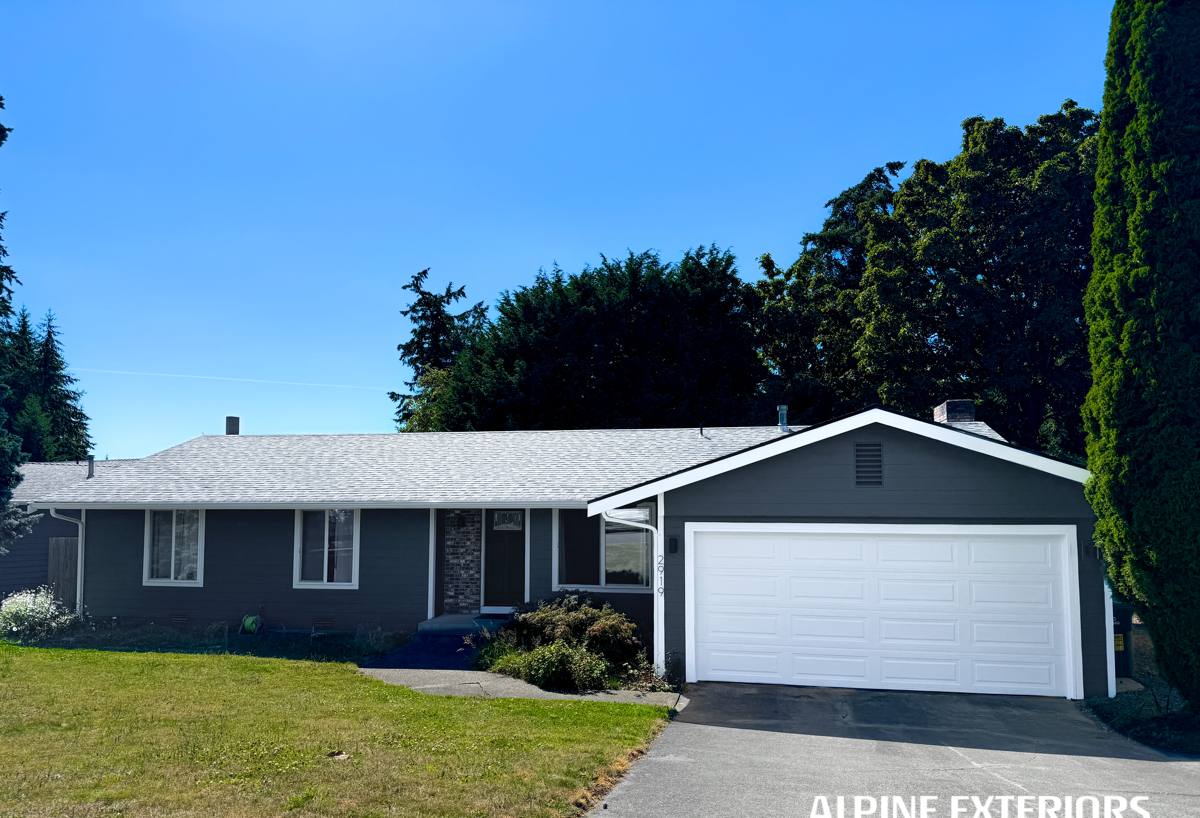
What Ferndale's Climate Actually Does to Siding
Three things drive almost every siding problem we see on homes in this area:
Salt Air
Ferndale is close enough to Birch Bay and the Strait of Georgia that airborne salt reaches homes on breezy days, especially on west- and north-facing walls. Salt accelerates corrosion on fasteners, trim flashing, and any metal components in a siding system. It also breaks down cheaper paint films faster than inland areas ever experience.
Driving Rain
Whatcom County doesn't just get rain — it gets wind-driven rain that hits siding at an angle instead of running straight down. That means water gets pushed into laps, seams, and butt joints that a system installed for a calmer climate wouldn't have to deal with. Flashing details and caulk joints that would be fine in a dry climate fail here within a few years if they're not done correctly.
Moss Season
Shaded north walls, tree-lined lots, and the long stretch of wet months from fall through spring give moss and algae months of moisture and low light to establish themselves. Moss holds water against the siding surface, and on products that aren't dimensionally stable, that trapped moisture is what starts rot at the substrate level.
None of this is unique to Ferndale — it's the reality for most of western Whatcom County. But it's worth spelling out because it explains every decision below.
Why We Only Install James Hardie Fiber Cement
We install one siding product on Ferndale homes: James Hardie fiber cement. We don't install vinyl, LP SmartSide, Cemplank, Allura, primed spruce, or cedar. That's not a marketing angle — it's a standard we set because of what we've seen this climate do to homes over time.
Fiber cement doesn't absorb water the way wood-based products do, so it doesn't swell, delaminate, or feed rot the way engineered wood siding can when moss and moisture sit against it for months. It's non-combustible, which matters less for storm exposure and more for general risk reduction and insurance considerations. And James Hardie's ColorPlus factory finish is baked on and warrantied against fading — a real advantage in a region where UV isn't intense but salt air and moisture cycling still wear down field-applied paint over time.
James Hardie also builds climate-specific product lines (HZ5 for areas with freeze-thaw cycling, HZ10 for wetter, milder climates like ours), engineered around moisture exposure rather than a one-size-fits-all formula. That's a level of climate-matching that vinyl and engineered wood products don't offer.
We're not going to tell you the products we don't install are junk — they're not, and each has situations where they make sense. We just won't put our name on an installation we don't believe will hold up on a Ferndale roofline for the long haul, and fiber cement is what we've standardized on.
What a Correct Siding Installation Involves Here
The siding board itself is maybe half of what determines how a job performs. The other half is installation detail — and this is where a lot of Ferndale homes end up with problems years after a re-side, regardless of what product was used.
- Weather-resistive barrier installed and lapped correctly, with no gaps at seams where wind-driven rain can push water behind it
- Flashing at every window, door, and roof-to-wall transition, integrated with the water-resistive barrier rather than just caulked over the top
- Proper fastener placement and spacing per James Hardie's installation specs — under- or over-driven nails are one of the most common causes of premature siding failure
- Correct board clearance from grade, decks, and roof lines so water can't wick up into the bottom edge of the siding
- Rain screen or drainage gap where the wall assembly calls for it, so any moisture that does get behind the siding has somewhere to go
- Factory-cut ends field-sealed per manufacturer spec, not left raw where they'll absorb water
Skip any one of these and you can end up with a wall that looks fine for a few years and then shows problems that trace back to the install, not the material.
Our Process for a Ferndale Home
1. On-Site Assessment
We walk the home, look at current siding condition, check for existing moisture or rot issues at trim and penetrations, and take real measurements — not a phone-based estimate.
2. Scope and Product Selection
We talk through which James Hardie line and profile fits the home — lap siding, board and batten, shingle-style panels — and what makes sense for the home's exposure. A wall that takes the brunt of the prevailing weather gets treated differently than a sheltered side.
3. Removal and Substrate Check
Old siding comes off and we inspect the sheathing underneath before anything new goes up. This is the point where hidden moisture damage from a prior installation shows up — and it needs to be addressed before new siding goes on, not covered over.
4. Weather Barrier and Flashing
This is the step that determines whether the job lasts. We install and integrate the water-resistive barrier and flashing system before a single piece of Hardie board goes up.
5. Installation to Manufacturer Spec
Fastening, clearances, and joint treatment follow James Hardie's published installation requirements — which is also what keeps the manufacturer's warranty intact.
6. Final Walkthrough
We review the finished work with you, point out anything you should know about maintenance, and answer questions before we consider the job done.
Cost Factors for Ferndale Siding Projects
Every home is different, so we won't quote a number without seeing the house. But these are the factors that actually move the price on a Ferndale siding installation:
| Factor | Why It Matters |
|---|---|
| Home size and wall complexity | More corners, gables, and dormers mean more cutting, flashing, and labor time |
| Substrate condition | Rot or moisture damage found during removal has to be repaired before new siding goes on |
| Siding profile chosen | Lap, shingle, and board-and-batten styles differ in material and installation time |
| Trim and detail work | Window and door trim, corner treatments, and fascia detailing add scope |
| Access and site conditions | Slopes, landscaping, and tight lot lines around a home affect staging and labor |
| Existing exterior condition | Homes needing extra prep, moss removal, or repair work take more time before install starts |
Why a Local Crew Matters for This Job
A crew that regularly works Birch Bay and Ferndale isn't guessing about how this area's weather behaves — they've seen which walls take the worst of the driving rain, which north-facing sections grow moss fastest, and which older installations in the area are showing their age and why. That local pattern recognition shows up in small decisions: where to add extra flashing attention, which side of a home needs a closer look at the substrate, how much drainage capacity a shaded wall really needs.
It also matters for accountability. A local company is still local next year, and the year after, when a warranty question comes up or you want an honest look at how the siding is holding up.
Signs Your Ferndale Home May Need New Siding
- Persistent moss or algae growth that returns quickly after cleaning
- Soft spots, bubbling, or visible warping in existing siding boards
- Paint that's peeling or chalking well before you'd expect a repaint to be due
- Visible gaps or separation at seams, corners, or trim boards
- Water staining on interior walls near exterior corners or window openings
- Siding that feels damp or spongy to the touch after a stretch of dry weather
If you're seeing any of these, it's worth having someone take a real look rather than waiting — moisture problems behind siding tend to get more expensive the longer they sit.
If you'd like an honest, no-pressure look at your Ferndale home's siding, we're happy to come out, walk the exterior with you, and put together a free estimate — no obligation either way.