 Birch Bay Window
 Why Semiahmoo Needs a Different Approach to Siding
Semiahmoo sits out on a narrow spit with water on more than one side, and that setting puts more stress on exterior siding than almost anywhere else in Whatcom County. Homes here take on salt-laden air from multiple directions, get hit by wind-driven rain with almost nothing around to break it, and sit inside a moss and mildew season that runs long into the year on shaded walls. Siding that would perform fine on a sheltered inland lot can start showing problems within a few years out here. This page is specifically about fiber cement siding for Semiahmoo properties — what the climate demands from it, what correct installation actually looks like, and why we install only one product system on homes in this location.
Salt Air From More Than One Direction
Because Semiahmoo is bordered by water on multiple sides, homes don't get a single prevailing salt exposure the way a lot of coastal properties do — they get it from wherever the wind happens to be coming from that day. Salt accelerates corrosion in fasteners and metal trim, and it breaks down lower-grade paints and finishes faster than a drier setting would. Siding material and hardware both need to be chosen with that in mind from the start.
Wind-Driven Rain, Not Just Rainfall
With almost no windbreak out on the spit, rain rarely falls straight down here — it gets pushed sideways into wall assemblies, seams, and trim joints with real force. That matters more for siding performance than the region's total rainfall numbers suggest, because it's testing the horizontal joints and lap details in a way calmer sites never do.
A Moss Season That Runs Most of the Year
Mild temperatures, high humidity, and shaded north-facing walls combine to keep moss and mildew active across most of the calendar in this part of Whatcom County. Any siding material that's porous or that holds moisture against its surface becomes a growth surface, and Semiahmoo's waterfront setting doesn't shorten that window at all.
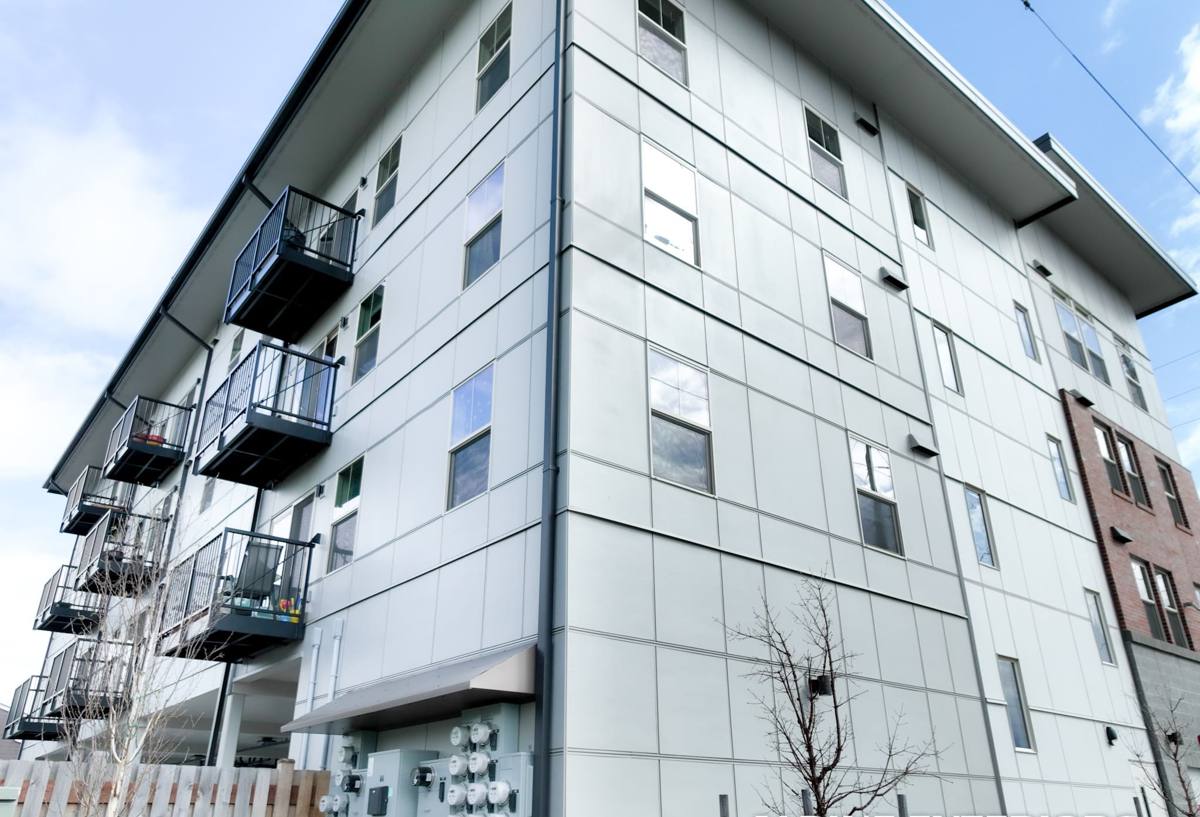
What Happens When Siding Isn't Built for This Exposure
The failures we see most often on tear-offs in this area aren't dramatic — they're slow. Vinyl panels that have warped or bowed after repeated heat-cool cycling in direct wind exposure, seams that have opened just enough to let wind-driven rain track behind the wall, or engineered wood products with swollen, delaminating edges where cut ends were never fully sealed. Cedar and primed wood siding that missed a repaint cycle show cupping and checking that lets moisture in behind the finish. None of these are unusual products failing in unusual ways — they're ordinary products responding predictably to an exposure they weren't built to handle long-term. By the time a homeowner notices staining, soft spots, or a change in how a wall feels to the touch, moisture has often been working behind the siding for a while already.
Why We Install Only James Hardie Fiber Cement Here
We used to install a broader range of siding products. We stopped, and that decision came directly from what we kept finding on service calls and tear-offs on exposed, salt-air properties like the ones on this spit — not from a supplier relationship or a promotional push.
- Non-combustible core: Fiber cement doesn't feed a fire the way wood-based siding products can, which matters for safety and often for insurance underwriting as well.
- Factory-applied ColorPlus finish: The color is baked on under controlled factory conditions rather than brushed on in the field, and it holds up longer against fading, chalking, and moisture intrusion than site-applied paint.
- Climate-engineered HZ5 formulation: Hardie's HZ5 product line is built for regions with heavy moisture exposure and freeze-thaw cycling — a good match for waterfront Whatcom County.
- Dimensional stability: Fiber cement doesn't swell, cup, or warp the way wood-fiber products can after repeated wetting over a long wet season.
- Strong transferable warranty: Hardie backs the product with a substantial warranty structure, provided the installation follows their published specification.
We won't install LP SmartSide, vinyl siding, Cemplank, Allura, primed spruce, or cedar. Each of those has a legitimate place in the market, and plenty of homeowners are satisfied with them in less exposed settings. On a property facing Semiahmoo's combination of salt air, open wind, and near-constant moisture, though, we've made a professional call: we'd rather install one system we fully stand behind than offer a cheaper option that quietly shifts long-term maintenance risk onto the homeowner.
What a Correct Fiber Cement Installation Actually Involves
Fiber cement only performs the way it's engineered to when it's installed to spec. On an exposed property like this, the installation details matter more than they would on a sheltered inland lot, because there's less margin for a shortcut to go unnoticed.
The Water-Resistive Barrier and Flashing Come First
Before any siding goes up, the wall needs a continuous, properly lapped water-resistive barrier and correctly sequenced flashing at every window, door, and roof-to-wall transition. On a wind-exposed property, flashing has to be detailed to shed water that's arriving sideways, not just from above — laps that would be adequate in a calmer setting can let water track behind the wall here.
Fastening, Clearances, and Gaps
Hardie's specification calls for particular fastener types, spacing, and penetration depth, and for specific clearances from grade, roofing, and decks. In salt air, using corrosion-resistant fasteners isn't an optional upgrade — standard fasteners can start corroding well before the siding itself would otherwise need attention, and a rusting fastener eventually stains and loosens the board around it.
Joints, Trim, and Caulking
Factory-mitered corners and properly sequenced trim reduce the number of field joints that rely on caulk to stay watertight. Where caulk is used, it needs to be the right product for the joint and applied correctly, since caulk is a maintenance item, not a permanent seal — a joint that depends entirely on caulk to keep water out is a joint that needs to be checked periodically for the life of the siding.
How We Approach a Fiber Cement Project on the Spit
- Walk the exterior with the homeowner and assess the existing siding, sheathing condition where visible, and how the current wall has handled moisture and salt exposure over time.
- Put together a clear, written scope covering tear-off, sheathing repair if needed, water-resistive barrier, flashing, and the specific Hardie product and color.
- Remove the existing siding down to the sheathing and inspect for hidden moisture damage before anything new goes on.
- Install the water-resistive barrier and flashing at every penetration and transition, sequenced to shed wind-driven rain.
- Install the Hardie siding to manufacturer specification, using corrosion-resistant fasteners appropriate to a salt-air environment.
- Finish trim, corner detail, and caulking, then walk the completed exterior with the homeowner.
Fiber Cement Compared to Other Siding Materials
| Material | Behavior in Salt Air & Wind-Driven Rain | Maintenance Demand | Typical Longevity Here |
|---|---|---|---|
| James Hardie fiber cement | Dimensionally stable; doesn't swell or wick moisture at joints | Low; factory finish resists fading and chalking | 30+ years with correct installation |
| Vinyl siding | Can warp, distort, or loosen under sustained wind exposure | Low upfront, but seams and fasteners are weak points in salt air | Variable; often shorter on exposed waterfront lots |
| LP SmartSide / engineered wood | Wood-fiber core is sensitive to moisture at cut edges and joints | Moderate; edge sealing and caulk upkeep matter a great deal | Depends heavily on installation quality and upkeep |
| Cedar / primed wood | Absorbs and releases moisture readily; cups and checks over time | High; regular refinishing needed in wet, salty air | Shorter without a consistent maintenance schedule |
What Actually Drives the Cost of a Fiber Cement Project Here
A useful estimate isn't a single square-foot number — it's built from several factors that vary from house to house, and on a waterfront property some of these carry more weight than they would inland.
| Factor | Why It Matters on Semiahmoo |
|---|---|
| Tear-off vs. overlay | Tear-off costs more upfront but is the only way to inspect and repair sheathing that's had years of salt and moisture exposure behind it |
| Home shape and trim complexity | Corners, dormers, and multiple roof transitions each add flashing and fitting work beyond a simple rectangular wall |
| Sheathing condition once exposed | Waterfront homes have a higher chance of hidden moisture damage behind older siding, which can add repair scope once discovered |
| Fastener and flashing grade | Corrosion-resistant hardware costs more than standard fasteners but is necessary in direct salt exposure |
| Site access | Tight lots, waterfront setbacks, or limited staging space can slow crew logistics compared to an easy inland lot |
| Product line, profile, and color | Hardie's lap, shingle-style, and panel profiles price differently, and ColorPlus finish options vary by line |
We won't quote a number without seeing the home, but we'll walk you through each of these factors during the estimate so the final figure makes sense rather than arriving as a surprise.
Maintenance Homeowners Should Actually Plan For
Fiber cement with a factory finish is genuinely low-maintenance compared to painted wood or aging vinyl, but "low-maintenance" isn't "no-maintenance," especially in this climate. A simple annual routine keeps a Hardie installation performing the way it's designed to for decades.
- Rinse salt residue and debris off the exterior a few times a year, particularly on wind-facing walls
- Keep gutters and downspouts clear so water isn't overflowing onto siding below
- Check caulked joints at trim, windows, and corners annually and re-caulk any that have cracked or pulled away
- Inspect shaded and north-facing walls for early moss or algae growth and address it before it spreads
- Avoid pointing a pressure washer directly into seams or joints; a garden hose and soft brush are usually enough
- Watch for any fastener staining, which can signal a fastener starting to corrode and needing replacement
Why Hiring a Crew That Already Works Semiahmoo Matters
A contractor who regularly works this specific stretch of coastline already knows things a crew unfamiliar with the spit would have to learn the hard way — how far wind-driven rain actually travels up a wall in an open exposure, which fastener grade holds up under year-round salt air, and how much drainage detailing a shaded, moss-prone wall needs compared to a sun-facing one. Semiahmoo's mix of waterfront exposure and, in some areas, resort or community aesthetic expectations also means a local crew is more likely to already understand the practical realities of scheduling, staging, and access on these properties before the job starts, rather than figuring it out on day one.
A Simple Checklist Before Hiring for Fiber Cement Siding Here
- Ask specifically which Hardie product line and profile they're proposing, and why it fits your home's exposure
- Confirm they carry current Washington contractor licensing and active liability insurance
- Ask whether the quote includes full tear-off, sheathing inspection, and a new water-resistive barrier
- Ask what fastener and flashing hardware they use, and whether it's rated for salt-air exposure
- Get a written scope of work and warranty terms before signing anything
If you're weighing a fiber cement siding project on a Semiahmoo property, we're happy to walk the exterior with you and give an honest read on what it actually needs. Reach out below for a free, no-pressure estimate.