 Birch Bay Window
 James Hardie Siding for a Point Roberts Home
Point Roberts is one of the more unusual addresses in Whatcom County. It sits on the tip of a peninsula south of the 49th parallel, cut off from the rest of Washington by land — the only road route in and out runs through Canada. That geography matters for a lot of reasons, but for a homeowner planning a siding project, it means the usual assumptions about "just call a local contractor" don't quite apply. Every project here has to account for the border, and that's before you even get to the weather.
And the weather is real. Because the Point is a peninsula with water on more than one side, salt-laden air reaches homes across the whole community, not just the handful of lots with a direct waterfront view. Combine that with driving rain that has almost no windbreak to slow it down and a moss and mildew season that runs most of the year, and you've got an exterior environment that punishes shortcuts. We install James Hardie fiber cement siding exclusively, and on a property like this, that's not a marketing detail — it's the reason the siding is still doing its job fifteen years after installation instead of showing problems in year five.
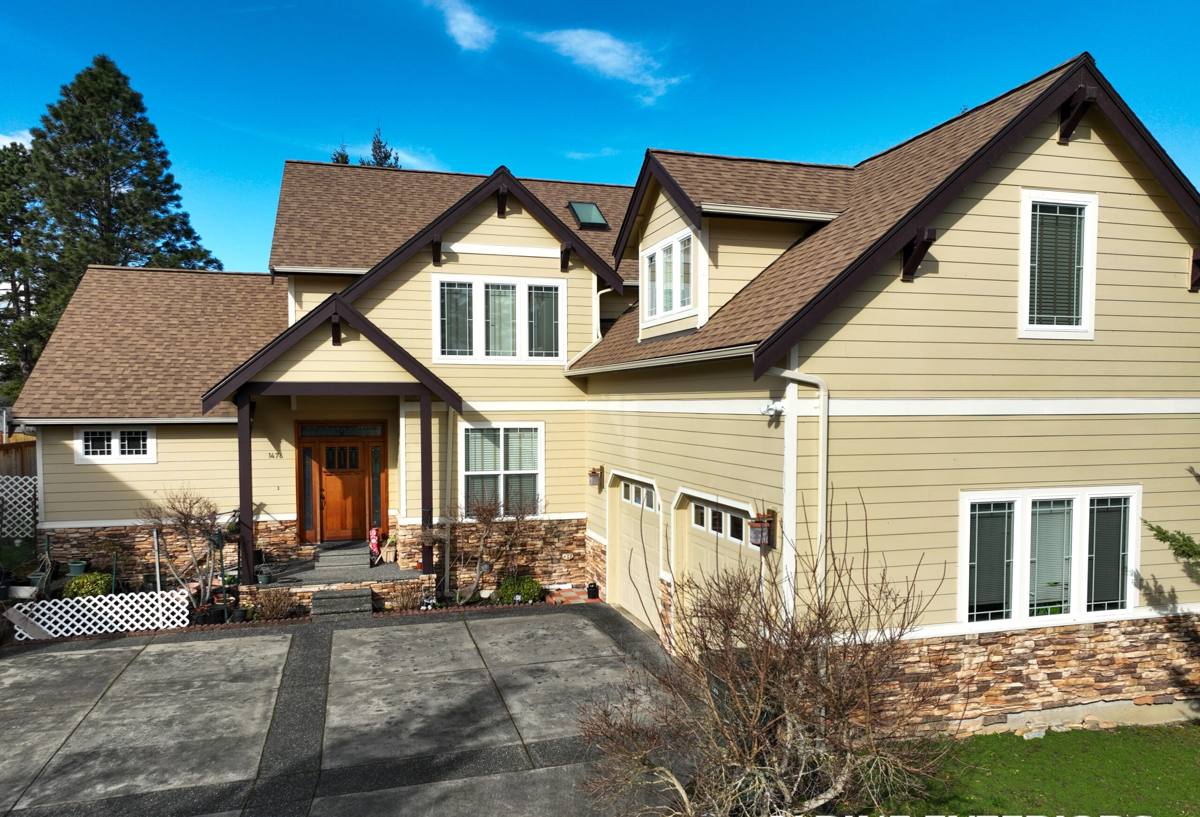
What This Peninsula's Exposure Does to Siding
Salt Air With Nowhere to Go
Most towns in Whatcom County have salt exposure concentrated near the shoreline and tapering off as you move inland. Point Roberts doesn't get that tapering effect the same way, because the peninsula is narrow and bordered by water on more than one side. Salt-laden air moves across the community more evenly, which means fasteners, trim hardware, and lower-grade finishes are under corrosion pressure on lots that would be considered "inland" almost anywhere else in the county.
Driving Rain and Open Wind
There's very little to break the wind coming off the water here, and storms push rain sideways into wall assemblies rather than letting it fall straight down. That's a heavier moisture load on flashing, trim joints, and lap seams than a typical rainfall total would suggest. Installation details that hold up fine on a sheltered inland lot can fail specifically because water is finding its way in at an angle those details were never built to handle.
A Long Moss and Mildew Season
Mild temperatures and near-constant humidity add up to a moss and mildew season that runs across most of the calendar in this part of Whatcom County, and Point Roberts' tree cover and shaded, low-traffic lots don't shorten it any. Roofs and any porous or moisture-retentive siding material are usually the first places it shows up, especially on north-facing walls that don't get much direct sun to dry things out between storms.
Why We Only Install James Hardie Fiber Cement
We used to install a wider range of siding products. We stopped, and that change came directly from what we kept finding on tear-offs and service calls in exposed, water-adjacent settings like this one — not from a supplier relationship.
- Non-combustible core: Fiber cement doesn't feed a fire the way wood-based siding can, which matters for safety and, in many cases, insurance underwriting.
- Factory-applied ColorPlus finish: The color is baked on under controlled conditions rather than brushed on in the field, and it resists fading and chalking far longer than site-applied paint exposed to salt air.
- Climate-engineered HZ5 line: Hardie's HZ5 formulation is built for regions with heavy moisture exposure and freeze-thaw cycling, which describes this stretch of coastline well.
- Dimensional stability: Fiber cement doesn't swell, cup, or warp the way engineered wood products can after repeated wetting through a long wet season.
- Strong transferable warranty: Hardie backs its products with one of the more substantial warranty structures in the industry, as long as installation follows spec.
We won't install LP SmartSide, vinyl siding, Cemplank, Allura, primed spruce, or cedar. Each has a legitimate place in the market, and homeowners elsewhere are happy with them. But on an exposed peninsula property like this, we've made a professional call that we'd rather stand fully behind one system than offer something cheaper that quietly shifts long-term maintenance risk onto the homeowner.
What Correct Installation Requires on a Point Roberts Home
Fiber cement only performs the way it's engineered to when it's installed to Hardie's published specifications. That's true everywhere, but it matters more here because the exposure gives a sloppy install less room to coast before problems show up.
- Manufacturer-specified clearance from grade, roofline, and deck surfaces, so splash-back and standing moisture stay off the board edge
- Correct fastener type, spacing, and material — corrosion-resistant hardware matters more on a lot with salt exposure from multiple directions
- Properly lapped, sealed flashing at every window, door, and penetration, since that's where wind-driven rain finds its way in first
- A drainage plane or rain-screen gap behind the siding, so any moisture that does get past the surface can drain and dry instead of sitting against the wall
- Factory-cut edges used wherever possible, with field cuts sealed per spec to preserve the ColorPlus finish's protection
A Hardie product installed loosely will still develop moisture problems in a climate like this one. The material is only as good as the installation behind it, which is why we send certified installers to every job rather than treating fiber cement as an interchangeable swap for whatever a crew is used to hanging.
Why Hiring a Crew That Already Works Point Roberts Matters
Point Roberts adds a logistics layer that most siding projects in Washington simply don't have: material, equipment, and crew all have to cross an international border to get here. A contractor unfamiliar with that reality can end up planning a project the same way they'd plan one ten miles down the road, and then lose days when a delivery gets held up or a crew's crossing takes longer than expected on a busy day. A crew that already works this community builds that reality into the schedule from the start — ordering material with enough lead time, planning crossings around predictable wait patterns, and staging supplies so a border delay doesn't stall the whole job.
There's also a site-specific piece to it. A crew that's worked several projects on the Point already has a feel for how exposure differs between the bay side and the strait side of the peninsula, and adjusts fastener grade and flashing detail accordingly instead of applying one generic spec to every lot. That familiarity is the kind of thing that's hard to fake on a first visit, and it's exactly what determines whether an installation holds up for decades or starts showing trouble in a handful of years.
Our Process for a Point Roberts Siding Project
- Site assessment: We walk the property and evaluate its specific exposure — which direction it faces, how much windbreak it has, and what condition the existing siding and sheathing are in.
- Material ordering with border logistics built in: Because everything has to cross into the Point, we order and schedule delivery with enough lead time that a crossing delay doesn't stall the project once work has started.
- Tear-off and inspection: Old siding comes off and we inspect the sheathing underneath for hidden moisture damage before anything new goes up. Problems found here get addressed before they get covered over again.
- Installation to Hardie spec: Correct clearances, fasteners, flashing, and drainage detailing, installed by certified crews familiar with this exposure.
- Final walkthrough and warranty registration: We review the finished work with you and make sure your Hardie warranty is properly registered and transferable if you sell the home down the road.
Comparing Siding Materials for This Exposure
| Material | Moisture Behavior | Maintenance in Salt Air | Typical Longevity Here |
|---|---|---|---|
| James Hardie fiber cement | Dimensionally stable, resists swelling | Low; factory finish resists fading and chalking | 30+ years with correct install |
| Vinyl siding | Can warp or distort with heat and wind loading over time | Low upfront, but seams and fasteners are exposure points | Variable; shorter on wind-exposed peninsula lots |
| LP SmartSide / engineered wood | Wood-based core is moisture-sensitive at cut edges and joints | Moderate; edge sealing and caulk maintenance matter | Depends heavily on installation and upkeep |
| Cedar / primed wood | Absorbs and releases moisture readily | High; regular refinishing needed in damp, salty air | Shorter without consistent maintenance |
Signs a Point Roberts Home May Need New Siding
- Moss or mildew that keeps returning on shaded or north-facing walls shortly after cleaning
- Cracking, soft spots, or visibly separated boards, especially near ground level or roof transitions
- Paint or finish that's chalking or fading noticeably faster on the wind- and water-facing side of the home
- Rust staining running down from fasteners or trim hardware
- Caulk joints at trim and corners that have shrunk, cracked, or pulled away from the surface
- Visible warping or cupping on any wood-based or engineered siding panels
Warranty and Long-Term Maintenance
James Hardie backs its siding with a transferable, non-prorated limited warranty on the substrate, plus a separate warranty on the ColorPlus finish's color retention. Transferability is worth noting specifically for a community like this one, where waterfront and near-waterfront properties often change hands with buyers asking pointed questions about exterior condition and remaining service life. Maintenance on a correctly installed Hardie system is light — periodic gentle washing to keep salt residue and organic growth from building up is generally all it needs, rather than the repainting and recaulking schedule a wood-based product demands in this climate.
If you're planning a siding project on the Point and want a straight answer about what your home actually needs, we're happy to walk the property with you and put together a free, no-pressure estimate — no upsell script, just an honest look at the exposure and what it takes to hold up against it.