 Birch Bay Window
 Board & Batten Siding, Built for Marietta's Coastline
Marietta sits close enough to the water that its homes take a different kind of weather beating than siding manufacturers assume when they write their installation manuals. Salt-laden air moves through the trees and settles on exterior walls. Driving rain off the Strait finds every gap in a poorly flashed wall assembly. And Whatcom County's long, damp shoulder seasons give moss and algae months to work into any siding that holds moisture instead of shedding it. Board and batten siding, done right, can handle all of that. Done wrong, it becomes one of the highest-maintenance siding profiles on the market. The difference is almost entirely in the material and the install, not the look.
We install board and batten siding for Marietta homeowners using James Hardie fiber cement exclusively. This page covers what that means in practice: what the climate here demands from a vertical siding profile, what a correct installation actually involves, and why a crew that already works this specific stretch of coastline matters more than it might seem.
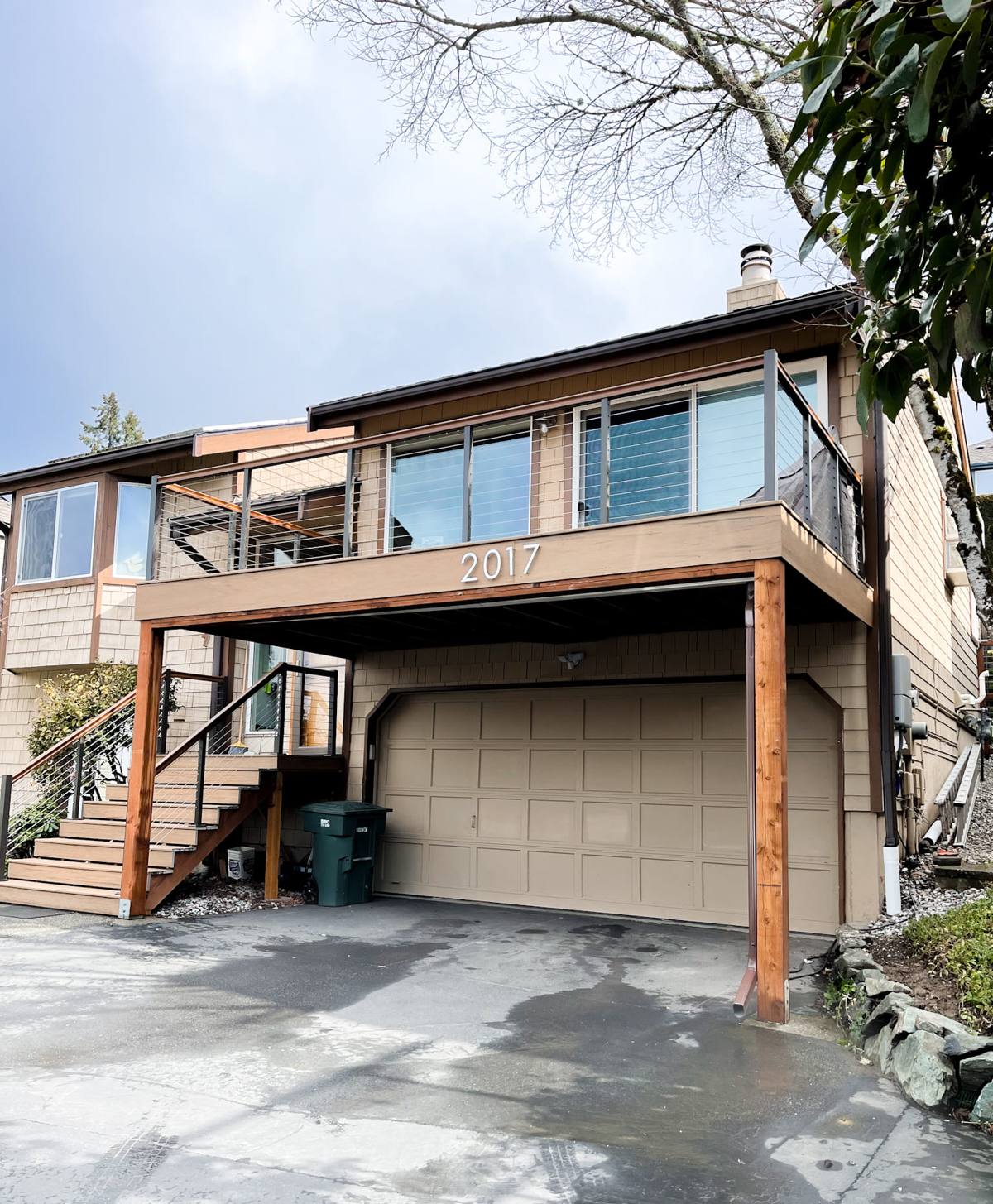
Why Board and Batten Is a Popular Fit in Marietta
Board and batten has a strong presence in this part of Whatcom County — it reads as a Pacific Northwest coastal style, pairs well with the mix of older cottages and newer builds around Birch Bay, and gives a home a clean, vertical line that horizontal lap siding doesn't offer. It's also a legitimately practical choice for certain wall assemblies, since the vertical boards can shed water efficiently when the battens and flashing details are done correctly.
The catch is that "done correctly" is doing a lot of work in that sentence. Board and batten has more seams, more fastener penetrations per square foot in some layouts, and more reliance on the battens themselves staying tight and sealed than a standard lap profile does. In a dry inland climate, sloppy detailing might go unnoticed for years. In Marietta's salt air and rain exposure, it shows up fast — usually as staining at the batten joints, soft spots at the base, or paint failure long before the rest of the house needs attention.
What Marietta's Climate Actually Does to Vertical Siding
Salt Air
Airborne salt is corrosive to exposed metal fasteners and trim, and it accelerates the breakdown of coatings that aren't formulated to resist it. On a board and batten wall, this matters most at the battens themselves, where fastener heads are more exposed than on a standard lap profile, and at any metal flashing or trim tying into the siding.
Driving Rain
Wind-driven rain off the water doesn't just fall — it pushes sideways into wall assemblies, hunting for any gap in the water-resistive barrier, flashing, or caulk joints. Board and batten's vertical seams, if not properly lapped and sealed behind the battens, give rain a more direct path inward than a shingled horizontal profile does.
Moss and Algae Season
Whatcom County's wet season runs long, and shaded or north-facing walls in Marietta can stay damp for extended stretches. Siding that absorbs moisture, or that has any organic wood content, gives moss and algae something to root into. Siding that resists moisture uptake and carries a factory finish resistant to mildew growth simply gives it much less to work with.
Why We Only Install James Hardie for This Application
Board and batten is offered in wood, engineered wood, vinyl, and fiber cement. We've made a professional decision to install it in James Hardie fiber cement only, and it's worth explaining why rather than just stating it.
- Moisture behavior: Fiber cement doesn't absorb and swell the way wood-based products can, which matters directly on a wall style with more seams and joints than lap siding.
- Non-combustible core: Hardie's fiber cement composition doesn't feed a fire the way wood-based sidings can, which is a real consideration on any home near dry brush or with neighboring structures close by.
- Factory-applied ColorPlus finish: The color and topcoat are baked on at the factory under controlled conditions, giving significantly better resistance to fading, chipping, and mildew staining than field-applied paint on wood or engineered wood battens.
- Climate-engineered product lines: Hardie manufactures specific formulations (its HZ5 line, relevant to our Pacific Northwest region) engineered for moisture and freeze-thaw conditions like ours, rather than a one-size-fits-all product.
- Warranty structure: Hardie backs its siding with a strong, transferable limited warranty — a real factor for resale, and a level of manufacturer accountability that isn't matched by every product on the market.
We don't install vinyl, engineered wood (LP SmartSide), primed spruce, cedar, Cemplank, or Allura board and batten. Each of those has genuine strengths in the right application — cedar's natural appearance, vinyl's low upfront cost, engineered wood's workability. But for the specific combination of salt exposure, driving rain, and moss pressure that Marietta homes face, we've standardized on Hardie because it's the product we're willing to stand behind long-term on this coastline.
What a Correct Board and Batten Installation Involves
The material only performs as well as the assembly behind it. On every board and batten project in Marietta, our process includes:
1. Water-Resistive Barrier and Drainage Plane
A properly lapped weather barrier goes on first, with attention to every seam, penetration, and transition. Board and batten in particular benefits from a rainscreen or furring strategy that lets any moisture that gets behind the battens actually drain and dry, rather than sitting against the sheathing.
2. Flashing at Every Transition
Windows, doors, roof-to-wall intersections, and the base of the wall all get flashed to shed water outward, not trap it behind the siding. This is the single most common place we find failures on board and batten walls installed by crews unfamiliar with the profile.
3. Fastener Placement and Spacing
Hardie publishes specific fastener requirements for board and batten applications — spacing, penetration depth, and placement relative to board edges. Installing to spec is what keeps boards from cupping, splitting, or working loose over time, especially under wind-driven rain conditions.
4. Proper Gapping and Caulking
Board and batten needs controlled gaps at butt joints and terminations to accommodate the material's minor expansion and contraction, sealed with an appropriate exterior-grade sealant rated for the exposure. Gaps that are too tight or joints that are caulked incorrectly are a common source of premature failure.
5. Base and Grade Clearance
Maintaining proper clearance between the bottom of the siding and grade, decking, or roofing keeps the boards out of standing water and away from constant splash-back — a detail that matters even more on a vertical profile than a horizontal one.
Comparing Siding Options for a Marietta Board & Batten Project
| Material | Moisture Resistance | Salt Air Durability | Maintenance | Fire Resistance |
|---|---|---|---|---|
| James Hardie Fiber Cement | Strong — engineered for wet climates | Strong, factory finish resists coresion-driven wear | Low — periodic washing | Non-combustible |
| Vinyl | Doesn't absorb moisture, but seams and fasteners can trap it behind panels | Can become brittle over time in coastal UV/salt exposure | Low, but prone to warping and fading | Combustible, can melt/deform |
| Engineered Wood (LP SmartSide) | Treated, but wood-based core is moisture-sensitive at cut edges and joints | Moderate — coating and edge-sealing critical | Moderate — edge maintenance matters | Combustible |
| Cedar / Primed Spruce | Natural material, absorbs and releases moisture, needs ongoing sealing | Requires diligent refinishing near salt air | High — repainting/staining on a cycle | Combustible |
This table reflects general material behavior, not a claim about any specific manufacturer's product failing. Every one of these materials has a place; we simply concluded that fiber cement is the right standard for the conditions Marietta homes face.
Our Process for a Marietta Board & Batten Project
- On-site assessment: We walk the home, evaluate existing siding and sheathing condition, and check for moisture damage or flashing issues that need to be addressed before new siding goes on.
- Detailed proposal: You get a clear scope covering material, color, trim details, and any repair work identified during the assessment — no vague allowances.
- Prep and moisture barrier installation: Old siding comes off, sheathing is inspected and repaired as needed, and a new water-resistive barrier goes on with full attention to lapping and penetrations.
- Flashing and rainscreen detailing: Every window, door, and transition gets flashed before a single board goes up.
- Board and batten installation to Hardie spec: Fastener spacing, gapping, and sealant application follow manufacturer requirements exactly.
- Final walkthrough: We review the finished work with you and confirm everything meets our standard before calling the job done.
What to Check Before Hiring Any Crew for This Work
- Do they install board and batten regularly, or mostly lap siding?
- Will they show you their flashing and water-resistive barrier approach before boards go up?
- Are they installing to the manufacturer's published fastener and gapping specs, not just "how we've always done it"?
- Do they carry proper licensing and insurance for exterior work in Washington?
- Can they explain why they recommend one siding material over another for your specific wall exposure?
Why a Crew That Already Works Marietta Matters
Board and batten installation isn't fundamentally different from one town to the next, but the judgment calls involved — how aggressive to be with rainscreen detailing, which walls need extra attention because they face prevailing wind and rain, how much clearance to build in near grade — are shaped by local exposure. A crew that's worked Whatcom County's coastline repeatedly has already seen what happens to board and batten walls that were under-flashed or under-sealed for this climate, and builds accordingly. That's a harder thing to get right if a crew is applying general-purpose techniques to a specific coastal microclimate for the first time.
If you're considering board and batten siding for a home in Marietta, we'd be glad to take a look and talk through what your specific wall exposures need. Reach out for a free, no-pressure estimate using the form below.