 Birch Bay Window
 Marietta Roofs Face a Specific Kind of Weather
Marietta sits close enough to Birch Bay and the Salish Sea that its roofs take on a different wear pattern than homes further inland in Whatcom County. Wind off the water arrives with force and direction that changes fast during a storm system, driving rain sideways under lap joints and flashing that would stay dry in a calmer setting. Add a long, wet moss season most winters, and you get roofs that are working harder year-round than the calendar might suggest. Storm damage here rarely announces itself with a hole you can see from the driveway. More often it starts as a lifted shingle tab, a hairline gap in flashing, or granules washing into a downspout, and it grows quietly until water finds a way into the attic.
We're not describing this to scare anyone into a repair they don't need. It's the opposite: understanding how storms actually damage a roof in this area is what keeps a repair honest. A crew that treats every roof the same, regardless of exposure to salt-laden air and wind-driven rain, tends to either over-repair (replacing more than necessary) or under-repair (patching the visible spot and missing what the wind did three feet away).
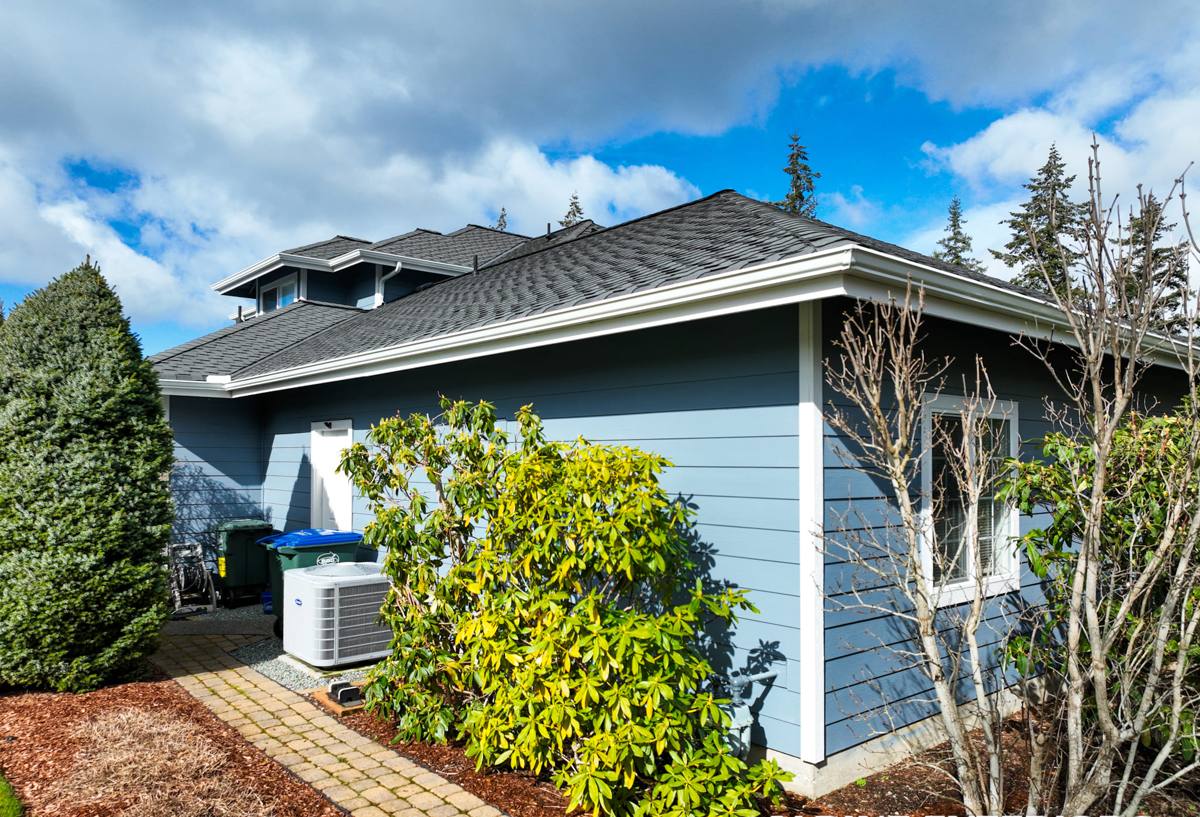
What Actually Counts as Storm Damage
Not every roof problem after a windy week is "storm damage" in the sense insurers or contractors mean, and that distinction matters for how a repair gets scoped and paid for.
Wind Damage
Sustained wind and gusts can lift shingle tabs, break the adhesive seal strip, or tear shingles off entirely at the nail line. Wind damage is directional — it tends to show up on the same slope repeatedly, usually the side facing the prevailing storm direction, which around Birch Bay is often the side exposed to weather coming off the water.
Impact Damage
Branches, cones, and debris carried by wind can crack shingles, dent metal flashing, or puncture underlayment where a shingle has already been torn away. Impact damage is usually localized and easier to point to, but it's also easy to miss if it happened on a slope you don't see from the ground.
Water Intrusion Without Visible Impact
This is the one that causes the most long-term cost. Driving rain doesn't need a hole — it needs a gap. A flashing seam that's a sixteenth of an inch open, a nail that's backed out enough to break its seal, or a valley that's been slowly eroding under moss growth can let water in without a single broken shingle anywhere on the roof.
Warning Signs Worth Walking Around For
You don't need to get on a ladder to catch most storm damage early. A slow walk around the exterior after a rough weather week catches a surprising amount.
- Shingle granules collecting in gutters, downspout splash blocks, or along the base of exterior walls
- Shingle tabs that look slightly lifted or curled at the edges, especially compared to the rest of the slope
- New or spreading moss and dark streaking, particularly on north-facing or heavily shaded slopes
- Water stains, sagging, or a musty smell in the attic or on ceilings after a storm
- Flashing around chimneys, vents, or skylights that looks bent, separated, or rust-streaked
- Debris — branches, needles, cones — piled in valleys where it traps moisture against the roof deck
- Gutters pulling away from the fascia or overflowing during rain, which points to a drainage problem that will eventually reach the roof edge
Any one of these on its own might be nothing. Two or three together, especially after a named storm or a stretch of high wind, is worth a professional look before the next system rolls through.
What a Correct Storm Repair Actually Involves
A storm damage repair is not the same job as a routine maintenance patch, and treating it that way is how homeowners end up calling a roofer back out a season later.
Full-Slope Inspection, Not Just the Reported Spot
If a homeowner points to a leak over the kitchen, the source of that water is very often uphill, upslope, or in a completely different section of roof than the stain suggests. Water travels along the deck and rafters before it shows up as a stain on drywall. A correct repair starts with tracing the path, not patching the ceiling's location.
Matching Materials, Not Just Covering the Gap
Shingle color and profile change over the life of a product line. A patch that doesn't match closely enough becomes a second problem — a visible seam that also behaves differently in wind and rain than the surrounding roof. When an exact match isn't available, the honest approach is to blend the repair into a less visible slope or be upfront that a partial mismatch is the trade-off of a spot repair versus a fuller section replacement.
Flashing and Fastener Detail
Most storm leaks trace back to flashing and fasteners, not shingles themselves. Repairing the shingle field while leaving compromised flashing in place is a short-term fix. This is also where salt-laden air matters most: standard fasteners corrode faster near the water, so what holds fine forty minutes inland can back out or rust through years sooner in Marietta.
Decking Check Before Closing Up
If water has been getting into the roof assembly for any length of time, the plywood or plank decking underneath can be softened or delaminated. Closing up new shingles over compromised decking just relocates the problem to the next storm. A correct repair opens the area enough to confirm the deck is sound — or replace the section that isn't — before anything new goes down.
Our Process, Start to Finish
- Initial call and triage. We ask what you're seeing, when it started, and whether it followed a specific storm. That helps us bring the right materials on the first visit instead of guessing.
- On-site inspection. We check the reported area and the full roof, since storm damage rarely stays confined to one spot. We look at shingles, flashing, valleys, penetrations, and — where accessible — the attic side of the deck.
- Written scope and estimate. You get a clear explanation of what's damaged, what's causing it, and what the repair involves, before any work starts.
- Temporary protection if needed. If there's active water intrusion, we can tarp or otherwise secure the area to stop further damage while repair materials are sourced.
- The repair itself. Damaged shingles, underlayment, and flashing are replaced with attention to how they'll perform against the wind and rain pattern specific to that slope.
- Final walkthrough. We show you what was done and what to watch for going forward, including any maintenance that will extend the life of the repair.
Storm Repair and Insurance Claims
Many storm repairs in this area involve an insurance claim, and the process goes more smoothly when the repair scope and the claim documentation match up from the start.
Documentation That Actually Helps a Claim
Photos of the specific damage, dated notes on when it appeared, and a clear written scope of the repair carry more weight with an adjuster than a verbal description. We document what we find during inspection specifically so it's usable if you decide to file a claim.
What We Won't Do
We won't inflate a scope to pad a claim, and we won't tell you something is storm damage when it's really age or maintenance-related wear — that distinction matters for whether a claim gets approved, and it's not ours to fudge. If a roof has both storm damage and pre-existing wear, we'll say so plainly so you can make an informed decision with your insurer.
What Affects the Cost of a Storm Repair
| Factor | Why It Matters |
|---|---|
| Extent of the affected area | A single lifted shingle costs far less to fix than a full slope with multiple compromised courses |
| Roof pitch and access | Steep or high roofs require more safety setup and time, which affects labor cost |
| Material availability | An exact shingle match may be readily available or may require sourcing, which can affect both cost and timeline |
| Decking condition | If water has softened the deck, replacing that section adds material and labor beyond the visible shingle repair |
| Flashing scope | Repairing flashing at chimneys, valleys, or skylights is more labor-intensive than shingle-only work |
| Layers of existing roofing | Older roofs with multiple layers can complicate tie-ins and may need more preparation |
We walk through these factors on-site so the estimate reflects your actual roof, not a generic per-square rate that doesn't account for what a storm did specifically to your home.
Materials That Hold Up to Salt Air and Moss
Our standard for repair materials in this area is built around two things Marietta roofs deal with more than most: airborne salt and prolonged dampness. Standard fasteners can corrode faster this close to the water, so we favor corrosion-resistant fastener options for repair work in this zone — it's a small material cost difference that avoids a repeat callout a few years down the line. On the shingle side, algae-resistant granules are worth discussing for any slope that stays shaded and damp for long stretches, since ordinary granules give moss and algae more to grip. We'll talk through these options as part of your estimate rather than defaulting to whatever's cheapest to stock, because the trade-off is maintenance and longevity, not upfront price alone.
Why a Crew That Already Works Marietta Matters
Storm damage repair rewards local familiarity in ways that are easy to underestimate. A crew that's already worked roofs in this specific stretch of Whatcom County knows which slopes tend to take the brunt of wind off the water, which roof styles in the area are prone to moss buildup in the same spots year after year, and how quickly a small gap can turn into an interior leak given the rain pattern here. That's knowledge you don't get from a general estimate template — it comes from having stood on enough local roofs after enough local storms.
There's also a practical response-time argument. After a significant storm, roofing crews get busy fast, and the ones who already have a route through the area can often get to an active leak sooner than a company routing in from further away. When water is actively getting into a house, that gap in response time is the difference between a contained repair and a ceiling replacement.
After the Repair: Keeping It From Happening Again
A storm repair holds up longest when it's paired with basic upkeep that fits this climate specifically.
- Clear gutters and downspouts before the fall rains start, since clogged gutters back water up under the roof edge
- Trim back branches that overhang the roof, both to reduce impact risk and to cut down on the shade that feeds moss
- Have moss treated or removed before it thickens into a mat that holds moisture against shingles through the wet season
- Do a quick visual check after any major windstorm rather than waiting for a leak to show up inside
- Keep an eye on flashing around any roof penetration — vents, chimneys, skylights — since these are the first place a repair can loosen over time
None of this requires a professional visit every time, but it's worth a walk-around after anything that made the news as a windstorm.
If you're seeing any of the signs above, or you just want a second opinion after a recent storm, we're happy to take a look. Estimates are free and there's no pressure to move forward — you can use the form below to get in touch and we'll schedule a time to come out.