 Birch Bay Window
 Building New on the Cottonwood Beach Shoreline
Putting windows into a new home is a different job than swapping out old ones, and it's a different job again when the site sits this close to the water. Cottonwood Beach homes face a steady diet of salt-laden air, wind-driven rain, and a long stretch of the year when moss and algae have every excuse to take hold on anything that stays damp. None of that is a problem you fix after the fact with caulk. It's a problem you build against from the day the rough openings go in.
New construction gives you one real advantage over a remodel: you get to set the window assembly up correctly the first time, before siding, trim, and finish work cover up the parts that actually keep water out. On a shoreline lot in Whatcom County, that opportunity is worth taking seriously.
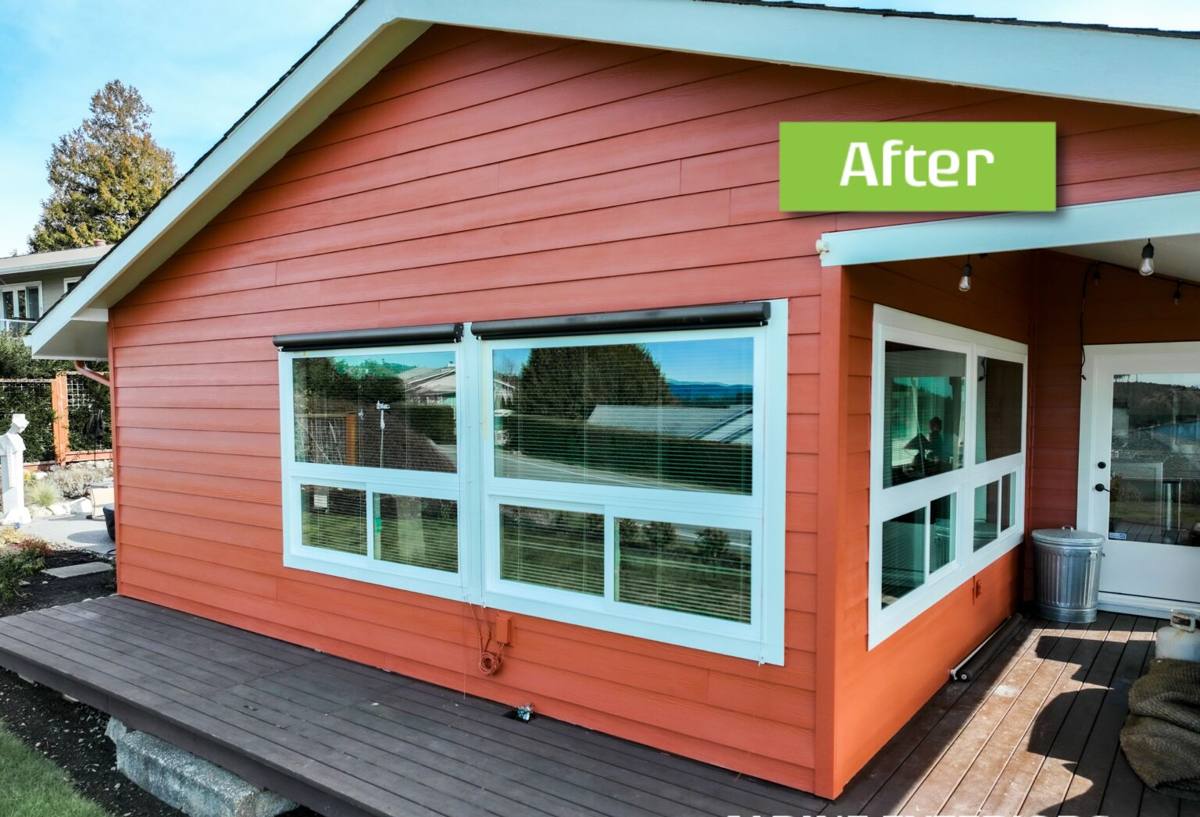
Why New Construction Isn't Just "Install and Move On"
Replacement window work fits into an existing wall assembly — you're often matching what's already there. New construction is the opposite: nothing exists yet, which means every layer has to be built in the right order and every detail has to be right the first time, because it's about to be buried under house wrap, flashing tape, and siding.
That includes rough opening sizing and squareness, the weather-resistive barrier (WRB) integration around each opening, sill pan flashing, head flashing, and the sequencing of window installation against the rest of the building envelope. Get the order wrong — windows in before the WRB is properly lapped, or flashing tape applied to a dirty or wet surface — and you've built a leak path into a brand-new house that won't show itself until the first hard storm off the water finds it.
What "Correct" Actually Means Here
On an exposed shoreline lot, correct means water has nowhere to go but back out. That means:
- Rough openings framed square, plumb, and to the manufacturer's specified tolerance — not "close enough"
- Sill pans installed with a positive slope to the exterior, not flat or reverse-sloped
- WRB integrated in proper shingle-lap order so water sheds down and out, never behind the barrier
- Flashing tape rated for the temperature and moisture conditions at install time, not just whatever was on the truck
- Head flashing that actually diverts water past the window, not just decorative trim
Choosing Window Materials for a Salt-Air, High-Moisture Site
Every window material has trade-offs, and those trade-offs shift when the house sits close enough to smell the salt air. What performs fine three miles inland doesn't always hold up the same way at Cottonwood Beach.
| Material | Salt-Air / Moisture Behavior | Maintenance Burden | Typical Fit for New Construction |
|---|---|---|---|
| Vinyl | Good — won't corrode or rot; UV can affect darker colors over time | Low | Common, cost-effective, wide size range |
| Fiberglass | Very good — dimensionally stable, resists salt corrosion well | Low | Strong choice for exposed, wind-loaded walls |
| Aluminum-clad wood | Good exterior protection if cladding and seals are intact; wood core vulnerable if moisture gets past the clad | Moderate | Popular for appearance; needs disciplined flashing detail |
| Bare aluminum | Can pit and corrode faster in salt-laden air without a quality finish | Moderate to high | Less common on new coastal builds unless finish-rated for marine exposure |
We don't push one material as "the" answer for every build. What we do is walk through how each option actually behaves once it's facing driving rain and salt spray year-round, so the choice on your plans matches how the house will really be used and where it sits.
Performance Ratings That Actually Matter on This Site
Manufacturer spec sheets are full of numbers, but only a few matter for a Cottonwood Beach build:
- U-factor — heat loss rating; Washington's energy code sets minimums, and coastal homes benefit from staying well under the max allowed
- Design Pressure (DP) rating — how much wind load the window and its anchoring can handle; matters more on an open, wind-exposed shoreline lot than on a sheltered inland one
- Water resistance rating — tested under simulated wind-driven rain, which is exactly the condition this stretch of Whatcom County produces regularly in fall and winter
- Air infiltration rating — lower numbers mean fewer drafts and less moisture-laden air finding its way into wall cavities
We size and spec windows to the exposure category of the specific lot, not a generic regional default — a wall facing open water gets treated differently than one tucked behind the house next door.
Coordinating With Your Builder's Schedule
Window installation on a new build isn't a standalone task — it's one link in a sequence that includes framing, WRB, flashing, siding, and trim. Windows have to go in at the right moment relative to each of those trades, not whenever it's convenient. Too early and the WRB isn't ready to integrate properly; too late and you're fighting completed trim work to get flashing right.
We work directly with general contractors and builders on scheduling, showing up when the opening is framed and the WRB is ready, and coordinating flashing details with whoever is running the siding crew. On a shoreline job, a half-day miscommunication about sequencing can mean redoing flashing work after siding is already up — expensive and avoidable.
Flashing and Moisture Management for the Long Term
The visible part of a window installation is maybe ten percent of what actually keeps water out. The rest is flashing detail that disappears behind siding and trim the day after it's installed. On a site dealing with driving rain off the water and a moss season that runs long, that hidden ten percent is what determines whether the house stays dry for the next thirty years or starts showing rot around openings in five.
We pay particular attention to sill pan drainage, back-dam details that stop water from migrating inward, and keeping sealant joints away from areas where moss and algae growth tend to trap moisture against the building. A window that's watertight on day one but traps moisture behind a poorly-drained sill will show problems eventually — usually right where you can't see it until the damage is done.
Our New-Construction Window Process
- Review plans and window schedule with the builder or homeowner, confirming sizes, egress requirements, and energy code compliance
- Site visit to assess wind exposure, sun orientation, and site-specific moisture concerns before finalizing material and rating specs
- Coordinate install timing with framing and WRB installation stages
- Verify rough openings for square, plumb, and correct dimension before setting a single window
- Install sill pan flashing, set windows to manufacturer specification, and integrate head and jamb flashing with the WRB in proper shingle-lap order
- Walk the completed openings with the builder before siding closes them in, so any issue is caught while it's still fixable
Checklist: What to Confirm Before Windows Go In
- Rough openings are framed to spec and checked for square
- WRB is installed and ready for proper flashing integration
- Sill pan flashing is planned with positive drainage to the exterior
- Window U-factor and DP rating match the energy code and exposure of this specific lot
- Egress-sized windows are placed correctly per code in bedrooms and required rooms
- Flashing tape and sealants are rated for the temperature and moisture conditions on installation day
- Installation timing is confirmed with the builder's siding and trim schedule
Why Local Experience on This Shoreline Matters
Window installation instructions read the same whether the house is going up in a dry inland subdivision or three hundred feet from the water. What's different is how much margin for error you have. A flashing detail that would slide by unnoticed inland can turn into a real moisture problem on a Cottonwood Beach lot within a couple of wet Whatcom County winters. A crew that's already worked this shoreline knows which walls take the worst of the driving rain, how far moss and algae growth typically creep up a north-facing sill, and where builders in this specific area tend to need extra attention on sequencing.
That familiarity doesn't show up on a spec sheet, but it shows up in how the house performs five and ten years down the road.
If you're planning new construction in Cottonwood Beach and want windows specified and installed correctly from the start, we're happy to walk the plans with you or your builder. Reach out for a free, no-pressure estimate using the form below.