 Birch Bay Window
 Windows Built for Point Whitehorn's Coastal Exposure
Point Whitehorn sits right up against the Strait of Georgia, and that location cuts both ways. The bluffs and shoreline give homes here some of the best views in Whatcom County, but they also put windows through conditions that inland Birch Bay properties simply don't deal with as much: near-constant salt-laden air, wind-driven rain that hits glass and trim sideways instead of straight down, and a wet, shaded off-season that keeps moss and algae going for months at a time. Windows on this stretch of coastline age differently than windows five or ten miles inland, and choosing and installing them without accounting for that is how homeowners end up with fogged glass, soft trim, and drafts years before they should.
This page is about one thing: installing correctly specified, energy-efficient windows on homes in and around Point Whitehorn, and doing it in a way that actually holds up to the local climate rather than just looking good on install day.
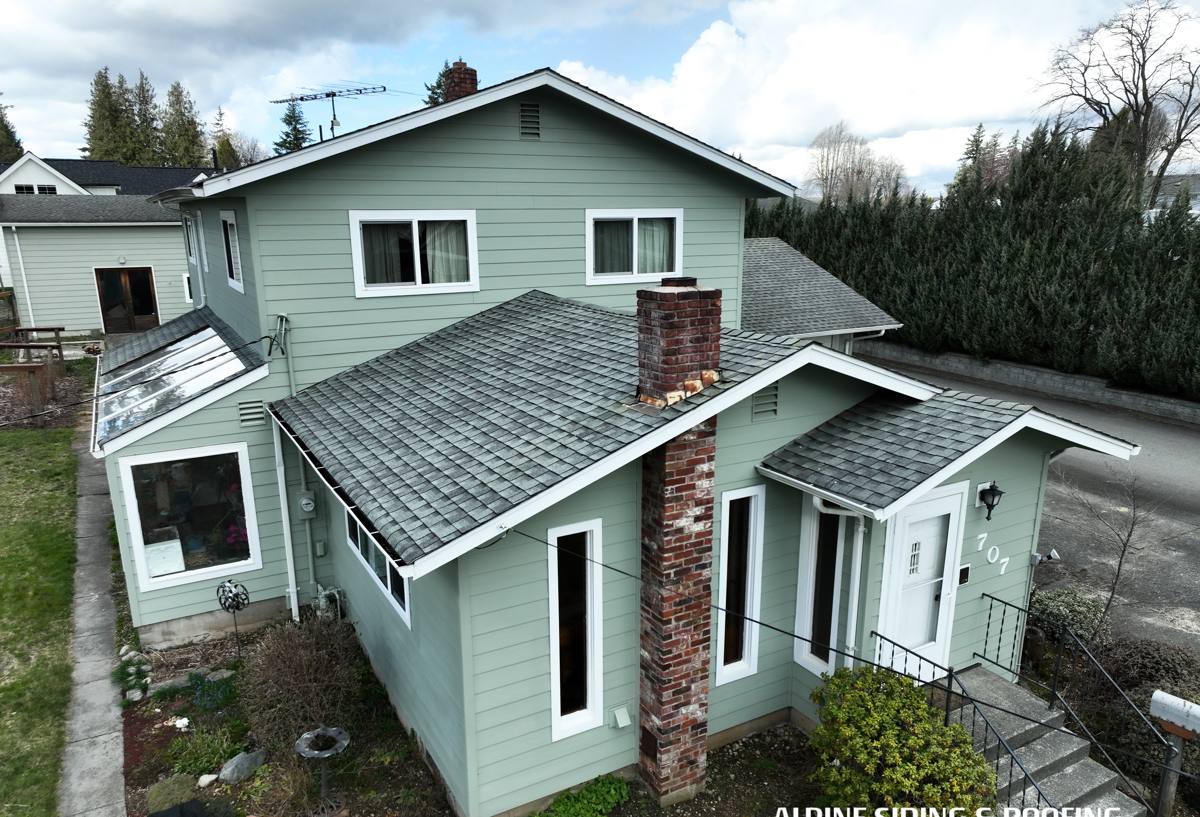
What Salt Air, Rain, and Moss Season Actually Do to a Window
Salt Air
Airborne salt is corrosive to hardware — hinges, locks, balance mechanisms, and screws — long before most homeowners notice anything wrong with the glass itself. On a standard inland home, window hardware might go a decade or more without issue. On a home exposed to onshore wind off the Strait, unprotected or low-grade hardware can start binding, corroding, or failing well ahead of that. Frame finishes matter here too; not every coating or cladding is rated to hold up the same way in a marine-influenced environment.
Driving Rain
Storms coming off the water don't just fall on a window, they push against it. That lateral pressure finds any weak point in the flashing, sealant, or window-to-wall transition and forces water behind the trim rather than off of it. A window that would perform fine in a sheltered inland yard can leak on a bluff-facing wall in Point Whitehorn if the flashing detail wasn't built for wind-driven water in the first place.
Moss and Algae Season
Whatcom County's wet, overcast stretch from fall through spring keeps north- and west-facing surfaces damp for long periods, which is exactly what moss and algae need to take hold. On windows, that growth shows up in frame corners, sill tracks, and anywhere water sits instead of draining. Beyond appearance, sustained moisture against a frame or sill is what eventually leads to soft wood, degraded sealant, or hardware corrosion if it's not designed to shed water and dry out between storms.
What "Energy-Efficient" Should Mean for This Location
Energy efficiency isn't just about the glass package — although that matters. It's about how well the whole assembly resists the specific combination of wind, moisture, and temperature swing that a coastal Whatcom County property deals with. For Point Whitehorn homes, that generally means paying attention to:
- U-factor — how well the window resists heat transfer; lower is better for our mild but often damp, wind-exposed winters
- Air infiltration rating — how tightly the window seals against wind-driven air, which matters more here than in sheltered inland locations
- Glass package — low-E coatings and gas-filled insulated glass units reduce both heat loss and condensation risk
- Frame material and finish — needs to hold up to salt exposure without degrading or requiring constant upkeep
- Water management design — sill design, weep paths, and drainage that actually move wind-driven rain back outside
A window that's efficient on paper but poorly sealed against wind-driven rain will still cause problems on a bluff-exposed wall — condensation, drafts around the frame, or eventual water intrusion that undermines the very efficiency it was supposed to deliver.
Frame Material Trade-Offs for a Marine Environment
There's no single "correct" frame material for every home — it depends on the home's exposure, style, and budget. Here's how the common options generally compare for a salt-air, high-moisture setting like Point Whitehorn:
| Frame Material | Coastal Performance | Maintenance | Typical Trade-Off |
|---|---|---|---|
| Vinyl | Good — won't rust or rot, handles moisture well | Low — occasional cleaning | Fewer color/style options; can flex on very large openings |
| Fiberglass | Very good — dimensionally stable, resists salt corrosion | Low | Higher upfront cost than vinyl |
| Aluminum-clad wood | Good on the exterior face if cladding and flashing are done right | Moderate — interior wood still needs normal upkeep | More installation-sensitive; any flashing gap invites moisture into the wood core |
| Bare wood | Weakest for direct salt/rain exposure without diligent upkeep | High — regular refinishing needed | Best warmth and character, but the most demanding option this close to the water |
We'll talk through which of these makes sense for your specific elevation and sun/wind exposure rather than defaulting to one product for every job — a sheltered wall and a bluff-facing wall on the same house can reasonably call for different answers.
What a Correct Installation Involves Here
Most window failures we see aren't a bad window — they're a poorly executed installation around a decent window. That gap matters even more on a property exposed to driving rain. A correct installation on a Point Whitehorn home includes:
- Removing and inspecting the old opening for hidden rot or moisture damage before anything new goes in
- Installing house wrap and flashing in the correct shingle-lap order so water is always directed outward and downward, never trapped behind trim
- Using sealants and flashing tapes rated for the temperature range and UV exposure they'll actually see, not just whatever's on the truck
- Setting the window level, plumb, and square, with proper shim placement so the frame isn't stressed and the seals aren't compromised
- Insulating the gap between the rough opening and the frame — not stuffed too tight, not left with voids
- Finishing interior and exterior trim so water can't collect against the sill
Every one of those steps is more consequential on a wind- and rain-exposed elevation than it would be on a calm, sheltered wall elsewhere in the county. Skipping or rushing any of them is usually where callbacks come from.
Our Process for Point Whitehorn Projects
1. On-Site Assessment
We look at each opening individually — orientation, wind exposure, current signs of moisture or hardware wear, and what's actually driving the replacement (comfort, drafts, condensation, appearance, or damage).
2. Straightforward Recommendation
You get options that fit your home and your exposure, with the honest trade-offs explained — not a single product pushed regardless of fit. If a lower-maintenance option makes more sense for a bluff-facing wall than what you initially had in mind, we'll say so.
3. Written Estimate
Clear scope, clear pricing, no pressure to sign on the spot.
4. Installation
Proper flashing, sealing, and finish work as outlined above, done by a crew that installs windows in this exact climate regularly — not occasionally.
5. Walkthrough
We check operation, seals, and finish work with you before calling the job done.
What Affects the Cost of a Window Project Here
Every home is different, but these are the main factors that move the price on a Point Whitehorn window job:
| Factor | Why It Matters |
|---|---|
| Number and size of openings | More or larger windows mean more material and labor |
| Frame material chosen | Vinyl, fiberglass, and clad-wood carry different material costs |
| Glass package | Upgraded low-E coatings and multi-pane assemblies cost more but perform better in our climate |
| Wall exposure | Bluff-facing or wind-exposed walls may call for extra flashing detail and time |
| Condition of the existing opening | Hidden rot or moisture damage found during removal adds repair work |
| New construction vs. replacement | Retrofitting into an existing wall takes more care than a new-build opening |
We don't quote sight-unseen for exactly this reason — what's behind the trim matters as much as the window itself, and we'd rather find that out before we give you a number than after.
Keeping Coastal Windows Performing Between Services
Good installation buys you years of trouble-free performance, but a few habits help windows in this environment go the distance:
- Rinse salt residue off frames and glass periodically, especially after windy storms off the water
- Keep weep holes and sill tracks clear of debris, moss, and standing water
- Check exterior caulking and trim seams once a year for cracking or gaps
- Operate hardware regularly so locks and hinges don't seize from disuse
- Address any soft trim, staining, or interior condensation early — those are early signals, not cosmetic issues
Why Local Installation Experience Matters
Whatcom County has a lot of microclimates within a short drive — a sheltered inland yard and an open bluff above the Strait can call for different flashing details and product choices even on the same street. A crew that regularly works Point Whitehorn and the surrounding Birch Bay shoreline already knows which walls take the brunt of the weather, which details actually hold up to salt air and driving rain year after year, and which shortcuts show up as callbacks two winters later. That's not something a general-market install crew, unfamiliar with this specific stretch of coastline, picks up on the first try.
If your windows are drafty, fogged, difficult to operate, or just due for an upgrade, we're happy to take a look and give you a straightforward, no-pressure estimate — no obligation, no hard sell. Use the form below to get started.