 Birch Bay Window
 Metal Roofing in Point Whitehorn: What This Coastal Corner Actually Needs
Point Whitehorn sits right up against the water in northern Whatcom County, and that location shapes everything about how a roof ages here. Homes in this stretch of Birch Bay take a steady diet of salt-laden air, wind-driven rain that comes in sideways off the Strait, and a long wet season that keeps roof surfaces damp for months at a time. A roof that would hold up fine twenty miles inland can start showing problems years early out here if it wasn't built for this specific exposure.
Metal roofing has become a popular answer to that problem for good reason. Done correctly, it handles salt air without the slow breakdown you see in some other materials, sheds heavy rain fast, and doesn't give moss the same foothold that a shingle roof does. But "done correctly" is doing a lot of work in that sentence — metal roofing is unforgiving of shortcuts, and a lot of what determines whether it performs for twenty-plus years happens in details most homeowners never see: fastener choice, underlayment, flashing sequence, and how the panels are seamed.
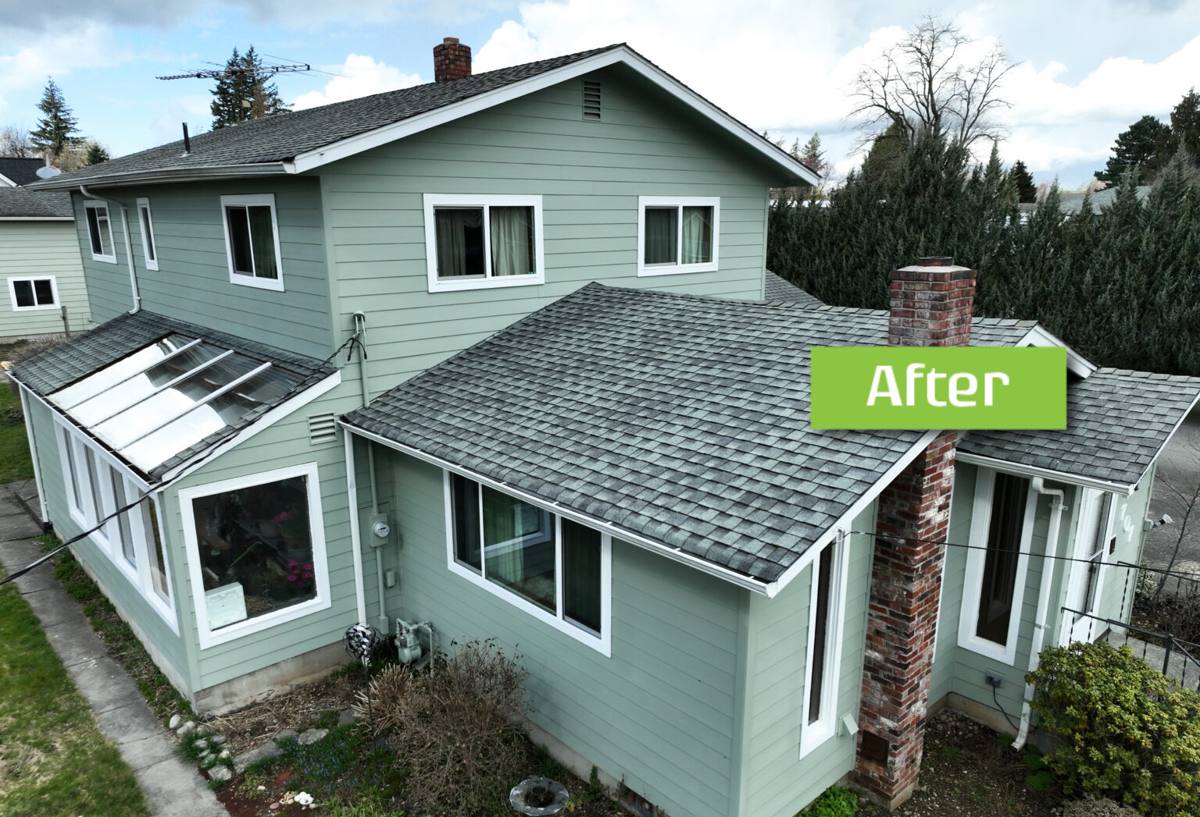
Why Salt Air and Moss Season Change the Job
Salt Air and Metal Compatibility
Not all metal roofing handles a marine environment the same way. Galvanized steel can corrode faster in salt air if the coating is thin or the cut edges aren't sealed. We favor coated steel systems and fastener hardware rated for coastal exposure, and we pay attention to dissimilar-metal contact — mixing incompatible metals or fasteners near the water accelerates corrosion in ways that aren't obvious until years later.
Moss and Standing Moisture
Whatcom County's long wet season means moss pressure is a fact of life, especially on shaded, north-facing slopes common in wooded areas near Point Whitehorn. Metal's smooth, sloped surface gives moss far less to grip than shingles, but valleys, low-slope sections, and anywhere debris collects can still hold moisture long enough for growth to start. Roof design and airflow underneath the panels matter as much as the material itself.
Driving Rain and Wind
Storms coming off the water don't just drop rain straight down — they push it sideways and up under laps and flashings that would stay dry in a calmer inland location. That's why lap coverage, sealant placement, and underlayment choice get more attention on a job like this than they might on a roof a few miles inland.
What a Correct Metal Roof Installation Involves
A metal roof is only as good as the layers underneath it and the details around every penetration. On a Point Whitehorn home, we treat these as non-negotiable:
- A synthetic or self-adhered underlayment rated for high-moisture exposure, not a bare minimum builder-grade felt
- Ice-and-water-shield style membrane at eaves, valleys, and any low-slope transition where wind-driven rain is most likely to find a gap
- Fasteners and flashing metal matched to the panel material to avoid galvanic corrosion, especially near the coast
- Proper panel overlap and sealant at every seam, sized for the actual slope and exposure of that section of roof
- Ridge and hip venting that lets the roof breathe without creating a path for wind-driven rain to get pushed inside
- Flashing details at chimneys, skylights, and wall intersections built for this specific roof, not a generic one-size template
Skipping or shortcutting any one of these doesn't usually cause a problem on day one. It shows up two, five, or ten years later as a leak, a rust stain, or moss establishing in a spot that should have stayed dry — and by then it's a repair job instead of a five-minute detail during install.
Comparing Roofing Approaches for a Coastal Point Whitehorn Home
| Factor | Standard Asphalt Shingle | Properly Installed Metal Roof |
|---|---|---|
| Moss resistance | Lower — rough surface gives moss a place to establish | Higher — smooth, sloped surface sheds debris and moisture faster |
| Wind-driven rain performance | Adequate if properly installed, but laps are more vulnerable | Strong when flashing and seams are done correctly |
| Salt air durability | Granule and mat breakdown can accelerate near the coast | Coated steel holds up well; depends on proper fastener/flashing matching |
| Typical lifespan | 15–25 years in this climate, often less on exposed slopes | 40+ years when installed to spec and maintained |
| Upfront cost | Lower | Higher |
| Maintenance needs | Periodic moss treatment, more frequent inspection | Lower ongoing maintenance, but fastener/seam checks still matter |
This isn't a knock on shingle roofing — it's a legitimate, budget-friendly option for a lot of homes. The comparison is here because a coastal, moss-prone location like Point Whitehorn is exactly the situation where metal's advantages tend to justify the higher upfront cost over the life of the roof.
Our Process for a Point Whitehorn Metal Roof
1. On-Site Assessment
We start by walking the roof and the attic space, not just looking at it from the ground. Slope, existing ventilation, decking condition, and exposure to prevailing wind and rain all factor into how we spec the job — a roof facing the water gets different flashing and underlayment attention than one tucked behind trees.
2. Straight Scope and Pricing
You get a clear written scope covering panel type, underlayment, flashing details, and ventilation plan before any work starts. Metal roofing costs vary based on panel style, roof complexity, and how much tear-off and decking repair is needed — we walk through those cost factors with you rather than handing over a number with no explanation.
3. Tear-Off and Deck Inspection
Once the old roofing is off, we inspect the decking for rot or soft spots — common on older Whatcom County homes that have taken on some moisture over the years. Any repairs happen before a single panel goes on, since covering a compromised deck with new metal just hides the problem.
4. Underlayment, Flashing, and Panel Installation
This is where the coastal-specific details from the section above get built in: high-moisture-rated underlayment, corrosion-appropriate fasteners, and flashing sequenced correctly at every penetration and edge.
5. Final Walkthrough
We walk the finished roof with you, cover what maintenance (if any) it needs, and make sure you understand the warranty coverage on both material and workmanship before we consider the job done.
Why a Crew That Already Works Point Whitehorn Matters
Roofing crews that work all over the region tend to install to a generic standard that works fine in milder, drier conditions. A crew that regularly works this specific stretch of Birch Bay coastline already knows which slopes on Point Whitehorn homes take the worst of the wind-driven rain, which fastener and flashing choices actually hold up against sustained salt exposure, and where moss tends to establish first on a shaded roof in this microclimate. That familiarity shows up in fewer callbacks and a roof that performs the way it's supposed to for its full lifespan, not just for the first few dry summers.
It also matters for something less visible: knowing which products and installation methods have a track record in this exact environment, versus ones that look good on a spec sheet but haven't been tested against a Whatcom County coastal winter. We make our product and installation choices based on that real-world performance, not on what's easiest or cheapest to install.
Signs an Existing Metal or Shingle Roof Needs Attention
- Rust streaking or discoloration at seams, fasteners, or flashing edges
- Moss or dark streaking building up on shaded or north-facing slopes
- Granule buildup in gutters (a shingle-roof sign of accelerated wear)
- Any staining on interior ceilings, especially after a windy rainstorm
- Loose, lifted, or visibly separated flashing around chimneys, vents, or skylights
- Panels or shingles that look fine from the ground but haven't been inspected in several years
None of these automatically mean a full replacement is needed — sometimes it's a flashing repair or a ventilation fix. But in a climate like this, catching it early is the difference between a small repair and a much bigger one.
Getting the Details Right the First Time
Metal roofing rewards a careful install and punishes a rushed one, and that gap matters more in a place that sees the kind of salt air, wind-driven rain, and moss pressure that Point Whitehorn does. The material itself isn't the hard part — the flashing, fastening, and ventilation decisions around it are what determine whether it performs for decades or starts causing problems within a few years.
If you're weighing a metal roof for your Point Whitehorn home, or you want a straight opinion on whether your current roof is holding up the way it should, we're happy to take a look and walk you through what we see. Reach out for a free, no-pressure estimate using the form below.