 Birch Bay Window
 Why Sandy Point Roofs Wear Differently
Sandy Point sits close enough to the water that every roof in the neighborhood is dealing with three things at once: salt-laden air off the Strait, driving rain that comes in sideways during winter storms, and a moss season that runs longer here than it does even a few miles inland in Whatcom County. None of these three things is dramatic on its own. Together, over a few winters, they add up to the kind of roof damage that starts small and gets expensive if it's ignored.
Salt air is corrosive to exposed metal — nails, flashing, vent boots, gutter hangers. Driving rain finds the smallest gap in flashing or underlayment and pushes water uphill under shingles instead of just running off. And moss doesn't just look bad; it holds moisture against the roof deck for months at a time, which is exactly the condition that rots sheathing and lifts shingles. A roof repair in Sandy Point has to account for all three, not just patch the visible problem.
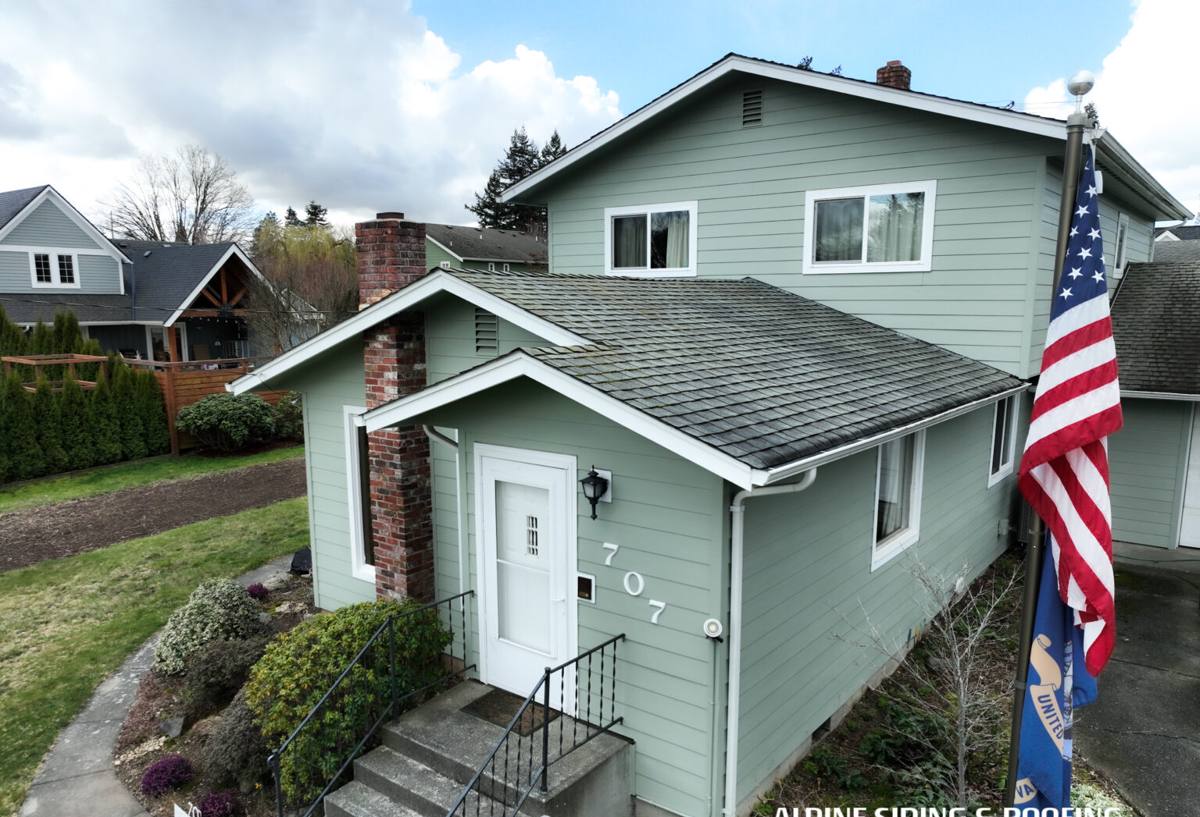
What a Sandy Point Home Actually Needs From a Roof Repair
A lot of roof repair work anywhere in western Washington is basically the same: fix the leak, replace the damaged material, move on. In Sandy Point, we build in a few extra steps because of the coastal exposure:
- Corrosion-resistant fasteners and flashing wherever bare metal is exposed to salt air, not just standard galvanized
- Extra attention to flashing details at chimneys, vent pipes, and roof-to-wall transitions, since wind-driven rain concentrates at these joints
- Moss and organic debris fully cleared before any repair is made — patching over moss just traps moisture under the new work
- Underlayment condition checked around the repair area, not just at the failure point, since chronic moisture exposure tends to compromise a wider area than the visible leak suggests
Skip any of these and a repair might hold for a season or two before the same problem resurfaces a foot away from where it was fixed.
The Roof Problems We See Most in Sandy Point
Moss and Algae Buildup
Whatcom County's damp, mild winters and shaded lots give moss a long runway to establish itself, and Sandy Point's proximity to the water keeps humidity levels high even when it isn't actively raining. Moss on a roof isn't cosmetic — its root structure lifts shingle edges, and the mat itself holds water against the roof surface long after a storm has passed.
Flashing Failure
Flashing is the metal that seals roof penetrations and transitions — chimneys, skylights, dormers, valleys. Salt air accelerates corrosion at seams and fastener points, and once flashing starts to fail, water finds its way in even on a roof with otherwise sound shingles.
Wind-Driven Rain Intrusion
Storms coming off the water don't just fall straight down — they drive rain sideways and even slightly upward under eaves and at exposed edges. Roofs with adequate underlayment and properly lapped shingles handle this fine. Roofs with aging or improperly installed underlayment can leak in a storm even without any single obvious point of damage.
Fastener and Metal Corrosion
Standard fasteners and flashing that would last decades a few miles inland can show real corrosion in a coastal environment within a much shorter window. This is one of the most common root causes we find behind a leak that otherwise looks like it "came out of nowhere."
What a Correct Repair Actually Involves
A roof repair done right isn't just sealant and a new shingle. Here's what we consider the minimum for a repair that actually lasts in a Sandy Point exposure:
- Full inspection of the affected area and a reasonable perimeter around it, not just the spot where the leak is showing up inside the house
- Removal of moss, organic debris, and any deteriorated material down to sound roof deck or underlayment
- Assessment of the roof deck itself for soft spots or rot, since a leak that's been active for a while often affects the sheathing underneath
- Replacement of damaged shingles, flashing, or underlayment with materials matched as closely as possible to the existing roof
- Correct fastening and sealing at all new material, with attention to how water will move across that section in a driving rain
- A final check that the repair ties in cleanly with the surrounding roof so it isn't a visible or functional weak point going forward
Where we can't get a good color or profile match on shingles — which happens with older roofs — we'll tell you honestly rather than mismatch materials just to finish the job quickly.
Our Process, Start to Finish
Inspection and Diagnosis
We start on the roof, not just in the attic looking up at a stain. Most leaks show up inside the house well away from where the actual failure point is on the roof, so we trace the path rather than guessing based on where the ceiling is wet.
A Written Repair Plan
Before any work starts, you get a clear explanation of what's actually wrong, what needs to be done to fix it, and a straightforward estimate. If we find the damage is more extensive than a simple repair can address, we'll say so — and explain why — rather than patching something that needs more.
The Repair Itself
We clear debris and moss from the work area, remove and replace damaged material, and rebuild flashing and underlayment details to current best practice, even if the original installation didn't have it. Roofing standards and materials have improved over the decades; a repair is a reasonable time to bring a section up to a better standard, not just replicate what was there.
Cleanup and Walkthrough
We clear the work area of old material and debris and walk you through what was done and why, including anything worth keeping an eye on going forward — for example, a section of roof with heavier moss regrowth potential due to shade or tree cover.
Repair or Replace? How We Help You Decide
Not every roof problem in Sandy Point calls for a full replacement, and not every leak is a candidate for a simple patch. The right call depends on the roof's age, how widespread the damage is, and how it was built originally. Here's how we think through it:
| Factor | Favors Repair | Favors Replacement |
|---|---|---|
| Roof age | Under 15-20 years, depending on material | Nearing or past expected material lifespan |
| Extent of damage | Localized — one section, one penetration | Multiple areas, or damage found in more than one inspection |
| Deck condition | Sound sheathing, no widespread rot | Soft spots or rot found in more than one area |
| Material availability | Matching shingles/material still obtainable | Discontinued material, poor match available |
| History of repairs | First or second repair on this roof | Repeated repairs in the same general area |
We'll give you our honest read on where your roof falls on this table — including telling you when a repair is the right, lower-cost move, even if a replacement would be a bigger job for us.
Managing Moss Over the Long Term
Because Sandy Point's moss season runs long, a one-time repair without any follow-up moss management tends to see the same problem return within a couple of years. A few habits make a real difference between repairs:
- Keep overhanging branches trimmed back to reduce shade and debris buildup on the roof surface
- Clear gutters and valleys of needles and leaves at least twice a year, since clogged gutters keep water sitting against roof edges
- Have moss physically removed rather than just treated, since chemical treatment alone doesn't address moss that has already rooted into the shingle surface
- Have the roof looked at after any major windstorm, since that's when flashing and shingle damage is most likely to occur even without an obvious leak showing up right away
Signs Your Sandy Point Roof Needs a Repair Now
Some problems are obvious. Others show up as small clues long before there's an active leak inside the house. Worth checking for:
- Visible moss growth, especially on north-facing or shaded sections of the roof
- Shingles that look lifted, curled, or out of alignment with the surrounding roof
- Rust streaking or visible corrosion at flashing, vent boots, or metal edges
- Granules collecting in gutters or at the base of downspouts
- Water stains on interior ceilings, especially after a storm with strong wind
- Daylight visible through the roof deck from inside the attic
If any of these look familiar, it's worth having the roof looked at before the next round of winter storms rather than after.
Why Local Experience in Sandy Point Matters
A crew that already knows Sandy Point's exposure — the salt air, the wind direction storms typically come from, how long moss season actually runs here compared to more sheltered parts of Whatcom County — starts an inspection already knowing what to look for. That matters for a repair, because the most common mistake in coastal roof work isn't bad workmanship on the visible fix; it's not accounting for the conditions that caused the damage in the first place, so the same failure shows up again a season later.
We'd rather do the extra ten minutes of inspection and the slightly more thorough flashing detail up front than come back to the same house for the same leak next winter.
If you're seeing moss buildup, a slow leak, or storm damage on a Sandy Point roof, we're glad to take a look and give you a clear, honest assessment — no pressure, no obligation. Use the form below to request a free estimate.