 Birch Bay Window
 Building New in Sumas? The Windows Are Not an Afterthought
When a home is going up from the ground, the windows are one of the few components that get exactly one chance to be installed correctly. There's no siding to peel back later, no old flashing to inspect and replace — the rough openings are framed, the weather-resistive barrier goes on, and the windows either get integrated into that assembly properly or they don't. In Whatcom County, where new construction in and around Sumas has to stand up to salt-laden air, long stretches of driving rain, and a moss season that seems to run longer every year, that first install is what determines whether the homeowner is dealing with window problems in year three or year twenty-three.
New-construction windows are a different discipline from replacement work. Replacement windows are chosen to fit into an existing opening with minimal disruption to siding and trim. New-construction units have a nailing fin designed to be integrated directly into the wall's water management system before the exterior finish ever goes on. Get that sequencing wrong — even slightly — and you've built a leak path into the wall that won't show itself until the drywall inside is already stained.
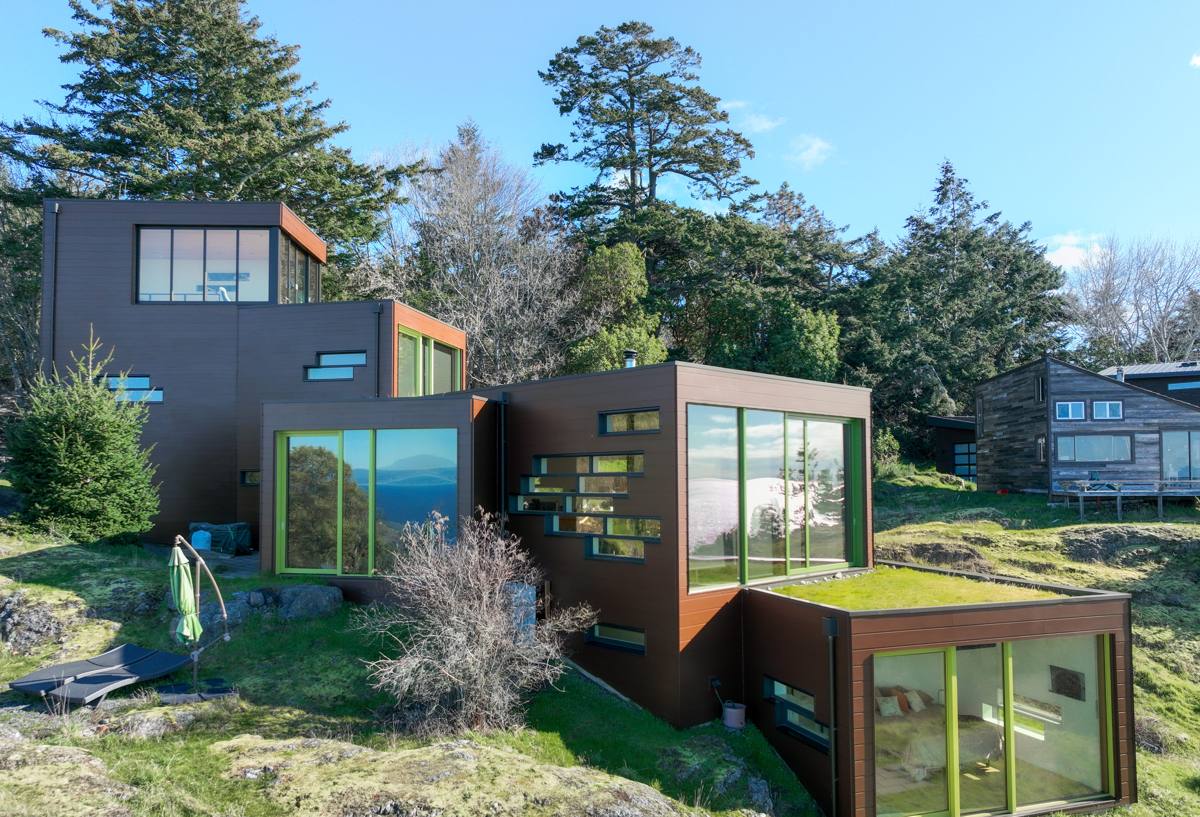
What Sumas-Area Homes Are Actually Up Against
Whatcom County sits in a spot where marine air off the Salish Sea, wind funneling down from the foothills, and a genuinely wet climate all combine. That means:
- Salt-influenced air that accelerates corrosion on unprotected fasteners, hardware, and untreated metal flashing over time
- Driving, wind-blown rain that hits window assemblies at an angle, not just straight down — a detail that matters enormously for flashing design
- A long moss and algae season that keeps exterior surfaces damp for extended stretches, which punishes any window or trim detail that traps moisture instead of shedding it
- Temperature swings between damp winters and warmer, drier summers that stress sealants and glazing seals over the life of the window
None of this means a home in Sumas needs exotic materials. It means the ordinary details — flashing laps, sill pans, sealant choice, fastener selection — have to be done right every single time, because this climate doesn't forgive shortcuts the way a drier region might.
New-Construction vs. Replacement: Why We Draw a Hard Line
We get asked fairly often why a "new-construction window" is treated as its own category rather than just a window that happens to go into a new house. The answer is in how the unit is designed to be installed.
New-Construction Windows
These have an integral nailing flange around the perimeter. The flange gets set into the wall's weather-resistive barrier using a specific shingle-lap sequence — sill first, then jambs, then head — so that any water that gets behind the siding is directed down and out, never trapped against the frame. This only works if it happens before the siding and trim go on.
Replacement (Insert) Windows
These are built to slide into an existing frame with the old exterior finish left mostly intact. They rely on different sealing and flashing logic entirely. Installing a replacement-style unit in new construction — or vice versa — is one of the more common corner-cutting mistakes we see, and it sets up water-management problems that don't show up until the first real wet season.
What a Correct New-Construction Install Involves
On a new build in Sumas, the window install is really a sequence of small, specific steps, each one dependent on the last being done right:
- Rough openings checked for square, level, and correct dimension before any window arrives on site
- Sill pan flashing installed to catch and direct any water that reaches the sill back outward
- Weather-resistive barrier integrated with the flashing in the correct shingle-lap order — this is the step most often rushed on production builds
- Window set, shimmed, and fastened per the manufacturer's structural requirements, not just "however it fits"
- Flange sealed and integrated with the house wrap or building paper at jambs and head
- Interior air-sealing with low-expansion foam or backer rod and sealant, so the insulation performs the way it's rated to
- Exterior trim and siding tied in so water sheds away from every joint, not toward it
Skipping or rushing any one of these doesn't usually cause an immediate problem. It causes a slow one — moisture intrusion that shows up as staining, soft trim, or mold growth a few winters down the road, right about when the original builder is long gone.
Choosing Frame Material and Glass for This Climate
There's no single "correct" window product for every new build — the right choice depends on the home's design, budget, and exposure. But some trade-offs matter more here than in a drier inland climate.
| Frame Material | Strengths in This Climate | Trade-Offs to Plan For |
|---|---|---|
| Vinyl | No corrosion risk, low maintenance, good value | Frame flexes more in temperature swings; quality varies a lot between manufacturers |
| Fiberglass | Dimensionally stable, handles moisture and temperature cycling well | Higher upfront cost than vinyl |
| Wood (clad exterior) | Classic look, good for architectural styles that call for it | Interior wood still needs protection from condensation; exterior cladding quality matters a lot |
| Aluminum | Strong, slim sightlines | Poor insulator unless thermally broken; more prone to condensation in damp climates |
On glass, we generally steer new-construction clients in this area toward double-pane units with a Low-E coating and argon fill as a baseline, with the specific coating tuned toward solar heat gain control rather than maximum heat retention — Western Washington's issue is usually damp and mild, not brutal cold. Whatever the coating, wide sightlines and heavy glass require frames rated for the actual weight and wind load the design calls for, especially on larger picture windows increasingly common on new builds in this area.
A Word on Warranty Structure
Some manufacturers offer longer or more generous-sounding warranties than others. We factor warranty terms into product recommendations, but we weigh them alongside real-world moisture performance, installation sensitivity, and how consistently we've seen a given line perform in this specific climate — not the length of the warranty period alone.
Our Process on New-Construction Jobs Near Sumas
Because we work regularly on new builds throughout Whatcom County, our process is built around coordinating with the framing and siding schedule rather than working around it:
- Plan review — we look at rough opening sizes and window schedules before units are ordered, catching mismatches early
- Site timing — we coordinate directly with the builder or GC so windows go in at the right point in the framing sequence, not before the wall is ready or after siding has already started
- Flashing and sill pan installation — done to a consistent standard on every opening, not just the ones a supervisor happens to check
- Documentation — photos of flashing and sill details before they're covered by siding, so there's a record of what's behind the wall
- Final walk-through — every unit operated, checked for square, and inspected for a clean, sealed exterior line before we call the job done
Why Hiring a Crew That Already Works This Area Matters
New-construction window installation isn't especially exotic work, but it is unforgiving of inconsistency. A crew that installs windows across different climates and conditions without a local baseline can do fine work in a dry region and still under-detail flashing for a place that gets sustained, wind-driven rain and a long damp season. A crew based in and around Whatcom County has already seen what happens when a sill pan is skipped, when a shingle-lap sequence gets reversed, or when a fastener choice starts showing corrosion a few years in — and adjusts for it as standard practice, not as an afterthought.
That local pattern-recognition is also what makes coordination with builders smoother. Framing crews, siding crews, and window installers all have to hand off clean work to each other on a tight new-construction schedule. A crew unfamiliar with the pace and expectations of local builds is more likely to create scheduling friction — or to install fast and hope the flashing works out.
What Affects Cost on a New-Construction Job
Every quote is specific to the home, but the main variables that move the number on a Sumas-area new build are consistent:
| Factor | Why It Matters |
|---|---|
| Number and size of openings | More openings and larger units mean more material and labor per window |
| Frame material chosen | Vinyl, fiberglass, wood-clad, and aluminum carry different material costs |
| Glass package | Upgraded Low-E coatings, tempered glass where code requires it, and specialty glazing add cost |
| Window style | Fixed picture windows are simpler than operable casements, sliders, or awnings with hardware |
| Site access and scheduling | Working around a tight framing schedule or difficult site access can affect labor time |
We give straightforward, itemized estimates rather than a single lump number, so a homeowner or builder can see exactly what's driving the cost and where there's room to adjust.
Get a Straight Answer Before You Order Windows
If you're framing a new home in the Sumas area, or working with a builder who is, it's worth getting a window contractor's eyes on the plans before units are ordered — it's much easier to fix a mismatched rough opening or a glass spec on paper than after the walls are closed in. We offer free, no-pressure estimates for new-construction window work throughout the Birch Bay and greater Whatcom County area, with a straightforward look at what your specific build needs and what it will cost to do right the first time.