 Birch Bay Window
 Why Bellingham-Area Homes Need Windows Built for This Climate
Homes around Bellingham and Birch Bay sit close enough to the water that salt air is a daily fact of life, not an occasional nuisance. Add Whatcom County's driving winter rain and a moss season that can stretch from fall through spring, and a window isn't just glass in a frame — it's a sealed system that has to hold up against corrosion, wind-driven moisture, and constant damp shade in a lot of yards. A window that would be perfectly fine in a drier inland climate can fail early here if it wasn't specified and installed with this environment in mind.
Custom windows matter most in older homes, additions, and remodels where the rough openings aren't standard sizes, or where the original windows were installed decades ago under different codes and different expectations for energy performance. A custom approach means the window is built to fit the actual opening and the actual exposure of that wall — not a one-size-fits-all catalog unit.
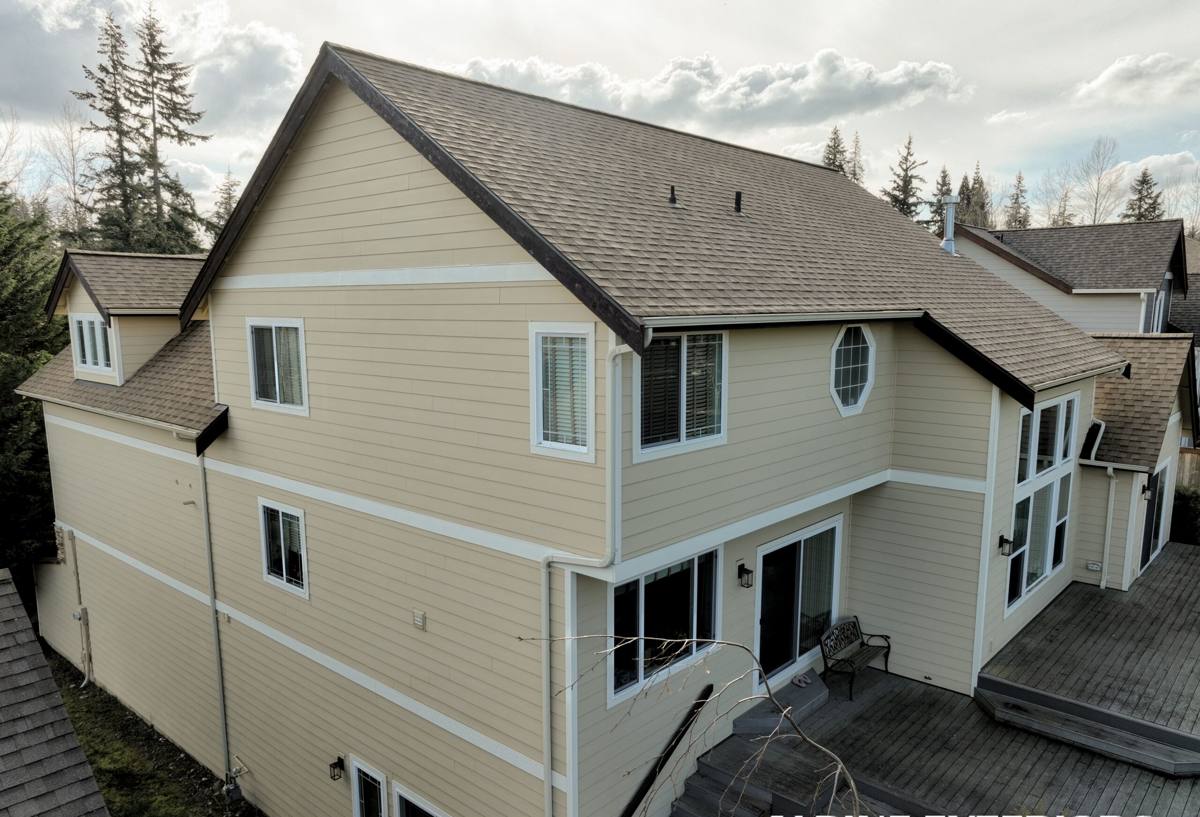
What "Custom" Actually Means on a Real Job
Measured, Not Guessed
Every opening gets measured on-site, not estimated from a floor plan. Older homes settle, framing shifts, and no two openings in a house are ever exactly identical — even when they look that way from the outside. Custom sizing avoids the gaps and shims that turn into leak points later.
Retrofit vs. Full-Frame Replacement
Not every job needs the wall opened up. A retrofit (or "pocket") replacement reuses the existing frame and trim, which is faster and less invasive, but it only makes sense if that existing frame is still dry and structurally sound. A full-frame replacement removes everything down to the rough opening, which costs more and takes longer, but it's the right call anytime there's evidence of water intrusion, rot, or a frame that was never properly flashed in the first place. Part of doing this job honestly is telling a homeowner which one they actually need, not defaulting to whichever is easier to sell.
Frame Material: What Actually Holds Up Near Salt Air
Material choice matters more here than in a lot of inland markets, because salt-laden air accelerates corrosion on hardware and finishes that would otherwise last for decades. Here's how the common options generally compare for this specific environment:
| Frame Material | Salt-Air / Moisture Performance | Maintenance | Typical Cost Position |
|---|---|---|---|
| Vinyl | Good — won't corrode or rot, handles damp exposure well | Low — occasional cleaning | Lower to mid |
| Fiberglass | Very good — dimensionally stable, resists warping in wet/dry cycling | Low | Mid to higher |
| Wood or wood-clad | Requires diligence — attractive, but the wood core is vulnerable if any seal fails | Higher — periodic refinishing, moisture checks | Higher |
| Aluminum | Weaker fit here — prone to corrosion and condensation without added thermal breaks | Moderate | Varies |
We're not going to tell a homeowner a wood window is a bad product — plenty of them are beautiful and well-made. But we will be honest that in a house exposed to salt spray and long wet winters, a wood frame carries a real ongoing maintenance obligation, and that's a trade-off worth understanding before you commit to it, not after.
Glass and Sealing Choices That Matter Locally
Low-E coated glass is close to standard now, and for good reason in a region with as many overcast days as Whatcom County gets — it manages heat loss without darkening the room the way older tinted glass did. Argon or krypton gas fills between panes add insulating value, which matters for comfort near a wall that takes direct wind off the water.
Double-pane glass with a good Low-E coating is adequate for most homes here. Triple-pane adds real value on north- or west-facing walls that catch the worst of the wind and rain, or in rooms where condensation on cold glass has been a recurring problem — but it comes at a cost and weight increase that isn't always necessary for every opening in a house.
The weatherstripping and hardware matter as much as the glass. Stainless or corrosion-resistant hardware is worth the modest upcharge on a house this close to salt air — standard hardware can start showing pitting and stiffness within a few years in this environment.
Installation Details That Decide Whether a Window Lasts
Most window failures we see aren't glass failures — they're installation failures. The window itself can be excellent and still leak or fog prematurely if the flashing and sealing around it weren't done correctly.
- Proper flashing integration with the existing weather-resistive barrier, layered so water sheds outward and down, never inward
- Sill pan flashing under every opening, so any water that does get past the sill has somewhere to drain instead of pooling against the framing
- Backer rod and compatible sealant at the exterior joint — sized and applied correctly, not just caulked over gaps
- Shimming that supports the frame evenly without bowing it, which affects how well the sash seals for the life of the window
- Interior air sealing at the rough opening, which matters as much for condensation control as the exterior sealing does
In a climate with this much sustained wind-driven rain, skipping or rushing any one of these steps is exactly how a brand-new window ends up with water stains on the drywall inside two winters.
Our Process for a Bellingham-Area Custom Window Project
The work follows the same sequence on every job, adjusted for the specifics of the house:
- On-site assessment. We look at existing frames, siding condition, and any signs of past water intrusion before recommending retrofit or full-frame replacement.
- Precise measurement. Every opening is measured individually — we don't order from a single set of dimensions for a whole house.
- Material and glass selection. We walk through the trade-offs above based on which walls take the most weather, not a blanket recommendation for the whole project.
- Ordering and lead time. Custom units are built to spec, so there's a manufacturing lead time to plan around — we give a realistic window for this up front rather than an optimistic guess.
- Installation. Flashing, sealing, and shimming are done to the standard above on every unit, not just the ones that are easy to reach.
- Final check and cleanup. Every window is operated, checked for square and proper seal, and the site is cleaned up before we call the job done.
Checklist: What to Confirm Before Hiring for This Kind of Work
- Ask whether they'll recommend retrofit or full-frame replacement, and why — a straight answer here tells you a lot
- Confirm they measure every opening individually rather than working off one set of dimensions
- Ask specifically how they handle sill pan flashing and exterior sealant, not just "we install windows"
- Get the manufacturer's warranty terms in writing, including what voids it
- Ask how they'd handle a leak discovered a year after installation — a real answer beats a vague guarantee
- Confirm licensing, insurance, and that they're familiar with local permitting requirements for the work involved
Living With Windows Here: Moss Season and Salt Air Maintenance
Even a well-installed window benefits from a little seasonal attention in this climate. Tracks and weep holes can collect debris and moss spores during the wet months, and if weep holes get blocked, water that's supposed to drain back outside can back up instead. A simple annual check — clearing tracks, confirming weep holes are open, and rinsing accumulated salt residue off frames near the water — goes a long way toward getting the full service life out of a window investment. None of this is complicated, but it's easy to overlook until a problem shows up.
Why Local Experience Actually Matters Here
A crew that works Bellingham and the greater Birch Bay area regularly has already seen how houses in this specific exposure behave — which walls take the worst weather, which older homes tend to have flashing shortcuts from a previous remodel, and what actually holds up season after season versus what looks fine on install day. That's not something you can fully substitute with a product spec sheet. It also means straightforward answers about local permitting and realistic expectations for how a given house will perform, based on jobs already done nearby rather than general assumptions.
If you're weighing options for a Bellingham-area window project — whether it's a couple of problem windows or a full-house replacement — we're happy to take a look and give you a straightforward, no-pressure estimate. There's no obligation, and you'll get a clear answer on what your home actually needs.