 Birch Bay Window
 Metal Roofing for Bellingham's Coastal Climate
Bellingham sits close enough to the water that every roof in the area deals with the same combination of problems: salt-laden air blowing in off the bay, long stretches of driving rain through fall and winter, and shade from mature trees that keeps roofs damp long after a storm passes. Asphalt shingles were never really designed for that combination, which is why so many Bellingham homeowners are looking at metal roofing when it's time to replace what's up there now.
This page is about metal roofing specifically for homes in and around Bellingham. Not a general overview of metal roofing everywhere — what this climate actually does to a roof, what a correctly installed metal system needs to hold up here, and how we approach the job on a house in this part of Whatcom County.
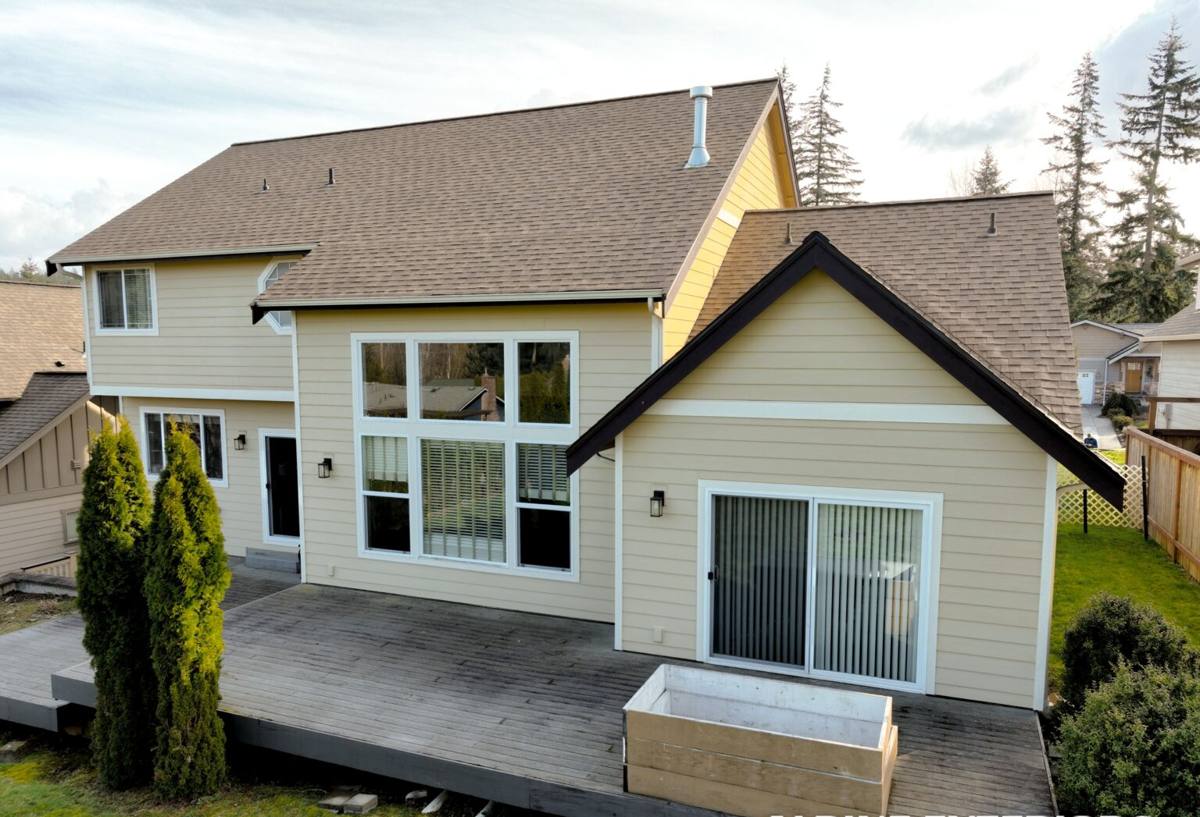
What Salt Air, Rain, and Moss Do to a Roof Over Time
Three things wear on roofs in this area more than almost anywhere else in the state:
- Salt air. Proximity to Birch Bay and the wider Salish Sound means airborne salt settles on every exterior surface, including the roof. Over years, that accelerates corrosion on unprotected metal fasteners, flashing, and any bare steel edges.
- Driving rain. Storms here don't just fall straight down — wind pushes rain sideways into laps, seams, and flashing details that a calmer climate might never test. A roof that's "close enough" on flashing work will eventually leak here; it's a matter of when, not if.
- Moss and algae. Shade, moisture, and mild temperatures year-round make Whatcom County ideal moss habitat. Moss doesn't just look bad — it holds water against roofing material and can work its way under shingle tabs and around fasteners.
A metal roof doesn't make any of these three factors disappear. What it does is change how much they matter, provided the system and the installation are matched to the conditions.
Metal Roofing Systems We Install
Not all metal roofing is the same product wearing different colors. The panel type, the fastening method, and the coating all affect how a roof performs against salt air and standing moisture specifically.
| System | How It's Fastened | Best Fit For | Maintenance Load |
|---|---|---|---|
| Standing seam steel or aluminum | Concealed clips, no exposed fasteners on the field of the roof | Homes wanting the lowest long-term maintenance and cleanest look | Low — few penetration points for water or corrosion to start |
| Exposed-fastener steel panels | Screws driven through the panel face with a rubber washer | Outbuildings, shops, or budget-conscious re-roofs | Moderate — washers age and need periodic checking |
| Stone-coated steel | Interlocking panels, fastened similar to standing seam | Homeowners who want a shingle or shake profile with metal's durability underneath | Low to moderate |
For most Bellingham homes, we steer clients toward standing seam or stone-coated steel. Exposed-fastener panels cost less up front, but every screw is a potential leak point once the washer starts to break down — and in an area with this much sustained rain, that's a maintenance item you don't want to be tracking on a ladder every couple of years.
Steel vs. Aluminum
Both hold up well here when properly coated and installed. Steel is the more common choice regionally and, with a quality paint system, resists coastal salt exposure well. Aluminum won't rust by nature, which some homeowners prefer for extra peace of mind this close to the water, though it typically comes at a higher material cost. Neither is the wrong answer — it's a trade-off between upfront cost and that additional layer of corrosion certainty.
The Details That Separate a Correct Install from a Problem Roof
Underlayment
Metal roofing needs a synthetic, high-temperature underlayment underneath it — not the felt paper used under some shingle roofs. In a climate where wind-driven rain regularly gets pushed sideways into seams, the underlayment is the backup layer that keeps a roof dry if wind ever forces water past the metal itself. This is not an area to cut corners in Bellingham's weather.
Flashing and Penetrations
Every place a roof meets a wall, chimney, vent pipe, or skylight is a place water is trying to get in. Flashing details take more skill and more time than the flat panel runs, and they're the single most common source of leaks on any roof — metal or otherwise — when they're rushed. We treat flashing as the part of the job that determines whether the roof actually performs, not just a finishing touch.
Fasteners and Panel Movement
Metal panels expand and contract with temperature swings. Fastening systems need to allow for that movement, especially on standing seam roofs where clips — not screws through the panel — are what let the metal move without stressing the seams. Fasteners and clips also need to be a metal compatible with the panel, or you introduce galvanic corrosion, which shows up faster in salt air than it would inland.
Moss and Algae on a Metal Roof
Metal roofing gives moss and algae a much harder surface to establish on compared to asphalt shingles, and the smooth, non-porous finish sheds water fast enough that debris has less time to sit and hold moisture. That's a real advantage in a moss-heavy climate like this one.
It isn't moss-proof, though. Debris that collects in valleys, against chimneys, or anywhere water flow slows down can still trap enough moisture for moss and algae to get a foothold over time, especially under tree cover. Keeping valleys and low points clear is still part of owning a metal roof here — it's just a much lighter maintenance load than scraping moss off shingles every year or two.
Our Process for a Bellingham Metal Roof
Inspection and Estimate
We start by getting on the roof and into the attic if accessible — not just walking the yard and guessing. We're checking deck condition, existing ventilation, flashing points, and anything the current roof is already telling us about how water moves across that particular house.
Tear-Off or Overlay
Metal can sometimes go over an existing roof depending on local code, deck condition, and the type of system chosen, but in a rain-heavy climate we're conservative about this. If the decking underneath has any moisture damage, covering it up instead of addressing it is how a good-looking new roof develops problems in a few years. We'll tell you honestly which situation you're in.
Install Day
Underlayment goes down first, followed by flashing at every penetration and transition, then panels — worked methodically so seams and laps are consistently oriented against prevailing wind and water flow direction for this site.
Final Walkthrough
We walk the finished roof and the property with you, cover what maintenance (if any) the system needs, and make sure gutters and downspouts are clear and functioning with the new roofline before we consider the job done.
What Metal Roofing Costs in This Area
Metal roofing costs more upfront than asphalt shingles — that's a straightforward trade-off, not a sales pitch. What it costs on any given house depends on a handful of factors:
| Factor | Why It Moves the Price |
|---|---|
| Panel system chosen | Standing seam runs higher than exposed-fastener panels due to material and labor complexity |
| Roof complexity | Valleys, dormers, and multiple roof planes mean more flashing work and cutting |
| Tear-off vs. overlay | Removing an old roof adds labor and disposal cost but avoids covering hidden problems |
| Deck condition | Any rotted or moisture-damaged decking found during tear-off needs replacing before panels go on |
| Steel vs. aluminum | Aluminum typically carries a higher material cost than steel |
The honest way to know what your roof will cost is a walk-through and a written estimate — broad online price ranges rarely account for what's actually going on with a specific roof and house.
Keeping a Metal Roof Working for Decades
Metal roofing is genuinely low-maintenance compared to shingles, but "low" isn't "none." A short annual routine keeps it performing the way it's designed to:
- Clear leaves and debris out of valleys and around any roof penetrations, especially under overhanging trees
- Check that gutters and downspouts are flowing freely so water isn't backing up under the roof edge
- Look for any scuffed or scratched paint after storms or fallen branches, since exposed bare metal is where corrosion can start
- Have flashing around chimneys, skylights, and vents checked periodically rather than waiting for a leak to show up inside
- After any major windstorm, do a visual check for loose panels or fasteners before the next rain
Why a Local Birch Bay-Area Crew Matters
A roofing crew that works Bellingham and the surrounding Whatcom County area regularly knows how this specific climate behaves — how wind tends to drive rain during a fall storm coming off the water, how much moss pressure a shaded north-facing slope actually sees here, and what flashing details hold up over years of that pattern versus what only looks right on install day. That's different from general roofing knowledge, and it shows up in how a roof performs five and ten years down the line, not just how it looks the week it's finished.
It also matters for warranty support and any future service. A crew based in the area is the one that's still around and reachable if you ever have a question about your roof down the road — not a name from a job that moved on to the next region.
If you're weighing metal roofing for a home in the Bellingham or Birch Bay area, we're happy to take a look and walk you through what it would actually involve for your roof — no pressure, no obligation. Fill out the form below and we'll get a free estimate scheduled.