 Birch Bay Window
 Window Installation Built for Blaine's Coastal Conditions
Blaine sits at the northern edge of Whatcom County, close enough to Semiahmoo Bay and Drayton Harbor that salt air is a daily fact of life for most homes in town, not just the ones with a water view. That salt-tinged marine air, combined with rain that regularly arrives sideways instead of straight down and a moss season that can run for most of the year, puts more demands on a window opening here than a lot of homeowners expect. Windows are one of the few places on a house where the wall assembly is intentionally interrupted — framed, flashed, and sealed around a manufactured unit — and that interruption is exactly where a marginal installation shows its weaknesses first.
This page is specifically about window installation for Blaine homes: what the local climate asks of a window opening, what a correct install actually involves, how our process works, and why it's worth hiring a crew that already works in this part of the county rather than one learning the local conditions on your house.
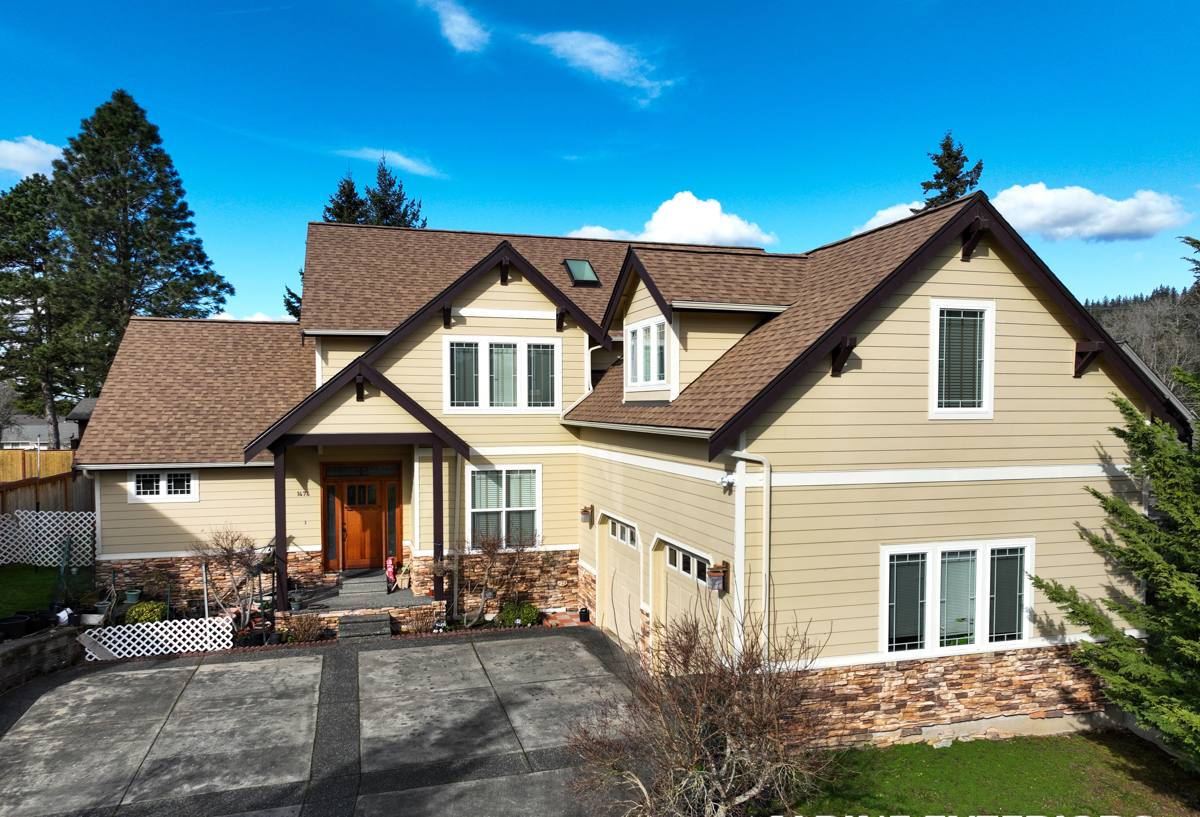
What Blaine's Climate Demands From a Window Installation
Salt Air and Hardware Corrosion
Homes in and around Blaine take on salt-laden air as an everyday condition, and that air is hard on window hardware, fasteners, and lower-grade flashing metal over time. An installer using standard-grade hardware because it's cheaper or easier to source is making a choice that shows up as pitted locks, stiff cranks, and rust streaking well before it would on a home further inland. On a coastal town like this, corrosion-resistant fasteners and flashing aren't an upgrade — they're the baseline.
Driving Rain and Sill Drainage
Storms coming ashore in Blaine don't just fall straight down; wind pushes rain sideways into window openings, under sills, and into any gap that a calmer climate would never test. A sill that's flat, or flashed with nothing more than a bead of caulk, will eventually let that wind-driven water find its way behind the frame. A sill built with real pitch and a proper drainage path is one of the most important details in the whole installation, and it's also one of the easiest to get wrong if a crew is moving fast.
A Long Moss Season and Sustained Moisture
Mild, damp conditions for much of the year give moss and mildew a long growing season in Blaine, and shaded window sills and trim are some of the first places it shows up. Moisture that lingers around a window opening because of a poor drainage detail doesn't just look bad — over years it works into trim, sheathing, and framing, turning a cosmetic issue into a structural one. Getting the water management right at install time is what keeps that from ever starting.
Replacement vs. New Construction: Two Different Jobs
Most window installation work in Blaine falls into one of two categories, and they're not interchangeable approaches even though both end with a working window in the wall.
Replacement (retrofit) installation fits a new window into an existing, already-finished opening without disturbing the surrounding siding and trim. It relies on careful removal of the old unit, inspection of the framing and sheathing underneath for hidden rot or moisture damage, and a sealing approach built around the fact that the wall around the opening stays closed up. This is the far more common job on established Blaine homes.
New-construction (nail-fin) installation happens when framing is open — a new build, an addition, or a full re-siding project — and the window's nailing fin gets fastened directly to the studs before the weather-resistive barrier and siding go on. That gives an installer the best possible access to build the flashing sequence in the correct order, layer by layer, rather than working around finished exterior surfaces. If your project involves a re-side or an addition, it's worth discussing whether new-construction windows make more sense than a retrofit unit, since the access can make for a more thorough job.
What a Correct Window Installation Involves
Opening Inspection Before Anything Goes In
Before a new window ever gets set, the existing rough opening gets checked for square, plumb, and for hidden problems — soft sheathing, old water staining, or framing that's shifted over the years. On a coastal home, it's not unusual to find some degree of moisture damage around an old window that was never flashed correctly the first time, and that needs to be addressed before the new unit goes in, not covered over.
Sill Pan and Drainage Detail
A properly formed sill pan, pitched to shed water outward rather than left flat, goes in before the window is set. This is the single detail most responsible for whether a window stays dry through Blaine's wind-driven storms over the long run.
Setting the Window Level, Plumb, and Square
The unit gets shimmed and fastened so it operates correctly and seals evenly all the way around. A window that's slightly out of square binds, doesn't lock tight, and leaves an uneven gap that's harder to seal well no matter how much sealant gets used to compensate.
Flashing Integration in the Correct Order
Flashing tape and the wall's water-resistive barrier have to be integrated in the correct shingle-lap sequence — sill first, then jambs, then head flashing lapped over the top — so any water that reaches the wall drains down and out instead of getting trapped behind the window. This is the step that separates a correct install from a fast one, and it's mostly invisible once the trim goes back on.
Interior and Exterior Sealing
Low-expansion foam or backer rod and sealant fill the gap between the frame and the rough opening without over-packing it, and exterior trim and caulk joints get finished so the whole opening sheds water rather than holding it against the frame.
Operation and Hardware Check
Once everything is set and trimmed, the window gets opened, closed, and locked to confirm smooth operation, with hardware and weatherstripping checked before the crew leaves.
Comparing Frame Materials for Blaine Homes
Frame material choice matters more here than it would in a drier, more sheltered town, because the gap between a well-suited product and a poorly-suited one shows up faster in salt air and sustained moisture.
| Frame Material | Moisture & Corrosion Behavior | Typical Maintenance | Realistic Lifespan Here |
|---|---|---|---|
| Vinyl | Won't rot; performs well when correctly installed and sealed | Low; occasional track and weep-hole cleaning | 20-30 years |
| Fiberglass | Dimensionally stable, resists moisture and corrosion well | Low | 30-40+ years |
| Wood, clad exterior | Attractive interior finish; clad exterior shields the wood from direct weather exposure | Moderate; interior finish upkeep only if left unclad | 20-30+ years depending on cladding |
| Aluminum | Conducts cold and can corrode over time in salt-influenced air unless well-finished | Moderate | 20-30 years |
We'll walk you through which frame material fits your home's exposure, budget, and how long you plan to stay in the house, rather than defaulting to whichever product is easiest to sell. A shaded, wind-sheltered wall and a wall that takes direct weather off the bay don't always call for the same answer.
Energy Performance and Washington Code
Replacement windows installed in Blaine have to meet the U-factor and performance requirements set out in the Washington State Energy Code, and that applies regardless of which contractor does the work. Beyond the minimum code number, it's worth thinking about glazing suited to this specific climate — low-E coatings that manage heat loss appropriately for a marine climate with a lot of overcast days, rather than a one-size-fits-all glass package on every window in the house. We'll go over the U-factor and NFRC ratings on any window we install so you know exactly what's being specified before the work begins.
How Our Process Works
- On-site assessment and measurement: We look at each opening's exposure, check for hidden moisture damage around existing windows, and take precise field measurements rather than relying on rough estimates.
- Product selection: We go over frame material, glazing, and style options suited to your home and budget, and explain the honest trade-offs of each rather than pushing one option.
- Scheduling: We give you a realistic timeline, including lead time on ordered units, so there are no surprises about when work will happen.
- Removal and opening inspection: Old windows come out carefully, and the opening gets inspected and repaired if there's hidden rot or damage before a new unit ever goes in.
- Sill pan, set, and flashing: Each opening gets a properly pitched sill pan, a correctly set window, and flashing integrated in the correct lapped order.
- Finish work and operation check: Interior and exterior trim is finished, and every window is checked for smooth, correct operation before we call the job done.
A Practical Checklist for Any Window Installation Quote
- Does the quote specify a pitched sill pan, or just a flat sill and caulk?
- Are corrosion-resistant fasteners and flashing specified for this coastal environment?
- Will the crew inspect the existing opening for hidden moisture damage before installing?
- Is the flashing sequence described in the correct shingle-lap order — sill, jambs, then head?
- Do the proposed windows meet current Washington State Energy Code U-factor requirements?
- Is there a clear warranty on both the product and the labor, in writing?
Why Hiring a Crew That Already Works Blaine Matters
A crew that regularly installs windows in and around Blaine has already seen how salt air corrodes underspecified hardware, how wind-driven rain finds its way through a poorly detailed sill, and which walls in this town take the brunt of weather off Semiahmoo Bay and Drayton Harbor. That's practical knowledge that shows up in small decisions throughout the install — decisions a crew unfamiliar with this specific stretch of coastline might not think to make at all. It also means working with someone who's still around and reachable years later if a warranty question or a sealing issue comes up, rather than a crew that did one job in town and moved on.
If you're planning a window replacement or installation project in Blaine, we're glad to take a look at your home and talk through the options honestly. Use the form below to request a free, no-pressure estimate.