 Birch Bay Window
 Birch Bay Village Sits in a Tough Spot for Windows
Birch Bay Village homes take a beating that a lot of window installers simply aren't set up to handle correctly. You're close enough to the water that salt-laden air is a daily fact of life, exposed enough that wind-driven rain finds its way into gaps a drier climate would never test, and shaded and damp enough, especially in the fall and winter months, that moss and algae get a long runway to work on anything with a foothold. A window that's a perfectly fine product in Spokane or Yakima can underperform here within a few years if it wasn't selected and installed with this specific exposure in mind.
We work in Birch Bay and the surrounding Whatcom County waterfront neighborhoods regularly, and the failure patterns we see are consistent enough that we've built our process specifically around them. This page is about one job, done right, for one neighborhood: custom window replacement for Birch Bay Village homes.
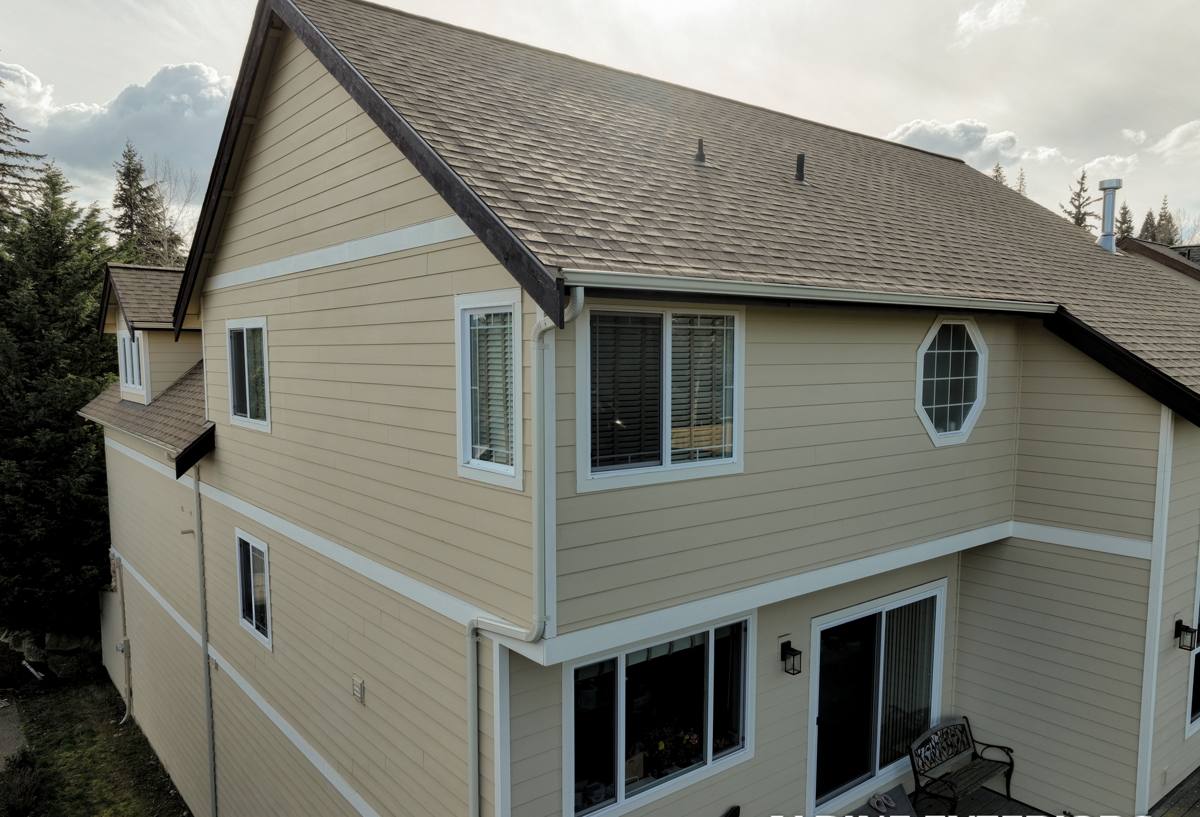
What Salt Air, Driving Rain, and Moss Season Actually Do to a Window
Salt Air
Airborne salt is corrosive to unprotected metal hardware, fasteners, and some lower-grade aluminum components. Over time it can pit finishes, degrade weatherstripping faster than inland exposure would, and accelerate wear on anything not rated for coastal-adjacent use. It's not dramatic day to day, but it's relentless, and it shows up first at the hardware and the frame corners.
Wind-Driven Rain
Birch Bay gets exposed weather off the water, and rain here often arrives sideways rather than straight down. That matters enormously for window performance, because a window can be perfectly watertight in a calm rain and still leak under wind pressure if the flashing details, sill pan, and sealant joints weren't built for lateral water intrusion. This is one of the most common reasons we get called to a home that's "only a few years old" and already has staining or soft trim below a window.
Moss Season
Whatcom County's long wet season, shaded lots, and tree cover mean moss and algae get months of uninterrupted growing conditions on north-facing walls, sills, and anywhere water sits instead of shedding. On windows, that shows up as green or black staining on sills and lower sashes, and over years it can hold moisture against wood trim or lesser sealants long enough to start real decay underneath, not just a cosmetic issue.
What a Correctly Installed Window Needs to Do Here
Given all three of those, a correct install for a Birch Bay Village home isn't just "put the new window in the old hole." It needs to actually solve the exposure, which means:
- A sill pan or equivalent drainage detail that gets any water that does get past the exterior back outside, not into the wall cavity
- Flashing integrated with the home's existing water management, lapped correctly so water sheds down and out, not behind the siding
- Hardware and fasteners rated for coastal-adjacent, marine-influenced air, not standard interior-grade components
- Sealant and weatherstripping chosen for UV and moisture durability, not just the cheapest compatible option
- Frame materials and finishes that resist moss and algae adhesion, or at minimum don't give it an easy foothold at the sill
Skip any one of these and the window might look fine on install day and still cause problems within a few wet seasons. This is why we don't treat "custom windows" as a catalog pick — the sizing, the product, and the install details all get worked out together for the specific opening and its exposure.
Frame Material Comparison for This Exposure
There's no single "best" window material for every situation, but some hold up better than others against Birch Bay's specific combination of salt air, driving rain, and prolonged dampness. Here's how the common options generally compare for this kind of exposure:
| Material | Salt Air Resistance | Moisture/Moss Resistance | Maintenance |
|---|---|---|---|
| Vinyl | Good — won't corrode | Good, easy to clean | Low |
| Fiberglass | Very good — dimensionally stable | Very good | Low |
| Aluminum (standard) | Fair — needs quality finish/hardware | Fair | Moderate |
| Wood or wood-clad | Requires diligent upkeep | Vulnerable if finish fails | High |
We're not against wood-clad windows on principle — some homeowners want the interior look and are willing to keep up with the maintenance. But we're honest about the trade-off: in a spot like Birch Bay Village, wood-clad frames put more of the long-term burden on the homeowner to stay ahead of finish failure, moisture intrusion, and moss growth at the sill. Vinyl and fiberglass shift more of that durability into the product itself, which is why we lean toward them for most coastal-exposed openings here unless there's a specific reason to go another direction.
Our Process for a Birch Bay Village Job
1. On-Site Assessment
We look at each opening individually, not just the window itself. That means checking the existing flashing and water management, looking for evidence of past leaks or moss staining, and noting which elevations take the worst of the wind and rain exposure. A south or west-facing wall with direct water exposure often needs different detailing than a sheltered opening on the same house.
2. Product and Sizing
Custom windows means the unit is built to the actual opening, not forced to fit a stock size with shims and extra sealant doing the work a correct fit should be doing. We go over material options honestly, including the trade-offs above, so you're picking based on how you actually want to maintain the home, not a sales pitch.
3. Removal and Opening Prep
Old flashing, sealant, and any moisture-damaged framing get addressed before the new window goes in. Installing a good window over a bad or already-compromised opening just hides the problem temporarily.
4. Installation and Flashing Integration
This is where the driving-rain resistance actually gets built in — sill pan, flashing laps, and sealant joints done in the right order so water is directed out, never trapped.
5. Final Check and Walkthrough
We walk the finished opening with you, confirm operation, and explain anything specific to that window's exposure or maintenance going forward.
Signs Your Current Windows Are Already Losing the Fight
If you're not sure whether it's time to look at replacement, these are the signs we see most often on Birch Bay Village homes before a full failure shows up:
- Green, black, or dark staining building up on sills or lower sashes, especially on shaded or north-facing walls
- Soft or discolored trim below a window, which usually points to water getting past the sill rather than just surface condensation
- Hardware that's stiff, corroded, or harder to operate than it used to be
- Visible gaps, cracked or shrunken sealant lines around the frame
- Drafts or noticeable cold spots near the window in winter wind
- Fogging between panes on double- or triple-glazed units, which means the seal has failed
Any one of these on its own isn't necessarily an emergency, but a few together on the same window is usually a sign the exposure has outpaced what that unit was built to handle.
What Drives Cost on a Birch Bay Village Project
Every home and opening is different, so we don't quote broad numbers without seeing the job, but these are the main factors that move the price on a custom window project in this area:
| Factor | Why It Matters |
|---|---|
| Number and size of openings | More or larger windows means more material and labor |
| Frame material chosen | Vinyl, fiberglass, and wood-clad carry different material costs |
| Condition of the existing opening | Water damage or rot found during removal adds repair scope |
| Exposure and elevation | Wind- and rain-exposed walls may need more robust flashing detail |
| Access and site conditions | Second-story or hard-to-reach openings take more time |
| Trim and finish work | Matching existing interior/exterior trim can add scope |
Why It Matters That We Already Work This Neighborhood
A crew that installs windows all over Western Washington without much focus on any one area will still do competent work, but there's real value in a crew that already understands the specific rhythm of Birch Bay Village's exposure: which elevations catch the worst wind-driven rain, how fast moss builds up on a shaded sill here versus a sunnier lot a few miles inland, and what the salt air does to hardware over a five- or ten-year stretch rather than just on install day. That familiarity shows up in small decisions — which flashing detail to prioritize, which material trade-offs are worth discussing with a specific homeowner — that add up to a window that's still performing well well past the first couple of wet seasons.
Keeping New Windows Performing After Install
A correctly installed window in this climate still benefits from a little upkeep. Rinsing salt residue off exterior surfaces periodically, keeping gutters and nearby drainage clear so water isn't sheeting down over the window, and checking sills for early moss growth before it gets established all extend the life of the install. We'll walk through what's specific to your windows and exposure at the end of the job, so you're not guessing at maintenance later.
If you're weighing whether it's time to replace a window or two, or you're planning a fuller custom window project for a Birch Bay Village home, we're glad to take a look and give you an honest read on what your openings actually need. Reach out for a free, no-pressure estimate using the form below.