 Birch Bay Window
 Deck Building on Lummi Island: Built for a Marine Climate
Lummi Island sits out in Whatcom County waters, reached by a short ferry crossing from the mainland, and that setting shapes what a deck on this island actually has to survive. Homes here sit close to open water, get a steady dose of salt-laden marine air, and take driving rain off the water that behaves differently than rain falling on a sheltered, inland lot. Add in a moss and mildew season that runs long in this part of Washington, and a deck built to a generic spec sheet just doesn't hold up the way one built for this specific exposure does.
We build decks across Whatcom County, and Lummi Island jobs get planned with this exposure in mind from the first site visit — the footings, the fasteners, the decking material, and the flashing where the deck ties into the house all get chosen and installed for salt air and sustained moisture, not for a drier or more sheltered property a few miles inland.
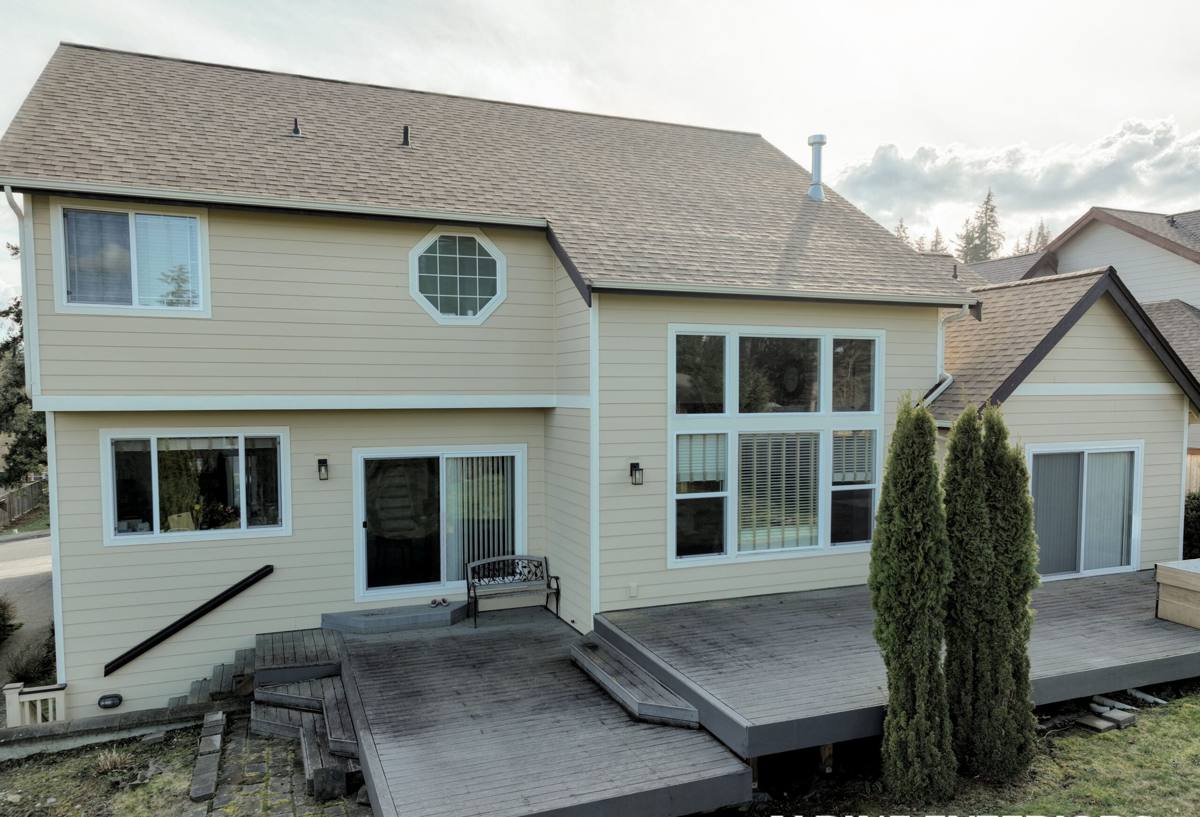
What This Climate Does to a Lummi Island Deck
Salt Air and Fastener Corrosion
Being surrounded by open water means Lummi Island homes see more direct salt exposure than most inland Whatcom County properties. Salt accelerates corrosion on fasteners, joist hangers, and any exposed metal hardware, and it's usually the connectors under the deck — not the visible decking boards — that fail first when the wrong grade of hardware gets used. A deck can look fine on top while the framing hardware underneath is already rusting.
Driving Rain and Trapped Moisture
Wind off the water pushes rain sideways as much as it falls straight down, which means water gets driven up under railings, into board gaps, and against the ledger board where a deck attaches to the house. That's a heavier moisture load than a simple rainfall total suggests, and it's exactly why ledger flashing and proper drainage gaps matter more here than they would on a calmer, more sheltered lot.
A Long Moss and Mildew Season
Mild temperatures and near-constant moisture give moss and mildew a long season on this island, especially on shaded decks or ones tucked under tree cover. Beyond looking bad, a mossy deck surface gets slick and can hold moisture against the board itself, which shortens the life of wood decking and stains lighter-colored composite boards if it's not addressed.
What a Correctly Built Deck Involves Here
Footings and Framing
Everything starts below the decking boards. Footings need to be sized and set to the correct frost depth, and the framing above them needs joists sized for the actual span and load rather than the minimum that happens to work on paper. On a marine site, we also pay attention to ground clearance and airflow under the deck, since a low, poorly ventilated frame stays damp longer after every rain.
Ledger Attachment and Flashing
Where a deck attaches to the house is one of the most common failure points on any deck, and it's a bigger risk in a wind-driven rain climate. The ledger board needs to be through-bolted (not just lag-screwed) into solid framing, and it needs proper flashing that integrates with the house's existing siding and moisture barrier — not just caulk smeared along the top edge. Done wrong, this detail sends water directly into the house's wall framing, not just under the deck.
Fasteners and Hardware
Every fastener, joist hanger, and structural connector on a Lummi Island deck needs to be rated for corrosive, coastal exposure — typically stainless steel or hot-dip galvanized hardware rated for ground contact and marine environments. Standard interior-grade hardware corrodes faster here than most homeowners expect, and it's a poor place to cut costs since hardware failure is a structural, not cosmetic, problem.
Decking Material and Board Spacing
Board gapping matters more in a wet climate than people assume — decking needs consistent spacing to let water drain through and air move underneath, rather than sitting tight and trapping moisture between boards. We'll walk through wood, composite, and PVC decking options against how each one actually performs under salt air and sustained rain, not just how they look on a showroom sample.
Railings, Stairs, and Code Basics
Guardrails generally need to land in the 36 to 42 inch height range with baluster spacing that keeps a small child from passing through, and stairs need consistent rise and run with a graspable handrail on any run of meaningful height. These aren't optional style choices — they're baseline safety and code requirements, and most decks on Lummi Island fall under Whatcom County's building permit process the same as any unincorporated part of the county.
Comparing Decking Materials for This Climate
| Material | Moisture Behavior | Maintenance in Salt Air | Typical Longevity Here |
|---|---|---|---|
| Pressure-treated wood | Resists rot when properly sealed; end cuts and fastener holes are vulnerable points | Higher; needs regular sealing or staining | 10-15 years with consistent upkeep |
| Cedar | Naturally moisture-resistant but still moves and checks with repeated wetting and drying | Higher; regular finish maintenance to hold color and resist graying | 15-20 years with consistent upkeep |
| Composite decking | Doesn't rot, but lower-quality boards can absorb moisture at cut ends without capping | Low; occasional cleaning to control moss and mildew | 25-30 years depending on product quality |
| PVC / cellular PVC | Fully resists moisture absorption; won't rot or swell | Low | 30+ years |
There's no single right answer for every home — budget, how much upkeep you're willing to do, and how the deck sits relative to shade and wind all factor in. We'll give you the honest trade-offs for your specific site rather than steering you toward whichever material is easiest to sell.
Why Ferry Access Changes How We Plan the Job
Building on an island means the ferry schedule is part of the project plan, not an afterthought. Material deliveries, crew scheduling, and equipment access all have to work around ferry timing and capacity, and a contractor who hasn't done that before can end up with a job that stalls out because a load of lumber or a piece of equipment didn't make the crossing on the day it was needed. We plan Lummi Island jobs around that reality from the start — ordering materials with enough lead time, batching trips efficiently, and setting a realistic schedule instead of promising a mainland-style timeline that a ferry-dependent job can't actually keep.
Signs an Existing Lummi Island Deck Needs Attention
- Soft, spongy, or discolored decking boards, especially near the ledger or in shaded areas
- Rust staining around fasteners or visible corrosion on joist hangers and connectors
- Persistent moss or algae growth that returns quickly after cleaning
- Gaps, cracks, or separation where the deck meets the house at the ledger board
- Railings or posts that feel loose or move under normal pressure
- Water pooling on the deck surface instead of draining through board gaps
- Visible daylight or gaps where flashing should be sealed against the house siding
Any of these is worth a professional look before another wet season passes. Caught early, most are a repair. Left alone, several point to structural framing or hardware that needs to be replaced, not just resurfaced.
Our Process for a Lummi Island Deck Project
We start with an on-site assessment of the property — existing structure if there's a deck to replace, house wall condition where a new deck will attach, sun and wind exposure, and how the site drains. From there we put together a clear written scope covering footings, framing, decking material, railings, and any permit work required through Whatcom County, along with a realistic timeline that accounts for ferry logistics. Once work begins, ledger flashing, fastener grade, and drainage detailing are handled as standard practice on every job, not as optional upgrades priced separately.
Why a Crew That Already Works Lummi Island Matters
A contractor who builds decks on this island regularly already knows how salt air, wind exposure, and sustained moisture behave differently here than on a typical mainland lot, and has already worked out how to keep a project moving on a ferry schedule instead of getting caught off guard by it. That experience shows up in the details — which hardware grade actually holds up, how much drainage detailing a given site needs, how to sequence material orders so the crew isn't standing around waiting on a delivery. Those are exactly the details that decide whether a deck lasts one wet season or several decades.
A Simple Checklist Before Hiring for Deck Work on Lummi Island
- Ask what fastener and hardware grade they use, and whether it's rated for coastal, corrosive exposure
- Confirm they carry current Washington contractor licensing and active liability insurance
- Ask how they handle ledger flashing and how it ties into your home's existing siding
- Ask whether they've worked on the island before and how they plan around ferry access
- Get a clear, written scope of work and realistic timeline before signing anything
If you're planning a new deck or need an honest read on one that's showing its age on Lummi Island, we're glad to come take a look. Reach out below for a free, no-pressure estimate.