 Birch Bay Window
 Why Birch Bay Village Siding Wears Differently Than Siding Inland
Birch Bay Village sits close enough to the water that its siding lives a harder life than siding twenty minutes inland in Whatcom County. Salt-laden air off the bay settles on exterior walls year-round, driving rain off the water finds every gap in flashing and caulk during winter storms, and the damp, shaded stretch of the calendar that locals just call moss season gives algae and moss a long runway on north- and west-facing walls. None of that is dramatic on its own. It's cumulative. A house that would go a decade without a siding call somewhere drier in the county can start showing real problems in six or seven years here if the siding and the flashing behind it weren't detailed for this specific exposure.
That's the backdrop for every repair call we take in Birch Bay Village: not "why did this fail," but "given this location, what does correct actually look like, and what needs to happen so it doesn't fail again in the same spot."
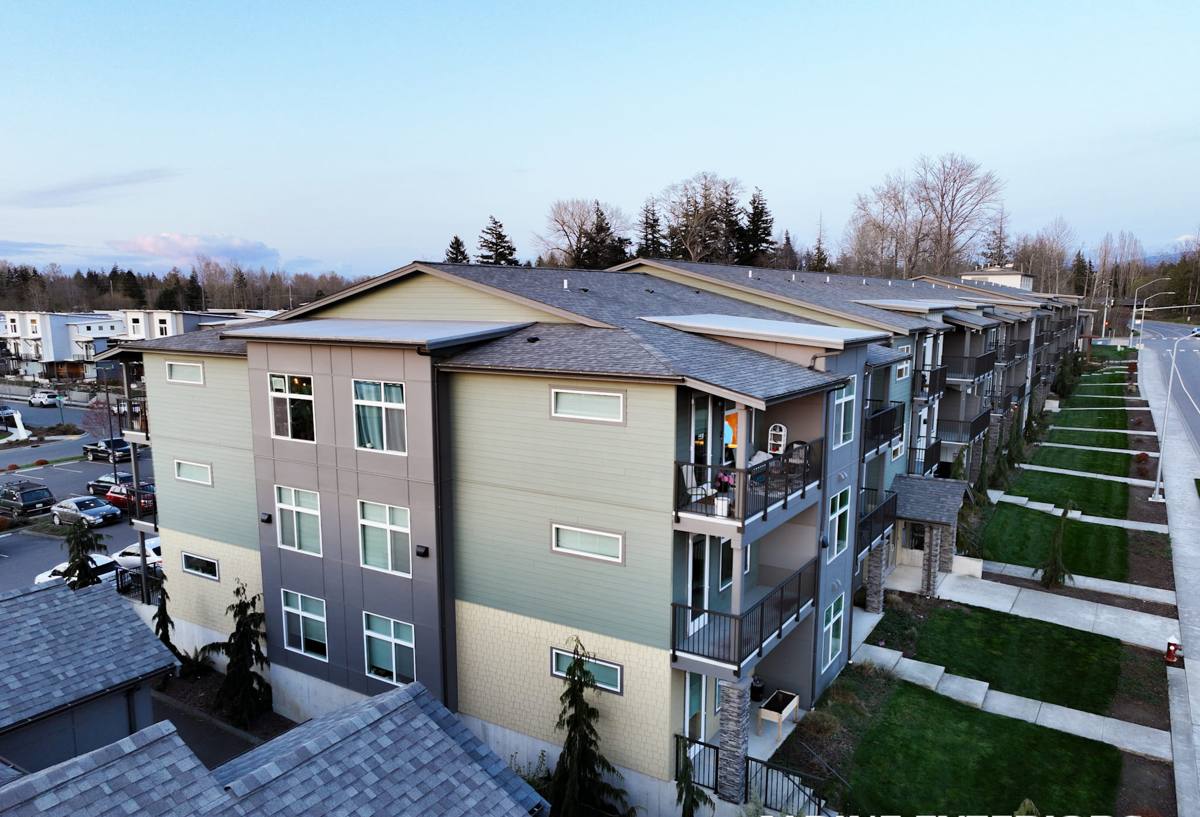
Signs Your Siding Needs a Repair Call, Not Just a Watch-and-Wait
Most siding damage in this area doesn't announce itself with a hole in the wall. It shows up as small, easy-to-dismiss signs that add up. Here's what we tell Birch Bay Village homeowners to actually walk their exterior and look for:
- Soft or spongy spots when you press on the siding, especially near the bottom courses and around window trim
- Persistent black or green streaking that comes back within weeks of being cleaned
- Visible gaps, cracks, or separation at panel joints, corners, or where siding meets trim
- Paint that's bubbling, peeling, or chalking unevenly in patches rather than uniformly across a wall
- A musty smell near an exterior wall from inside the house, particularly after a stretch of wet weather
- Nail heads popping, or fasteners that look rusted and streaking rust down the siding face
- Warping or visible waviness when you sight down a wall at a low angle
Any one of these by itself might be minor. Two or three together, especially on the side of the house that takes the most weather off the water, usually means moisture has already gotten past the surface and it's worth having someone look before the next wet season.
What's Usually Happening Behind the Siding
Siding is the visible layer, but it's not the only layer doing work. Behind it there should be a water-resistive barrier (house wrap or building paper) and flashing at every window, door, and horizontal joint, all lapped so water sheds outward and down rather than sneaking behind the cladding. In a location like Birch Bay Village, where wind-driven rain regularly hits walls at an angle instead of falling straight down, that flashing detail matters more than it does in a sheltered inland lot.
When we open up a damaged section, the siding itself is often the messenger, not the actual problem. What we typically find underneath is one of a few things:
- Failed or missing flashing at a window or door that let water track behind the cladding for a long time before it ever showed on the surface
- House wrap that was torn, taped incorrectly, or lapped the wrong direction during a prior install
- Trim or siding installed tight to a horizontal surface (like a deck or roof line) with no drainage gap, so water pools and wicks upward
- Old caulk joints that hardened and cracked, giving wind-driven rain a direct path inward
A repair that just replaces the visible siding without addressing what let water in behind it isn't a repair — it's a delay. That's the standard we hold every repair job to, whether it's a single panel or a whole wall.
Repair or Replace: How We Make That Call
Not every damaged section needs to become a full re-side, and we don't push replacement when a targeted repair will hold up. But we also won't patch something that's going to fail again in a year just to keep the job small. The honest answer usually comes down to how much of the wall is affected and what's causing it.
| Situation | What We Typically Recommend | Why |
|---|---|---|
| Isolated damage from one clear cause (a flashing failure at one window, one cracked panel) | Targeted repair of that section | The rest of the wall system is sound; fixing the root cause and replacing the affected area solves it |
| Recurring damage in the same spot after a prior patch | Open up a wider area to find the real source | Repeat failures almost always mean the first fix treated a symptom, not the cause |
| Moisture or soft siding spread across multiple courses or a full wall | Full wall or full-elevation replacement | Widespread moisture usually means the water-resistive barrier itself has failed, not just one flashing point |
| Siding is an older material (non-Hardie) nearing the end of its practical service life, with repairs becoming frequent | Discuss a planned replacement in James Hardie fiber cement | At some point repeated patch repairs cost more over a few years than doing it right once |
We'll walk you through which category your situation falls into before any work starts, with the reasoning, not just a recommendation.
What We Won't Do
We won't caulk over a moisture problem to make a wall look fixed for the short term, and we won't recommend a full re-side when a proper repair will genuinely hold. Both of those are shortcuts that cost homeowners more down the line, one way or another.
Our Siding Repair Process in Birch Bay Village
1. Inspection and Diagnosis
We start by looking at the whole exterior, not just the spot you called about. Because moisture and salt exposure tend to affect a house unevenly depending on which walls face the weather, a problem on one elevation is worth checking for on the others before we scope the job.
2. Opening Up the Damaged Area
Before quoting a fix, we open the affected section enough to see the flashing, house wrap, and sheathing underneath. This is the step that tells us whether we're dealing with a contained issue or something that's traveled further than the visible damage suggests.
3. Addressing the Cause, Not Just the Symptom
Flashing gets corrected or replaced, torn house wrap gets patched or replaced with proper shingle-lap technique, and any rotted or compromised sheathing gets addressed before new siding goes back on. Covering damaged sheathing with new siding is how small problems become expensive ones.
4. Matching and Installing the Repair
Where the existing siding is James Hardie, we match the profile and, where possible, the ColorPlus finish so the repair blends rather than standing out as an obvious patch. Where it isn't, we'll talk through your options honestly, including what a Hardie-based repair or partial replacement would look like.
5. Final Check and Cleanup
We check caulking, fastener pattern, and drainage clearance at the bottom of the repair before calling it done, and we clean up the job site fully.
Why It Matters That This Crew Already Works Birch Bay Village
A repair crew that only shows up in this specific stretch of Whatcom County a couple times a year is guessing at conditions a local crew already knows. Working Birch Bay Village regularly means we already have a working sense of which elevations on a typical lot here take the worst of the weather off the bay, how aggressively moss and algae come back on shaded walls, and how fasteners and trim hardware tend to hold up under sustained salt exposure. That's not a marketing point — it's the difference between a repair that's built for the actual conditions on your wall and one that's built for a generic Pacific Northwest house.
It also means straightforward logistics: no long drive-time markup on a small repair, and a crew that can realistically come back and stand behind the work.
Why We Repair and Replace With James Hardie, Not Alternatives
We install James Hardie fiber cement exclusively — we don't install vinyl, LP SmartSide, or other fiber cement brands. That standard applies to repair and replacement work, too. In a salt-air, high-moisture environment like Birch Bay Village, the reasons matter practically, not just as a brand preference:
- Non-combustible material that doesn't soften, warp, or become a food source for moss and algae the way some wood-based composite products can
- Factory-applied ColorPlus finish engineered to hold color and resist the fading and chalking that salt air and UV accelerate on field-painted siding
- HZ5 and other climate-engineered product lines built specifically for the freeze-thaw and moisture conditions of the Pacific Northwest
- A strong, transferable warranty that holds up when the product is installed to Hardie's own specification, which is what we do on every job
When a repair is small and localized, we'll match into existing Hardie siding directly. When a home's existing siding is a different material and repairs keep recurring, we'll give you a straight assessment of what a Hardie-based fix or replacement would cost and how it compares to continuing to patch what's there.
What a Siding Repair in Birch Bay Village Typically Costs
Repair cost depends less on square footage and more on what's actually found once a wall is opened up. These are the factors that move the number, not a quote:
| Factor | Why It Affects Cost |
|---|---|
| Size of the affected area | More siding, trim, and flashing material and labor to replace |
| Condition of the sheathing underneath | Rotted sheathing has to be replaced before new siding goes back on |
| Extent of flashing and house wrap correction needed | Root-cause fixes take more time than a surface-level patch, but prevent repeat calls |
| Whether the color/profile needs to be matched | Matching older Hardie ColorPlus finish or profile can affect material sourcing |
| Height and accessibility of the damaged area | Second-story or hard-to-reach sections take longer and may need staging |
We'll give you a firm number once we've actually opened up the area and can see what's involved — not before.
Keeping Repaired Siding Ahead of the Next Moss Season
A repair is only as good as the maintenance that follows it. In Birch Bay Village, that mostly means staying ahead of moss and algae on shaded and north-facing walls before growth gets established, keeping gutters clear so overflow doesn't run down and pool at siding bottoms, and doing a walk-around after major storms to catch any new gaps at trim or flashing early. None of that is complicated, but skipping it is how a well-done repair ends up needing another one sooner than it should.
If you're seeing any of the signs above on a Birch Bay Village home, or you just want an honest read on whether what you're looking at is a small fix or something bigger, we're happy to come take a look. The estimate is free, there's no pressure attached, and you'll get a straight answer either way.