 Birch Bay Window
 Blaine's Roofs Work Harder Than Most
Blaine sits right on the water at the edge of Whatcom County, close enough to Semiahmoo Bay and the Strait of Georgia that salt air is part of daily life, not an occasional nuisance. Add in the driving rain that rolls off the Pacific through much of the fall and winter, plus a moss season that can stretch nine months out of the year in shaded, north-facing roof sections, and you have a roofing environment that's genuinely tougher than what most inland Washington homes deal with. A roof that would coast along fine in a drier part of the state can show real wear here well before its expected lifespan is up.
Storm damage in this area rarely shows up as one dramatic event. More often it's a combination: a windstorm lifts a few shingles, rain gets underneath before anyone notices, and moss quietly holds moisture against the deck for months afterward. By the time a stain shows up on a ceiling, the damage has usually been building for a while. That's the pattern we see most often on storm calls in Blaine, and it's why we approach repairs here differently than we would on a drier, more sheltered roof.
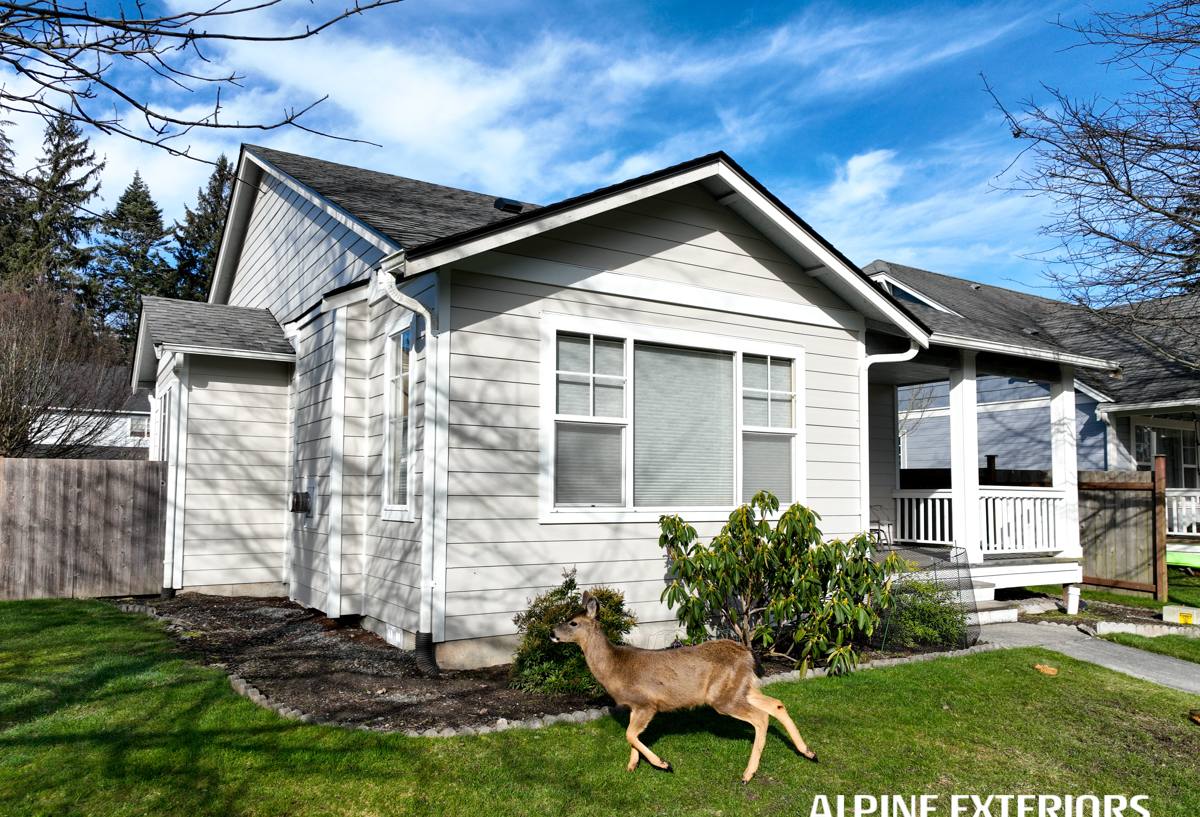
What Storm Damage Actually Looks Like on a Blaine Roof
Wind and Rain Damage
Winter storms coming off the water tend to bring sustained wind rather than short gusts, and that steady pressure is what lifts shingle tabs, works fasteners loose, and pulls flashing away from chimneys and walls. Driving rain — rain pushed sideways by wind — is especially good at finding its way under shingles that are only slightly lifted, into vent boots that have started to crack, and around skylight and chimney flashing that's lost its seal. None of this necessarily looks dramatic from the ground.
Moss and Moisture Damage
Moss is the slower, quieter problem, but in Blaine it's arguably the bigger long-term threat to a roof. Shaded roof sections, north-facing slopes, and areas under overhanging trees stay damp for extended stretches, and moss takes hold in the granule layer of asphalt shingles or in the seams of other roofing materials. As it spreads, it lifts shingle edges and holds water against the surface long after the rest of the roof has dried out. Combined with salt-laden air, which accelerates corrosion on nails, flashing, and metal roof panels, you get a slow breakdown that a storm can then exploit — a roof already weakened by months of moss and salt exposure fails in wind and rain that a healthy roof would have shrugged off.
What a Correct Storm Damage Repair Actually Involves
A proper storm repair is not just replacing the shingles that are visibly missing. It starts with figuring out how far the damage actually extends, because wind and rain damage is frequently worse under the surface than it looks from the driveway.
Inspection Comes First
We check the obvious things — missing or torn shingles, dented or lifted flashing, damaged vent boots — but we also look at the roof deck itself where damage is visible, check attic insulation and framing for signs of water intrusion, and inspect areas around chimneys, skylights, and valleys where leaks concentrate. In a coastal, moss-prone area like Blaine, we're also checking for moss growth and granule loss on sections that weren't part of the immediate storm damage, since those areas are often next in line for problems.
Repair vs. Replace: What Actually Decides It
Not every storm-damaged roof needs a full replacement, and not every roof that looks rough from the ground actually is. The decision usually comes down to a handful of practical factors.
| Factor | Favors Repair | Favors Replacement |
|---|---|---|
| Extent of damage | Isolated to one section or slope | Spread across multiple areas of the roof |
| Roof age | Roof is under roughly half its expected life | Roof is already near or past its expected lifespan |
| Underlying deck condition | Deck is sound, dry, and intact | Deck shows rot, soft spots, or repeated past water intrusion |
| Moss and granule loss | Limited to small, treatable areas | Widespread granule loss or moss coverage across the roof |
| Material availability | Matching shingles/material still available | Discontinued material forces a broader replacement anyway |
Where it's genuinely a repair situation, we say so and repair it. There's no reason to push a full replacement on a roof that has years of good life left in it once the damaged section is properly fixed.
Our Process for Storm Repairs in Blaine
- Initial assessment: We inspect the roof, document the damage, and check the areas most likely to be hiding secondary problems — valleys, flashing, and shaded slopes.
- Written scope and estimate: You get a clear explanation of what's damaged, what needs to happen, and an honest cost range before any work starts.
- Temporary protection if needed: If there's an active leak or exposed deck, we get it covered and protected so the problem doesn't get worse while repairs are scheduled.
- Repair work: Damaged shingles, underlayment, flashing, and vent boots are replaced with materials suited to a coastal, high-moisture environment — not just whatever's fastest.
- Moss and debris treatment: Where moss contributed to the damage, we address it as part of the repair, not as an afterthought, so the same spot doesn't fail again next season.
- Final walkthrough: We show you what was done and what to watch for going forward.
Materials and Methods That Actually Hold Up Here
In a salt-air environment, fastener and flashing choice matters more than it does further inland. Standard fasteners can corrode faster near the water, so we favor corrosion-resistant hardware for repairs in Blaine and similar coastal areas. Flashing details get extra attention too — a flashing repair that's slightly undersized or poorly sealed is exactly the kind of thing that looks fine for a season and then fails during the next real storm.
For shingle repairs, matching the existing material as closely as possible matters for both appearance and performance — mismatched shingle types can create uneven wear patterns and, in some cases, void manufacturer warranty coverage on the surrounding roof. Where an exact match isn't available because a product's been discontinued, we'll walk you through the closest reasonable options rather than guessing.
Storm Damage and Insurance: What Homeowners Should Know
Many storm-related roof repairs are eligible for homeowners insurance coverage, particularly when the damage is tied to a specific wind or storm event rather than gradual wear. That said, insurers generally distinguish between sudden storm damage and long-term deterioration from age or lack of maintenance, and a roof that's been quietly degrading from moss and moisture for years can complicate a claim tied to a single storm. Good documentation matters here — dated photos and a clear written assessment of what happened and when make a real difference if you decide to file a claim. We're glad to provide documentation of the damage we find; we're not an insurance adjuster and don't make coverage decisions, but a clear, honest assessment gives you something solid to work with.
What To Do Right After a Storm Hits Your Roof
- Check for visible signs of damage from the ground — missing shingles, damaged flashing, debris on the roof — without climbing up yourself
- Look inside the attic and along ceilings for new stains, damp spots, or drips
- Take photos of any visible exterior damage as soon as it's safe to do so
- Avoid tarping or attempting repairs yourself on a wet or windy roof
- Address active leaks quickly — even small ones — since water sitting on a deck or in insulation causes damage that compounds fast
- Get an inspection scheduled before the next storm system arrives, not after
Why It Matters to Hire a Crew That Already Works Blaine
Storm damage repair isn't one-size-fits-all, and a crew that mostly works drier, inland roofs can miss things that are second nature to a crew that's regularly on roofs along the Whatcom County coastline. Knowing which slopes in a given neighborhood tend to hold moss longest, which flashing details tend to fail first in driving rain, and how salt air affects different materials over time isn't something you learn from a manual — it's something you learn from doing the work here repeatedly. That local familiarity translates into repairs that are diagnosed correctly the first time and built to actually hold up through the next storm season, not just patched to look fine until the next inspection.
After the Repair: Keeping Moss Season From Undoing the Work
A storm repair is only as good as the maintenance that follows it, especially with moss season being as long as it is here. Keeping gutters and valleys clear of debris, trimming back overhanging branches that keep sections of roof shaded and damp, and having the roof checked periodically for early moss regrowth all go a long way toward protecting the repair you just paid for. We're happy to point out the specific spots on your roof most likely to need that kind of attention based on what we see during the repair itself.
If a recent storm has left your roof looking worse for wear, or you're just not sure whether what you're seeing is a quick fix or something bigger, we'll come take an honest look. Reach out for a free, no-pressure estimate — the form below is the easiest way to get started.