 Birch Bay Window
 Board & Batten in the Terrell Creek Area
Terrell Creek sits in the low-lying, wooded corridor just inland from Birch Bay, where wetlands, mature tree cover, and proximity to saltwater all shape how a house ages. Board and batten siding has become a popular choice out here for good reason — the vertical lines suit the mix of farmhouse, craftsman, and modern homes going up in the area, and it reads as a clean, deliberate design statement rather than a default. But board and batten is also one of the least forgiving siding profiles when it's built with the wrong material or installed by someone who hasn't dealt with this specific stretch of Whatcom County before. The vertical battens create dozens of extra seams and fastening points per wall, and every one of them is a potential entry point for water if the details aren't right.
This page is about that one job, done correctly, for homes in the Terrell Creek area — not a general overview of siding options.
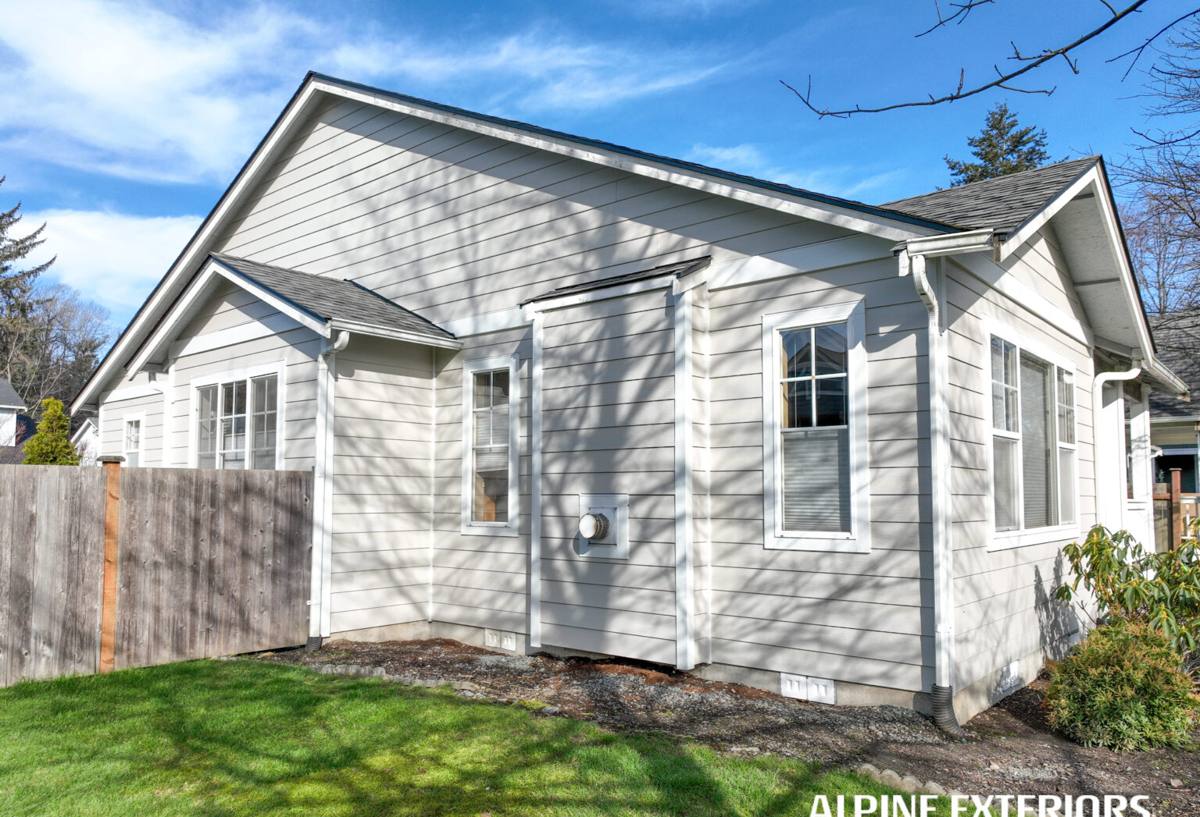
What This Climate Does to Vertical Siding
Homes near Terrell Creek deal with a combination of conditions that's tougher on siding than most homeowners realize until something starts failing.
Salt Air and Coastal Exposure
Even set back from the water, homes in this pocket of Birch Bay get enough salt-laden air to accelerate corrosion on fasteners, staples, and any exposed metal trim. Over years, that corrosion works its way into board and batten joints and can loosen the very battens meant to keep water out. Materials and fasteners that aren't rated for coastal exposure fail faster here than they would twenty miles inland.
Driving Rain
Storms moving through the Strait of Georgia and the Salish Sea bring rain sideways, not just down. Vertical board and batten has more horizontal seams (at the top and bottom of each course, if the design calls for it) and more vertical batten joints than lap siding, and wind-driven rain will find any gap, undersized overlap, or missed flashing detail. A batten that isn't fastened correctly, or a panel gap that's too tight or too loose, becomes a channel for water to track behind the siding.
Moss Season
The tree canopy and creek-adjacent humidity around Terrell Creek keep shaded wall sections damp for extended stretches, especially through fall and winter. Moss and algae don't just look bad — sustained moisture against a wall surface is what causes rot in wood-based products and finish breakdown in lower-grade composites. A siding material's ability to shed water and resist moisture absorption matters more here than in a drier part of the county.
Why We Only Install James Hardie for This Application
We install James Hardie fiber cement exclusively — no vinyl, no LP SmartSide, no Cemplank, no Allura, no primed spruce or cedar board and batten. That's a deliberate standard, not a lack of options, and board and batten is exactly the profile where the difference between products shows up fastest.
Wood and engineered-wood board and batten depend on an intact factory or field-applied coating to keep water out of the substrate. Once that coating is compromised at a cut edge, a fastener hole, or a batten joint — which is inevitable in a climate this wet — moisture gets into the material itself. Vinyl board and batten sheds water reasonably well but expands and contracts significantly with temperature swings, which stresses the very seams that make this profile work, and it's a poor match for homeowners who want a look and feel closer to real wood siding.
Hardie fiber cement is non-combustible, dimensionally stable across our temperature range, and factory-finished with ColorPlus so the color layer isn't something we're relying on a field coat to protect. For board and batten specifically, we use Hardie's HZ5 product line, engineered for wetter climate zones, paired with correctly rated fasteners and trim. It doesn't eliminate maintenance — nothing does in this climate — but it removes the single biggest failure point we see in other board and batten installations: a coating or substrate that can't keep up with the moisture load.
| Factor | James Hardie Fiber Cement | Wood / Engineered Wood | Vinyl |
|---|---|---|---|
| Moisture absorption | Very low | Moderate to high once coating is breached | None, but traps moisture behind panel if not vented |
| Salt air / coastal durability | Strong with rated fasteners | Coating and fastener corrosion both age faster | Fasteners still vulnerable; panel itself is inert |
| Finish maintenance | Factory ColorPlus finish, long repaint interval | Field or factory coating needs regular recoating | No paint, but fades and chalks over time |
| Fire rating | Non-combustible | Combustible | Combustible, can deform under heat |
| Typical warranty structure | Long-term, transferable | Varies widely by manufacturer | Long labeled term, often prorated |
What a Correct Board & Batten Job Actually Involves
Board and batten looks simple from the street — vertical panels, vertical strips over the seams — but the installation has more decision points than a standard lap job, and skipping any of them is how call-backs happen two or three winters later.
Behind the Siding
A weather-resistant barrier and properly lapped flashing at every window, door, and penetration go on before a single panel is hung. On a home this close to a creek corridor and the bay, we also pay close attention to the drainage plane — a rainscreen gap behind the siding lets any moisture that does get past the surface dry out instead of sitting against the sheathing.
Panel Layout and Fastening
Panel spacing, batten placement, and fastener schedule all have to follow Hardie's engineering specs for our climate zone — not a generic install pattern. Fasteners need to be corrosion-resistant and set at the correct depth; overdriven or underdriven fasteners are one of the most common defects we find when we're called to look at someone else's board and batten work.
Joints, Corners, and Trim
Every horizontal joint, inside corner, and outside corner is a place water wants to get behind the wall. Correct flashing, sealant selection, and trim detailing at these points matter more on a vertical profile than on horizontal lap siding, simply because there are more of them per square foot of wall.
Our Process for Terrell Creek Properties
- Site walk and moisture assessment — we look at tree cover, shade patterns, drainage around the foundation, and the condition of the existing wall assembly before quoting anything.
- Removal and substrate check — once old siding comes off, we inspect sheathing for hidden rot or moisture damage, which is common on homes that have had wood or composite siding for years in this area.
- Weather barrier and drainage plane installation — done to spec, not shortcut, before any Hardie product goes up.
- Board and batten installation — panels, battens, and trim installed to James Hardie's fastening and clearance requirements for our climate zone.
- Final inspection — we walk every joint, corner, and penetration before calling the job done.
What Drives Cost on a Board & Batten Project
Every Terrell Creek home is different, and the honest answer to "what will this cost" depends on a handful of specific factors rather than a flat rate:
- How much of the existing wall assembly needs to come off and be inspected or repaired before new siding goes on
- Whether the project is a full re-side or an accent application on part of the home
- The amount of trim, corner, and window detailing involved, since board and batten has more of it than lap siding
- Wall height and access — two-story sections and steep or obstructed lots take longer
- Any hidden moisture or rot damage found once old siding is removed
We'll walk your specific project and give you real numbers rather than a rough guess — there's no substitute for looking at the actual wall.
Maintaining Board & Batten Siding in This Climate
Hardie fiber cement is low-maintenance, not no-maintenance, especially with the shade and moisture patterns around Terrell Creek. A short annual routine keeps it performing the way it's designed to:
- Rinse shaded or moss-prone wall sections at least once a year, more often on north-facing or heavily treed elevations
- Check caulking at window and door trim annually and re-seal any that's cracked or pulled away
- Keep gutters and downspouts clear so water isn't sheeting down wall sections
- Trim back vegetation and tree limbs that keep siding shaded and damp longer than necessary
- Watch fastener heads and trim edges for early corrosion staining, which can signal a fastener issue worth addressing early
Why It Matters That We Already Work This Area
A crew that's installed siding across Birch Bay and the surrounding Whatcom County communities knows which elevations on a Terrell Creek property will stay damp longest, how the local moss season behaves, and which flashing and drainage details actually hold up against wind-driven rain off the Strait. That local pattern recognition is the difference between a spec sheet and a siding job that's still performing well a decade in. We're not learning this climate on your house.
If you're planning a board and batten project near Terrell Creek, we'll come take a look, walk you through what your specific home needs, and give you a straightforward, no-pressure estimate — use the form below to get started.