 Birch Bay Window
 Why Lynden Homes Need Windows Built for This Climate
Lynden sits inland in the Nooksack Valley, away from the immediate coastline, but it shares the same weather pattern that shapes every home in Whatcom County: long stretches of gray, wet weather, heavy fall and winter rain, morning fog that can linger for hours, and short, intense windows of summer heat that stress old seals and glazing. Add in wind-driven storms that push moisture sideways into wall assemblies, and it's easy to see why windows in this area age differently than windows in drier parts of the country. A window that would last decades in Arizona can start failing in half that time here if it wasn't installed correctly in the first place.
We're based in Birch Bay and work throughout Whatcom County, including a steady flow of jobs in Lynden. That gives us a good read on how the local building stock — from older farmhouses to newer subdivisions — tends to hold up, and where windows typically fail first.
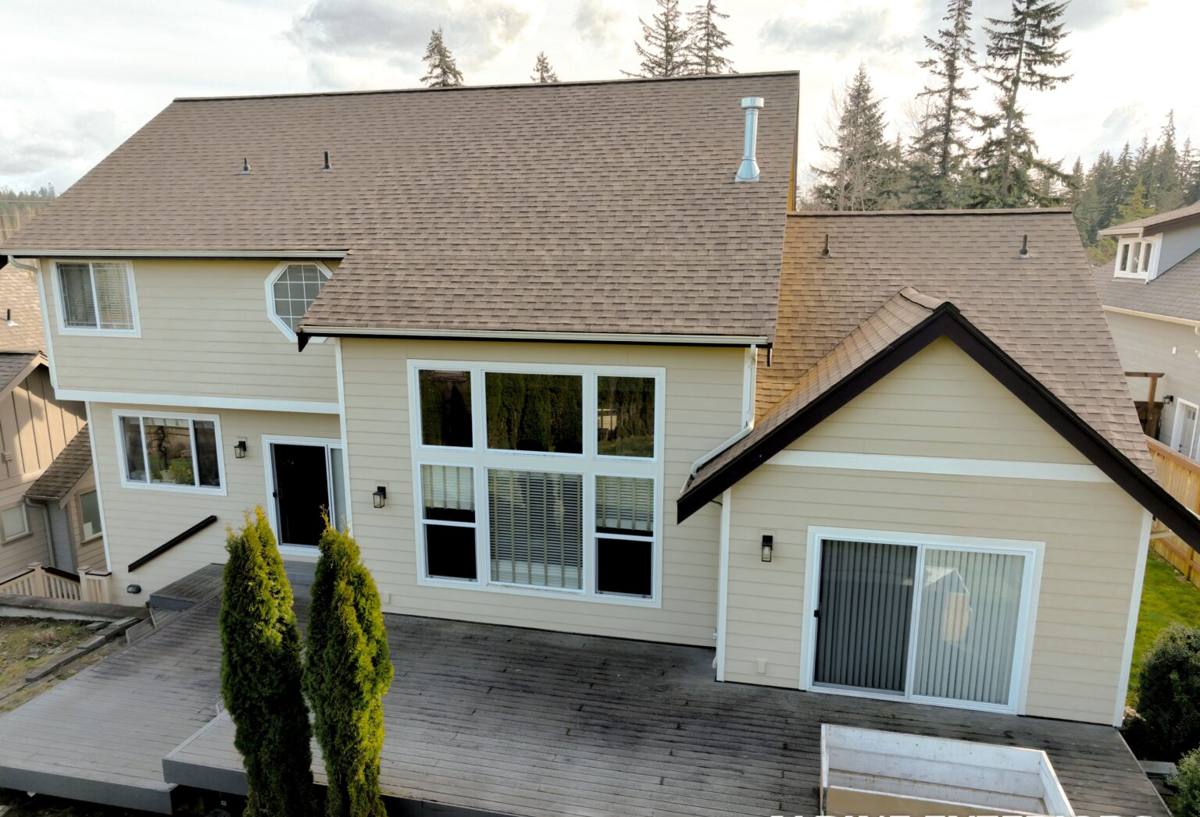
What Local Weather Does to Older Windows
Driving rain and wind-driven moisture
Rain here rarely just falls straight down. Wind pushes it sideways against west- and south-facing walls, which means the flashing and sealant around a window opening are doing real work, not just sitting there for looks. Once a bead of caulk cracks or a sill pan is missing or improperly lapped, water finds its way behind the trim and into the framing. You often don't see it until the sill is soft or the interior paint is bubbling — by then the damage has been building for a while.
A long moss season and shaded exposures
Whatcom County's moss season runs long. On north-facing walls, or anywhere trees keep a window in shade for most of the day, algae and moss growth on trim and sills isn't just cosmetic — it holds moisture against wood and vinyl surfaces far longer than a dry, sunny exposure would. Over years, that constant dampness breaks down caulk lines, degrades wood trim, and accelerates seal failure on older insulated glass units.
Temperature swings and condensation
Lynden gets colder, sharper temperature drops than the immediate coastline, especially on clear winter nights. Combined with indoor humidity from cooking, showers, and heating systems, older single-pane or early double-pane windows often show fogging between the panes or persistent condensation on the interior glass. That's a sign the seal has failed and the insulating gas or dead-air space is compromised — not something that can be fixed, only replaced.
Signs Your Lynden Home Is Ready for Replacement Windows
- Fogging, haze, or visible moisture between the panes of a double-pane window
- Drafts you can feel near the frame even when the window is fully latched
- Wood sills or jambs that feel soft, spongy, or show peeling paint from trapped moisture
- Windows that are difficult to open, close, or lock — often a sign the frame has shifted or swollen
- Visible moss or dark staining on exterior trim that keeps returning after cleaning
- Noticeably higher heating bills compared to similar-sized homes with newer windows
- Single-pane glass anywhere in a home that's otherwise been updated
What a Correct Window Replacement Job Actually Involves
Full-frame vs. insert replacement
There are two basic approaches. An insert (or "pocket") replacement fits a new window into the existing frame, leaving the old frame, sill, and exterior trim in place. It's faster and less invasive, and it works well when the existing frame is still sound and square. A full-frame replacement removes the window down to the rough opening, which lets us inspect and repair the framing, sill, and flashing underneath — something we recommend whenever there's evidence of past water intrusion, which is common enough in this climate that it's worth checking rather than assuming everything underneath is fine.
Flashing and water management
This is the part that matters most and shows the least once the job is done. A correct installation includes a sloped sill pan to direct any water that gets past the window back outside, properly lapped flashing tape integrated with the home's weather-resistive barrier, and head flashing that sheds water over the top of the window rather than trapping it. Skipping or rushing this step is the single biggest reason replacement windows fail early in wet climates like ours — the window itself can be excellent and still leak if the opening around it wasn't built to shed water correctly.
Sealing and insulation
Around the frame, we use appropriate low-expansion foam or backer rod and sealant to close air gaps without bowing the frame out of square — over-filling with the wrong foam is a common shortcut that causes windows to operate poorly for years afterward. On the exterior, sealant joints need to be sized and tooled correctly, not just smeared on, since a joint that's too thin or too wide fails faster under our freeze-thaw and wet-dry cycles.
Choosing the Right Window for a Lynden Property
Frame material is one of the bigger decisions in a replacement project, and it affects both upfront cost and how much attention the window needs afterward.
| Frame Material | Moisture Resistance | Maintenance | Typical Lifespan |
|---|---|---|---|
| Vinyl | Very good — won't rot or corrode | Low — occasional cleaning | 20–30 years |
| Fiberglass | Excellent — dimensionally stable, resists moisture damage | Low | 30+ years |
| Wood-clad | Good on the exterior clad side; interior wood needs protection from indoor humidity | Higher — periodic finish upkeep on interior wood | 20–30 years with upkeep |
| Aluminum | Fair — prone to condensation and heat loss without thermal breaks | Low | 20–25 years |
For most Lynden homes, we lean toward vinyl or fiberglass frames because they hold up well against sustained damp exposure without the ongoing maintenance a wood interior requires. Wood-clad windows still have a place, especially on homes where the look matters for a period-appropriate remodel, but we're upfront that they come with more long-term upkeep in this climate. Glass selection matters too — a double-pane unit with a low-E coating and argon fill is the standard baseline here, and we'll talk through whether triple-pane makes sense for a specific room based on orientation, road noise, or how the home is heated.
Our Process for Lynden Window Replacement Projects
- On-site assessment. We look at each window from both inside and outside, check for existing moisture damage, and measure openings precisely rather than relying on rough estimates.
- Honest scope and quote. We'll tell you plainly whether an insert replacement is appropriate or if full-frame work is warranted, and why — along with a written quote that spells out materials and labor.
- Scheduling around weather. Given how much rain this area gets, we plan installation days with realistic weather windows and can sequence multi-window jobs to limit how long any opening is exposed.
- Removal and inspection. Old windows come out carefully, and we inspect the framing and sill before anything new goes in — this is where hidden rot or past water damage gets caught and addressed.
- Installation with proper flashing and sealing. New sill pans, flashing, and sealant are installed to current best practice, not just whatever the old setup happened to be.
- Interior and exterior finish work. Trim, caulking, and touch-up work are completed so the finished opening looks intentional, not patched.
- Final walkthrough. We test operation on every window and walk the job with you before calling it done.
Why Hiring a Crew That Already Works Lynden Matters
Window replacement isn't just a product swap — it's construction detailing done correctly for the conditions a specific building will face. A crew that regularly works Whatcom County knows what a properly lapped weather-resistive barrier needs to look like on a home that will see a genuine wet season every year, understands local permitting expectations, and has already seen how different exposures — a shaded north wall versus an open south-facing one — age differently around here. That experience shows up in the details: where extra flashing attention goes, which sills tend to need repair before new windows go in, and how to sequence a job so openings aren't left exposed during a stretch of driving rain.
It also means accountability. A local company has a reputation in the community to maintain and is easy to reach if a question comes up after the work is done — not a crew that installed windows here once and moved on.
Questions Worth Asking Before You Hire
- Will the job include full-frame inspection, or only if damage is visible from the outside?
- What flashing and sill pan approach will be used, specifically?
- Is the quote itemized by window, material, and labor, or a single lump sum?
- What's the warranty on both the window product and the installation labor — are they separate?
- How does the crew handle a multi-day job if weather turns during installation?
- Can you see examples of frame materials and glass packages in person before deciding?
Getting Started
If your windows in Lynden are fogging, drafting, sticking, or just showing their age, it's worth having them looked at before another wet season adds to the wear. We're happy to walk through your home, point out what we actually see — not a sales pitch — and put together a straightforward, no-pressure estimate using the form below.