 Birch Bay Window
 Decks Built for California Creek's Marine Climate
California Creek sits close enough to the water that every outdoor structure on your property deals with the same three things year-round: salt-laden air off Birch Bay, long stretches of driving rain, and a moss season that can run from fall through spring. A deck built without those conditions in mind will look fine for a year or two and then start showing problems — soft spots, black streaks, loose fasteners, boards that cup or crown. A deck built for this specific stretch of Whatcom County holds up because the material choices, the framing details, and the drainage were all planned around what actually happens here, not around a generic build sheet.
This page is about one job in one area: custom deck construction for homes in and around California Creek. It's not a general primer on decks everywhere — it's what we've learned building and maintaining decks specifically in this kind of coastal, wet, shaded environment.
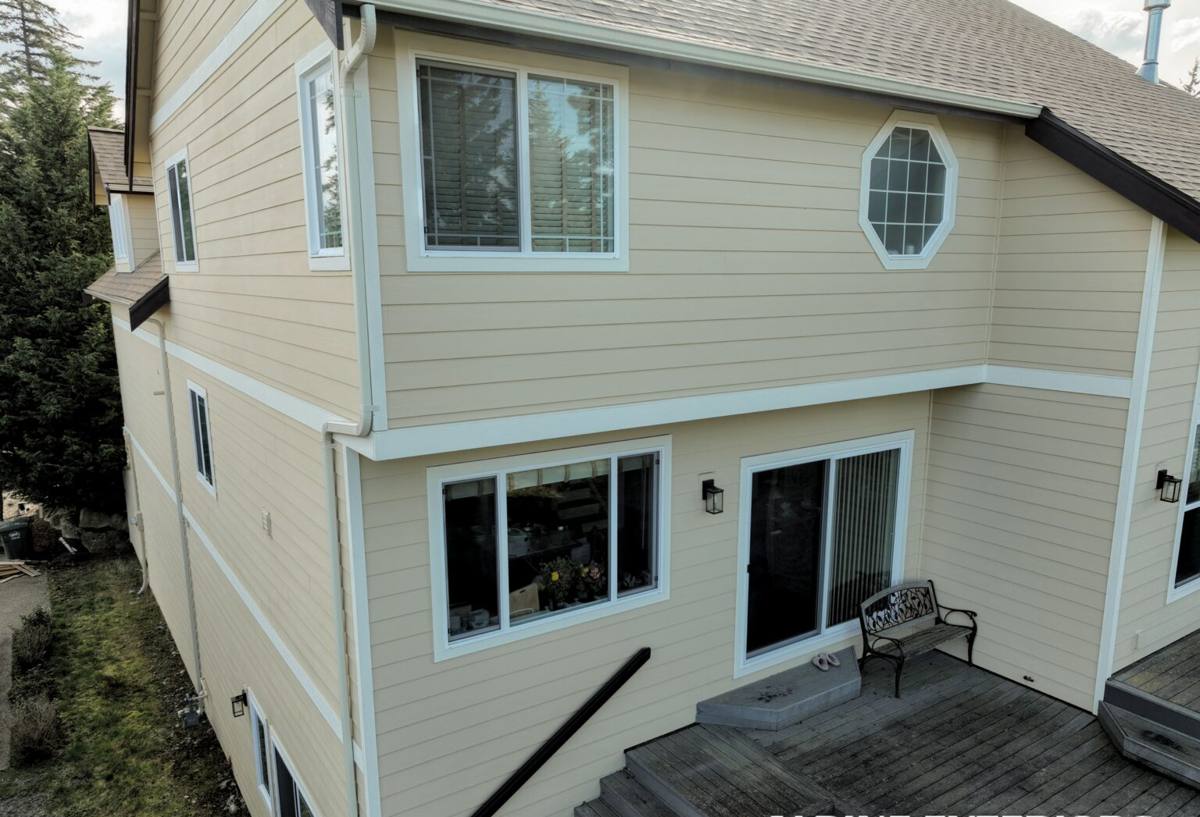
What Local Homes Actually Need From a Deck
Most of the deck problems we get called out to fix in this area trace back to the same root causes: water that had nowhere to go, wood that couldn't dry out between rain events, or hardware that wasn't rated for a salt-air environment. A deck that's going to last here needs to manage moisture actively, not just tolerate it.
Moisture Management Comes First
Decking that sits low to the ground, gets shaded by trees, or backs up to a fence line will stay damp longer after every rain. In a climate where rain isn't occasional but routine, that extra drying time is where moss, algae, and rot get their foothold. Proper joist spacing, gapping between boards, and airflow underneath the deck aren't optional extras — they're the difference between a deck that sheds water and one that holds it.
Salt Air and Hardware
Fasteners, brackets, and structural connectors that aren't rated for coastal exposure will corrode faster here than they would further inland. Once a fastener starts rusting, it weakens the connection it's holding and can stain the wood or composite around it. This is a detail that's easy to skip and expensive to fix later, since it usually means pulling boards to get at the hardware underneath.
Choosing the Right Decking Material
There's no single "best" decking material — there's a best material for your budget, your maintenance tolerance, and how much sun or shade the deck gets. In a shaded, damp, salt-exposed spot, some materials are simply more forgiving than others.
| Material | Moisture Behavior | Maintenance | Typical Lifespan Here |
|---|---|---|---|
| Pressure-treated lumber | Resists rot when sealed; absorbs water if finish is neglected | Needs cleaning and re-sealing every 1-2 years in this climate | 15-20 years with upkeep |
| Cedar | Naturally moisture-resistant, ages gracefully to gray | Occasional cleaning; sealing optional but extends life | 15-25 years |
| Composite decking | Won't rot or absorb water; can still grow surface moss/algae if shaded | Periodic washing to keep moss from taking hold in grooves | 25+ years |
| PVC decking | Fully moisture-resistant, no wood fibers to feed rot or fungus | Lowest maintenance; occasional rinse | 25-30+ years |
We don't push one material over another as a rule. Composite and PVC cost more up front but make sense for homeowners who want to spend their weekends on the water instead of re-sealing a deck. Cedar and treated lumber cost less initially and can look excellent, but they ask for real upkeep in a climate that doesn't give wood much of a break. We'll walk through the honest trade-offs for your specific site — sun exposure, tree cover, how close you are to the water — before you commit to a material.
Getting the Structure Right
The parts of a deck nobody sees are the parts that determine whether it's still standing solid in fifteen years. This is where a lot of shortcuts get taken, and where they cause the most damage.
Ledger Board Flashing
Where a deck attaches to the house is the single most common failure point we see in this region, because it's the one spot where water is most likely to get trapped against the structure. Correct flashing at the ledger board — installed so water sheds outward and down, not back toward the house — is non-negotiable in a climate with this much rainfall.
Footings and Frost
Footings need to be set below frost depth and sized for the soil conditions on your lot, which can vary block to block this close to the water table. Undersized or shallow footings are a slow-motion problem — they don't fail in year one, they fail after a few freeze-thaw cycles have worked on them.
Joist Spacing and Board Gapping
Tighter joist spacing than the manufacturer's minimum, and a deliberate gap between boards, both help a deck dry out faster after rain. This matters more here than in a drier climate, because the drying window between storms is often short.
Site-Specific Design Considerations
Every California Creek lot has its own mix of sun, shade, wind exposure, and slope, and that mix should shape the deck design — not just the size and shape, but the orientation and railing choices too.
- Shaded, tree-covered lots benefit from wider board gaps and materials that resist moss more than they resist fading
- Wind-exposed sites near the water benefit from railing designs that don't act as a sail, and from corrosion-resistant hardware throughout
- Sloped lots need footing and support planning specific to the grade, not a standard flat-lot layout
- Decks near mature trees need drainage planned around leaf and needle debris, which clogs gaps and holds moisture if ignored
None of this is guesswork — it's what a site visit is for. We look at where the sun actually hits your yard, which direction the weather comes from, and how water moves across your lot before we draw up a design.
Our Process for a California Creek Deck Build
The steps are straightforward, but the details inside each step are where the quality shows up.
- Site visit and assessment — we look at drainage, sun/shade exposure, soil, and how the deck will tie into your home
- Design and material selection — honest recommendations based on your budget, maintenance preference, and the site conditions we observed
- Permitting — Whatcom County and local jurisdiction requirements handled as part of the job, not left for you to sort out
- Framing and structural work — footings, ledger flashing, and joist layout built to hold up in this climate, not just pass inspection
- Decking, railings, and finish work — installed with the gapping, fastener choice, and detailing that keep water moving off the structure
- Final walkthrough — we go over basic maintenance specific to your material so you know what to expect season to season
Maintenance Checklist for Moss and Salt Air
A well-built deck still needs some seasonal attention in this climate. Here's what actually keeps a California Creek deck looking and performing well over the years:
- Sweep debris off the deck surface regularly, especially under trees, so moisture and organic matter don't sit in the gaps
- Rinse or wash the deck at least once or twice a year to knock back early moss and algae growth before it takes hold
- Check fastener heads and metal connectors periodically for early signs of corrosion, especially on decks closer to the water
- Re-seal wood decking on the schedule appropriate to the product — skipping a cycle in this climate shows up fast
- Keep gutters and downspouts near the deck clear so roof runoff isn't dumping extra water onto or under the structure
- Watch for soft spots or discoloration around the ledger board connection, which is the most common early warning sign of a moisture problem
Why a Crew That Already Works This Area Matters
A deck builder who works across a wide region has to treat every job as a generic build. A crew that already works California Creek and the surrounding Birch Bay area knows which streets sit in more shade, which lots catch more wind off the water, and which fastener and finish combinations have actually held up here over time. That local knowledge shows up in fewer callbacks and a deck that's built for the conditions it will actually face, not the average conditions somewhere else in Whatcom County.
It also matters for permitting and inspection — knowing the local process and requirements ahead of time keeps the job moving instead of stalling on paperwork.
Get a Free Estimate for Your California Creek Deck
If you're planning a new deck or replacing one that's showing its age, we're happy to come take a look, walk the site with you, and put together a straightforward, no-pressure estimate. Use the form below to get started.