 Birch Bay Window
 Decks Built for Cherry Point's Marine Climate
Cherry Point sits close enough to the water that its weather behaves differently than a deck built ten miles inland in Whatcom County. Homes here catch salt-carrying air off the Salish Sea, take driving rain from storms that roll in with real wind behind them, and sit under a gray sky for long stretches of the year that keep wood surfaces damp far longer than a sunnier climate would. A deck built to a generic national spec — the kind you'd get from a big-box design template — will often look fine for the first year or two and then start showing problems: rusted fastener heads bleeding into the decking, soft spots at the ledger board, moss creeping across boards that never fully dry out. Building correctly for this specific stretch of Birch Bay means choosing materials, hardware, and drainage details with that climate in mind from the first sketch, not fixing it after the fact.
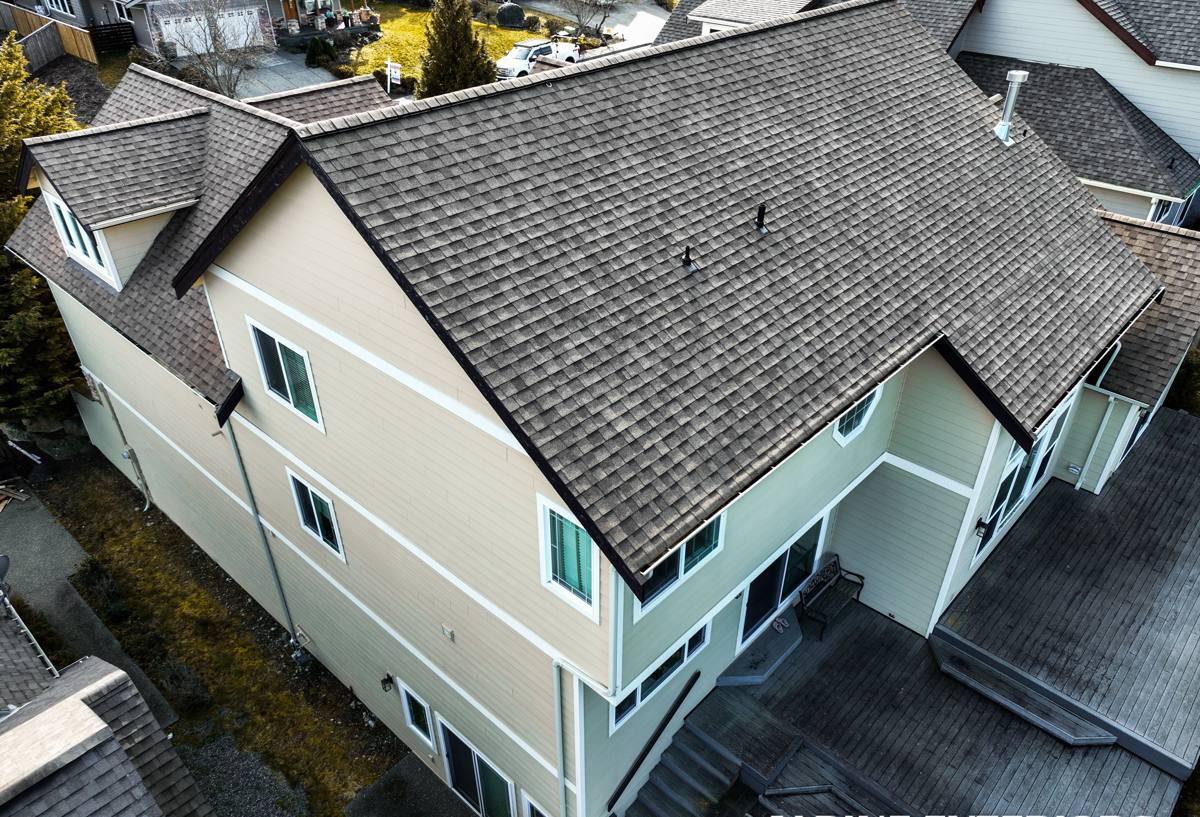
What Salt Air, Driving Rain, and Moss Actually Do to a Deck
Salt Air and Metal Fasteners
Airborne salt accelerates corrosion on any exposed metal. Standard electro-galvanized screws and joist hangers that would last for decades in a dry inland climate can start rusting within a few seasons this close to the water. Once a fastener starts to corrode, it doesn't just look bad — it loses holding strength, and rust streaks bleed into the surrounding wood or composite, leaving stains that don't scrub out.
Driving Rain and End-Grain Moisture
Wind-driven rain doesn't just fall on a deck, it gets pushed sideways into joints, board ends, and any gap where water can collect instead of shed. End grain — the cut ends of boards and framing lumber — absorbs water many times faster than a flat face. Left unsealed or poorly flashed, that's where rot typically starts first, usually hidden underneath the decking where you won't see it until the damage is well established.
Moss and Shade
A long moss season means anything that stays damp and shaded for weeks at a time will grow something on it eventually. Moss and algae hold moisture against the deck surface, make boards slick and unsafe underfoot, and — on wood decking — feed the exact conditions that lead to soft, punky spots. Decks tucked under trees or on the north side of a house are especially prone to this and need extra attention to airflow and drainage.
Choosing a Decking Material for This Climate
There's no single "right" material for every home, but each option behaves differently once salt air, rain, and moss are part of the equation. Here's how the common choices compare for a project in this area:
| Material | How it handles salt air & rain | Moss/algae resistance | Maintenance |
|---|---|---|---|
| Pressure-treated wood | Good if properly sealed and re-coated; end grain needs regular attention | Moderate — needs cleaning and occasional treatment | Annual cleaning, re-sealing every 1-2 years |
| Cedar or other natural wood | Naturally rot-resistant but still needs sealing at joints and fastener points | Moderate — same care as treated wood | Regular cleaning and oil/sealer reapplication |
| Capped composite | Excellent — the cap layer resists moisture absorption and salt exposure | Good — smooth cap sheds algae more easily than open-grain composites | Occasional washing, no sealing or staining |
| Uncapped composite | Fair — can absorb moisture at cut ends and show it over time | Fair — more porous surface can hold moss/mildew | Periodic cleaning; ends need to be sealed at install |
We'll walk through these trade-offs honestly based on your budget, how much upkeep you actually want to do, and how exposed your specific site is to wind and rain. A shaded, wind-sheltered deck can sometimes get away with a lower-maintenance wood approach; a deck facing open water exposure usually does better long-term with capped composite or very disciplined wood maintenance.
What a Correctly Built Deck Involves
The visible decking boards are the smallest part of what determines whether a deck holds up here. The details that actually matter are mostly underneath:
- Ledger board flashing — where the deck attaches to the house needs proper flashing so water is directed away from the house's wall assembly, not trapped behind the ledger.
- Joist protection — joist tape or an equivalent moisture barrier on top of framing members keeps rain from soaking directly into cut lumber under the decking.
- Corrosion-rated hardware — fasteners, joist hangers, and structural connectors rated for coastal or wet-climate exposure, not standard interior-grade hardware.
- Footings set to the right depth — footings need to go below the frost line and account for local soil and drainage conditions so the structure doesn't shift over time.
- Drainage gaps and airflow — proper spacing between boards and clearance underneath the deck so air can circulate and moisture doesn't get trapped against framing.
- Code-compliant railings and stairs — height, spacing, and attachment that meet current building code, especially important on decks with any real elevation change.
Skipping any one of these doesn't usually cause an immediate problem — it shows up two, five, or ten years later as rot, rust, or a deck that's started to sag or feel spongy in spots.
Site Factors We Look At in Cherry Point
No two lots here sit the same way relative to wind and water, and that changes how we approach a deck build:
Wind and Water Exposure
A deck on the side of the house that catches prevailing wind off the water needs more attention to flashing, fastener grade, and board gapping than one that's more sheltered. We look at where your home actually sits before recommending a spec, rather than applying the same build to every house.
Sun, Shade, and Drainage
Tree cover and which direction a deck faces both affect how long it stays wet after a storm. On shaded or low-airflow sites, we'll often adjust board spacing, add ventilation underneath, or steer toward a material that tolerates prolonged dampness better.
Ground Conditions
Soil and drainage vary lot to lot in this part of Whatcom County. Footing depth and placement get set based on what's actually under your yard, not a one-size assumption.
Our Process, Start to Finish
- On-site walkthrough — we look at your home's exposure, existing structure (if replacing a deck), grade, and how you actually plan to use the space.
- Design and material conversation — honest talk about wood versus composite, size, layout, and railing style, with real trade-offs explained rather than upsold.
- Permitting — we handle the permit and code review process for the county so you're not left figuring that out on your own.
- Build — proper footings, flashing, joist protection, and corrosion-rated hardware go in first, before a single decking board is placed.
- Final walkthrough — we go over the finished deck with you, including what maintenance (if any) your chosen material needs going forward.
Keeping a Coastal Deck Looking Good: Owner Maintenance Checklist
Even a well-built deck needs some ongoing attention in this climate. A short seasonal routine goes a long way:
- Sweep off leaves, needles, and debris regularly so damp organic matter doesn't sit on the boards.
- Rinse off salt residue and grime a few times a year, especially after storms with strong onshore wind.
- Check for early moss or algae growth in shaded corners and clean it off before it spreads.
- Inspect fastener heads and hardware annually for rust staining or looseness.
- Reseal or re-stain wood decking on the schedule your specific product calls for — don't wait until it looks obviously worn.
- Keep gutters and downspouts near the deck clear so runoff isn't draining directly onto or under it.
Why Local Experience Matters for This Job
A crew that's built decks around Birch Bay and Cherry Point already knows which fastener grades hold up, which corners of a lot tend to stay damp longer, and how the county's permitting and setback review process works for this area — none of which is guesswork picked up from a general how-to guide. That familiarity means fewer surprises during the build and a deck that's specified correctly for your site the first time, instead of a generic build that needs early repairs once the local weather has its say.
If you're planning a new deck or replacing one that's showing its age, we're happy to walk your property, talk through material options honestly, and put together a straightforward estimate — no pressure, no obligation. Use the form below to get started.