 Birch Bay Window
 Blaine's Climate Is Hard on Decks — Here's Why
Blaine sits right on the water in Whatcom County, and that location cuts both ways. The same marine air that makes the views worth having also puts a deck through more than most inland homes ever see. Salt-laden air off the coast accelerates corrosion on fasteners and hardware. Driving rain off the water finds every gap in flashing and framing. And the long, wet, low-sun stretch of fall through spring here means moss and algae get a real head start on any surface that holds moisture.
None of this is unique to one house or one street — it's the baseline condition for anything built outdoors in this part of Whatcom County. A deck that isn't specified and built for it will show problems years before it should: soft spots, rust streaks around fasteners, green film that never fully goes away, and boards that cup or split at the ends.
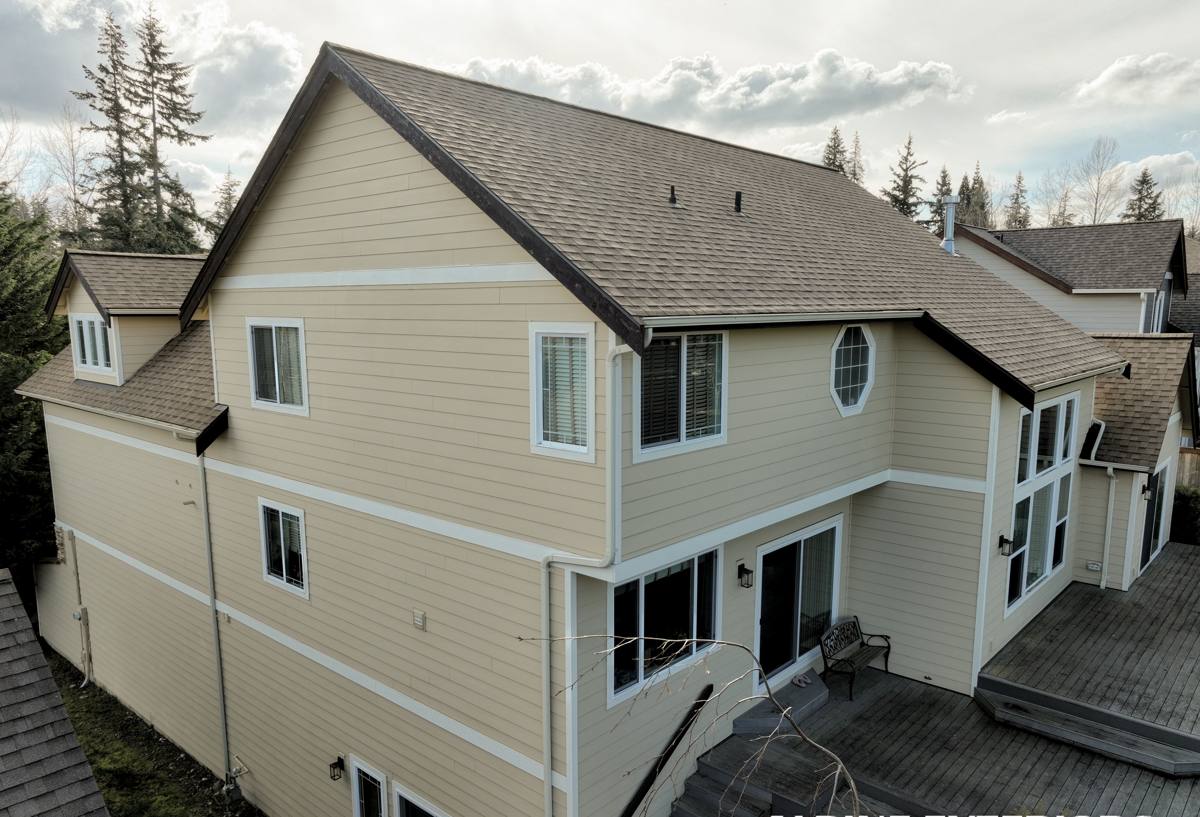
Why Composite Decking Makes Sense Here
Composite decking isn't the right call for every project, but for Blaine's climate it solves the specific problems wood decking struggles with year after year.
- Capped composite boards don't absorb water the way wood fibers do, so they're far less prone to the swelling, cupping, and splintering that driving rain causes over time.
- They don't need annual staining or sealing to hold up — a real advantage when the wet season here leaves a narrow window for that kind of maintenance work anyway.
- The cap layer resists mold, mildew, and moss growth better than bare wood, though nothing outdoors in this climate is completely maintenance-free.
- Color and texture are baked into the board, so fading and graying happen much more slowly than with wood exposed to UV and salt air.
That said, composite isn't a magic material. It still needs a correctly built substructure, proper drainage, and the right hardware — get any of those wrong and you'll have problems no decking product can fix on its own.
What Composite Decking Won't Do
It's worth being honest about the trade-offs. Composite boards can run warmer underfoot in direct summer sun than lighter-colored wood, though Blaine's marine climate keeps that less of an issue than it would be further inland. Upfront material cost is higher than pressure-treated lumber. And composite can't be sanded or refinished the way wood can if it's ever damaged — a gouged board typically gets replaced, not repaired. We'll walk through these trade-offs honestly during an estimate rather than oversell the product.
What a Correct Composite Deck Build Actually Involves
The decking boards themselves get most of the attention, but the substructure underneath is what determines whether the deck lasts. In a climate with this much rainfall, a few details matter more here than they would in a drier region.
Framing and Substructure
Joists should be treated for ground or exposed-weather contact, properly spaced for the specific composite product being installed (composite often requires tighter joist spacing than wood), and protected with joist tape where boards will sit directly on top. Skipping joist tape is a common shortcut that lets water sit against untreated wood for months at a time during our wet season — that's where hidden rot starts, invisible under the decking above.
Drainage and Airflow
A deck built low to the ground, or against a house wall without adequate slope and ventilation, will trap moisture underneath it. That trapped moisture is exactly what feeds moss and mildew growth in a long wet season. Correct framing height, ledger flashing where the deck meets the house, and gaps that allow airflow underneath all matter more here than in a dry climate where a shortcut might never get noticed.
Fastening Method
Hidden fastener clip systems are worth the extra labor cost in this climate. They keep the deck surface free of exposed screw heads, which means fewer entry points for water and fewer corrosion spots to show up as rust streaks down the line. Where face-screwing is unavoidable — stair stringers, picture-frame borders, some railing posts — the fastener grade matters.
Composite vs. Other Decking Options for Coastal Whatcom County
| Factor | Capped Composite | Pressure-Treated Wood | PVC / Cellular |
|---|---|---|---|
| Moisture resistance | Strong — cap layer sheds water | Weak without regular sealing | Very strong — no wood fiber |
| Salt air / corrosion exposure | Good with correct hardware | Fair — fasteners corrode faster | Good with correct hardware |
| Moss/mildew resistance | Good, not immune | Poor without upkeep | Good |
| Annual maintenance | Occasional wash | Sanding/staining/sealing | Occasional wash |
| Upfront cost | Mid-high | Lowest | Highest |
| Repair approach | Board replacement | Sand, patch, refinish | Board replacement |
Wood remains the lowest upfront cost and some homeowners prefer the traditional look enough to accept the maintenance burden. Our job is to lay out what each option actually costs over ten or fifteen years in this specific climate, not just at installation, so the decision is an informed one.
Our Process for a Blaine Composite Deck
- Site walk and assessment. We look at drainage, sun/shade exposure, existing framing (for replacement projects), and how close the deck sits to salt air exposure.
- Substructure evaluation or design. New builds get framing sized correctly for the composite product chosen; replacement projects get an honest look at whether the existing substructure can be reused or needs to be rebuilt.
- Material selection. We go over composite product lines, color and grain options, and railing systems that match the coastal exposure of the site.
- Installation. Joist tape, proper flashing at the ledger, correct fastener spec, and hidden-fastener installation where the product allows it.
- Final walk-through. We cover basic care — what to clean, what not to use on the surface, and what to watch for as the seasons change.
Hardware and Fasteners: The Detail That Gets Skipped
In a climate with year-round salt air, the fasteners and structural hardware often fail before the decking material does. Standard galvanized screws and brackets can start showing corrosion within a few years this close to the water. We spec stainless steel or coated fasteners rated for coastal exposure, along with structural connectors designed for wet, corrosive environments. It costs more than hardware-store hardware, but it's the difference between a deck that needs hardware repairs at year eight versus one that doesn't.
Living With Composite Decking Through a Long Moss Season
Composite resists moss and algae better than bare wood, but "resists" isn't "immune." Shaded areas, spots with poor airflow underneath, and boards that stay damp for extended stretches during our wet months can still develop a film over time. A periodic wash with a soft-bristle brush and a mild cleaner handles most of it — pressure washers can be used but only at the right distance and pressure setting, since too aggressive a setting can damage the cap layer on some products.
Simple Maintenance Checklist
- Sweep debris off the deck regularly, especially fallen leaves and needles that trap moisture against the surface.
- Keep gaps between boards clear so water can drain through rather than pooling.
- Wash shaded or low-airflow areas more often than sun-exposed sections.
- Check fastener and railing hardware periodically for early signs of corrosion.
- Confirm gutters and downspouts near the deck aren't dumping extra runoff onto or under it.
Why a Crew That Already Works Blaine Matters
Decking work in Blaine isn't identical to decking work forty miles inland. A crew that already builds here knows the fastener grade this coastline actually requires, understands how much drainage and airflow a substructure needs to survive our wet season, and has seen firsthand what happens to decks that were built with inland assumptions. That local experience shows up in fewer callbacks and a deck that's still solid a decade in, not just at handoff.
It also means straightforward answers about permitting and inspection expectations in Whatcom County, since local requirements can differ from a generic statewide answer a traveling crew might give.
Cost Factors to Expect
| Factor | How It Affects Cost |
|---|---|
| Deck size and shape | Larger footprints and complex angles increase board waste and labor time |
| Existing substructure condition | Rot or undersized framing on replacement projects adds rebuild cost |
| Fastening method | Hidden fastener systems cost more in labor than face-screwing |
| Railing type | Composite or metal railing systems cost more than basic wood rail |
| Height and stairs | Elevated decks with stairs add framing, code, and safety requirements |
| Hardware grade | Coastal-rated stainless or coated fasteners cost more than standard hardware |
We'll give a straightforward, itemized estimate rather than a vague per-square-foot number, since the substructure work and hardware choices affect the total as much as the decking material itself.
Get an Honest Look at Your Project
If you're weighing composite decking for a home in Blaine or elsewhere along the Birch Bay area coastline, we're glad to come take a look and give you a straightforward assessment — what your site needs, what it doesn't, and a real cost range before any work begins. Use the form below to request a free, no-pressure estimate.