 Birch Bay Window
 Decking Built for Sandy Point's Coastal Exposure
Sandy Point sits right up against the water, and that changes what a deck has to survive. Salt-laden air, wind-driven rain off the Strait, and the long gray stretch of moss season put more stress on outdoor structures here than in a typical inland Whatcom County yard. A deck that would hold up fine a few miles east can start showing problems within a couple of seasons this close to the shoreline. We build and replace decks for homeowners in this area, and the material and installation choices we make are shaped specifically by that exposure — not by a generic spec sheet.
This page covers what composite decking specifically means for a Sandy Point property: what the climate actually does to a deck over time, what a correctly built composite deck involves, and how we approach the work here.
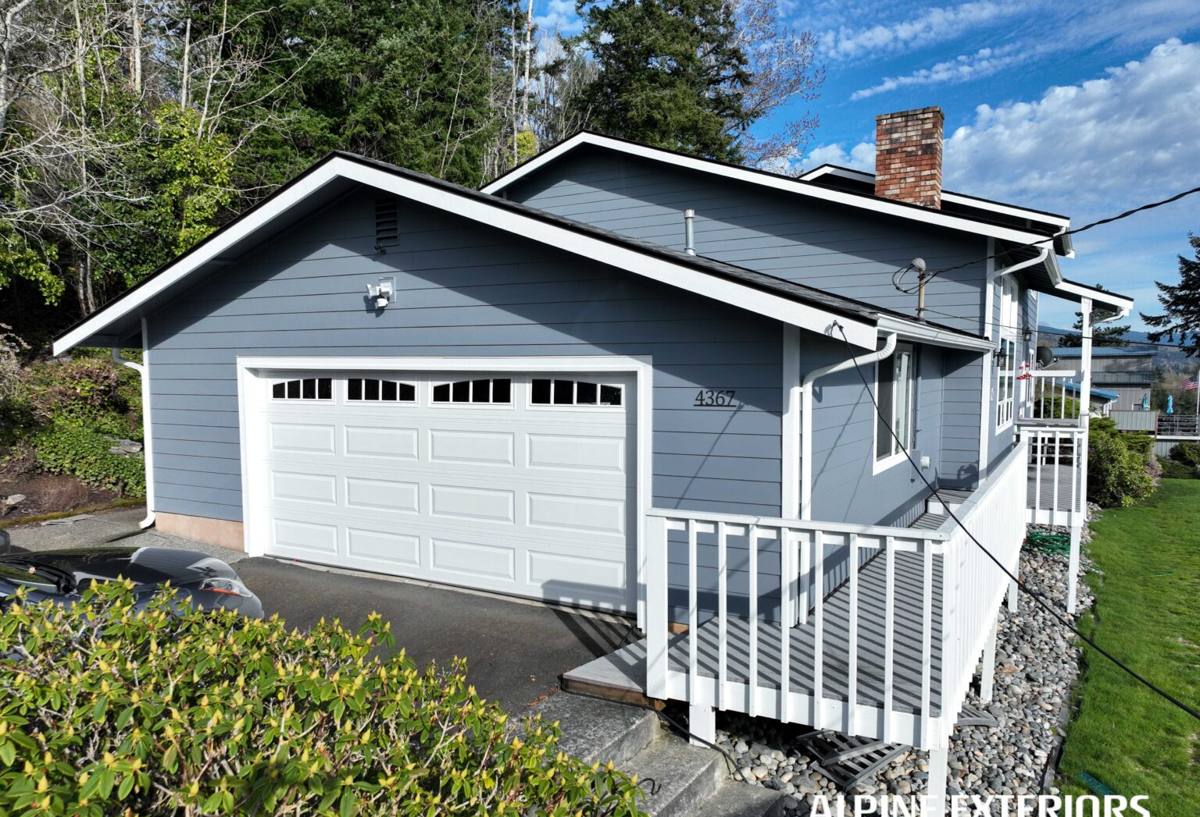
What Salt Air, Rain, and Moss Actually Do to a Deck
It helps to be specific about the failure modes, because they're different from what most decking advice online assumes.
Salt Air and Metal
Airborne salt accelerates corrosion on anything metal — fasteners, brackets, railing hardware, and structural connectors. A deck built with standard hardware can develop rust streaks and weakened connections well before the decking boards themselves show wear. This is one of the most common issues we find when we're called out to look at an older deck near the water: the boards look fine, but the fasteners underneath don't.
Driving Rain and Standing Moisture
Rain here doesn't just fall straight down — wind pushes it sideways into ledger connections, under railings, and into any gap that isn't properly flashed or sealed. Combined with our long wet season, that means wood surfaces, end grain, and fastener penetrations stay damp for extended stretches. Wood absorbs that moisture; composite doesn't, but the substructure underneath still needs to be built to shed water properly regardless of what decking material sits on top.
Moss and Algae Growth
Whatcom County's moss season is long, and a deck in a shaded or damp corner of a Sandy Point lot can start growing moss on the surface within a year or two if the board texture, drainage, and airflow underneath aren't right. Moss holds moisture against the board surface and becomes a slip hazard on stairs and landings — it's a maintenance issue and a safety issue at the same time.
Why Composite Decking Fits This Climate
Composite decking is made from a blend of wood fiber and plastic, usually with a protective outer cap (a "capped composite" board) that resists moisture absorption, fading, and staining better than the wood fiber core alone. For a property exposed to salt air and constant damp, that matters in a few concrete ways:
- It doesn't absorb water the way solid wood does, so it isn't as prone to the swelling, cupping, and splintering that comes from repeated wet-dry cycles
- It doesn't need staining or sealing on a yearly cycle to keep the surface protected
- Capped boards resist mold and mildew growth on the surface better than uncapped composite or untreated wood
- It holds color and finish longer under salt exposure and UV than most wood species used for decking
Composite isn't maintenance-free — nothing exposed to this environment is — but it shifts the maintenance burden from sanding, staining, and replacing damaged boards to simple periodic cleaning.
Composite vs. Other Decking Materials for a Sandy Point Property
Homeowners near the water often ask us to lay out the real tradeoffs rather than just recommend one product. Here's how the common options compare for this specific environment:
| Material | Salt air performance | Moisture behavior | Ongoing maintenance |
|---|---|---|---|
| Pressure-treated wood | Fasteners and hardware corrode faster; wood itself needs regular sealing | Absorbs water, prone to cupping and splitting in wet-dry cycles | Annual cleaning and re-sealing, more frequent board replacement |
| Cedar or other natural wood | Better rot resistance than treated pine but still vulnerable to salt and UV | Absorbs water; grays and checks without upkeep | Regular staining/sealing to preserve appearance and longevity |
| Uncapped composite | Better than wood, but the exposed core can absorb some moisture over time | Less prone to structural swelling than wood, can still stain or mold on the surface | Periodic cleaning; more susceptible to surface staining than capped boards |
| Capped composite (e.g., Trex, TimberTech, Fiberon lines) | Strong resistance to salt exposure and UV fading | Sheds water at the surface, doesn't swell or splinter | Occasional washing; no staining or sealing required |
We install composite decking from several manufacturers depending on a homeowner's budget, color preference, and design goals — the right board profile matters more than the brand name on the box.
What Correct Composite Installation Involves Here
A composite deck is only as good as what's underneath it, and this is where a lot of the long-term problems near the water actually start. Correct installation for this environment includes:
Framing and Substructure
Joist spacing has to match the composite board's rated span — composite generally needs tighter joist spacing than solid wood decking to avoid flexing and long-term sagging. We also treat or protect the joists and framing themselves, since that structure is still typically wood even when the decking surface is composite.
Ledger Flashing and Water Management
Where a deck attaches to the house, the ledger board connection is one of the most common sources of hidden water damage — especially with wind-driven rain pushing moisture sideways into that seam. Proper flashing, sealing, and a slight drainage slope away from the house are non-negotiable here, not optional upgrades.
Fasteners and Hardware
Given the salt air, we use stainless steel or coated fasteners and hardware rated for coastal exposure rather than standard-grade hardware. It costs more up front and saves the homeowner from hidden corrosion problems a few years down the line.
Ventilation and Drainage Underneath
Airflow underneath the deck helps everything dry out between rain events. Skirting, landscaping, or low clearance that traps moisture underneath a deck creates the damp, shaded conditions moss and mold need to take hold.
Our Process for a Sandy Point Composite Decking Project
The steps are the same on paper as decking work anywhere, but the details we check are specific to this location:
- Site assessment. We look at sun and wind exposure, drainage patterns, existing framing condition (if it's a rebuild), and how close the deck sits to salt spray or standing moisture.
- Design and material selection. We walk through board profiles, colors, and railing options, and talk through the real cost and maintenance tradeoffs rather than steering toward the most expensive option.
- Permitting. Most attached decks above a certain height off grade require a permit through Whatcom County. We handle that process as part of the job so it isn't left on the homeowner's plate.
- Demolition or prep. For replacement projects, we assess the existing framing rather than assuming it's reusable — near the water, hidden fastener corrosion or ledger rot is common enough that we check before building on top of it.
- Installation. Framing corrections, flashing, hardware, and board installation, built to the spans and clearances the material requires.
- Final walkthrough. We go over the finished deck with the homeowner, including what routine maintenance actually looks like for their specific board and location on the property.
Maintaining a Composite Deck in a Salty, Mossy Environment
Composite decking cuts down on maintenance significantly, but "low maintenance" isn't "no maintenance," especially this close to the water. A simple seasonal routine keeps a composite deck looking and performing the way it should:
- Rinse or sweep the surface regularly to clear salt residue, pollen, and organic debris before it builds up
- Scrub shaded or damp areas (under furniture, near railings, north-facing corners) periodically to prevent moss and algae from getting a foothold
- Keep gutters and downspouts near the deck clear so runoff isn't draining directly onto or under the deck surface
- Trim back vegetation that shades the deck or blocks airflow underneath it
- Check railing hardware and fasteners annually for early signs of corrosion, even though the decking itself won't rust
- Clear leaves and debris from between boards and around drainage gaps before winter
Cost Factors for a Sandy Point Composite Deck
Every deck is priced around the specifics of the property, but the main variables that move the cost are consistent from project to project:
| Factor | Why it affects cost |
|---|---|
| Deck size and layout | Square footage and shape (straight runs vs. multiple levels or angles) drive both material and labor |
| Board tier | Uncapped composite costs less than premium capped composite lines; heavier board profiles cost more |
| Substructure condition | A full rebuild of framing costs more than resurfacing sound existing framing with new decking |
| Height and railing requirements | Elevated decks need more substructure, railings, and sometimes stairs, all of which add cost |
| Site access | Waterfront lots and tight access can add labor time for material handling and equipment |
| Permitting scope | Permit requirements and any required engineering review add time and fees on top of the build |
Why Hire a Crew That Already Works This Area
Decking advice that works for a covered inland patio doesn't always hold up for a property exposed to open water and salt spray. A crew that already works in Sandy Point knows to spec coastal-rated hardware by default, knows what Whatcom County's permitting process actually requires for a deck project, and has seen firsthand what happens to decks built without those details accounted for. That local experience shows up in fewer callbacks and a deck that's still performing well after several wet seasons, not just in how it looks on installation day.
If you're planning a new composite deck or replacing one that hasn't held up to the salt air and moss, we're happy to take a look at your property and walk through the options. Reach out for a free, no-pressure estimate using the form below.