 Birch Bay Window
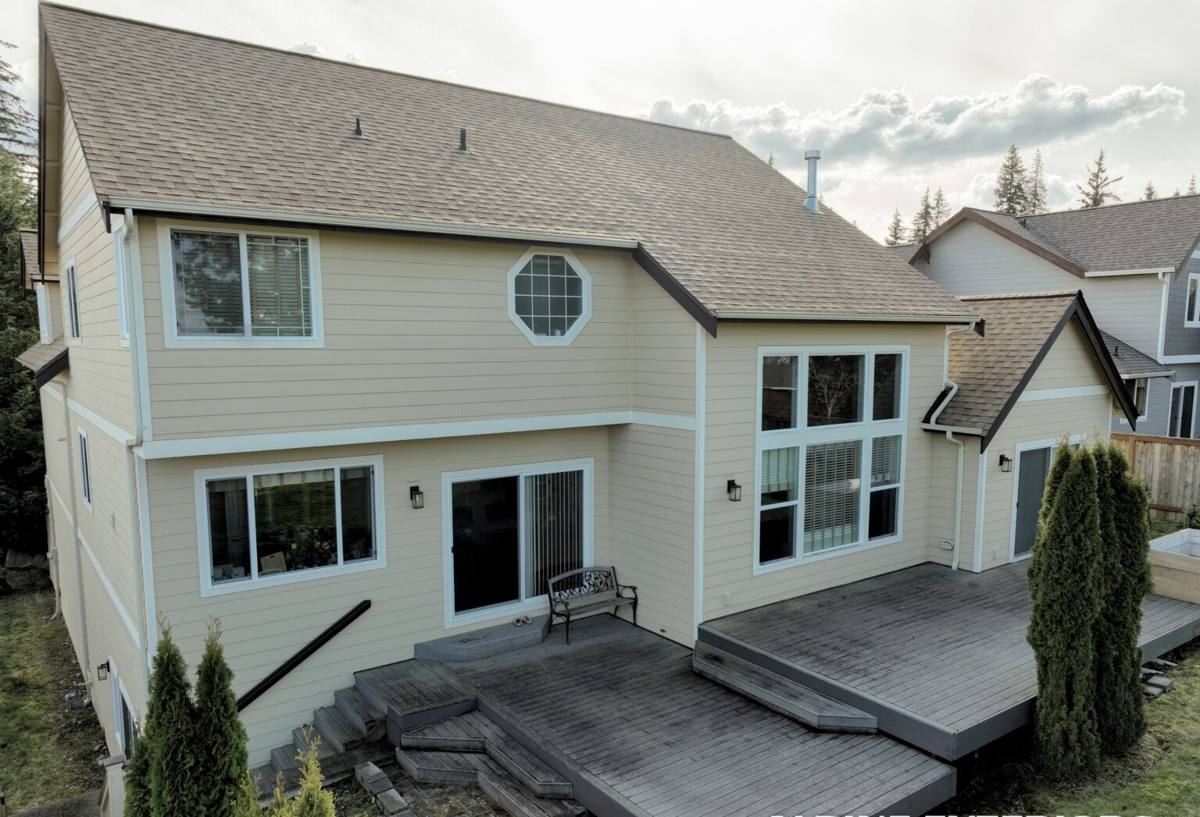
 Deck Repair Built for Cottonwood Beach Conditions
Cottonwood Beach sits close enough to the water that every deck in the neighborhood is dealing with a different set of stresses than a deck built inland. Salt-laden air corrodes fasteners and hardware faster than manufacturers' warranties assume. Wind-driven rain off the Strait doesn't just fall on a deck — it gets pushed sideways into ledger boards, stair stringers, and any gap where two pieces of framing meet. And Whatcom County's long, wet moss season means organic growth gets a head start on wood and composite decking alike, holding moisture against the surface for months at a time.
We repair decks in this area regularly, and the pattern is consistent: the damage almost never starts where it becomes visible. By the time a homeowner notices a soft spot underfoot or a stain spreading across the boards, the underlying structure has usually been absorbing moisture for a season or two already. A repair that only addresses the surface symptom tends to fail again within a year or two. A repair that traces the problem back to its source — flashing, fastener choice, drainage, ventilation underneath — holds up.
What Cottonwood Beach Homes Actually Need From a Deck Repair
Not every deck repair is the same job with different materials. A deck near the water needs specific attention in a few areas that inland decks can sometimes get away with skipping.
Fastener and Hardware Corrosion
Standard galvanized fasteners and joist hardware corrode noticeably faster in salt air. Screws that would last a decade elsewhere can start weeping rust streaks in half that time near Birch Bay. When we open up a deck for repair, checking every exposed fastener and structural connector for corrosion is standard practice, not an upsell — a deck is only as strong as its weakest connection point.
Ledger Board and Flashing Integrity
The ledger board — where the deck attaches to the house — is the single most common failure point we find in this region, and driving rain is the reason why. Without correctly lapped flashing directing water away from the connection, moisture works its way behind the ledger and into the rim joist over time. This is often invisible from the top of the deck and only shows up once the wood has already started to soften.
Moss and Surface Moisture Management
A long moss season means any horizontal surface that doesn't shed water quickly will grow something on it. Beyond being slippery and unattractive, moss and algae hold moisture against boards and fasteners far longer than bare wood or composite would dry on its own. Board spacing, surface pitch, and material choice all affect how much of a moss problem a deck develops over its life.
Under-Deck Drainage and Airflow
Decks built low to the ground or over unfinished space below need airflow underneath to dry out between rain events. When landscaping, added skirting, or grade changes block that airflow, framing can stay damp for weeks at a stretch during the wet months — which is most of the year here.
Signs Your Cottonwood Beach Deck Needs Repair
- Soft, spongy, or bouncy spots when you walk across the deck
- Rust streaking below screw heads or metal connectors
- Gaps opening up between the house and the ledger board
- Persistent moss, algae, or black staining that comes back after cleaning
- Railing posts that feel loose or move when pushed
- Stair stringers that flex or creak more than they used to
- Boards that stay wet or dark long after the rest of the deck has dried
- Visible daylight or gaps where flashing should be sealed at the house wall
Any one of these on its own might be minor. Two or more together usually mean it's time for a closer look before the next repair becomes a full rebuild.
How We Approach a Deck Repair
1. Inspection From the Ground Up
We don't just look at the walking surface. A proper inspection includes getting underneath the deck where possible to check joists, beams, posts, and footings, plus a close look at the ledger connection and flashing at the house. This is where the real story of a deck's condition usually is.
2. Identifying the Actual Cause
Rot, corrosion, and soft framing are symptoms. Before we start replacing material, we identify why that section failed — poor flashing, a drainage path that dumps water where it shouldn't, fasteners that were never rated for this environment, or simple age. Fixing the symptom without fixing the cause just resets the clock on the same failure.
3. Repairing to Match the Rest of the Structure
Structural framing, decking boards, railings, and stairs each have their own repair standards. We match structural repairs to code requirements for load-bearing members, and we match cosmetic repairs — decking, railing components — as closely as reasonably possible to the existing deck so the repair doesn't stand out or create a mismatched maintenance schedule down the road.
4. Upgrading What Caused the Failure
If corroded fasteners caused the problem, we don't put the same grade of fastener back in. If missing or poorly lapped flashing let water in at the ledger, we correct the flashing detail as part of the repair. The goal is a deck that doesn't come back to us with the same complaint in three years.
Repair vs. Rebuild: How We Decide
Homeowners often ask upfront whether their deck needs a repair or a full rebuild. The honest answer depends on how far the damage has spread and how the deck was originally built.
| Factor | Usually Repairable | Usually Needs Rebuild |
|---|---|---|
| Extent of rot/corrosion | Isolated to a few boards, joists, or connectors | Widespread across framing or multiple structural members |
| Ledger board condition | Flashing failure caught early, ledger itself sound | Ledger board itself soft or delaminating |
| Post and footing condition | Posts and footings solid, deck surface/framing is the issue | Posts rotted at grade or footings undersized/failing |
| Age of original build | Newer deck with a specific, addressable defect | Older deck built to outdated span or fastening standards |
| Cost comparison | Repair cost is a fraction of full replacement | Repair cost approaches a large share of rebuild cost |
We'll always tell you honestly which category your deck falls into. There's no advantage to us in talking a repairable deck into a rebuild, and there's no advantage to you in patching a deck whose framing is fundamentally compromised.
Materials and Hardware Choices for This Climate
What we use in a repair matters as much as the workmanship. For fasteners and structural hardware near the water, we hold to a higher corrosion-resistance standard than the minimum code requirement — the small added cost up front is minor compared to reopening a deck in a few years because standard hardware failed early. For decking material, both quality wood and composite options can perform well here, but each comes with a different maintenance rhythm.
Wood Decking Repairs
Wood requires more regular maintenance — cleaning, sealing, and periodic moss treatment — but it's straightforward to spot-repair a single damaged board without replacing large sections, and it's easy to match visually to an existing deck.
Composite Decking Repairs
Composite resists moss and moisture damage on the surface better than wood, but the underlying framing still needs the same attention to drainage and fastening. Composite boards from different production runs can vary slightly in color, so full-board replacement sometimes shows a minor difference until it weathers in.
Why Local Experience With Cottonwood Beach Matters
A deck repair crew that mostly works dry, inland properties can still do competent framing work, but they may not automatically account for the corrosion rate on hardware this close to salt water, or budget for the extra time a flashing detail takes when it's been failing quietly for a while. Working regularly in Birch Bay and the surrounding Whatcom County coastline means we've seen how decks in this specific environment actually fail over time — not in a textbook, but in the framing we've opened up ourselves. That shapes what we check first, what we upgrade as a matter of course, and what we flag for a homeowner even when it wasn't the original reason for the call.
What a Deck Repair Estimate Should Include
A useful estimate for deck repair work should be specific enough that you know exactly what you're paying for and why.
- A written description of what's damaged and why, based on an actual inspection — not a guess from photos alone
- Whether the issue is isolated or likely to affect adjacent framing
- What will be repaired versus replaced, and why that line was drawn there
- The specific fasteners and hardware being used and why they're appropriate for this environment
- Whether any flashing, drainage, or ventilation corrections are included
- A clear range, not a vague estimate, with the reasoning behind cost drivers
If an estimate can't answer these points, it's worth asking follow-up questions before agreeing to the work — a repair that skips the cause tends to cost more in the long run than doing it right the first time.
Maintaining a Deck After Repair
Once a repair is done correctly, a little seasonal maintenance goes a long way in this climate. Clearing debris and moss buildup before the wet season sets in, keeping gutters and downspouts near the deck clear so water isn't dumping onto or under it, and doing a quick visual check of fasteners and the ledger connection once a year will catch small issues while they're still small. None of this requires a professional visit every time — it just requires paying attention during the months when Whatcom County weather is doing the most damage.
If your deck near Cottonwood Beach has soft spots, rust stains, recurring moss, or just feels less solid than it used to, we're happy to come take a look. The estimate is free, there's no pressure attached to it, and you'll get a straight answer about whether you're looking at a repair or something bigger — just fill out the form below to get started.