 Birch Bay Window
 Windows Built for the Cottonwood Beach Waterfront
Cottonwood Beach sits close enough to Birch Bay's shoreline that homes here deal with a combination of stresses most inland Whatcom County neighborhoods don't: salt-laden air, wind-driven rain that hits siding and window frames at an angle instead of straight down, and a wet season that stretches long enough for moss and algae to take hold on anything that stays damp. Windows in this kind of exposure work harder than windows anywhere else in the region, and if they were installed without that in mind, it usually shows up first as drafts, fogging between panes, or soft trim around the frame.
An energy-efficient window replacement here isn't just about lowering a heating bill, though that's part of it. It's about choosing glass and frame materials that hold up to salt exposure, and installing them with flashing and sealing details that actually shed the amount of water this stretch of coastline sees every winter.
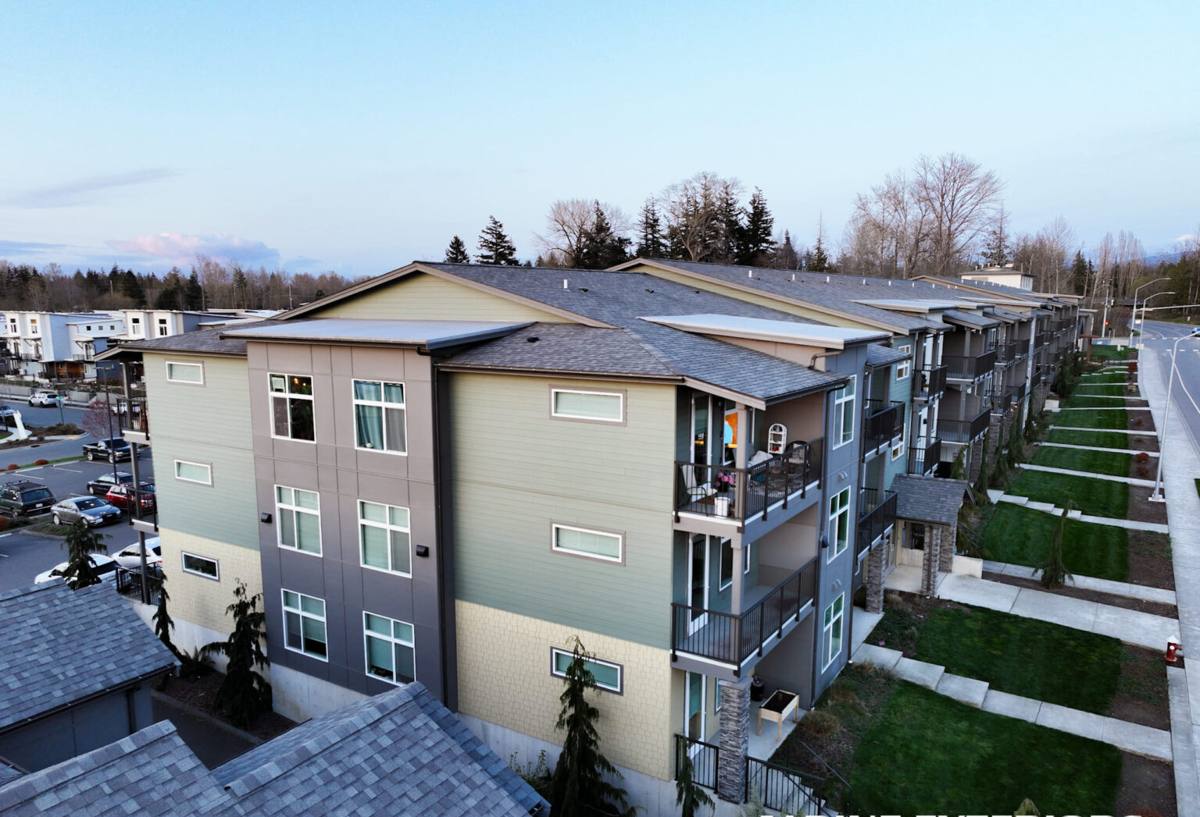
What "Energy-Efficient" Means in a Salt-Air Climate
Energy-efficient windows are rated on a few core numbers, and they matter differently depending on where you live. In the Pacific Northwest marine climate, the two that matter most are U-factor and air leakage.
U-Factor: The Main Number for This Climate
U-factor measures how much heat a window lets escape. Lower is better. Birch Bay doesn't see the extreme summer heat that makes solar heat gain coefficient (SHGC) the dominant concern, so for most Cottonwood Beach homes we're weighing U-factor and air infiltration more heavily than solar performance. A window with a strong U-factor but a poor installation will still leak air around the frame — the rating on the glass doesn't help you if the seal around the opening isn't right.
Air Leakage Rating
This number gets overlooked but matters a lot on a wind-exposed lot. Driving rain finds gaps that calm-weather installations never get tested against. A window with a low air-leakage rating, paired with correct flashing, is what actually keeps a Cottonwood Beach home dry and draft-free through a January storm off the water.
Signs Your Current Windows Are Costing You
- Condensation or fogging between the panes of a double-pane window — the seal has failed and the insulating gas is gone
- Cold air noticeably moving near the frame edges on a windy day
- Soft or discolored wood trim or sill, especially on the side of the house facing the water
- Visible moss, algae, or green staining building up on the frame or sill that keeps returning after cleaning
- Difficulty opening or latching a window that used to operate smoothly — frames can swell or warp with sustained moisture exposure
- A noticeable jump in heating costs compared to similar-sized homes further inland
Any one of these on its own might just mean a caulking touch-up. Several together usually mean the window unit itself, or the flashing behind it, has reached the end of its service life.
Frame Material Comparison for Coastal Exposure
Material choice matters more here than it would a few miles inland. Salt air accelerates corrosion on some hardware and speeds up UV and moisture breakdown on others. Here's how the common options hold up specifically in a Birch Bay / Cottonwood Beach exposure:
| Frame Material | Salt Air Performance | Maintenance | Notes for This Area |
|---|---|---|---|
| Vinyl | Good — won't corrode or rot | Low; occasional rinse to clear salt film | Most common choice for direct waterfront exposure; consistent performance without repainting |
| Fiberglass | Very good — dimensionally stable, resists warping | Low | Higher upfront cost, holds paint finishes well if you want a specific exterior color |
| Wood-clad | Fair — cladding protects the exterior face, but end cuts and joints are moisture-sensitive | Higher; needs regular inspection of seals and cladding joints | Best reserved for sheltered elevations, not the side facing the water directly |
| Aluminum | Poor without marine-grade coatings — prone to pitting and corrosion in salt air | Moderate to high | We generally steer Cottonwood Beach clients away from standard aluminum frames for this reason |
We're not telling clients any of these materials is inherently bad — wood-clad windows perform fine in a lot of settings. The point is matching the material to the exposure. A frame that's a fine choice three streets back from the water can be the wrong call on a lot with a direct view of the bay.
What a Correct Installation Actually Involves
The window unit itself is maybe half the job. The other half is what happens around it, and it's where most problems start if it's rushed.
Flashing and Water Management
Every opening needs a flashing sequence that directs water down and out, never behind the siding. On a wind-exposed lot, we pay particular attention to the head flashing above the window and the sill pan below it, since driving rain here doesn't fall straight down — it's pushed sideways into the wall.
Sealing Without Trapping Moisture
It's tempting to over-seal a window to stop drafts, but sealing the wrong layer can trap moisture inside the wall cavity instead of letting it drain. Correct technique uses sealant at the right layer while still allowing the assembly to shed any water that does get in.
Fastening for Wind Exposure
Homes closer to the water see stronger sustained wind loads than homes set back among trees. Fastening schedules and shimming need to account for that so the frame doesn't flex and open a gap over time.
Our Process for a Cottonwood Beach Window Job
- On-site assessment — we look at each opening individually, not just the house as a whole. Sun and wind exposure can vary meaningfully from the water-facing side to the sheltered side of the same home.
- Product selection — we walk through frame material, glass package, and U-factor options based on that specific exposure, budget, and how the window will be used (fixed, casement, slider, etc.).
- Removal and inspection — once the old unit is out, we check the framing and sheathing underneath for hidden moisture damage before anything new goes in. This is often where the real story of a window's failure shows up.
- Flashing and installation — proper flashing sequence, shimming, and fastening for the wind exposure at that specific opening.
- Interior and exterior finish — trim, sealant, and touch-up work so the finished opening matches the rest of the house.
- Walkthrough — we go over operation, and what routine upkeep looks like for the specific material and location.
Why a Crew That Already Works Cottonwood Beach Matters
A window contractor who mostly works inland projects doesn't see driving rain and salt exposure often enough to build habits around it. A crew that regularly works Birch Bay and Cottonwood Beach homes already knows which elevations on a given lot take the brunt of winter storms, which framing details tend to hide moisture problems in homes of this area's age and construction style, and how to sequence a job around the area's weather windows so an opening isn't left exposed longer than it needs to be.
That familiarity also shows up in smaller, practical ways — knowing what permitting looks like for Whatcom County exterior work, and having a realistic sense of how long materials take to source so a job doesn't stall with a house opened up mid-installation.
Living With Moss Season: Maintenance That Actually Helps
Good windows still need some upkeep in this climate, especially through the long wet season when moss and algae growth is at its worst.
- Rinse frames and sills periodically to clear salt film before it has a chance to sit and dry repeatedly
- Keep gutters and downspouts clear so runoff isn't sheeting directly down over window openings
- Trim back vegetation that keeps a window shaded and damp longer than the rest of the house
- Check exterior caulking once a year, particularly after the first hard storms of the season
- Wipe down interior sills after heavy rain events if condensation tends to collect there
- Have weep holes on vinyl or fiberglass frames checked periodically — moss and debris can block them and cause water to sit where it shouldn't
None of this is difficult, but skipping it is exactly how a well-installed window ends up looking like a poorly installed one after a few winters.
Cost Factors for This Type of Project
| Factor | How It Affects Cost |
|---|---|
| Number and size of openings | Larger jobs get some efficiency of scale, but each opening still needs full flashing and finish work |
| Frame material | Vinyl is typically the lowest upfront cost; fiberglass and wood-clad run higher |
| Glass package | Upgraded low-E coatings and gas fills add cost but improve U-factor performance |
| Condition of existing framing | Hidden moisture damage found during removal adds repair scope before the new window goes in |
| Exposure of the specific opening | Water-facing elevations may call for more robust flashing detail than sheltered ones |
| Window style | Fixed windows are generally simpler and less costly than operable casements or sliders of the same size |
We give a straightforward, itemized estimate before any work starts, so there's no guessing about what's driving the price on your specific home.
Get an Honest Look at Your Windows
If your Cottonwood Beach home has windows that are drafty, fogged, or showing wear on the water-facing side, it's worth having someone who works this specific stretch of coastline take a look before deciding what to do. We offer free, no-pressure estimates — use the form below to get one scheduled.