 Birch Bay Window
 Roofing in Custer Means Building for the Coast, Not Around It
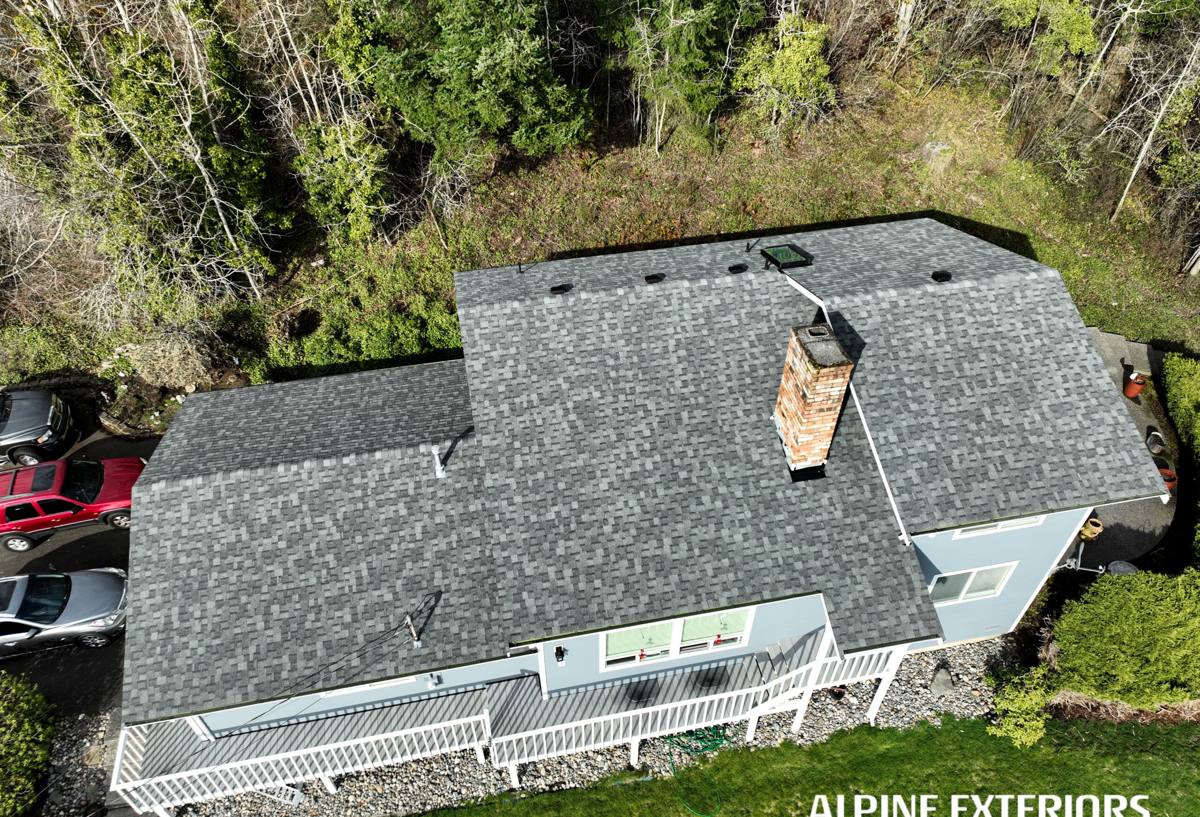
Custer sits close enough to the Salish Sea that salt air is part of daily life, even on properties that don't have a water view. Add Whatcom County's long, wet winters and the shade cover common on rural and wooded lots, and you get a roofing environment that punishes shortcuts. A shingle roof installed the way it's meant to be installed will handle all of this for decades. One installed with gaps in the details — thin underlayment, skipped flashing steps, poor attic airflow — will show problems within a few winters, usually as moss, granule loss, or leaks at the valleys and penetrations first.
This page is about doing asphalt shingle roofing correctly for this specific area: what the climate actually does to a roof here, what a proper install looks like, and how we approach the work when we're on a Custer property.
What Salt Air, Driving Rain, and Moss Season Actually Do
Salt Air
Airborne salt from Birch Bay and the surrounding coastline accelerates corrosion on exposed metal — nails, flashing, vent stacks, and gutter hardware. Standard electro-galvanized fasteners can start showing rust streaks on a shingle roof well before the shingles themselves are due for replacement. It's a slow problem, but it's a real one, and it's specific to homes within a few miles of the water.
Driving Rain
Storms coming off the water tend to push rain sideways, not straight down. That matters because a shingle roof's water-shedding design assumes rain falls mostly vertically. Wind-driven rain finds its way under shingle tabs, into exposed nail heads, and through poorly lapped flashing at walls, chimneys, and skylights. A roof that would perform fine in a calmer climate can leak here if the underlayment and flashing weren't installed with wind-driven rain specifically in mind.
Long Moss Season
Custer's mix of shade, moisture, and mild temperatures gives moss and algae a long growing window — often close to year-round on north-facing slopes and anywhere overhung by trees. Moss doesn't just look bad. It holds moisture against the shingle surface, lifts tabs as it grows, and works its way under the roofing over time. Left unaddressed, it shortens the life of an otherwise sound roof.
Why Asphalt Shingles Still Make Sense Here
Some homeowners assume a wet coastal climate calls for metal or specialty roofing. Asphalt shingles remain a solid, cost-effective choice for most Custer homes when they're installed with the right materials and details for this environment. They're easier to repair in sections, more affordable to replace when the time comes, and available in algae-resistant formulations built for exactly the conditions found here. The material isn't the weak point in most roofing failures we see locally — the installation is.
What a Correct Asphalt Shingle Roof Includes
Underlayment and Ice/Water Barrier
A synthetic underlayment rated for wind-driven rain, with self-adhered ice-and-water shield at eaves, valleys, and around every penetration, gives the roof a real second line of defense — not just a formality between the deck and the shingles.
Flashing at Every Transition
Chimneys, skylights, sidewalls, and vent pipes are where most leaks start. Proper step flashing, counter-flashing, and pipe boots — installed new, not reused from the old roof — matter more in this climate than shingle brand.
Fasteners That Match the Environment
Given the salt air near the water, corrosion-resistant fasteners are worth specifying rather than assuming standard nails will hold up the same way they would further inland.
Attic Ventilation
Balanced intake and exhaust ventilation keeps the underside of the roof deck dry and temperate. Without it, moisture from the living space condenses on the deck, which accelerates rot and shortens shingle life from underneath — a problem you won't see until it's already advanced.
Moss and Algae: Built Into the Choice of Shingle
Standard shingles and algae-resistant shingles look identical on the shelf, but the difference shows up after a few Custer winters. Algae-resistant shingles use copper- or zinc-infused granules that slow algae and moss growth on the surface. On a shaded or north-facing roof plane, that difference is worth discussing before installation, not after moss has already taken hold.
| Feature | Standard Shingles | Algae-Resistant Shingles |
|---|---|---|
| Moss/algae resistance | None built in | Copper or zinc granules slow growth |
| Best use case | Sunny, well-ventilated slopes | Shaded, north-facing, or tree-covered slopes |
| Upfront cost | Lower | Modestly higher |
| Long-term maintenance | More frequent cleaning likely needed | Reduced cleaning frequency |
| Warranty coverage for staining | Rarely included | Often included by manufacturer |
We'll tell you honestly which slopes on your specific roof are moss-prone before we quote materials, rather than applying the same shingle to every plane by default.
Our Process for a Custer Roofing Job
1. Inspection and Honest Assessment
We walk the roof, check the attic, and look at flashing, decking condition, and ventilation — not just shingle wear. We'll tell you if repair is a reasonable option before recommending full replacement.
2. Tear-Off and Deck Check
Old material comes off down to the deck so we can actually see what's underneath. Soft or water-damaged decking gets replaced, not covered over — a step that's easy to skip and expensive to regret later.
3. Underlayment, Flashing, and Shingle Install
Ice-and-water membrane at vulnerable areas, wind-rated underlayment across the field, new flashing at every transition, then shingles installed to manufacturer spec for nailing pattern and exposure.
4. Ventilation Check
We confirm intake and exhaust venting are balanced for the attic space, adding or correcting vents where the existing setup falls short.
5. Cleanup and Walkthrough
Full site cleanup including a magnetic sweep for stray fasteners, followed by a walkthrough so you know exactly what was done and what to watch for going forward.
Repair or Replace? What to Check First
Not every roofing problem in Custer means a full replacement. Here's what we look at before making that call:
- Age of the current roof and remaining expected life of the shingles
- Whether moss or algae is surface-level or has already lifted shingle tabs
- Number of past layers already on the roof (a second layer often limits repair options)
- Condition of flashing versus condition of the shingle field itself
- Evidence of active leaks in the attic versus cosmetic wear only
- Granule loss pattern — even wear from age versus localized wear from a specific failure point
If the shingles are still within their service life and the issues are localized — a damaged flashing detail or a wind-lifted section — targeted repair is usually the honest recommendation. Full replacement makes sense when the underlayment and decking are due regardless of shingle condition.
Cost Factors Homeowners Ask About
| Factor | Why It Affects Price |
|---|---|
| Roof pitch and access | Steeper or harder-to-access roofs take longer and require more safety setup |
| Number of existing layers | Tear-off of multiple layers adds labor and disposal cost |
| Decking condition | Rotted or soft plywood found during tear-off needs replacement before shingles go on |
| Roof complexity | Valleys, dormers, and multiple penetrations add flashing labor |
| Shingle tier chosen | Standard versus algae-resistant versus higher-wind-rated products |
| Ventilation upgrades | Adding or correcting intake/exhaust venting where the existing setup is inadequate |
We provide a detailed, itemized quote so you can see exactly where the cost is going rather than a single lump number.
Why Hiring a Crew That Already Works Custer Matters
A roofing crew that regularly works this part of Whatcom County already knows which slopes tend to hold moss, how far wind-driven rain travels up a roof plane in a coastal storm, and which flashing details fail first in salt air. That local pattern recognition shows up in small decisions — where extra ice-and-water membrane gets used, which fastener spec gets called out, how ventilation gets balanced for a shaded lot — that a crew unfamiliar with the area might not think to make.
Maintenance That Actually Extends Roof Life Here
A correctly installed shingle roof in Custer still benefits from periodic attention given the moss season and coastal exposure:
- Keep gutters clear so water isn't backing up under the eaves during driving rain
- Trim back overhanging branches to reduce shade and debris on moss-prone slopes
- Have moss treated or removed gently before it lifts shingle tabs, rather than pressure-washing, which can strip granules
- Have flashing and pipe boots checked periodically, since these fail before the shingle field usually does
If you'd like a straightforward look at your roof's condition and what it would take to repair or replace it correctly for Custer's climate, we're glad to provide a free, no-pressure estimate — just fill out the form below.