 Birch Bay Window
 Why Roofs Wear Out Faster in Custer
Custer sits close enough to the water that salt-laden air off the Strait of Georgia and Birch Bay reaches the neighborhood on a regular basis, especially during winter storms when onshore wind pushes moisture inland. Combine that with Whatcom County's long, grey rainy season and the heavy tree cover common on Custer lots, and you get three forces working against a roof at the same time: corrosion, saturation, and moss. None of these show up overnight. They show up as five, ten, and fifteen years of quiet wear that most homeowners never notice until a leak forces the issue.
A roof built for a dry climate, or installed by a crew that doesn't think about this specific combination of salt, rain, and shade, tends to fail early in exactly the ways local homeowners already recognize: streaky black staining, soft spots near valleys, and granule loss that shows up as grit in the gutters. Roof replacement done right for this area isn't just "put new shingles on." It's an assembly built to handle water that never really stops coming, in one form or another, for eight months of the year.
What Long Moss Season Actually Does to a Roof
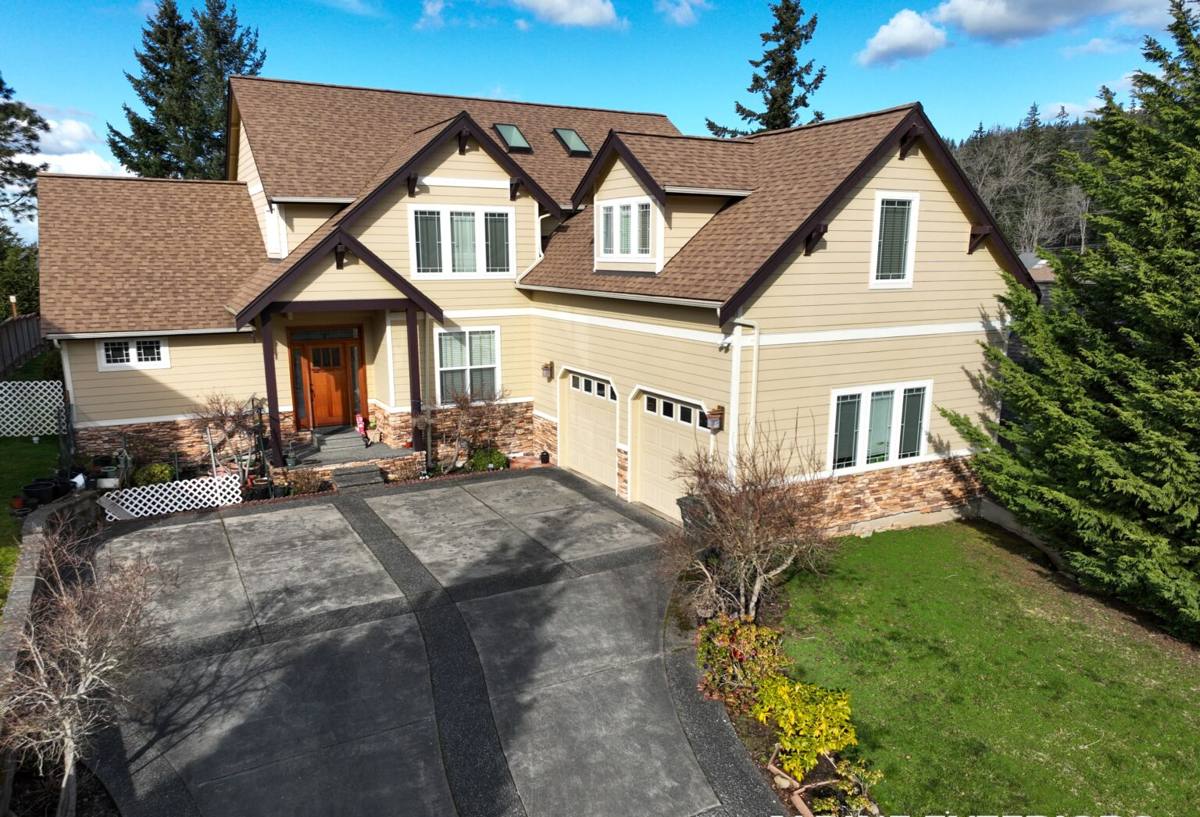
Moss doesn't just look bad. It holds moisture against the roof surface long after the rest of the roof has dried, which keeps shingles saturated, accelerates granule loss, and eventually lifts shingle edges as the moss mat grows and thickens. On shaded roof sections — common in Custer where mature conifers and windbreaks shade large sections of roofline for much of the day — moss can establish itself within a couple of years on a roof that never gets a full drying cycle.
Zinc or copper strips near the ridge help slow regrowth, but they don't fix a roof that's already lost its protective granule layer to years of moss growth. That's a big part of why we look at moss patterns during an inspection — they tell us which slopes are taking the most punishment and whether the roof underneath still has enough life left to be worth patching versus replacing.
Signs a Custer Roof Is Ready for Replacement
Not every roof problem means a full replacement. But these are the signs we take seriously when we're out on a Custer roof, because in this climate they tend to mean the underlying deck or underlayment is already compromised, not just the shingles on top:
- Granules collecting in gutters and downspouts, especially after a hard rain
- Shingles that look cupped, curled, or cracked, particularly on south- and west-facing slopes
- Dark streaking or heavy moss coverage across large sections of roof, not just isolated patches
- Soft or spongy decking felt underfoot during an inspection walk
- Daylight visible through the attic at ridges, valleys, or plumbing boots
- Water stains on interior ceilings, especially near chimneys, skylights, or valleys
- A roof that's 20+ years old and has never had underlayment or flashing replaced
What a Correct Roof Replacement Involves
Full Tear-Off, Not an Overlay
We don't recommend layering new shingles over old ones on Custer roofs. An overlay traps moisture between layers and hides the one thing that actually matters in this climate: the condition of the decking underneath. A full tear-off lets us inspect every square foot of the roof deck for rot, delamination, or soft spots before anything new goes down.
Deck Repair Before Anything Else
Any plywood or OSB decking that's soft, delaminated, or stained from long-term moisture gets replaced before underlayment goes on. Skipping this step is the single most common reason a "new" roof leaks within a few years — the new shingles are fine, but they're fastened to compromised wood underneath.
Underlayment and Ice-and-Water Barrier
Given how much driving, wind-blown rain this area sees, we use synthetic underlayment across the full roof rather than old-style felt, and we install self-adhering ice-and-water membrane at eaves, valleys, and around every roof penetration — chimneys, skylights, plumbing vents. Those are the spots where wind-driven rain gets pushed backward under standard shingle laps, and it's where most roof leaks actually start.
Flashing That's Actually Replaced, Not Reused
Flashing around chimneys, skylights, and sidewalls gets replaced as part of the job, not caulked over and left in place. Reused flashing is one of the most common shortcuts in cheap roof jobs, and it's also one of the first things to fail when salt air accelerates corrosion on galvanized metal.
Ventilation Correction
We check and correct intake and exhaust ventilation as part of every replacement — see below for why this matters more here than in drier climates.
Ventilation and Moisture Control: The Part Homeowners Rarely See
A new roof surface can't fix a moisture problem that's coming from inside the attic. In Whatcom County's humid, mild climate, an attic without balanced intake (soffit) and exhaust (ridge or roof vents) ventilation traps warm, moist air against the underside of the roof deck. Over time that moisture condenses, soaks into the sheathing, and rots it from below — while the shingles on top still look fine. This is one of the quieter causes of premature deck failure we see on older Custer homes, and it's completely preventable with correct venting during a replacement.
We check for even intake-to-exhaust balance, clear blocked soffit vents, and add ridge or box venting where the existing setup is undersized. This is standard practice on every job, not an upsell.
Comparing Roofing Materials for Custer's Climate
| Material | Typical Lifespan Here | Moss/Algae Resistance | Notes for This Climate |
|---|---|---|---|
| Architectural asphalt shingle | 25–30 years | Good with algae-resistant granules | Best balance of cost, appearance, and performance for most Custer homes |
| 3-tab asphalt shingle | 15–20 years | Fair | Lower upfront cost, but shorter life under this much rain exposure |
| Standing seam metal | 40–50+ years | Excellent | Sheds moss and moisture well; fastener and flashing metal quality matters near salt air |
| Synthetic/composite shingle | 30–50 years | Very good | Higher upfront cost; good option for heavily shaded, moss-prone roof sections |
What Drives the Cost of a Roof Replacement
Every roof estimate is specific to the house, but these are the factors that move the price up or down the most on Custer jobs:
| Factor | Why It Matters |
|---|---|
| Roof pitch and access | Steeper roofs and limited ground access slow the job and add safety equipment costs |
| Number of layers to remove | Tear-off labor increases with each existing layer of roofing |
| Decking condition | Rot or delamination found during tear-off adds material and labor to replace it |
| Number of penetrations | Chimneys, skylights, and multiple vents each need individual flashing work |
| Material choice | Asphalt, synthetic, and metal carry very different material costs per square |
| Ventilation upgrades | Adding or correcting intake/exhaust venting is inexpensive relative to the rest of the job and pays off in roof life |
Our Process, Start to Finish
- On-site inspection. We walk the roof and the attic, check for moss patterns, soft decking, flashing condition, and ventilation balance, and take photos to review with you.
- Written estimate. You get a clear scope and price before any work starts — no verbal-only quotes, no vague allowances.
- Material selection. We walk through the tradeoffs above based on your roof's exposure, shading, and budget, not a one-size-fits-all recommendation.
- Permitting. We handle the Whatcom County permit where required so you don't have to track it down yourself.
- Tear-off and deck inspection. Old roofing comes off, decking gets inspected and repaired as needed, with photos of anything replaced.
- Underlayment, flashing, and ventilation. Synthetic underlayment, ice-and-water membrane at vulnerable areas, new flashing, and corrected ventilation go in before any finish material.
- Roofing installation. Shingles or metal panels installed to manufacturer spec and local wind/rain exposure requirements.
- Cleanup and magnetic nail sweep. Full site cleanup, including a magnetic sweep for stray fasteners in the yard and driveway.
- Final walkthrough. We go over the finished roof and warranty paperwork with you before calling the job done.
Why It Matters That We Already Work in Custer
A roofing crew that mostly works dry inland climates or dense urban lots doesn't automatically know how much extra attention Custer roofs need at the eaves, valleys, and penetrations, or how quickly moss re-establishes on a shaded slope here compared to elsewhere. Working this specific stretch of Whatcom County regularly means we're not guessing about which slopes take the worst of the wind-driven rain, which older neighborhoods tend to have undersized attic ventilation, or how salt exposure affects fastener and flashing choices as you get closer to Birch Bay's shoreline. That familiarity shows up in fewer callbacks and roofs that actually make it to the end of their expected lifespan.
What to Expect Before We Ever Pick Up a Tool
- A real inspection of both the roof surface and the attic, not just a curbside look
- A written scope that spells out materials, underlayment, and flashing plan
- Straight answers about whether your roof needs full replacement or targeted repair
- No pressure to upgrade to a premium material if a solid architectural shingle will do the job
- A clear timeline based on weather windows, since roofing in this climate means working around rain, not ignoring it
If your roof is showing moss, staining, granule loss, or you just haven't had it looked at in a while, a free, no-pressure estimate is the easiest way to find out where you actually stand. Use the form below and we'll set up a time to come take a look.