 Birch Bay Window
 Deck Repair for Terrell Creek Homes
Terrell Creek sits close enough to Birch Bay and the Strait of Georgia that decks here take a different kind of beating than decks further inland. It's not one big storm that does the damage — it's the slow, steady combination of salt-laden air, near-constant winter rain, and a moss season that can stretch from October into May. A deck that would last two decades in a dry climate can start showing structural problems in half that time out here if it wasn't built or maintained with this environment in mind.
We work on decks throughout Birch Bay and Whatcom County, and Terrell Creek's mix of wooded lots, low-lying drainage, and proximity to the water shows up again and again in the repair calls we get. This page covers what actually goes wrong with decks in this area, what a proper repair involves, and how to tell the difference between a deck that needs a repair and one that's telling you it's done.
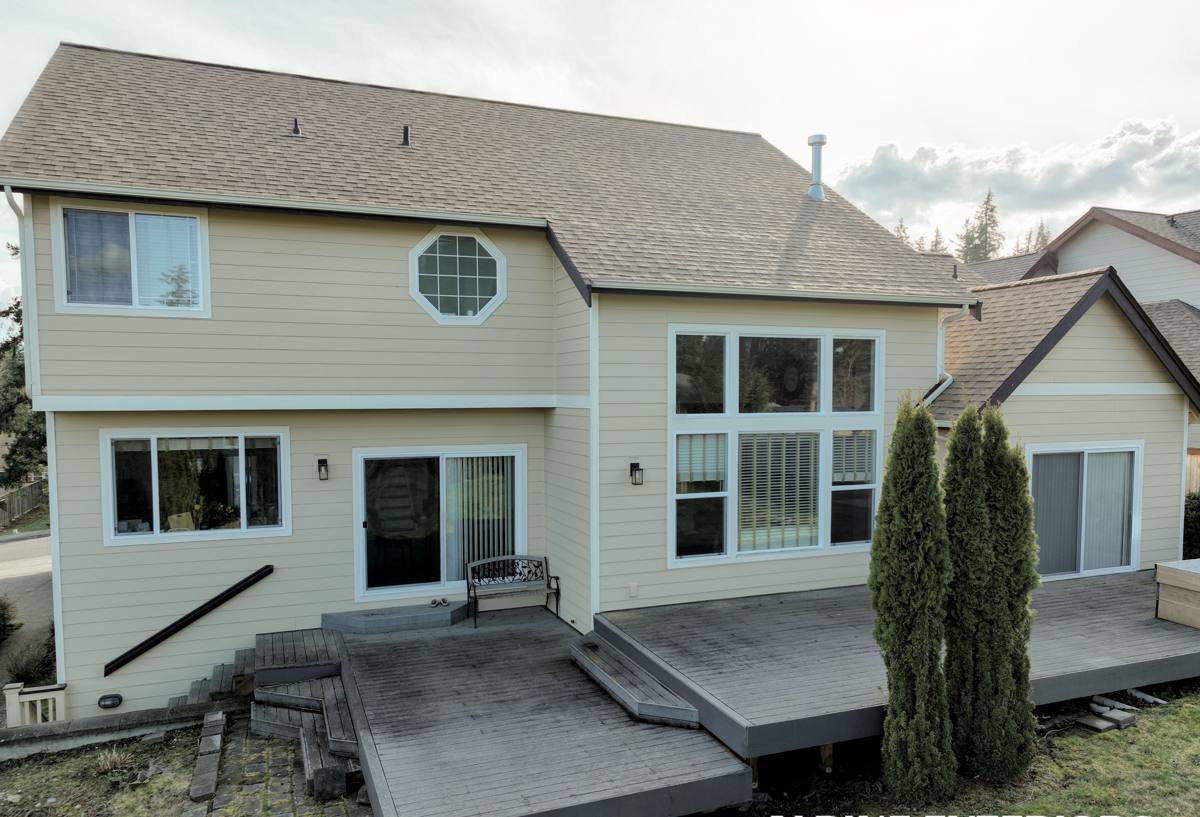
What Birch Bay's Climate Does to a Deck
Salt Air and Metal Fatigue
Airborne salt doesn't just affect homes right on the waterfront — it travels inland on the wind and settles on anything exposed, including decks set back from the water. Over time it accelerates corrosion in fasteners, joist hangers, and any exposed metal hardware. Corroded fasteners are one of the most common hidden problems we find, because the decking surface can still look fine while the connections underneath are failing.
Driving Rain and Trapped Moisture
Whatcom County gets rain that comes in sideways as often as it falls straight down, which pushes water into places a vertical rain would never reach — under railings, behind fascia boards, into the ledger board connection where the deck meets the house. Once moisture gets past a deck's surface protection and into end grain or fastener holes, it doesn't dry out quickly in our climate. That's where rot starts.
Moss, Shade, and Standing Moisture
Terrell Creek's wooded, low-lying character means a lot of decks sit in partial shade for much of the day, especially in fall and winter when the sun is low. Combined with our rain totals, that shade keeps deck boards damp far longer than a sun-exposed deck elsewhere in the same town. Moss and algae take hold on any surface that stays wet, and beyond looking bad, a mossy deck surface is a slip hazard and it holds moisture against the wood instead of letting it shed.
Signs Your Deck Needs Repair, Not Just Cleaning
A pressure wash can make a tired deck look better for a season without addressing what's happening underneath. Here's what actually signals a repair is needed:
- Soft, spongy, or bouncy spots when you walk across the decking
- Boards that have cupped, split, or pulled away from their fasteners
- Rust staining around fastener heads or joist hangers
- Gaps or movement where the ledger board meets the house
- Railings or posts that wiggle when pushed
- Persistent green or black staining that comes back within weeks of cleaning
- Stair stringers that flex or feel uneven underfoot
- Visible daylight or rot at board ends, especially where boards meet the rim joist
Any one of these on its own might be minor. Several together, especially on a deck ten or more years old, usually means it's time for a real assessment rather than another round of cleaning.
Common Repairs We Handle in Terrell Creek
Ledger Board and Structural Connections
The ledger board — where the deck attaches to the house — is the single most important structural connection on most decks, and it's also the one most exposed to trapped moisture if it was never properly flashed. We check this connection closely on every repair call, because a deck can look solid everywhere else and still have a compromised ledger.
Joists and Framing
Rot in joists usually starts at the ends or anywhere water collects, like under a poorly sealed board seam. Depending on how far it's spread, this can mean sistering a new joist alongside the damaged one or replacing sections outright.
Decking Boards
Individual boards that have cupped, split, or rotted can usually be replaced without tearing into the whole deck, as long as the framing underneath is sound.
Railings, Posts, and Stairs
Railing posts take a lot of stress and are a common failure point, especially where they were originally attached with just a few lag screws into rim joists rather than through-bolted. Stairs get similar wear at the stringers and treads, particularly on shaded, north-facing exits that stay damp longest.
Fastener and Hardware Replacement
Even when the wood itself is in decent shape, corroded fasteners and hangers are often the real reason a deck feels loose or unsafe. Swapping to hardware rated for our coastal air is frequently the difference between a repair that lasts and one that fails again in a few years.
Repair or Replace: How We Make That Call
Not every deck problem calls for a full rebuild, and not every deck is worth patching. We look at the extent and location of the damage, the age and condition of the framing, and what it would cost to keep repairing piece by piece versus starting fresh.
| Factor | Repair Usually Makes Sense | Replacement Usually Makes Sense |
|---|---|---|
| Framing condition | Solid, isolated soft spots | Widespread rot in joists or ledger |
| Age of deck | Under 12-15 years | Original construction 20+ years old |
| Extent of damage | A few boards, one railing section | Damage across most of the surface |
| Fastener condition | Mostly sound, some rust spots | Widespread corrosion throughout |
| Code compliance | Meets current railing/stair standards | Predates current guardrail or attachment code |
We'll always tell you honestly which side of that table your deck falls on. A repair that's cheaper up front but ignores a failing ledger board or widespread rot isn't a good use of your money.
Materials We Use and Why
For structural repairs, we use pressure-treated lumber rated for ground contact where it's called for, along with stainless or heavy hot-dip galvanized fasteners and hangers rather than standard coated hardware. In a salt-air environment, the upgrade in fastener quality costs more up front but avoids the repeat corrosion failures that standard hardware runs into within a few years here.
For decking surfaces, we'll talk through wood versus composite honestly. Wood is cheaper initially and easier to spot-repair board by board, but it needs regular sealing to hold up against our rain and moss. Composite costs more up front and some products can still trap moisture at poorly detailed board ends or fastener points if not installed carefully, so we pay close attention to manufacturer spacing and fastening specs rather than treating it as maintenance-free. Neither material is right for every situation — it depends on your budget, how much upkeep you want to do, and what the rest of your deck's structure calls for.
Our Deck Repair Process
- On-site assessment — we walk the full deck, checking the ledger, framing, fasteners, and surface, not just the parts that look obviously damaged.
- Honest scope and estimate — you get a clear breakdown of what needs repair now, what to watch, and what a full replacement would cost if that's the better path.
- Structural repairs first — ledger, framing, and hardware issues get addressed before any cosmetic work, since surface repairs on a weak structure don't hold.
- Surface and railing work — board replacement, railing repair, and stair work finished to match the existing deck as closely as possible.
- Final check — we test for movement, confirm railings and stairs are solid, and walk you through basic care for your specific deck and its exposure.
Why a Crew That Already Works Terrell Creek Matters
Deck repair here isn't the same job as deck repair in a dry inland climate, and it isn't identical to repair work even a few miles away in a more sun-exposed part of Birch Bay. A crew that already works this specific area knows to check the ledger connection first, expects rust on hardware that would still look new elsewhere, and recognizes which shaded, low-lying spots need extra attention to moss and drainage. That local pattern recognition is what keeps a repair from missing the actual cause of the problem and turning into a repeat call a year later.
Keeping Your Repair Lasting
Once repairs are done, a little seasonal attention goes a long way in this climate. Clear debris out from between boards and off ledger flashing before the fall rains set in, keep an eye on any shaded sections for early moss growth, and reseal or refinish wood surfaces on the schedule appropriate for the product used rather than waiting until it visibly needs it. Catching a loose fastener or a small soft spot early is a five-minute fix; ignoring it through another wet Whatcom County winter usually isn't.
If your deck in Terrell Creek has soft spots, rust stains, persistent moss, or just feels less solid than it used to, we're happy to come take an honest look. There's no pressure and no cost to get our assessment — the estimate form below is the easiest way to get started.