 Birch Bay Window
 Why Marietta Decks Take a Beating
Marietta sits close enough to the water that salt-laden air is a daily fact of life, not an occasional nuisance. That salt air works on metal fasteners, hardware, and any exposed connectors year-round, and it doesn't take a storm to do it — a steady onshore breeze is enough. Add Whatcom County's driving rain, which tends to come in sideways off the water rather than straight down, and water finds its way into every joint, screw hole, and board gap that isn't properly sealed or flashed.
Then there's moss season, which in this part of Washington isn't really a season at all — it's most of the year. Shaded decks, north-facing decks, and decks tucked under tree cover stay damp for days after a rain, and moss and algae take hold fast on wood surfaces that don't dry out. Left alone, that moss holds moisture against the boards, which accelerates rot from the top down instead of just from the underside where most homeowners think to check.
None of this means a deck in Marietta can't last. It means the materials, fasteners, and construction details have to be chosen for this specific climate, not for a generic build-anywhere spec sheet. A deck built the same way you'd build one in a dry inland town will fail here faster than the warranty paperwork suggests.
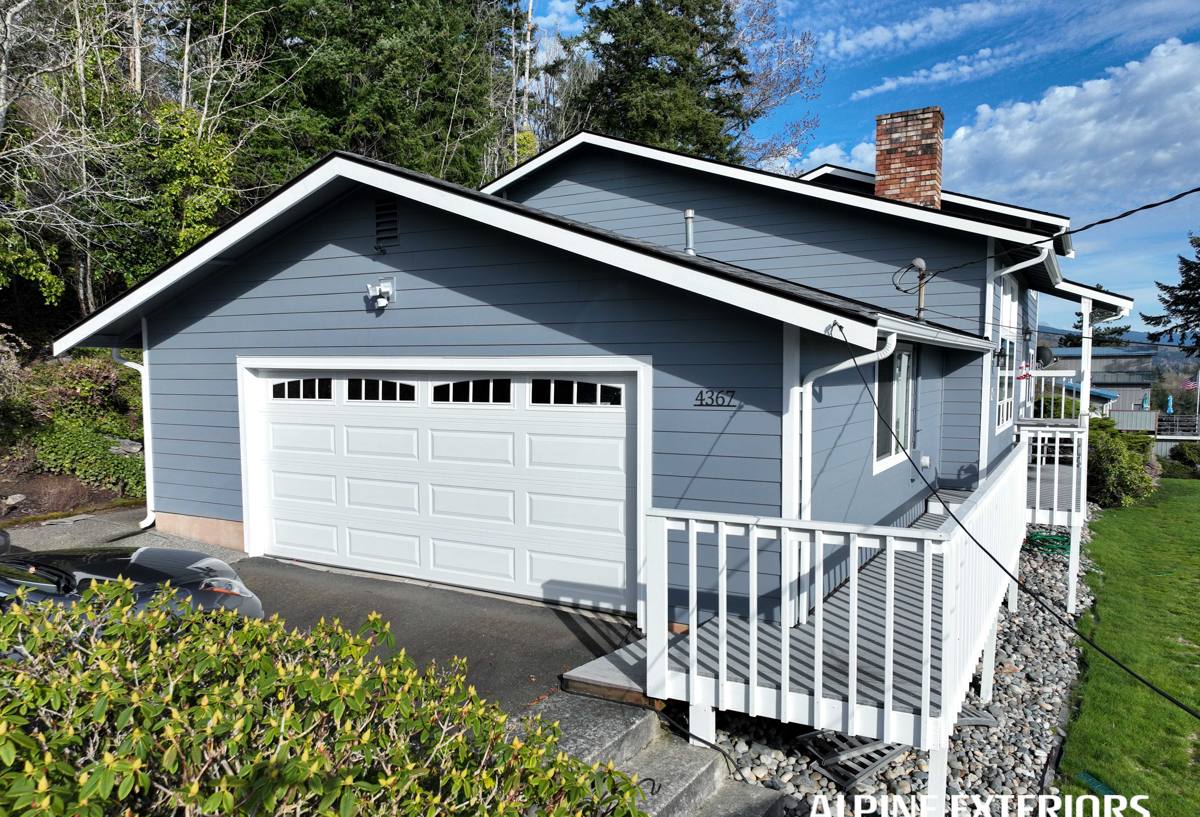
Signs Your Deck Needs Replacement, Not Just Repair
Homeowners often ask whether a deck can be patched instead of replaced. Sometimes it can — a few rotted boards or a loose railing post don't automatically mean a full teardown. But there's a point where repair is just delaying a bigger problem, and in a coastal, high-moisture area like Marietta that point comes sooner than most people expect. Here's what tells us a deck is past the repair stage:
- Soft, spongy, or springy boards anywhere on the deck surface, not just at the edges
- Rot or dark staining where the deck's ledger board meets the house — this is a structural and water-intrusion issue, not cosmetic
- Rusted, corroded, or bleeding fasteners (rust streaks running down the board face are a giveaway)
- Footings or posts that have shifted, settled, or heaved with the ground
- Railings or stair stringers that flex, wobble, or feel less solid than they used to
- Widening gaps between boards, or boards that have cupped and no longer sit flat
- Moss or algae that keeps coming back within weeks of cleaning, even after treatment
- A persistent damp or mildew smell coming from underneath the deck
If you're seeing two or more of these at once, especially anything at the ledger board or the framing underneath, it's usually more cost-effective in the long run to replace than to keep patching a structure that's already compromised.
What a Correct Deck Replacement Actually Involves
Structural Framing and Ledger Attachment
The single most important — and most commonly rushed — part of any deck replacement is the ledger board, the piece that bolts the deck to your house. This is also the single most common point of water intrusion into the structure behind it. A correct install uses proper flashing integrated with your home's existing water-resistive barrier or siding, not just a bead of caulk over the top. Done wrong, this is the detail that leads to hidden rot in your rim joist or sheathing years down the road, often invisible until the deck itself starts sagging.
Footings and Posts
Footings need to be sized and set to local frost depth and soil conditions, not guessed at. In areas with poor drainage or heavier clay soils, we pay close attention to how water moves around and under the footings, since standing water against a post base is one of the fastest ways to shorten a deck's life.
Joists, Beams, and Spacing
Joist spacing and beam sizing should be engineered for the decking material you're installing, not just copied from the old deck. Composite and PVC decking, for example, often call for tighter joist spacing than traditional wood to prevent flexing over time. Getting this wrong doesn't show up on day one — it shows up as a bouncy deck a few years later.
Choosing the Right Decking Material for This Climate
There's no single "best" decking material — there's a best fit for your budget, your maintenance appetite, and how much sun or shade your particular lot gets. Here's how the common options compare for a moisture-heavy, moss-prone environment like Marietta:
| Material | Moisture / Rot Resistance | Moss & Algae Resistance | Maintenance | Typical Lifespan |
|---|---|---|---|---|
| Pressure-treated wood | Good if sealed regularly; vulnerable once seal fails | Low — porous surface holds moisture | Annual cleaning and resealing | 10-15 years |
| Cedar | Naturally moderate rot resistance | Low to moderate | Regular sealing or staining to maintain appearance | 15-20 years |
| Capped composite | Excellent — won't absorb water or rot | Moderate to good, varies by brand and surface texture | Periodic washing, no sealing | 25-30+ years |
| PVC / capped polymer | Excellent — fully synthetic, non-porous | Good — smoother surfaces shed moss more easily | Occasional washing | 25-30+ years |
We're honest with homeowners that wood costs less up front but asks for more of your time every year — a reseal here, a moss treatment there. Composite and PVC cost more initially but hold up better against the exact conditions Marietta throws at a deck: standing moisture, shade, and salt air. Neither choice is wrong; it depends on whether you'd rather spend money once or spend a weekend on it every spring.
Our Deck Replacement Process
1. On-Site Assessment and Design
We walk the existing deck with you, check the framing and ledger connection, and talk through material options based on how much sun and shade your specific spot gets. Sun exposure varies a lot from lot to lot in this area, and that matters more for moss and material choice than most people realize.
2. Permitting
Deck replacements in Whatcom County typically require a permit, and requirements can vary depending on the deck's size, height, and attachment to the house. We handle the permitting coordination as part of the job so you're not left tracking down paperwork on your own.
3. Demolition and Framing
Once the old deck is removed, we inspect what's underneath — the ledger connection, the rim joist, and the soil and drainage conditions around the footings. This is often where hidden problems surface, and we'll always show you what we find before covering it back up.
4. Decking, Railing, and Fastener Installation
New framing goes in to spec for your chosen decking material, followed by the decking boards, railings, and stairs. Fasteners and hardware are chosen specifically for coastal exposure, covered in more detail below.
5. Final Walkthrough
We walk the finished deck with you, point out any manufacturer maintenance requirements tied to your material's warranty, and leave you with a straightforward care routine so the deck holds up the way it's supposed to.
Fasteners, Hardware, and Railings for Salt Air
Salt air is hard on standard hardware, and this is one of the areas where cutting corners doesn't show up until years later — usually as rust streaks bleeding down a board or a fastener that's lost its grip. For decks in Marietta, we favor stainless steel or heavily coated, corrosion-rated fasteners over standard galvanized hardware, along with hidden fastener systems on composite and PVC decking where possible, since hidden systems reduce the number of exposed metal points entirely.
For railings, aluminum, composite, and cable rail systems all resist salt-air corrosion better than untreated wood railings, which tend to need the most frequent upkeep of any component on the deck. Whatever material you choose, the connectors and brackets holding it together matter as much as the visible railing itself.
Permitting and Local Considerations in Whatcom County
Beyond the building permit itself, deck projects can run into setback requirements, height restrictions, and — depending on your specific property — considerations tied to proximity to the shoreline. These vary by lot and by jurisdiction within the county, which is part of why a generic online estimate or a crew unfamiliar with the area can miss something that ends up costing time later. We check these details as part of the design phase, before any demolition starts, so there are no surprises mid-project.
Why a Crew That Already Works Marietta Matters
Deck-building fundamentals don't change from town to town, but the details that determine whether a deck lasts 10 years or 30 do change with the site. A crew that's already worked in Marietta has a feel for how the sun and shade patterns run on different lots, how drainage behaves in the local soil, and how quickly moss comes back in a given spot — all of which shape material and framing decisions before the first board goes down.
There's also a practical side to it: weather windows. Scheduling a deck replacement around Whatcom County's rain patterns takes local knowledge, especially for the framing and ledger work that really needs to happen dry. A crew working this area regularly plans around that instead of finding out the hard way mid-project.
Maintaining Your New Deck
Whatever material you choose, a little routine care goes a long way in this climate. Use this as a general yearly guide:
- Rinse or sweep the deck surface regularly to keep moss and algae from getting a foothold, especially in shaded areas
- Check fasteners and railing connections once a year for looseness or early corrosion
- For wood decking, plan on resealing or restaining on the schedule the product calls for — don't wait until it looks dry and gray
- Keep gutters and downspouts near the deck clear so water isn't dumping directly onto or under it
- Trim back overhanging branches where possible to cut down on shade, debris, and moss growth
- Address any soft spots, loose boards, or rust streaks right away rather than waiting for the next season
A deck built and fastened correctly for this climate, paired with basic yearly upkeep, is the difference between replacing it again in a decade and getting the full lifespan out of the materials you paid for.
If your deck in Marietta is showing its age — or you just want an honest read on whether it needs repair or full replacement — we're happy to come take a look. Estimates are free, there's no pressure, and you'll get a straight answer about what your deck actually needs.