 Birch Bay Window
 Point Whitehorn sits along the Whatcom County shoreline north of Birch Bay, where homes range from older cabins and cottages on wooded lots to newer construction built closer to the bluff edge. A lot of the decks in this area were built years ago, under older code requirements, and have spent every season since taking on salt-laden air, wind-driven rain, and a moss season that runs longer here than it does further inland. By the time a deck starts showing real problems, it's usually been quietly losing ground for a while.
Deck replacement is a different job from deck repair, and it's worth being clear about that distinction before anything else. Repair fixes a specific problem — a rotted board, a loose railing post — while replacement means the structure itself, or enough of it, is no longer worth building around. This page covers what Point Whitehorn's climate does to a deck over time, how to tell when replacement is the right call, what a correct replacement job involves, and what to expect from a crew that already works this part of the county.
What Point Whitehorn's Climate Does to a Deck
Salt Air and Hardware Corrosion
Homes on this stretch of shoreline sit close enough to the water that salt-laden air is a constant, not an occasional weather event. That air works on any exposed metal a deck depends on — fasteners, joist hangers, post bases, railing brackets — and corrosion doesn't announce itself the way a rotted board does. A fastener can lose real holding strength while still looking mostly intact from a quick glance, which is part of why decks in this area sometimes fail structurally before they look obviously bad.
Wind-Driven Rain and the Ledger Connection
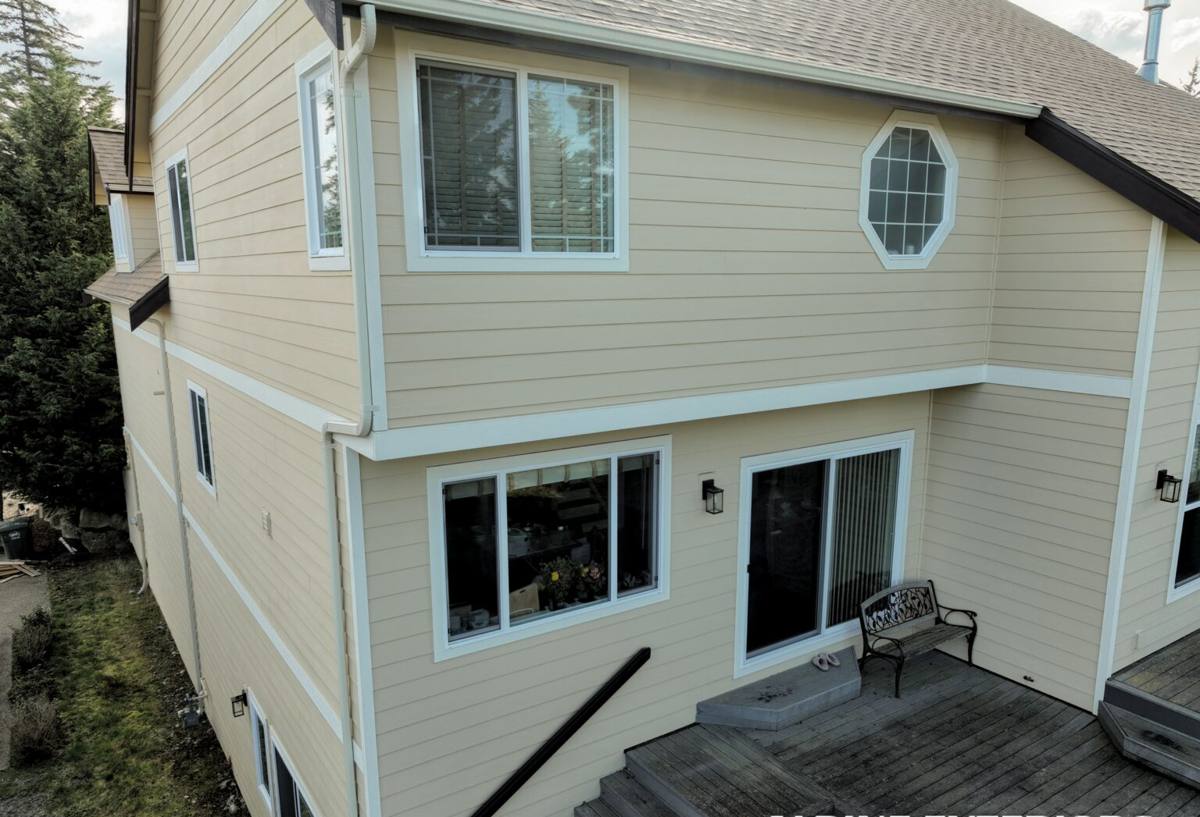
Storms coming off the water here don't fall straight down. Wind pushes rain sideways and drives it up under railings, behind ledger boards, and into any gap that wouldn't get tested in calmer conditions. The ledger board — where the deck attaches to the house — is usually the single most important connection on the whole structure, both structurally and for water management, and it's also the spot most likely to have been under-built or under-flashed on an older deck.
A Moss Season That Doesn't Really Break
Mild temperatures and near-constant moisture give moss a long growing season in this part of Whatcom County, and horizontal decking surfaces are some of the first places it takes hold, since they hold water longer than a wall or roofline does. Shaded decks and north-facing surfaces usually show it first, but any older, more porous decking material gives moss something to grip onto given enough time and dampness.
Signs a Point Whitehorn Deck Needs Replacement, Not Repair
Not every problem deck needs to come out entirely. But there's a point where patching individual boards or hardware stops being a real fix and starts being a way of postponing the inevitable. Some signs worth taking seriously:
- Boards that feel spongy, soft, or give slightly underfoot in more than one or two spots, not just at a single damaged board
- A ledger board attached with nails alone rather than lag bolts or through-bolts, which was common on older construction and doesn't meet current standards
- Rust streaking down from fasteners or hardware, especially around joist hangers and post connections
- Railing posts that flex or wobble noticeably when pushed, which usually points to a compromised connection, not just a loose screw
- Visible gaps or separation where the ledger meets the house, or staining on the siding or trim directly above the deck's attachment point
- Support posts showing rot or soft wood at the point where they contact grade or a concrete footing
- A structure that's simply reached the point where the cost and disruption of ongoing repairs starts to rival the cost of replacing it outright
If what you're looking at is one bad board or a single loose baluster, that's a repair. If it's the framing, the ledger connection, or multiple structural elements showing wear at the same time, replacement is usually the more honest answer, even if it's the less convenient one to hear.
What a Correct Deck Replacement Involves Here
Ledger Board and Structural Connection
This is where a lot of older decks in this area fall short of what current standards call for, and it's the first thing worth getting right on a replacement. A correctly built ledger connection uses through-bolts or structural lag screws sized and spaced for the deck's actual load, with flashing that directs water away from the house rather than into the rim joist behind it. On a house this close to the water, that flashing detail matters more than it would somewhere drier — it's the difference between a connection that sheds wind-driven rain and one that quietly feeds it into the wall assembly.
Footings and Substructure
Replacement is also the point where footing and post condition get a real look, not a guess. We check depth, condition, and connection hardware at each support post, and on a replacement we're not building around whatever's already there just because it's convenient — if a footing is undersized, cracked, or set too shallow, that gets addressed before framing goes back up.
Decking Material and Fastening
Whatever decking material you choose, the fastening approach matters as much as the board itself in this climate. We use corrosion-resistant fastener grades throughout and hidden fastener systems where the product supports them, which cuts down on exposed metal on the walking surface and gives a cleaner result. Board gapping gets set for drainage and material movement, not just appearance, so wind-driven rain and everyday moisture can actually clear the surface instead of sitting on it.
Railings and Current Code
Older decks were frequently built to whatever standard applied at the time, and railing height, baluster spacing, and guard requirements have changed since a lot of Point Whitehorn's existing decks went in. A replacement is the natural point to bring those elements up to current code rather than rebuilding an outdated design, and we'll flag where your existing layout doesn't meet current requirements before framing starts, not after.
Decking Material Options for This Climate
Material choice matters more here than it does in a drier, more sheltered setting, because the gap between a well-suited product and a poorly-suited one shows up faster this close to the water. There's no single right answer for every homeowner — budget, maintenance appetite, and how the deck gets used all factor in — but the honest trade-offs are worth laying out plainly.
| Material | Salt Air & Moisture Handling | Moss Resistance | Ongoing Upkeep |
|---|---|---|---|
| Cellular PVC | Excellent — no wood fiber to absorb moisture | Strong; smooth, non-porous surface | Occasional washing |
| Capped composite | Strong — cap layer resists moisture and staining | Good on most product lines | Occasional washing |
| Uncapped composite | Moderate — some absorption at exposed fiber over time | Fair; more prone to buildup | Periodic cleaning |
| Cedar | Moderate — natural resistance, but needs sealing | Fair when properly sealed and maintained | Regular oiling or sealing |
| Pressure-treated wood | Weakest against sustained salt exposure | Poor without regular treatment | Regular sealing or staining |
Our general standard on this stretch of coastline is to lead with capped composite or cellular PVC on weather-facing replacements, since the maintenance burden and moisture behavior over a fifteen- or twenty-year span is meaningfully better than an uncapped or wood product in this specific exposure. Wood can still be the right call for homeowners who want that specific look and are committed to the upkeep it requires — it's a trade-off worth discussing against your budget and how the deck will actually be used, not a one-size answer.
Our Deck Replacement Process
- Site visit and structural assessment — we look at the existing deck's framing, ledger connection, footings, and hardware condition, not just the surface
- Tear-out and hidden condition check — removing the old decking and framing is also when hidden rot, corrosion, or undersized footings usually surface, and we'll walk you through anything we find before proceeding
- Ledger reflashing and reattachment — the connection to the house is rebuilt to current standards, with flashing sequenced to shed wind-driven rain rather than trap it
- Framing and footing work — substructure is repaired or replaced as needed and sized for the deck's actual load and this site's exposure
- Decking installation — boards go down with corrosion-resistant fasteners and gapping set for drainage in your chosen material
- Railings, stairs, and code compliance — guard height, baluster spacing, and stair details are built to current code, even where the original deck wasn't
- Final walkthrough — we cover what your specific decking material needs going forward, which is usually minimal but not nothing
Cost Factors on a Point Whitehorn Deck Replacement
| Factor | How It Affects the Job |
|---|---|
| Overall size and footprint | More square footage means more material, framing, and labor |
| Decking material chosen | Pressure-treated wood is the lowest upfront cost; PVC and premium composite run higher but need less ongoing upkeep |
| Substructure condition | Hidden rot, corrosion, or undersized footings found during tear-out can add scope that isn't visible until demolition starts |
| Ledger and flashing work required | Bringing an under-flashed or under-bolted ledger connection up to standard adds labor but is not optional on a proper replacement |
| Railing style and code updates | Custom railing designs or bringing an older layout up to current spacing requirements adds cost over a standard rail |
| Site access and elevation | Elevated decks, difficult grade, or limited equipment access can add time and labor |
We won't quote a number sight unseen, since the substructure condition on an older deck often isn't clear until it's opened up. What we will do is walk the deck with you, explain what we're seeing, and give you a straight read on which of these factors apply to your specific project before you commit to anything.
Why a Crew That Already Works Point Whitehorn Matters
General deck-building guidance assumes average conditions in a moderate climate, and Point Whitehorn doesn't match that description. The combination of sustained salt air, wind-driven rain, and a moss season that runs most of the year puts more demand on fastener grade, ledger flashing, and material choice than a deck built further inland would ever see. A crew that has actually replaced decks on this stretch of shoreline knows which parts of standard guidance are worth following to the letter here, and which details are worth the extra time even when they'd be optional somewhere calmer.
That experience shows up in decisions that don't come up in a sales pitch — how much lap a ledger flashing membrane needs given this exposure, which fastener grade actually holds up long-term this close to the water, and when a footing needs to be corrected rather than built around. Those are the calls that decide whether a replacement deck is still solid in twenty years or showing the same problems again in five.
What to Ask Before Hiring for a Deck Replacement
- Ask what they found wrong with decks they've replaced in this specific area, and how that changed their approach
- Ask how they handle ledger board attachment and flashing, specifically — a vague answer here is a red flag
- Confirm current Washington contractor licensing and insurance before any work starts
- Get a written scope of work that separates what's included versus what could be added if hidden damage turns up during tear-out
- Ask how labor and the decking material itself are each covered under warranty
If your deck is showing soft spots, rust stains, a wobbly railing, or just feels like it's past the point of another patch job, it's worth having someone look at the actual structure before you decide anything. We offer free, no-pressure estimates for deck replacement in Point Whitehorn and the surrounding Birch Bay area — use the form below to get a time on the schedule.