 Birch Bay Window
 Nooksack Homes Face a Specific Kind of Weather Punishment
Homes in and around Nooksack sit close enough to Birch Bay and the Strait of Georgia that salt-laden air is a daily fact of life, not an occasional nuisance. Add Whatcom County's long, wet winters and a moss season that can stretch from October into May, and you have a climate that is genuinely tough on exterior building materials. Wood fibers swell and rot. Vinyl chalks, cracks in the cold snaps, and warps under direct afternoon sun on south-facing walls. Paint film on cheaper composite products fails years before the manufacturer's brochure suggests it will.
None of this is exotic knowledge to anyone who has lived here a few winters, but it matters enormously when you're choosing what to put on the outside of your house. Siding in this corner of Whatcom County isn't just a cosmetic decision — it's the one layer standing between your framing and a climate that rarely gives a house a break.
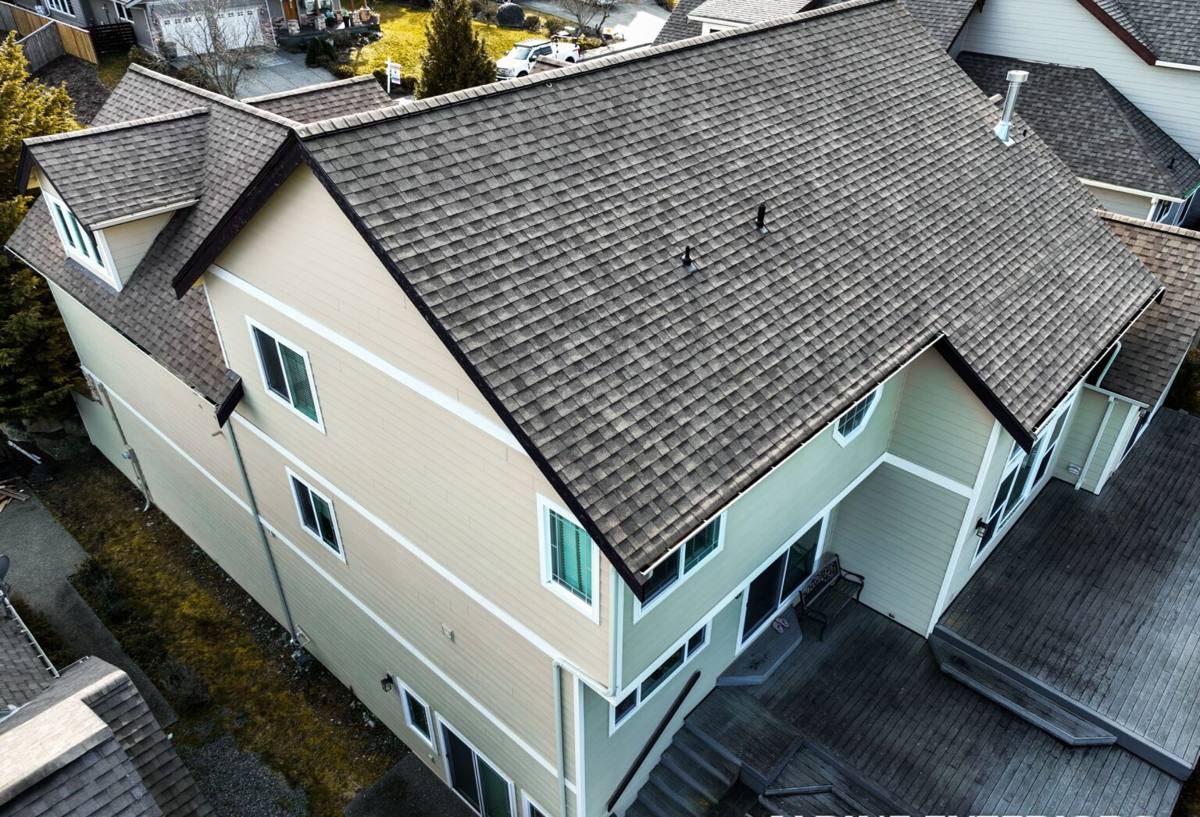
What "Driving Rain" Actually Does to a Wall Assembly
Driving rain isn't just rain that falls harder — it's rain pushed sideways by wind, which means it gets forced up under laps, into fastener holes, and behind poorly flashed trim. On a typical Nooksack lot with open exposure toward the water, wind-driven rain events are common enough that any siding installed without proper water-resistive barrier detailing, correct lap spacing, and sealed penetrations will eventually let moisture in — regardless of what the siding itself is made of.
This is why we treat the installation as the actual product. Fiber cement board that's rated for coastal exposure still fails early if it's nailed too tight, face-fastened where it should be blind-fastered, or left with gaps at butt joints that were never meant to be exposed to weather. A correct job starts behind the siding, with the drainage plane and flashing details, long before the first board goes up.
Moss, Algae, and the Long Wet Season
Whatcom County's tree cover and marine humidity mean north-facing and shaded walls stay damp for extended stretches most winters. That's ideal growing conditions for moss and algae, which don't just look bad — sustained moisture against a wall surface accelerates whatever degradation process is already underway, whether that's wood rot, paint failure, or substrate softening on lower-grade composite panels.
Fiber cement doesn't feed mold or moss the way wood-based products can, since it has no organic wood fiber for organisms to break down. It still needs to be installed with enough clearance from grade, decks, and roof lines to shed water properly and avoid trapping moisture against the bottom edge — a detail that matters more in Nooksack than it would in a drier inland climate.
Why We Install Only James Hardie Fiber Cement
We don't install LP SmartSide, vinyl, Cemplank, Allura, primed spruce, or cedar, and that's a deliberate standard, not a lack of options. Each of those products has legitimate strengths — cedar looks great, vinyl is inexpensive, engineered wood products install quickly — but each also carries a real-world trade-off that we've decided isn't worth putting on a home in this climate.
Wood-based products, including engineered wood siding, rely on their factory coating and careful field sealing of every cut edge to keep moisture out. Miss one cut edge in a marine climate with this much rainfall, and moisture wicks in over time. Vinyl is genuinely low-maintenance but has limited resistance to impact and thermal movement, and it can't be painted a different color down the road without specialty products. Cedar is beautiful but needs ongoing refinishing to hold up against UV and moisture cycling — a maintenance commitment that's easy to underestimate at the time of installation and hard to keep up with year after year.
James Hardie fiber cement is non-combustible, dimensionally stable across our wet-to-dry seasonal swings, and comes factory-finished with ColorPlus technology, which bakes the color into a baked-on finish rather than relying on field-applied paint that will need repainting on a normal cycle. Hardie's HZ5 product line is engineered specifically for wetter, more variable climates like ours, and the manufacturer backs it with a strong, transferable warranty when it's installed to their specification. That combination — the material itself plus a warranty structure that survives a home sale — is why we standardized on it and stopped installing alternatives.
What a Correct Installation Involves
Fiber cement is not a forgiving product to install badly. It's heavier and more rigid than vinyl, cuts differently than wood, and has specific fastening, clearance, and caulking requirements that vary by product line. A crew that treats it like "siding is siding" will produce a wall that looks fine on move-in day and starts showing problems within a few winters.
- Weather-resistive barrier installed and lapped correctly before any siding goes up
- Flashing at every window, door, and roof-to-wall transition, not just caulk
- Minimum clearance maintained from grade, decks, patios, and roof surfaces
- Manufacturer-specified nailing pattern and fastener type — no shortcuts to save time
- Butt joints and trim sealed with a product rated for the exposure, not general-purpose caulk
- Factory-cut edges kept intact wherever possible; field cuts sealed per manufacturer instructions
- Proper lap dimension maintained across the whole elevation, especially at inside and outside corners
Every one of those details is inspectable after the fact if something goes wrong, which is part of why we don't cut corners on them — a callback on a moisture issue is far more expensive than doing the flashing right the first time.
Our Process for a Nooksack Job
We start with a walk-around to assess exposure — which walls take the worst of the wind-driven rain, where moss has already established itself, where trim and old caulk lines are already failing. That assessment shapes the flashing and clearance details we plan for, not just the siding selection.
From there we remove the old siding down to the sheathing, check for hidden moisture damage (which is common enough on older Whatcom County homes that we budget time for it rather than treating it as a surprise change order), repair or replace any compromised sheathing, and install a new water-resistive barrier before any Hardie product goes up. We install per James Hardie's published specifications for our climate zone, including their HZ5 clearance and fastening requirements, and we walk the finished job with the homeowner before calling it done.
Comparing Siding Options for This Climate
| Factor | James Hardie Fiber Cement | Vinyl | Engineered Wood (e.g. LP SmartSide) | Cedar |
|---|---|---|---|---|
| Moisture resistance | High — non-combustible, doesn't absorb water like wood | High, but seams can allow water behind panels | Moderate — depends on sealed edges and coating integrity | Low without diligent, ongoing maintenance |
| Salt air / coastal exposure | Engineered for it (HZ5 line) | Tolerates it but can chalk and become brittle | Sensitive — edge sealing failures accelerate damage | Sensitive — accelerates weathering and graying |
| Repaint cycle | Factory ColorPlus finish, long repaint interval | Never needs paint, but color options are limited | Needs repainting on a normal exterior paint cycle | Needs refinishing every few years |
| Fire resistance | Non-combustible | Combustible, can melt/deform near heat sources | Combustible | Combustible |
| Warranty structure | Strong, transferable manufacturer warranty when installed to spec | Varies widely by manufacturer and product tier | Varies; edge-sealing failures often excluded | Typically no manufacturer warranty (natural material) |
Signs Your Current Siding Is Already Losing the Fight
Homeowners often wait too long to address siding problems because early signs look cosmetic. In this climate, they rarely stay cosmetic for long.
- Persistent moss or algae growth that returns within weeks of cleaning
- Soft spots, especially near the bottom courses or below windows
- Paint that's peeling or bubbling rather than just fading evenly
- Visible gaps or warping at butt joints and corners
- A musty smell in an interior room on an exterior wall
- Caulk that's cracked, shrunk, or pulled away from trim
Any one of these is worth a closer look. Several together usually mean moisture has already gotten past the surface.
Ongoing Maintenance After a Hardie Install
Fiber cement dramatically reduces maintenance compared to wood, but "reduced" isn't "zero," especially in a marine climate. A periodic soft wash to keep moss and algae from establishing on shaded elevations, an annual look at caulk joints and trim, and prompt attention to any gutter or drainage issue near the siding will keep a Hardie installation performing for the long haul. None of this requires refinishing the boards themselves — that's the point of the factory-applied ColorPlus finish.
Why Hiring a Crew That Already Works This Area Matters
A contractor who regularly works Nooksack and the greater Birch Bay area already knows which elevations on a given lot take the worst wind-driven rain, how far moss season really extends most years, and what clearance and flashing details actually hold up here versus what merely meets code minimums elsewhere. That local pattern recognition shows up in the details — where extra flashing goes, how much clearance is left at grade, which corners get extra attention — and those details are exactly what separates a siding job that lasts two decades from one that starts failing in five years.
If you're weighing a siding replacement or new construction siding decision in Nooksack, we're happy to walk your home, point out what your specific exposure is doing to your current siding, and lay out what a correct James Hardie installation would involve for your house — no pressure, no obligation. Use the form below to request a free estimate.