 Birch Bay Window
 Decks on Lummi Island Work Harder Than Decks Inland
A deck built a few miles inland in Whatcom County and a deck built on Lummi Island are not the same project, even if the plans look identical on paper. Lummi Island sits out in the Salish Sea, which means more open wind exposure, more direct salt spray, and weather that comes in off the water rather than filtering through trees and hills first. Add in Birch Bay's own marine climate — damp air, long wet winters, and shoulder seasons that never quite dry out — and you have conditions that will find every weak point in a deck within a few years if the build doesn't account for them from the start.
This page is specifically about custom decks for homes on and around Lummi Island. It's not a generic "we build decks" page — it's what we've learned about building decks that are meant to actually last out here, not just look good the first summer.
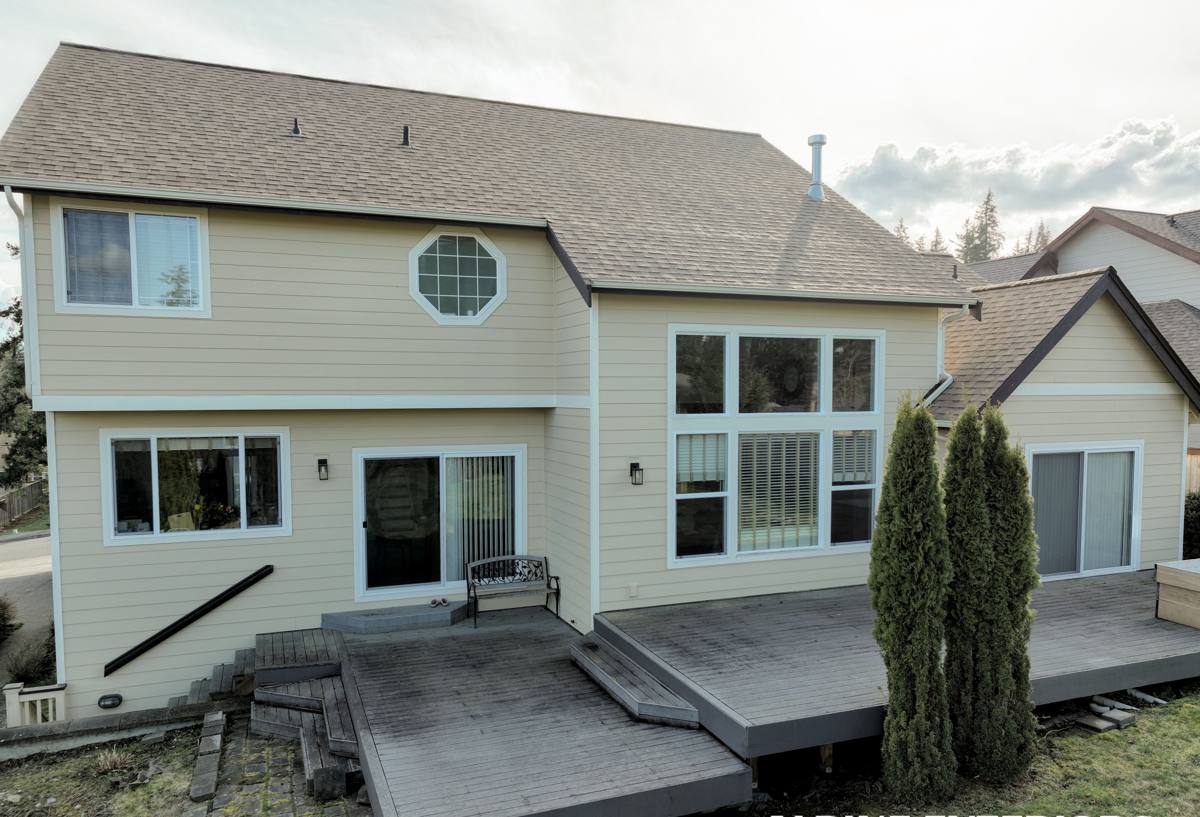
What Salt Air, Driving Rain, and Moss Actually Do to a Deck
Three things wear out decks near the water faster than almost anywhere else in the county:
Salt air and corrosion
Airborne salt doesn't just sit on the surface — it works into fastener heads, hinge points on hardware, and any exposed metal-to-wood connection. Standard interior-grade or lightly coated fasteners will start showing rust streaks and pitting well before the wood around them shows any wear. Once a fastener corrodes, it loses grip strength long before it fails visibly, which is exactly why fastener spec matters more here than in a lot of other places.
Driving, wind-blown rain
Rain near the water rarely falls straight down — wind pushes it sideways, up under fascia boards, and into any gap at the house connection. A ledger board or flashing detail that would be perfectly adequate on a sheltered inland deck can let water track into the rim joist or wall framing here, and that kind of hidden rot doesn't show up until it's already expensive.
A long moss and algae season
Shaded, damp decking stays wet longer, and moss and algae get a real foothold across fall, winter, and spring. Beyond looking bad, a mossy deck surface gets slick and traps moisture against the boards, which shortens the life of the material underneath it — wood or composite.
Framing and Fasteners: The Part Nobody Sees Is the Part That Matters Most
The visible decking is what a homeowner judges a deck by, but the framing underneath — joists, beams, ledger connection, and every fastener holding it together — is what determines whether the deck is still sound in fifteen years. On a Lummi Island or Birch Bay project, we treat this as the non-negotiable part of the job:
- Ledger flashing that actually sheds water away from the house band joist, not just a bead of caulk behind the board
- Structural fasteners rated for both pressure-treated lumber's chemical treatment and coastal exposure — not all "exterior-rated" hardware is rated for both
- Joist hangers and structural screws sized and spaced to current code, inspected before decking goes down, not assumed
- Proper end-cuts sealed on treated lumber, since a factory-treated board with an unsealed field cut is a rot starting point
None of this is glamorous, and none of it shows up in a photo. It's also the difference between a deck that needs a board replaced here and there over the decades and one that needs a full rebuild in ten years because the frame let go first.
Choosing a Decking Material for This Climate
There's no single "best" decking material — there's the right material for how a given deck will be used, how much upkeep the homeowner actually wants to do, and how exposed the site is. Here's how the common options hold up specifically against salt air, standing moisture, and moss:
| Material | Salt air / moisture behavior | Moss & algae resistance | Maintenance |
|---|---|---|---|
| Cedar | Naturally rot-resistant but surface finish needs upkeep near salt air | Needs regular cleaning and treatment to resist moss in shaded areas | Periodic staining/sealing; more hands-on |
| Pressure-treated lumber | Treatment resists rot, but fasteners and hardware must match the chemical treatment | Moderate — benefits from a protective coating | Regular cleaning, occasional sealing |
| Composite decking | Doesn't absorb moisture like wood; handles salt exposure well | Better resistance, though capped composites still need periodic washing | Low — mostly washing, no staining |
| PVC / vinyl decking | Fully impervious to moisture and salt | Best resistance to moss and algae staining | Lowest — occasional rinse |
For homes right on the water with heavy salt exposure, we usually steer people toward composite or PVC decking for the field of the deck, because the maintenance burden of a natural wood surface out here is real — it's not a matter of the wood being lower quality, it's that wood asks for more attention in this specific environment than most owners want to give it. That said, plenty of homeowners want the look and feel of real wood and are willing to keep up with it, and that's a legitimate choice too, as long as the maintenance schedule is honest going in.
Footings, Drainage, and Site Prep
Whatcom County soils vary a lot from lot to lot — some sites have well-drained glacial till, others hold water longer than you'd expect, especially anywhere close to sea level. Before we design footings, we look at:
- How the site drains after a heavy rain, not just how it looks on a dry day
- Footing depth and sizing appropriate to the soil we actually find when we dig, not just a generic assumption
- Grading and drainage away from the house foundation, since a deck built without this can quietly redirect water toward the crawlspace
- Ventilation under the deck so the space beneath stays dry enough to resist rot and moss buildup over time
Skipping proper site evaluation is one of the most common shortcuts in deck building, and it's also one of the hardest to fix after the fact, since it means pulling up finished decking to get at the frame and footings.
Railings and Hardware: Where Corrosion Shows Up First
Railings take the most direct salt exposure of any part of a deck, since they're vertical, unshaded, and catch spray off the water. A few things we pay attention to on Lummi Island jobs specifically:
Fastener and bracket finish
Standard galvanized hardware can be adequate inland but starts showing surface corrosion faster in direct salt air. On more exposed sites, we'll spec stainless steel fasteners and brackets at connection points, even though it costs more, because replacing a corroded bracket later means disassembling finished railing.
Cable and metal railing systems
Stainless cable rail looks great and is popular for water views, but cable and its hardware need to be genuinely rated for marine/coastal exposure, not just "stainless" in name — there's a real difference in alloy grade, and it affects how long the system stays tension-true and stain-free.
Wood railing components
Any wood railing component gets the same treatment logic as the decking itself — sealed end grain, appropriate fasteners, and a maintenance plan the homeowner actually signs up for.
Permits, Access, and Working on Lummi Island Specifically
Deck permitting on Lummi Island runs through Whatcom County, and depending on the project's size, height, and proximity to shoreline setback lines, that can mean additional review beyond a standard mainland deck permit. We handle that process as part of the job rather than leaving it to the homeowner to sort out.
The other reality of building on Lummi Island is logistics: it's ferry-access only, which means material deliveries, crew scheduling, and equipment all have to work around ferry timing rather than just driving over whenever it's convenient. A contractor who hasn't planned a Lummi Island job before will often underestimate this and let it turn into delays or missed appointments. We build our scheduling around it from the start, which is a big part of why timelines stay realistic on island projects.
How We Approach a Lummi Island Deck Project
- On-site visit to assess exposure, drainage, existing structure (if replacing a deck), and access for materials and crew
- Design conversation covering layout, decking material trade-offs, and railing system, with honest maintenance expectations for each option
- Permit handling through Whatcom County before any work begins
- Material and delivery scheduling built around ferry access, so the crew isn't standing around waiting on materials
- Framing and fastener installation to spec, including ledger flashing and any structural connections, with inspection before decking goes down
- Decking, railing, and finish work installed to the agreed plan
- Final walkthrough covering what maintenance the specific materials chosen will actually need
Keeping a Lummi Island Deck Looking and Performing Well Long-Term
A well-built deck out here still needs some seasonal attention — the climate doesn't let anything be fully maintenance-free. A simple yearly routine goes a long way:
- Sweep and rinse the deck surface regularly through the wet months to keep moss and algae from getting established
- Check railing hardware and fasteners once a year for early signs of corrosion, especially on the side facing prevailing wind and spray
- Keep gutters and downspouts near the deck clear so runoff isn't dumping extra water onto the surface or framing
- Reseal or restain wood surfaces on the schedule appropriate to the product used — don't wait until it visibly needs it
- Trim back vegetation that's shading the deck and keeping it damp longer than it needs to be
None of this is complicated, but skipping it is how a well-built deck starts looking tired years before it should.
If you're planning a new deck or replacing an aging one on Lummi Island or anywhere in the Birch Bay area, we're happy to come take a look and talk through what the site actually needs. There's no cost and no pressure to a first visit — just an honest read on your options, use the form below to get started.