 Birch Bay Window
 Building Siding for a Salish Sea Island Climate
Lummi Island sits right in the path of everything Puget Sound weather can produce: salt-laden air off the water, wind-driven rain that hits siding sideways instead of straight down, and long stretches of the year when surfaces barely get a chance to dry out before the next system rolls through. Homes here take a different kind of beating than homes twenty miles inland in Whatcom County, and the siding on them needs to be chosen and installed with that in mind, not treated as an afterthought.
We work out of Birch Bay and cover the surrounding Whatcom County coastline, and Lummi Island is one of the areas where we see the clearest gap between siding that was installed to a spec sheet and siding that was installed for the actual conditions on site. This page is about what that gap looks like in practice, and what a correct fiber cement siding job on an island home actually involves.
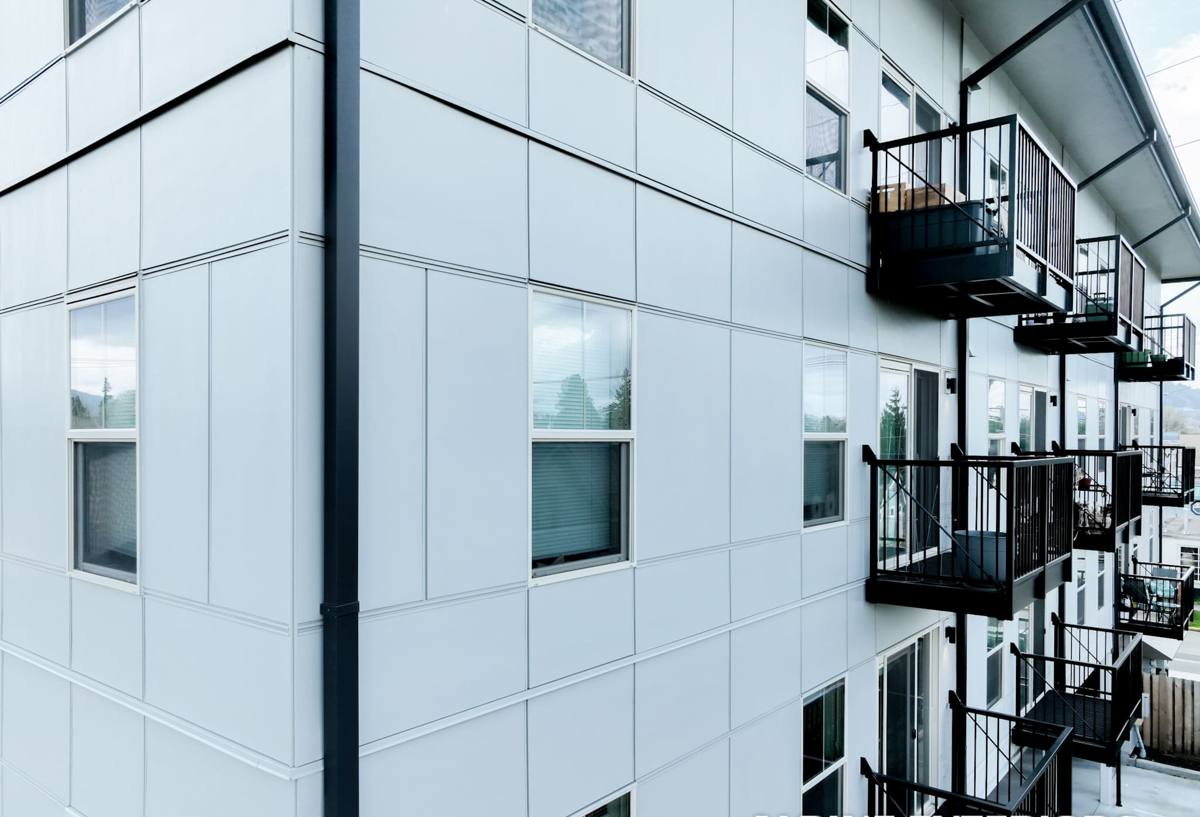
What Salt Air, Driving Rain, and Moss Season Actually Do
Salt Air and Fastener Corrosion
Airborne salt doesn't just sit on the surface of siding — it works its way into fastener heads, cut edges, and any spot where the finish has been compromised. Over years, that accelerates corrosion at exactly the points where a siding system is most vulnerable: nail heads, joints, and trim connections. Materials and fasteners that aren't rated for coastal exposure show this first, usually as rust streaking or bleed-through around fastener points long before the field of the siding shows any wear.
Driving Rain and Wind-Loaded Water
Rain that comes in at an angle off the water doesn't behave like rain falling straight down. It gets pushed up under laps, into butt joints, and around penetrations that would stay dry in a more sheltered location. That means flashing details, joint treatment, and clearances matter more here than they would on a home tucked into a windbreak a few miles inland.
Moss and Prolonged Moisture Exposure
Whatcom County's marine climate gives moss and algae a long growing season, and north-facing or shaded elevations on an island lot often stay damp for extended stretches. Moss holds moisture against a surface, and any siding product that isn't dimensionally stable or that absorbs water at its core will suffer for it — swelling, softening, or losing paint adhesion in exactly those chronically damp zones.
Why We Install Only James Hardie Fiber Cement
We don't install LP SmartSide, vinyl, Cemplank, Allura, or primed wood siding. That's not a marketing position — it's a standard we settled on after weighing how each of those materials actually performs under the conditions described above, especially in a coastal, moisture-heavy environment like Lummi Island.
Vinyl expands and contracts with temperature swings and can warp or become brittle over time, and its seams and J-channels give wind-driven rain more opportunities to find a way in. Engineered wood products like LP SmartSide use a wood-strand core that, however well treated, is still an organic material — it depends on an intact factory coating to keep moisture out, and any breach in that coating (a cut edge, a fastener hole, impact damage) exposes the core to exactly the kind of prolonged dampness that moss season creates. Primed spruce and cedar require the homeowner to stay ahead of repainting and sealing on a schedule that's hard to keep up with in a climate that doesn't give surfaces much time to dry. Other fiber cement brands can be reasonable products, but we've standardized our crews, our fastening schedules, and our warranty conversations around one system rather than juggling installation specs across several product lines.
James Hardie fiber cement is non-combustible, doesn't rely on an organic core, and holds up to repeated wet-dry cycling without the swelling or delamination that sinks lesser materials. That's the trade-off we're willing to make: fewer product options, but one system installed the same correct way on every job.
Choosing the Right Hardie Product Line for Island Exposure
James Hardie engineers its siding by climate zone, and that distinction matters more on an exposed island lot than it does in a sheltered subdivision. HZ5 products are engineered for the freeze-prone, wetter conditions found in much of the Pacific Northwest, while HZ10 products are built specifically for hot, humid climates and generally aren't the right fit for Whatcom County. For most Lummi Island homes, we're specifying HZ5 lap siding, panels, or shingle-style siding, paired with the ColorPlus factory finish rather than field-applied paint.
ColorPlus matters here in a very specific way: it's baked on in a controlled factory environment with a finish designed to resist fading and moisture intrusion at the surface, which reduces the number of failure points compared to a job-site paint job applied in variable weather. On a site where the paint has to survive salt exposure and a long damp season, that factory-controlled finish is doing real work, not just saving a step.
Profile Options Worth Discussing
- Lap siding (various exposures) — the most common choice, straightforward to detail correctly around windows and corners
- Panel siding with battens — a cleaner, more modern look that still needs careful joint and fastener planning
- Shingle-style siding — works well on accent areas but needs extra attention to overlap and drainage on a wind-exposed elevation
- Trim boards — matched to the siding line so expansion, fastening, and finish are consistent across the whole exterior
What a Correct Fiber Cement Installation Involves
Fiber cement is a forgiving material in terms of durability, but it's unforgiving of installation shortcuts. Most of the siding failures we get called out to inspect aren't product failures — they're installation failures that the product eventually exposed. On an island home taking direct weather, those shortcuts show up faster.
- Correct clearance between the bottom of the siding and roofing, decks, or grade — too tight and water gets trapped against the material
- Proper flashing and drainage plane behind the siding, not just caulk relied on as the primary water barrier
- Fasteners installed at the manufacturer's specified location and depth — overdriven or misplaced nails are one of the most common causes of early paint failure and moisture entry
- Joints and butt seams treated and sealed to spec, especially on elevations that take direct wind-driven rain
- Corners, window and door trim, and penetrations detailed so water sheds away from the wall assembly instead of collecting at transitions
- Field-cut edges sealed before installation, since a raw cut edge is the fastest way for moisture to enter the material
Every one of those items is inspectable, which is part of why we walk homeowners through them rather than just saying "trust us." On a coastal property, skipping any single item on that list shortens the life of the whole installation.
Our Process for Lummi Island Projects
Assessment and Product Selection
We start with an on-site look at exposure — which elevations take the most wind-driven rain, where moss and shade are already a problem, and where the existing siding or sheathing shows signs of past moisture issues. That assessment drives the profile and trim choices, not just the color.
Scheduling Around Island Access
Working on Lummi Island means planning material deliveries and crew logistics around ferry access, which is different from a mainland Birch Bay job where a truck can show up whenever. We build that into the schedule up front — staging materials efficiently and sequencing the work so crew time on the island is used productively — rather than treating it as a surprise that causes delays mid-project.
Installation and Weather Sequencing
We pay attention to weather windows during the install itself, since fiber cement, flashing, and sealants all perform better when installed in reasonably dry conditions rather than rushed between rain systems. On an island job, that sometimes means adjusting the day-to-day sequence rather than the overall timeline.
Final Walkthrough
Before we consider a job finished, we walk the exterior with the homeowner and point out the details described above — clearances, flashing, fastening — so there's a clear record of what was done and why.
What Fiber Cement Siding Costs on Lummi Island
Costs vary by home size, existing siding condition, and how much trim and detail work is involved, but a few factors specifically affect island projects more than a typical mainland job.
| Cost Factor | Why It Matters on Lummi Island |
|---|---|
| Logistics and ferry scheduling | Material staging and crew transport take more planning than a mainland delivery |
| Tear-off vs. overlay | Full removal of failing existing siding costs more but is often necessary where moisture has already reached the sheathing |
| Trim and detail complexity | Homes with more corners, window trim, and elevation changes take longer to detail correctly for wind-driven rain |
| Profile choice | Lap siding, panel systems, and shingle-style siding carry different material and labor costs |
| Repair to sheathing or framing | Long-term moisture exposure sometimes means underlying repairs are found once old siding comes off |
We'd rather walk a specific home and give an honest number than quote a range that doesn't reflect what your project actually needs — that's what the estimate visit is for.
Maintenance: What Ownership Actually Looks Like
One reason we standardized on James Hardie is that ongoing maintenance for the homeowner is genuinely light compared to wood or engineered wood siding. There's no repainting cycle to keep up with the way there is on primed spruce or cedar, since the ColorPlus finish is designed to hold color for years without a field repaint. That said, a coastal, moss-prone property still benefits from a simple annual routine.
- Rinse accumulated salt residue and debris off the siding surface, especially on elevations facing open water
- Keep gutters clear so overflow doesn't run down the face of the siding
- Trim back vegetation and branches that keep an elevation shaded and damp longer than it needs to be
- Have caulking at trim and penetrations checked periodically, since sealant is a maintenance item even on a low-maintenance siding system
Why Hiring a Crew That Already Works the Island Matters
A siding installer who's never worked an island job will price the logistics as a guess and often underestimate how much wind-driven rain and salt exposure change the detailing requirements. A crew that already works Lummi Island and the rest of coastal Whatcom County has already worked through those variables — scheduling around ferry access, choosing the right Hardie climate-zone product, and detailing flashing and joints for an exposure that's noticeably harsher than a sheltered inland lot. That experience shows up in fewer surprises during the project and in siding that's actually built for the conditions it has to survive, not just installed to a generic spec.
If you're weighing a siding replacement or new construction project on Lummi Island, we're glad to walk the property, look at your specific exposure, and put together a free, no-pressure estimate — no obligation, just a straight answer on what your home needs and what it would take to do it right. The form below is the easiest way to get that conversation started.