 Birch Bay Window
 Why Lynden's Roofs Take a Different Kind of Beating
Homes in and around Lynden sit close enough to Birch Bay and the Salish Sea that salt-laden air is a daily fact of life, not an occasional nuisance. That air works on exposed metal fasteners, flashing, and vent boots year-round, and it doesn't take a storm to do it — just time. Add in the driving rain that blows sideways off the water during winter fronts, and you've got a roof that's tested on wind-driven water intrusion far more often than a roof fifty miles inland. Then there's moss season, which in this part of Whatcom County isn't really a season at all — it's most of the year, thanks to shade, humidity, and mild temperatures that never dry things out for long. A roof built to a generic national spec can survive one of these conditions on its own. Surviving all three at once, for twenty-plus years, takes deliberate choices at every layer of the job, not just a good-looking shingle on top.
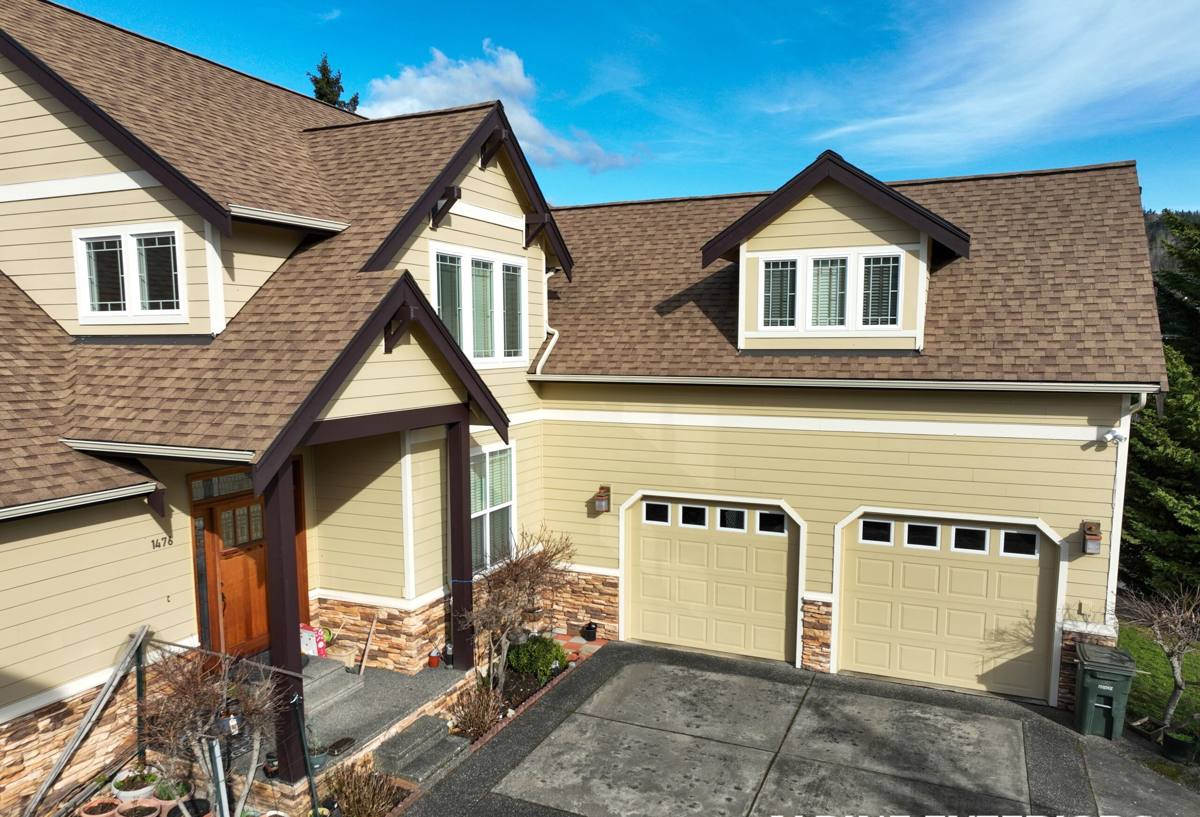
What a Correct Asphalt Shingle Roof Needs Out Here
"Correct" isn't a marketing word — it means the roof is assembled so that water, wind, and moisture each have a controlled path off the structure, with no shortcuts that only show up as a problem five years later.
Underlayment and Moisture Barriers
Shingles are the visible layer, but the underlayment is what actually keeps a roof dry when wind drives rain up under a shingle edge — which happens regularly here. We use synthetic underlayment across the full roof and self-adhering ice-and-water membrane at eaves, valleys, and any roof-to-wall transition, since those are the spots where wind-blown rain and ponding find their way in first.
Ventilation That Actually Works
A roof deck that can't breathe traps moisture underneath the shingles, and trapped moisture is exactly what feeds moss, rot, and premature shingle failure from the underside. Balanced intake at the eaves and exhaust at the ridge keeps air moving through the attic space, which matters more in a humid coastal climate than in a dry one — it's one of the most common corners cut on lower-cost re-roofs, and it's not visible until the deck underneath starts to fail.
Flashing and Transitions
Chimneys, skylights, sidewalls, and valleys are where roofs actually leak — the open field of shingles almost never is the problem. Given the salt air, we use corrosion-resistant flashing metal and proper step-and-counter-flashing details rather than relying on sealant alone, since caulk is a maintenance item and metal, installed correctly, is not.
Choosing the Right Shingle for Coastal Whatcom County Conditions
Not every asphalt shingle product is a good fit for a home exposed to salt air and sustained wind. The table below covers the main categories we work with and how they hold up locally.
| Shingle Type | Typical Lifespan | Wind Rating | Best Fit |
|---|---|---|---|
| 3-Tab | 15-20 years | Lower | Budget-driven projects, secondary structures |
| Architectural / Dimensional | 25-30+ years | Higher, with proper nailing | Most Lynden homes — the standard we recommend |
| Impact-Resistant (Class 4) | 25-30+ years | Highest | Exposed sites, homes wanting stronger hail/debris resistance |
For most homes in this area, we point owners toward architectural shingles. They carry more material per square, which means more surface for algae-resistant granules and a heavier profile that handles wind-driven rain better than a 3-tab product. The upfront cost difference is real, but so is the difference in how the roof looks and performs a decade in.
What Affects the Cost of a Lynden Roof Replacement
Every roof is priced on its own specifics, but a few factors move the number more than anything else, and knowing them ahead of time makes it easier to compare estimates apples-to-apples.
| Factor | Why It Matters |
|---|---|
| Roof size and pitch | A steeper roof takes longer to work safely and needs different staging, which affects labor more than material cost |
| Number of existing layers | Tear-off of a single layer is straightforward; two or three layers means more labor and disposal |
| Deck condition | Rotted or delaminated sheathing found during tear-off gets replaced, priced separately since it's not visible beforehand |
| Shingle class chosen | Architectural and impact-resistant shingles cost more per square than 3-tab, but last longer and carry stronger wind ratings |
| Roof complexity | Valleys, dormers, chimneys, and skylights add flashing work beyond open, simple roof planes |
| Access and site conditions | Steep driveways, limited staging area, or a home tucked back from the road can add setup time |
We walk through these factors with you at the estimate stage, not after the invoice arrives, so you understand what's driving the price before any work starts.
Our Installation Process, Start to Finish
The steps don't change much from job to job, but the attention paid to each one is what separates a roof that lasts from one that doesn't.
- Inspection and estimate. We look at the existing roof, deck condition, ventilation, and flashing details before quoting anything, so the number you get reflects what your roof actually needs.
- Tear-off. Old shingles, underlayment, and any damaged flashing come off down to the deck. We don't install new roofing over old — it hides problems instead of solving them.
- Deck inspection and repair. Any soft, delaminated, or water-damaged sheathing gets replaced before anything new goes down. This is where moisture damage from a previous failed roof usually shows up.
- Underlayment, ice-and-water shield, and flashing. This is the layer that determines whether the roof stays dry, done before a single shingle is laid.
- Shingle installation. Installed to manufacturer nailing specs — not just enough nails to hold the shingle down, but the pattern and placement that qualifies for the wind and material warranty.
- Ventilation check. Intake and exhaust are verified as part of the job, not assumed to already be adequate.
- Cleanup and final walkthrough. Magnetic sweep for nails, debris hauled off, and a walkthrough so you know what was done and what to watch for.
Permits and Local Requirements
Roofing work in Whatcom County typically requires a permit, and we handle that as part of the job rather than leaving it for the homeowner to sort out. Working locally means we already know the process and the inspection expectations, which keeps the schedule moving on your roof instead of stalling on paperwork.
Moss, Algae, and Long-Term Maintenance in a Wet Climate
A well-built roof still needs some upkeep in a climate this wet and shaded. None of it is complicated, but skipping it is how a twenty-five-year shingle turns into a fifteen-year shingle.
- Keep gutters and valleys clear of needles and debris so water has a clean path off the roof.
- Trim back overhanging branches to cut down on shade and organic debris that hold moisture against the shingles.
- Choose algae-resistant shingles, which include copper-bearing granules that slow algae and moss growth over time.
- Have moss removed with a soft wash or manual method rather than a pressure washer, which strips protective granules and shortens shingle life.
- Have your attic ventilation checked periodically — condensation problems inside the attic often show up as moss or dark staining outside before you ever see a leak.
- Address small leaks or lifted shingles promptly; a small entry point in this much rain doesn't stay small for long.
Signs Your Roof Needs a Look Now
Some warning signs are obvious, others are easy to write off as cosmetic until they aren't.
- Granules collecting in gutters or at downspout outlets, a sign the shingle surface is wearing thin
- Shingles that are curling, cupping, or lifting at the edges
- Thick moss mats, especially on north-facing slopes that stay shaded most of the day
- Dark streaking across the roof field, which is algae growth rather than dirt
- Soft or spongy spots underfoot, a sign of deck damage beneath the shingles
- Water stains on ceilings or in the attic near chimneys, skylights, or sidewalls
- Missing or torn shingles after a windstorm
Any one of these on its own isn't necessarily an emergency, but ignoring several at once usually means the next heavy rain finds its way in rather than off.
Why a Crew That Already Works in Lynden Matters
Roofing crews who mostly work drier, inland climates tend to under-build for conditions here — lighter underlayment, minimal ice-and-water coverage, flashing details that assume less wind-driven rain than this area actually gets. A crew that works Whatcom County regularly already knows which details fail first in this climate, because we've replaced roofs that skipped them. That local familiarity also means faster response for storm damage, a shorter drive for warranty callbacks, and a crew that isn't learning the local weather at your home's expense. It also means we're a known quantity if you ever need to call us back — not a name from an out-of-area ad that's hard to reach once the check has cleared.
Materials and Workmanship We Stand Behind
We install using manufacturer-specified methods so your shingles qualify for the full material warranty they're rated for, and we back our own installation with a workmanship warranty on top of that. If something is or isn't covered, we tell you plainly before the job starts — no vague language, no surprises when you actually need to use it.
If your roof is showing its age, or you just want an honest read on how many years it has left, we're glad to take a look. Reach out for a free, no-pressure estimate — someone from our crew will walk the roof, explain what we find in plain terms, and give you a straight answer either way.