 Birch Bay Window
 Deck Repair Built for Marietta's Waterfront Climate
Marietta sits close enough to the water that its decks live a harder life than decks twenty miles inland. Salt-laden air off Bellingham Bay works into fasteners and metal connectors year-round, driving rain finds every gap in flashing and board spacing, and the long gray stretch from fall through spring keeps deck surfaces wet enough, long enough, for moss and algae to take hold. None of that is unusual for this part of Whatcom County — but it does mean a deck here needs different attention than the same deck would in a drier climate.
We repair decks in Marietta and the surrounding Birch Bay area on a regular basis, and the failures we see are consistent: corroded hardware before the wood itself is gone, soft spots where moss held moisture against a board for months, and railings that loosened because a post base was never properly flashed. A good repair addresses the actual cause, not just the symptom on top.
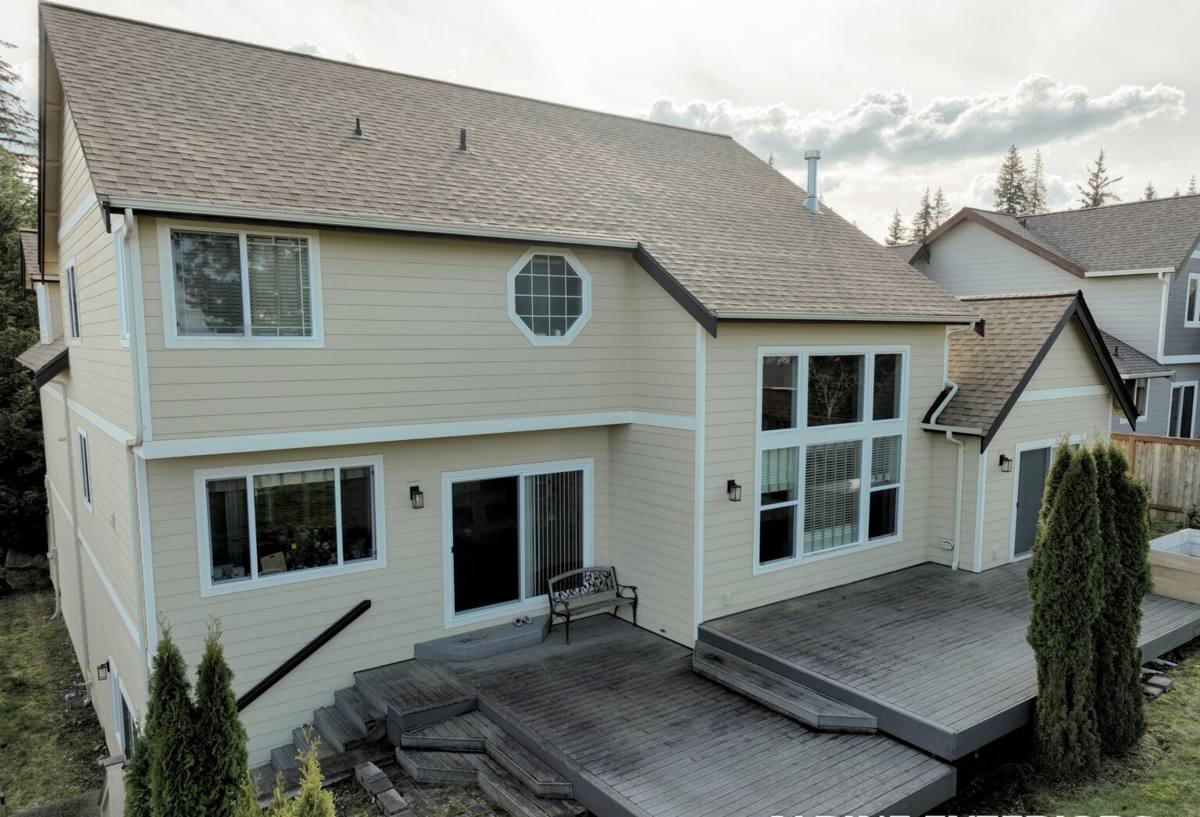
Signs a Marietta Deck Needs Repair, Not Just Cleaning
A lot of homeowners power-wash a mossy or discolored deck and assume that solves the problem. Sometimes it does. Other times the moss and grime were hiding something underneath. Here's what should prompt a closer look rather than just a cleaning:
- Boards that feel spongy, springy, or noticeably softer than neighboring boards when you walk on them
- Dark staining or a slightly sunken look around fastener heads or between deck boards
- Railings or posts that wiggle more than they used to, even slightly
- Rust streaks running down from screws, joist hangers, or other hardware
- Gaps opening up where the deck meets the house, or flashing that's visibly pulled away
- Stair stringers or ledger board areas that stay damp long after the rest of the deck has dried
- A persistent musty smell near the deck, which often points to trapped moisture below the surface
Any one of these on its own might be minor. Two or three together usually means moisture has been getting into the structure for a while, not just sitting on top of it.
What a Proper Deck Repair Actually Involves
Structural Repairs
This is the part that matters most and shows the least. Joists, ledger boards, posts, and the hardware connecting them all carry load, and in a marine-influenced climate like Marietta's, the connectors often fail before the lumber does. We check joist hangers and structural screws for corrosion, confirm the ledger board is properly flashed where it meets the house (a common weak point on older decks), and replace any framing member that's lost structural integrity from rot — not just the boards you can see from the top.
Surface and Railing Repairs
Deck boards that are cupping, splitting, or soft get replaced individually where possible, matched as closely as the existing material allows. Railings get re-secured to solid framing, not just tightened at the surface, since a loose railing is often a sign the post base underneath has already started to fail. We also address gaps and fastener patterns that let water pool instead of shed, since that's usually what caused the original damage.
Repair or Replace? What Actually Drives That Decision
Not every deck problem calls for a full rebuild, and not every deck is worth patching indefinitely. The honest answer usually comes down to how much of the structure — versus just the surface — has been affected.
| Factor | Leans Toward Repair | Leans Toward Replacement |
|---|---|---|
| Framing condition | Joists and ledger are solid; only isolated hardware corrosion | Widespread rot in joists, posts, or ledger board |
| Deck age | Under 15-20 years, built to a reasonable standard | Original construction is older or was never properly flashed |
| Extent of damage | A handful of boards or one section of railing | Damage scattered across most of the deck surface |
| Original build quality | Correct fasteners, proper spacing, adequate ventilation underneath | Signs of undersized framing or poor drainage from day one |
| Budget goals | Extend usable life a number of years for lower upfront cost | Want a longer-term reset and possibly a design change |
Broad ranges only, since every deck is different: spot repairs (a few boards, hardware, railing sections) are typically the least expensive fix; ledger and framing repairs cost more because of the labor to access and rebuild structure; a full deck replacement is the largest investment but resets the clock on the whole structure. We'll give you a specific number after we've actually looked at your deck — not before.
Materials That Actually Hold Up Near the Water
What we use to repair a deck depends on what's already there and what the homeowner wants going forward. Pressure-treated lumber remains the standard for structural framing because it's rated for ground and moisture contact, but even treated wood needs proper flashing and airflow underneath to perform in a climate like ours — the treatment resists rot, it doesn't eliminate the need for good building practices. For visible decking boards, composite materials have gotten better at resisting moss and moisture staining than they used to be, though they carry a higher upfront cost and their own installation requirements around spacing and fastening. Cedar is still a solid choice for homeowners who want a natural look, but it needs more consistent maintenance in a moss-prone climate to stay ahead of surface graying and biological growth.
We don't push one material as the universal answer. We'll walk through the honest trade-offs — upfront cost, maintenance schedule, how it matches your existing deck, and how it behaves through a Whatcom County winter — so you can pick what fits your situation.
Hardware Matters as Much as Lumber
In a salt-air environment, the fasteners and connectors are often the first thing to fail, not the wood. We use hardware rated for coastal and treated-lumber contact, since standard hardware can corrode faster here than it would further inland. This is a small line item that makes a real difference in how long a repair lasts.
How Our Deck Repair Process Works
- On-site assessment. We walk the full deck, check from underneath where access allows, and test boards, railings, and connection points rather than just looking at the surface.
- Honest scope and estimate. You get a clear picture of what's cosmetic, what's structural, and what your real options are — repair, partial rebuild, or full replacement — with pricing before any work starts.
- Repair the cause, not just the symptom. If moisture intrusion caused the damage, we address the flashing, drainage, or ventilation issue along with replacing damaged material, so the same failure doesn't recur in the same spot.
- Match and finish. Replacement boards and railing sections are matched to your existing deck as closely as materials allow, and everything is checked for level, secure fastening, and proper drainage before we call it done.
- Walkthrough. We go over what was done and what to watch for going forward, including any maintenance that will extend the life of the repair.
Keeping Moss and Moisture From Coming Back
A repaired deck can fail again in the same way if the conditions that caused it aren't managed. In Marietta's climate, that mostly means staying ahead of moss and standing water rather than reacting after damage shows up.
- Sweep leaves and debris off the deck surface regularly through fall, since trapped organic matter holds moisture against the wood
- Keep gutters and downspouts near the deck clear so runoff isn't dumping directly onto or under the structure
- Address moss at the first sign of it rather than waiting until it's established — it's far easier to remove early
- Check underneath the deck once or twice a year for standing water, blocked drainage, or early rust on hardware
- Reseal or refinish wood decking on the schedule appropriate for the product, since a failed finish lets moisture in fast in this climate
None of this eliminates maintenance entirely — no deck in a coastal, high-rainfall area is maintenance-free — but it significantly slows the wear that leads to the repairs we described above.
Why a Crew That Already Works in Marietta Makes a Difference
Deck repair isn't identical everywhere. A crew that works mostly in dry inland climates may not think twice about hardware corrosion or moss-driven rot, because they don't see it as often. Working regularly in Birch Bay and Marietta means we're used to diagnosing the specific failure patterns this coastal, high-rainfall environment produces — corroded connectors before wood damage, ledger flashing issues from driving rain, moss-related soft spots — rather than treating every deck problem as a generic wood repair.
That local familiarity also means a straighter conversation about what's actually needed. We're not going to recommend a full rebuild when a targeted structural repair will genuinely hold up, and we're not going to patch over a framing problem that's going to resurface in a year. You get an assessment based on what we see in this specific area, season after season.
If you've got a deck in Marietta that's showing soft spots, loose railings, moss buildup, or you just want a second opinion before winter, we're happy to take a look. The estimate is free, there's no pressure, and you'll get a straight answer about what your deck actually needs — use the form below to get started.