 Birch Bay Window
 Metal Roofing for Sumas Homes
Sumas sits inland from the coast but still gets the full brunt of what Whatcom County weather delivers over a year: long stretches of steady rain, damp air that never fully dries out between storms, and enough shade and moisture on north-facing slopes to grow moss faster than most homeowners expect. A roof out here isn't just shedding water for a few weeks in winter — it's under load for most of the year. Metal roofing holds up well under that kind of pattern, which is why we get asked about it constantly from Birch Bay clear through to Sumas.
This page is about metal roofing specifically for the Sumas area — what the local weather actually does to a roof over time, what a correct metal roof installation involves, and how our process works from the first look to the final walkthrough.
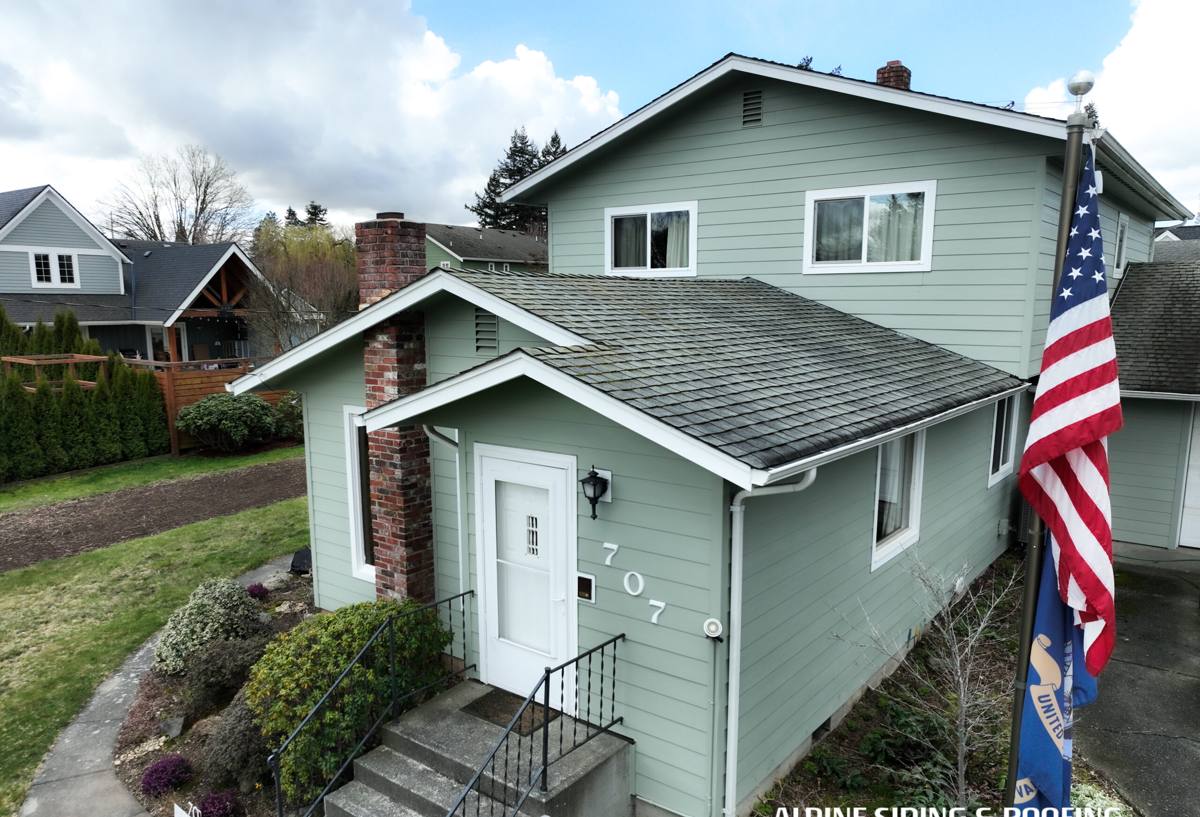
What Local Weather Does to a Roof Over Time
Every roofing material has a failure pattern shaped by the climate it sits in. In this part of Whatcom County, the pattern is consistent:
- Driving rain pushed sideways by wind finds any weak seam, lap, or fastener penetration — it doesn't need a downpour, just persistence.
- Salt-influenced air carried inland from the coast and the bay accelerates corrosion on unprotected metal, fasteners, and flashing over the years.
- A long moss and algae season — often eight months or more — takes hold anywhere moisture sits and sunlight is limited, especially on north- and east-facing roof planes and under tree cover.
- Freeze-thaw cycles, while milder here than inland Washington, still stress any roofing material that traps water instead of shedding it cleanly.
Asphalt shingles react to this environment by absorbing moisture into their mat, losing granules faster in wet-dry cycling, and giving moss a rough surface to grab onto. Metal roofing responds differently: it's non-porous, sheds water immediately, and gives moss and algae almost nothing to root into. That doesn't make it maintenance-free, but it does shift the maintenance burden from "replace worn material" to "keep the surface clean and the fasteners sound" — a much better position to be in after a decade of Whatcom County winters.
Why This Matters More in Sumas Specifically
Homes in and around Sumas often sit on lots with more mature tree cover than newer coastal developments, and many have roof pitches and orientations that hold shade for a large part of the day. Shade plus consistent moisture is exactly the combination that grows moss fastest. On a metal roof, that same shade is far less of a liability — there's no organic mat for spores to colonize, so a periodic rinse does most of the work that an asphalt roof would need chemical treatment and granule replacement to manage.
Choosing the Right Metal Roofing System
"Metal roofing" isn't one product — it's a category, and the right choice depends on the roof's pitch, the home's style, and your budget. We typically discuss two main paths with Sumas homeowners:
| System | How It's Installed | Best For | Trade-Offs |
|---|---|---|---|
| Standing seam | Concealed fasteners under raised, interlocking vertical panels | Long-term durability, clean modern look, low-slope sections | Higher material and labor cost; fewer contractors install it correctly |
| Exposed-fastener panel | Screwed directly through the panel face with washered fasteners | Budget-conscious projects, outbuildings, steeper roofs | Fasteners can loosen or wear over decades and need periodic checking |
We don't push one system on every job. A standing seam roof is the stronger long-term investment for a primary residence because there's no exposed fastener for water or salt air to work on over the years. Exposed-fastener panel is a legitimate, honest option for shops, additions, and homeowners working within a tighter budget — it just comes with a maintenance conversation about fastener condition that we're upfront about at the estimate.
A Note on Underlayment and Metal Type
The panel itself is only part of the system. What goes underneath it — and what the panel is made of — matters just as much in a wet climate:
- Underlayment: we use a synthetic, high-temp-rated underlayment rather than old-style felt, because felt breaks down faster under sustained moisture exposure and doesn't handle the heat that can build under dark metal panels.
- Panel material: steel with a quality Galvalume or painted finish, or aluminum where salt exposure is a bigger concern, both perform well here. We'll talk through the trade-offs for your specific roof rather than defaulting to whatever's cheapest that week.
- Fastener quality: mismatched or bargain-grade fasteners are one of the most common causes of early metal roof failure — they corrode faster than the panel around them and telegraph rust streaks down the roof face.
What a Correct Metal Roofing Installation Involves
Metal roofing is unforgiving of shortcuts in a way shingles sometimes aren't — a sloppy shingle roof can still shed water reasonably well for a while, but a metal roof with the wrong details will telegraph problems (leaks, oil-canning, fastener backout) much sooner. A correct installation includes:
- Deck inspection and repair — any soft, water-damaged, or improperly spaced decking gets addressed before a single panel goes down.
- Proper underlayment coverage, including extra protection at valleys, eaves, and any low-slope transitions where water sits longest.
- Correct panel layout and fastening pattern matched to the manufacturer's spec — not a generic pattern applied to every job regardless of panel type.
- Flashing at every penetration — chimneys, vents, skylights, and wall transitions — sized and lapped to shed water downhill, not just caulked and hoped for.
- Ventilation review
- Edge and trim detailing that accounts for wind-driven rain, which is a bigger factor here than in drier climates.
Skipping or rushing any one of these is how a metal roof ends up with a reputation it didn't deserve. The material is only as good as the details underneath it.
Our Process for a Sumas Metal Roofing Project
1. On-Site Assessment
We walk the roof, check the deck condition where accessible, evaluate pitch and existing ventilation, and talk through what's actually driving the decision to switch to metal — moss issues, an aging roof, storm damage, or a long-term plan for the home.
2. System Recommendation
Based on that assessment, we recommend a panel type and finish suited to the roof's exposure and your budget, and explain the honest trade-offs rather than steering you toward the highest-margin option.
3. Tear-Off or Overlay Decision
In most cases we recommend a full tear-off to inspect and repair the deck properly — overlaying metal on a compromised or overly worn existing roof just hides problems that will surface later. We'll tell you plainly if your situation is an exception.
4. Installation
Panels, flashing, and trim go in following manufacturer specifications, with attention to the fastening and lapping details that matter most in a wet climate.
5. Final Walkthrough
We review the finished roof with you, point out anything worth knowing for future maintenance, and make sure debris and packaging are cleared from the property.
What Metal Roofing Costs Depend On
We don't quote firm numbers without seeing the roof, but the main cost drivers on a Sumas project are consistent from job to job:
| Factor | Why It Matters |
|---|---|
| Roof pitch and complexity | Steeper roofs and more valleys, dormers, and penetrations mean more labor and flashing detail |
| Panel system chosen | Standing seam runs higher than exposed-fastener panel due to material and installation labor |
| Tear-off vs. overlay | Removing an old roof adds labor and disposal cost but avoids hiding deck problems |
| Deck repairs needed | Water-damaged sheathing found during tear-off adds material and time |
| Roof access | Tree cover, steep lots, and limited staging areas — common around Sumas — can affect labor time |
A metal roof generally costs more upfront than asphalt shingles. The trade-off is a much longer service life and far less ongoing moss and granule maintenance — worth weighing against your timeline for the home, not just the sticker price.
Keeping a Metal Roof Sound in This Climate
Metal roofing needs less upkeep than shingles, but "less" isn't "none." A short annual routine keeps a system performing the way it's designed to:
- Clear debris from valleys and gutters before the fall rains set in, so water isn't pooling against panel edges.
- Rinse off accumulated organic buildup on shaded roof planes once a year — a garden hose is usually enough since moss can't root into the surface.
- Walk the roofline visually (or have us do it) after any major windstorm to check for lifted trim or panel edges.
- Check exposed fasteners periodically if you went with an exposed-fastener system, since these are the first point of wear in a wet climate.
- Keep overhanging branches trimmed back to reduce shade, debris, and abrasion on the roof surface.
Why It Matters That We Already Work in Sumas
Roofing crews who mostly work drier inland climates sometimes underbuild for what Whatcom County actually throws at a roof — lighter underlayment, fewer flashing details, fastening patterns borrowed from a different region's spec sheet. We work this area regularly enough to know which roof planes hold moss longest, which orientations take the worst of the wind-driven rain, and where a standard detail needs an extra step to hold up here long-term. That's not a marketing line — it's the difference between a roof that looks right on installation day and one that still performs correctly after its fifth wet winter.
If you're weighing metal roofing for a home in the Sumas area, we're glad to take a look and talk through what makes sense for your roof specifically. Fill out the form below for a free, no-pressure estimate — no obligation, just a straight answer about your options.