 Birch Bay Window
 Deck Repair Built for Nooksack's Wet Coastal Climate
Decks in and around Nooksack take a beating that decks in drier parts of the country never have to deal with. You're close enough to the water to get salt-laden air moving through on a regular basis, Whatcom County's driving rain comes in sideways more often than not, and the region's long, cool, shaded stretches of the year turn into a months-long moss season. Put those three things together and you get a specific, predictable pattern of deck damage: soft spots near ledger boards, slick green growth on the walking surface, corroded fasteners, and joists that look fine from above but are quietly failing underneath.
We repair decks in this area regularly enough to know where the damage starts and how far it usually runs before a homeowner notices. This page walks through what we actually look for, how a proper repair is done, and why the climate here changes the calculus compared to a generic "deck fix" job.
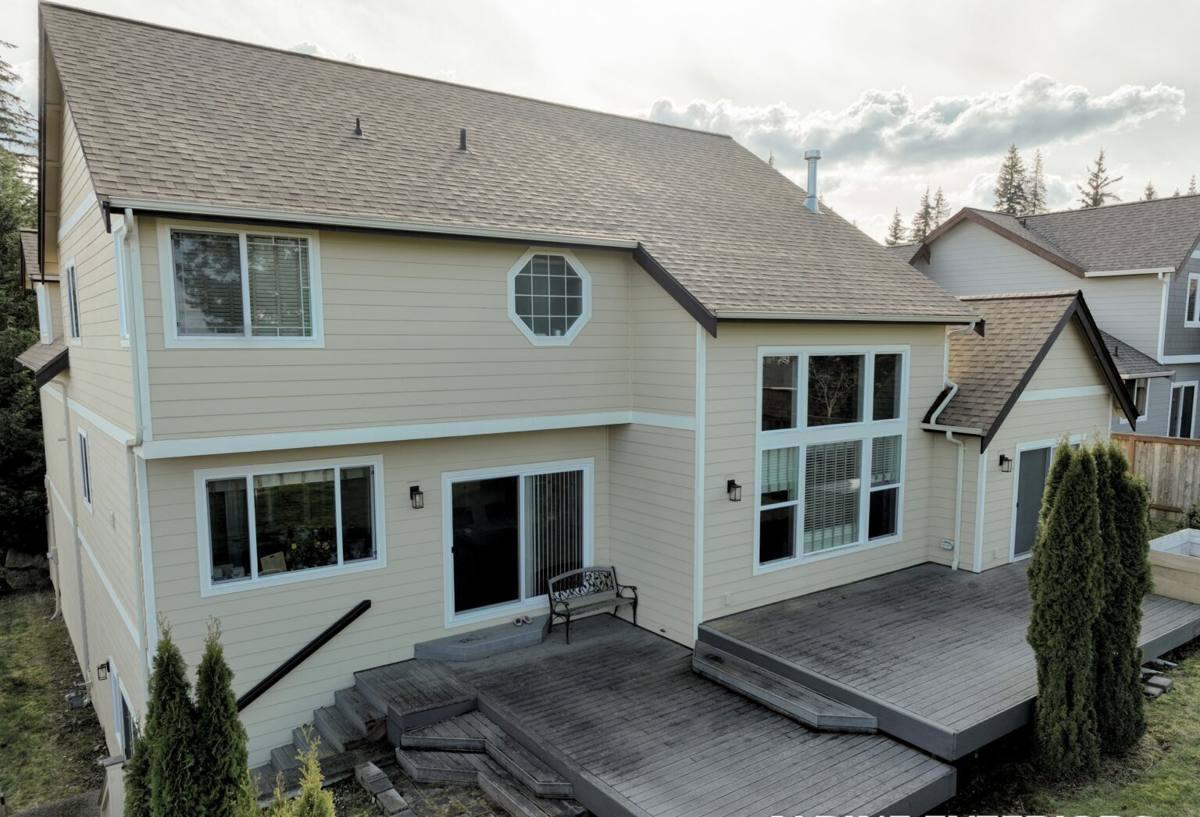
How Local Weather Actually Damages a Deck
Driving Rain and Water Intrusion
Wind-driven rain doesn't just fall on a deck — it gets pushed sideways and upward, into gaps that would stay dry in a calmer climate. That means water finds its way under flashing, behind ledger boards, and into fastener holes that were never properly sealed to begin with. Once water gets past the surface, it doesn't dry out quickly here. Whatcom County's damp, overcast stretches mean wood can stay wet for days or weeks at a time, which is exactly the condition rot needs to take hold.
Salt Air and Metal Fatigue
Being close enough to Puget Sound to catch salt air means every piece of metal on your deck — nails, screws, joist hangers, bolts, railing brackets — is under slow chemical attack. Standard galvanized fasteners that would last decades inland can start showing rust and pitting years earlier out here. Corroded fasteners lose grip strength gradually, so a deck can look structurally sound while its connections are quietly weakening.
Moss, Algae, and Surface Breakdown
Shaded decks, north-facing decks, and anything under tree cover grow moss on an accelerated schedule in this climate. Moss isn't just a slip hazard — its root structure holds moisture directly against the wood or composite surface, and the acids it produces can etch and soften wood fibers over time. On composite decking, heavy moss buildup traps grit against the cap layer and accelerates surface wear.
The Deck Problems We See Most Often in This Area
- Soft, spongy decking boards near the house where the deck meets the siding
- Rust streaks or crumbling around nail and screw heads
- A ledger board pulling slightly away from the house rim joist
- Green or black film on stair treads and shaded sections of decking
- Railing posts that wobble more than they used to
- Gaps or cracking where flashing meets the house wall
- Joists that feel spongy or show dark staining when probed from underneath
- Footings or posts sitting in standing water after heavy rain
Signs Your Deck Needs Repair Now, Not Later
Some deck problems are cosmetic and can wait. Others are structural, and waiting on those turns a repair into a rebuild. A quick way to tell the difference:
Cosmetic — Repair on Your Schedule
Surface graying, minor moss on the edges, loose screws that still bite, small hairline cracks in a handful of boards. These affect appearance and slip-resistance more than safety, though moss should never be ignored for long in this climate.
Structural — Repair Soon
Any board that flexes or feels soft underfoot, a ledger board with visible gap or movement, joists you can push a screwdriver into, railings that move at the post base, or stairs that feel bouncy. These affect load-bearing capacity and should be looked at before the next heavy storm season, not after.
What a Correct Deck Repair Actually Involves
A repair that only replaces the board you can see often misses the reason that board failed in the first place. Our process is built around finding the actual source of moisture or stress, not just patching the symptom.
1. Full Structural Inspection
We check the ledger board connection, joist condition from underneath, post and footing stability, railing attachment points, and fastener condition — not just the visible decking surface.
2. Moisture and Rot Mapping
We probe suspect areas to find the actual boundary of rot or water damage, since damaged wood often extends beyond what's visible from the top.
3. Flashing and Water Path Correction
If the root cause is water getting behind flashing or pooling at the ledger, we correct that path before replacing any wood — otherwise the same board fails again in a season or two.
4. Targeted Replacement
We replace only what's actually compromised — individual boards, specific joists, a section of railing — matched as closely as possible to your existing deck rather than defaulting to a full teardown when it isn't needed.
5. Fastener and Hardware Upgrade
Where corrosion is part of the problem, we upgrade to hardware rated for coastal exposure rather than replacing like-for-like with the same fasteners that failed.
6. Surface Treatment or Sealing
Repaired wood sections get sealed or treated appropriately so the new material weathers at the same rate as the rest of the deck instead of standing out or failing early.
Repair vs. Replacement: How We Help You Decide
| Factor | Favors Repair | Favors Replacement |
|---|---|---|
| Extent of rot | Isolated to a few boards or one area | Widespread through joists and ledger |
| Framing condition | Solid, joists sound underneath | Joists soft or failing in multiple spots |
| Age of deck | Newer, damage is localized | Original structure near end of service life |
| Cost so far | Repairs stay well under rebuild cost | Repeated repairs are adding up over time |
| Code compliance | Meets current railing and footing standards | Older deck doesn't meet current standards |
Straightforward repairs — a handful of boards, a section of railing, corroded fastener replacement — are usually a modest, contained cost. Deck damage that's reached the framing or ledger board tends to cost meaningfully more because it involves structural work, not just surface material. We'll always tell you plainly which category your deck falls into before any work starts.
Material Choices When Repairing
When we replace decking boards, homeowners usually choose between matching the existing wood or switching a section to composite. Both are legitimate choices, and the right one depends on your deck and your goals.
Wood is easier to match to an existing deck's appearance and is generally simpler to spot-repair board by board. It does require more regular maintenance — cleaning, sealing, and moss control — to hold up against this area's rain and shade. Composite resists moisture and moss buildup better and needs less upkeep, but it's harder to blend into an older wood deck, and full sections rather than single boards are sometimes the more practical repair unit. We'll walk you through what fits your specific deck rather than pushing one material as a default.
Why It Matters to Hire a Crew That Already Works This Area
Deck repair done by someone unfamiliar with coastal Whatcom County conditions often treats the symptom — swap the bad board, done. A crew that regularly works decks near Birch Bay knows to check the ledger flashing every time, knows which fastener grades actually hold up against salt air locally, and knows that a deck with heavy moss on one side usually has a drainage or shade issue driving it, not just a cleaning need. That local pattern recognition is the difference between a repair that lasts and one you're calling about again in two years.
Simple Maintenance That Extends the Life of a Repair
- Sweep leaves and debris off the deck regularly, especially in shaded corners where moss starts first
- Rinse or gently brush moss growth before it gets established rather than after
- Check railing posts and stair stringers for movement once or twice a year
- Keep gutters and downspouts clear so runoff isn't draining directly onto the deck
- Reseal or refinish wood decking on the schedule your product actually needs in this climate, not a generic interval
- Look underneath the deck occasionally, not just at the walking surface
If your deck has soft spots, visible moss buildup, or fasteners that look worse than they used to, it's worth having someone take a real look before the next stretch of driving rain makes the problem bigger. We offer free, no-pressure estimates for deck repair in the Nooksack area — use the form below to get a straightforward assessment of what your deck actually needs.