 Birch Bay Window
 Siding That Has to Work in Whatcom County, Not Just Look Good
Nooksack sits inside one of the wetter corners of Washington State, and homes here take a steady beating that homes in drier climates never see. Whether your property is closer to the water around Birch Bay or further inland near the river valley, the pattern is the same: long stretches of damp weather, wind-driven rain that gets pushed sideways into wall assemblies, and a moss and algae season that can run most of the year in shaded or north-facing areas. Add in salt-laden air moving in off the coast and you have a climate that is genuinely hard on exterior building materials.
Siding on a Nooksack home isn't decorative trim — it's the primary barrier protecting framing, sheathing, and insulation from moisture intrusion. When it fails, the damage is usually happening behind the wall long before anyone notices a problem on the surface. That's why the siding choice and the installation quality matter more here than they would in a milder, drier region.
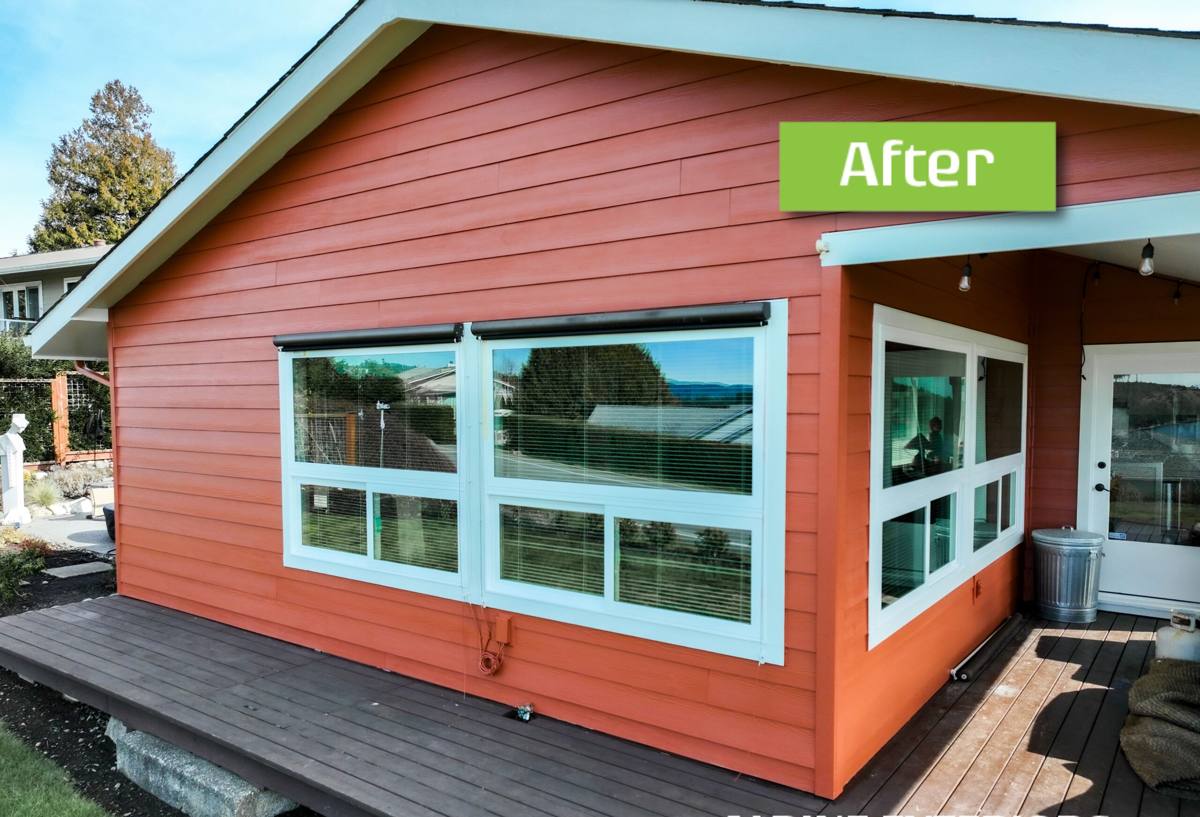
What Driving Rain and Moss Actually Do to a Wall System
It helps to understand the specific failure modes local weather creates, because they explain why some siding materials struggle here and others hold up.
- Wind-driven rain forces water sideways and upward under laps, trim, and butt joints — areas that are fine in calm rain but leak under sustained coastal wind.
- Prolonged dampness keeps siding surfaces wet for days at a time, which is exactly the condition wood-based and wood-fiber products need to begin swelling, delaminating, or rotting.
- Moss and algae growth holds moisture directly against the siding surface, extending the time the material stays wet even after the rain stops.
- Salt-laden air accelerates the breakdown of paint films and metal fasteners, which is why coastal-adjacent homes often show premature fading, chalking, or rust streaking on ordinary materials.
None of this means Nooksack is an unusually harsh place to build — it's a normal Pacific Northwest coastal climate. But it does mean the margin for error with siding material and installation detail is smaller than in most of the country.
Why We Standardized on James Hardie for This Climate
We install exclusively James Hardie fiber cement siding, and the reason is straightforward: it's an engineered product built specifically to resist the conditions described above, not a general-purpose material that happens to hold up okay.
Fiber Cement, Not Wood or Wood-Fiber
James Hardie siding is made from cement, sand, and cellulose fiber, cured into a rigid board. It doesn't have the wood grain structure that lets moisture wick along fibers, so it doesn't swell, cup, or rot the way solid wood, primed spruce, or engineered wood-fiber products can when they stay wet for extended periods — which is a normal condition during a Whatcom County winter.
Climate-Engineered Product Lines
James Hardie manufactures different formulations for different climate zones — a Northern, moisture- and freeze-oriented HZ5 formulation versus a Southern HZ10 formulation for hot, dry regions. For a project in Nooksack, that means the product specified for your home is built for wet, cooler conditions rather than a one-size-fits-all board shipped to every region in the country.
ColorPlus Factory Finish
Most of our installs use Hardie's ColorPlus finish, a baked-on factory coating that's considerably more resistant to fading, chalking, and moisture-driven failure than field-applied paint. In a salt-air environment, that finish durability is the difference between siding that still looks sharp in year twelve and siding that needs repainting by year five.
Non-Combustible
Fiber cement doesn't burn, which matters increasingly in Washington as wildfire smoke and ember exposure become a bigger part of summer conditions statewide. It's not the main reason we chose Hardie, but it's a real advantage over wood and vinyl.
Why We Don't Install Vinyl, LP SmartSide, or Wood Siding
We get asked about these alternatives often, and it's a fair question — they're less expensive up front. Here's the honest trade-off we see in this specific climate:
| Material | How it handles this climate | Where it falls short |
|---|---|---|
| Vinyl | Sheds rain fine when intact | Becomes brittle and can crack in cold snaps; seams and panels can warp or buckle; can't carry a factory finish as durable as ColorPlus |
| LP SmartSide / wood-fiber | Reasonable rain resistance when the finish is intact | Wood-fiber core is vulnerable to edge swelling and moisture wicking if caulking or paint fails, which is a real risk under sustained wet conditions |
| Cedar / primed spruce | Traditional look, breathable | Needs regular refinishing to stay sealed; moss and algae growth accelerates surface breakdown; higher long-term maintenance burden in a wet climate |
| James Hardie fiber cement | Engineered for Northern wet climates (HZ5), factory-cured finish | Higher material cost; requires correct installation detailing to perform as designed |
Every one of these products has a legitimate place somewhere in the market. Our decision to install only James Hardie is about matching the product to what Whatcom County weather actually does to a wall over 20-plus years, not about any single product being poorly made.
What a Correct Hardie Installation Looks Like
Fiber cement siding performs the way it's engineered to only when it's installed correctly. Poor installation is the most common reason any siding — including Hardie — fails prematurely, and it's usually invisible until there's a moisture or rot problem behind the wall. On a Nooksack project, the details we treat as non-negotiable include:
- A properly lapped, drainable weather-resistive barrier behind the siding, giving bulk water a path out rather than trapping it against the sheathing
- Correct flashing at every window, door, roofline, and deck ledger intersection — the places wind-driven rain actually gets in
- Manufacturer-specified fastener type, spacing, and penetration depth, since under- or over-driven fasteners are a common cause of early failure
- Proper clearance gaps at the bottom of the siding, around trim, and at butt joints so water can drain and the material can move seasonally without binding
- Factory-cut and factory-primed edges kept intact, with any field cuts sealed per Hardie's installation instructions
- Ventilation and drainage planes that don't trap moisture behind the cladding during the long damp stretches typical of a Whatcom County winter
None of these details are visible once the job is finished, which is exactly why the crew's discipline during installation matters more than almost anything else in the process.
Our Process, Start to Finish
We keep the process straightforward and transparent so you know what's happening at every stage:
- On-site assessment — we look at your home's current siding condition, exposure to wind and rain direction, moss and moisture patterns, and any signs of existing water damage.
- Written estimate — a clear scope covering product line, color, trim details, and any repair work needed to the sheathing or framing before new siding goes on.
- Prep and repair — removing failing material, addressing any rot or moisture damage found underneath, and correcting the weather barrier if it's compromised.
- Installation to manufacturer spec — flashing, gapping, fastening, and finishing done to James Hardie's published installation requirements, not shortcuts.
- Final walkthrough — reviewing the finished job with you before we consider the project complete.
Signs a Nooksack Home's Siding Needs Attention
A quick self-check worth doing once or twice a year, especially after a stretch of heavy weather:
- Persistent moss or algae staining that doesn't wash off, particularly on north-facing or shaded walls
- Soft, spongy, or visibly swollen sections of siding, especially near the bottom courses or around windows
- Paint that's peeling, bubbling, or chalking heavily rather than just fading evenly
- Visible gaps, cracked caulking, or separated joints at trim and corners
- Musty smells or discoloration on interior walls that back onto exterior siding
Any one of these on its own isn't necessarily an emergency, but they're worth having looked at before the next wet season.
Why Local Experience Matters for This Job
A crew that already works in and around Nooksack and greater Whatcom County has already seen how the local mix of rain direction, salt exposure, and moss growth behaves against a wall over time. That's not something you learn from a manufacturer's install manual alone — it comes from doing the work here repeatedly and paying attention to which details actually matter in this specific climate versus a generic installation checklist. It also means someone who understands local permitting expectations and typical wall assemblies for homes built in this part of the county, rather than treating every project as a first-time guess.
Long-Term Care Once Your Siding Is Installed
James Hardie siding is low-maintenance, not no-maintenance. A simple annual rinse to knock off moss and organic buildup, prompt attention to any caulking that starts to fail at trim joints, and keeping gutters clear so water isn't dumping directly onto a wall section will go a long way toward getting the full service life out of the material and its factory finish. James Hardie also backs the product with a strong transferable warranty, which is worth understanding fully before you commit — ask any contractor bidding your job to walk you through exactly what it covers.
If you're weighing your options for a Nooksack home, we're happy to take a look and give you a straightforward, no-pressure estimate — no invented urgency, just an honest read on your siding's condition and what it would take to do the job right.